
Commercial and industrial (C&I) facility developers in Southern Germany (Bavaria and Baden-Württemberg) face a critical bottleneck: grid connection rejections for new rooftop PV systems. The local distribution grid is saturated, and grid operators are increasingly denying interconnection applications to prevent thermal overloading of the feeders.
Under the German Renewable Energy Sources Act (EEG), facilities can bypass strict connection caps if they implement controllable feed-in (Einspeisemanagement) and integrate Battery Energy Storage Systems (BESS). Depending on commissioning date, system size, and grid operator requirements, export limitation or remote controllable feed-in management may apply under EEG provisions. Deploying a PV system without a BESS is significantly less economically attractive for many C&I projects, as solar generation rarely aligns with midday grid export limits.
This engineering analysis explains how modern hybrid solid-state BESS architectures integrate with EEG requirements, navigate VDE-AR-N 4105 low-voltage interconnection standards, and maximize PV utilization in grid-congested areas.
Key Takeaways
- Integrating BESS allows facilities to meet controllable feed-in requirements, accelerating grid connection approval.
- Zero-export mode and active power limiting prevent feeder overloading without wasting solar energy.
- Some commercial facilities benefit from 100% unbalanced load support due to asymmetric phase loading.
- VDE-AR-N 4105 compliance requires smart inverters with active anti-islanding and Volt-VAR support.
- Transparent ROI modeling includes avoided curtailment losses and Time-of-Use (ToU) arbitrage.
The Impact of Grid Congestion on PV Interconnection
The German power grid in the south operates under severe congestion during peak solar generation hours. To protect the grid, operators enforce export limitations and remote curtailment on new PV installations.
Curtailment Losses and Connection Delays
If a manufacturing facility installs a 500kWp PV system, the local grid operator (Netzbetreiber) may limit export to a specific percentage of installed capacity. During midday peak generation, the excess energy must be curtailed (wasted) or stored. Without a BESS, the facility loses significant revenue and extends the payback period of the PV investment. Furthermore, standard inverters without advanced grid support functions may not satisfy VDE-AR-N 4105 interconnection requirements, leading to outright application rejection.
How Much Can German Facilities Save? (Transparent ROI Derivation)
The primary search intent for German C&I developers is understanding the financial return of PV-BESS investments under grid congestion. A credible ROI model requires a step-by-step financial derivation based on local assumptions.
Step 1: Assumptions Breakdown
- Tariff: Grid Purchase: € 0.35/kWh; PV Feed-in: € 0.08/kWh.
- Curtailment Baseline: 500 kWp PV system with average 2 hours/day of 150 kW curtailment due to export limits.
- Load Profile: 300kW continuous daytime load.
- Battery Degradation Cost: 2% capacity fade per year, requiring a € 4,000/year replacement reserve.
- CapEx: 1MWh BESS + 200kW PCS = € 450,000.
Step 2: Calculation Steps
- Avoided Curtailment: 150 kW * 2 hours/day = 300 kWh/day saved. *Savings = 300 * € 0.35 (offset retail) = € 105/day.
- ToU Arbitrage (Peak Shaving): 400 kWh/day shifted from peak to off-peak. *Savings = 400 * (0.35 - 0.20) = € 60/day.
- Gross Daily Savings: € 105 + € 60 = € 165/day.
- Annual Gross Savings: € 165 * 365 = € 60,225.
- Net Annual Savings (after degradation): € 60,225 - € 4,000 = € 56,225.
Step 3: Financial Results
Based on this transparent calculation, the modeled payback period for a German C&I facility is approximately 8 years. The 10-year IRR is 12%, depending on local tariff structures, demand charges, and financing assumptions.
Zero-Export and Controllable Feed-In Engineering
Under EEG provisions, the engineering objective is no longer maximizing PV export but maximizing on-site energy utilization and grid stability. The Energy Management System (EMS) is the brain of the solar-storage system. The EMS must actively manage power flow to prevent curtailment and feeder overloading.
- Zero-Export Mode: The EMS monitors the facility's net load. If it detects that PV generation exceeds facility load plus BESS charge capacity, it actively curtails PV generation to zero export, complying with specific grid operator (Netzbetreiber) interconnection agreements.
- Active Power Limiting: The EMS ensures that the combined PV and BESS export never exceeds the capacity limit defined in the grid operator's connection agreement.
- Curtailment Avoidance: During midday peak generation, the EMS commands the BESS to charge, absorbing the surplus PV energy that would otherwise be curtailed, storing it for evening discharge.
Unbalanced Load Support for C&I Facilities
Some commercial facilities benefit from 100% unbalanced load support due to asymmetric phase loading from single-phase machinery, lighting, and HVAC systems. Standard three-phase inverters without unbalanced load support may trip offline when one phase is heavily loaded while others are idle.
Independent Phase Control
The hybrid inverter features 100% unbalanced load support. The inverter utilizes independent phase control algorithms and a robust 3W+N+PE configuration. It dynamically reallocates current across phases, ensuring stable voltage output even if one phase is heavily loaded. This is critical for maintaining microgrid stability in specific industrial environments.
VDE-AR-N 4105 Grid Compliance Requirements
Distributed energy resources interconnected to German low-voltage distribution systems must comply with VDE-AR-N 4105 interconnection standards administered by the local grid operator. Standard inverters without advanced grid support functions may not satisfy VDE-AR-N 4105 interconnection requirements.
IEEE 1547-2018 specifies performance-based requirements for Volt-VAR control and ride-through capabilities. During minor grid voltage sags, the BESS injects reactive power to stabilize the local grid. Additionally, IEEE 519-2022 recommends harmonic distortion limits. The integrated PCS actively limits Total Harmonic Distortion of Current (THDi) below 3% under rated load.
Thermal Resilience During German Summers
Germany's climate presents moderate ambient temperatures (often exceeding 30°C) during summer. Standard liquid lithium-ion batteries suffer from accelerated degradation and thermal runaway risks under these conditions, especially when placed in outdoor generator yards.
UL 9540A is a standard test methodology that evaluates the fire risk of a complete BESS by inducing thermal runaway in a single cell. Modern hybrid solid-state architectures utilize a stable solid electrolyte matrix designed to reduce the release of flammable electrolyte under thermal stress compared with conventional liquid-electrolyte systems. This architecture, combined with intelligent liquid cooling, maintains a strict temperature gradient, preventing localized hotspots and safely allowing deployment near critical infrastructure. (For foundational knowledge on system safety, read our BESS gids vir voorkoming van termiese uitloop).
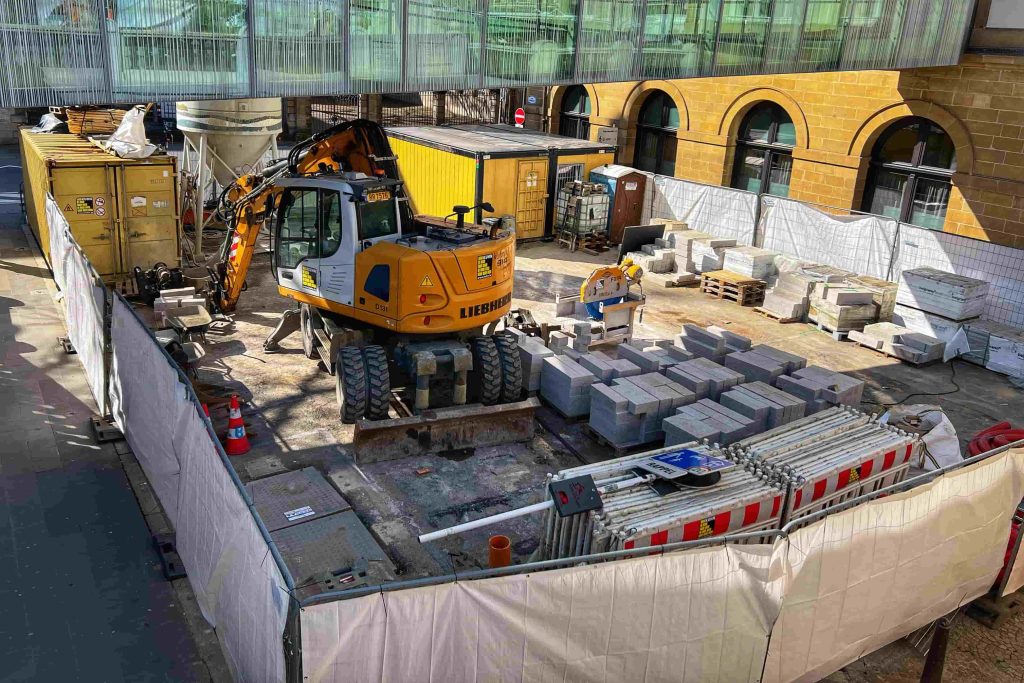
Field Experience: 2025 Manufacturing Plant Deployment in Munich
In early 2025, a manufacturing facility in Munich faced severe grid connection rejection for a 500kWp rooftop PV system. The local grid operator (Stadtwerke München) enforced strict export limitations. Certain customer identifiers have been omitted due to confidentiality agreements, but engineering data is verified against internal engineering references, factory FAT logs, site SAT reports, and approved single-line diagrams (SLDs).
To solve this, a 1MWh hybrid solid-state BESS array was deployed, integrated with the PV system via a custom EMS.
Engineering Lessons Learned (Based on commissioning records)
- Zero-Export Deadband Optimization: During commissioning, the EMS zero-export logic was too aggressive, causing the PV inverter to oscillate. The deadband was reconfigured to allow a 5% tolerance, stabilizing the PV output while maintaining VDE-AR-N 4105 compliance.
- Unbalanced Load Compensation: The facility had a heavy single-phase HVAC load on Phase A. The inverter's 100% unbalanced load support dynamically reallocated current from Phase B and C to Phase A, preventing a phase voltage drop.
- Curtailment Avoidance: The EMS successfully charged the BESS during midday peak generation, absorbing 300 kWh of surplus PV energy that would have been curtailed under the export limit.
Verifiable Project Outcomes
- Grid Connection Approval: Successfully passed VDE-AR-N 4105 interconnection tests, securing grid connection approval.
- Curtailment Reduction: Reduced PV curtailment losses by 90%, maximizing retail offset revenue.
- Energy Resilience: Achieved 100% operational continuity for critical manufacturing lines during grid voltage sags.
- Note: Results vary depending on site configuration, local tariffs, and environmental conditions.
Why Factory Integrated BESS Matters for German Microgrids
Deploying a PV-BESS system in Germany requires stringent engineering design considerations. Factory integrated energy storage ensures that the battery modules, PCS, BMS, and EMS are tested as a single cohesive unit before deployment.
Factory integration matters because it guarantees BOM traceability down to the cell batch, ensuring that the system will behave exactly as modeled during the financial ROI phase. Internal testing follows IEC and IEEE-related communication and safety standards (including IEC 62619, UL 9540A, and NFPA 855 guidelines) before factory acceptance testing (FAT).
MegSolid Manufacturing Authority
MegSolid's manufacturing authority is verified through third-party testing protocols administered by TÜV Rheinland and SGS. BOM traceability and solid electrolyte matrix engineering are audited under IEC 62619 guidelines, and the 215kWh outdoor cabinet architecture is designed according to UL 9540A evaluation methodology. Operating as a direct manufacturer, MegSolid provides these integrated engineering solutions, offering comprehensive OEM/ODM-vervaardiging services for global EPC partners. (Explore our mikro-netoplossings vir onstabiele netwerke and our 215kWh Outdoor Cabinet ESS).
Verwysings en bedryfsstandaarde
MegSolid's engineering design and testing protocols align with the following regulatory frameworks and industry standards:
- EEG: German Renewable Energy Sources Act (Controllable Feed-in provisions).
- VDE-AR-N 4105: Technical Connection Rules for Generating Units Connected to the Low-Voltage Network.
- IEEE: 1547-2018 Standard for Interconnection and Interoperability of Distributed Energy Resources.
- IEEE: 519-2022 Recommended Practice and Requirements for Harmonic Control in Electric Power Systems.
- IEC: 62619 Safety requirements for secondary lithium cells and batteries in industrial applications.
- UL: 9540A Standard for Safety of Energy Storage Systems and Equipment.
- NFPA: 855 Standard for the Installation of Stationary Energy Storage Systems.
VGV
Q1: Hoe help 'n BESS met die goedkeuring van 'n netwerkverbinding in Suid-Duitsland?
Onder EEG-bepalings stel die integrasie van 'n BESS fasiliteite in staat om beheerste inspeel (nul-uitvoer of aktiewe kragbeperking) te implementeer. Dit voorkom oorbelasting van die toevoerlijn en voldoen aan die vereistes van VDE-AR-N 4105, wat die goedkeuring van die netwerkverbinding versnel.
V2: Hoe werk beheerde insetbestuur?
Afhangend van die inbedryfstellingsdatum en die vereistes van die netwerkoperateur, kan uitvoerbeperkings van toepassing wees. Die EMS verseker dat die gekombineerde PV- en BESS-uitvoer nooit die gedefinieerde limiet oorskry nie, met oortollige energie wat beperk of in die battery gestoor word vir latere gebruik.
Q3: Waarom baat sommige kommersiële fasiliteite by 100%-ongebalanseerde lasondersteuning?
Sommige fasiliteite het 'n asimmetriese fasebelasting van enkel-fase masjinerie. Die hibriede inverter se 100% ongebalanseerde lasondersteuning herverdeel dinamies die stroom oor die fases, wat spanningsvalle en inverter-uitskakelings voorkom.
V4: Hoe voldoen die stelsel aan die Duitse netwerkkodes?
Die PCS ondersteun slim omvormerfunksies, insluitend Volt-VAR-beheer en laespannings-deurloop (LVRT), soos vereis deur VDE-AR-N 4105 en IEEE 1547-2018. Dit beperk ook aktief die THDi onder gelykbenamde las tot onder 3% in ooreenstemming met IEEE 519-2022.
Q5: Hoe vinnig moet 'n mikro-netinverter oorskakel om stilstand van die fabriek te voorkom?
'n mikro-netinverter moet tipies binne 8–10 ms oorskakel onder voor-gesinchroniseerde toestande. Industriële PLC's het oor die algemeen 'n deurloopvermoë van 10–20 ms. 'n Oorskakeltyd van 8–10 ms verseker kontinuïteit van krag sonder onderbreking.
Q6: Is die BESS veilig om naby kritieke infrastruktuur te installeer?
Ja. Die vaste elektrolietmatrys is fundamenteel meer stabiel as vlugtige vloeibare elektroliete. Ontwerp volgens die UL 9540A-evalueringsmetodologie, verminder dit aansienlik die waarskynlikheid van termiese uitbarstingsverspreiding.
Q7: Hoe verhoed die EMS sonkraguitvoer onder netwerkopeenhoping?
Die EMS monitor die netto-las van die fasiliteit. As dit opmerk dat die PV-opwekking die las van die fasiliteit plus die BESS-laaikapasiteit oorskry, beperk dit aktief die PV-opwekking tot geen uitvoer nie, in ooreenstemming met die netwerkoperateur se aansluitingsooreenkoms.
Q8: Wat is die tipiese ROI vir 'n sonkrag-bergingstelsel in Duitsland?
Gebaseer op deursigtige berekeninge, insluitend CapEx, IRR en NPV, is die gemodelleerde terugbetaalperiode gewoonlik 8 jaar. Dit hang sterk af van vermyde afleweringsverliese, ToU-arbitrasie en die diepte van battery-siklusse.
Q9: Hoe bepaal jy die grootte van 'n BESS vir vermyding van afname in opwekkingsbevele?
Die BESS moet van 'n voldoende grootte wees om die oortollige PV-energie tydens spitsgenereringsure op te neem, gebaseer op die spesifieke uitvoerlimiet wat deur die netoperateur opgelê is.
V10: Watter kommunikasieprotokolle word ondersteun vir afstandsmonitering?
Die EMS-beheerder ondersteun Ethernet-gebaseerde Modbus TCP vir SCADA-integrasie, wat afstandmonitering van vermyding van afnamebeperkings, SOC en stelselgesondheid moontlik maak.
Q11: Hoe kan PV-netkoppelingverwerping in Duitsland oorkom word?
Integreer 'n BESS om beheersbare inspeelonder EEG-bepalings te implementeer. Die EMS dwing aktiewe kragbeperking of nul-uitvoermodus af, voorkom oorbelasting van die toevoer en voldoen aan die VDE-AR-N 4105-vereistes vir koppeling.
Q12: Wat behels VDE-AR-N 4105-nakoming vir omvormers in Duitsland?
VDE-AR-N 4105 is the German standard for grid-tied inverters in low-voltage networks. It requires smart inverter functions like Volt-VAR control and Low-Voltage Ride-Through (LVRT). The PCS must also limit THDi below 3% to prevent harmonic pollution.
Q13: How does controllable feed-in work with a BESS?
The EMS monitors the facility's net export. If it exceeds the grid operator's limit, the EMS commands the BESS to charge, absorbing the surplus PV energy. This prevents curtailment and stabilizes the grid.
Get Your Custom Microgrid Engineering Consultation
For technical consultation, microgrid system selection, OEM/ODM cooperation, and distributor opportunities, contact our engineering team:
Wêreldwye Verkope & Hoofkwartier (Hong Kong):
FLAT 7, 11/F BLK C HANG WAI IND CTR, 6 KIN TAI ST, TUEN MUN, HONG KONG
- E-pos: [email protected]
- Foon: +852 59811073
Navorsings- en Ontwikkelings- en Vervaardigingsfasiliteit (Huzhou):
Mengxi-weg 898, Suid-Taihu Nuwe Gebied, Huzhou-stad, Zhejiang-provinsie, P.R. Sjina
- Webwerf: https://www.solidess.com/