
Buying a commercial BESS on $/kWh alone is the fastest way to blow your 10-year ROI. This checklist covers sizing inputs, the 10 documents you must demand before PO, the hidden costs EPCs usually miss, and a 15-year TCO model you can reuse on every bid.
In this guide you'll learn:
- How to accurately size a C&I BESS before issuing a PO.
- The 10 mandatory engineering documents buyers must request.
- How to evaluate a C&I BESS supplier before procurement.
- How to identify and calculate hidden costs (civil work, grid compliance, battery augmentation).
- How to perform a 15-year Total Cost of Ownership (TCO) comparison.
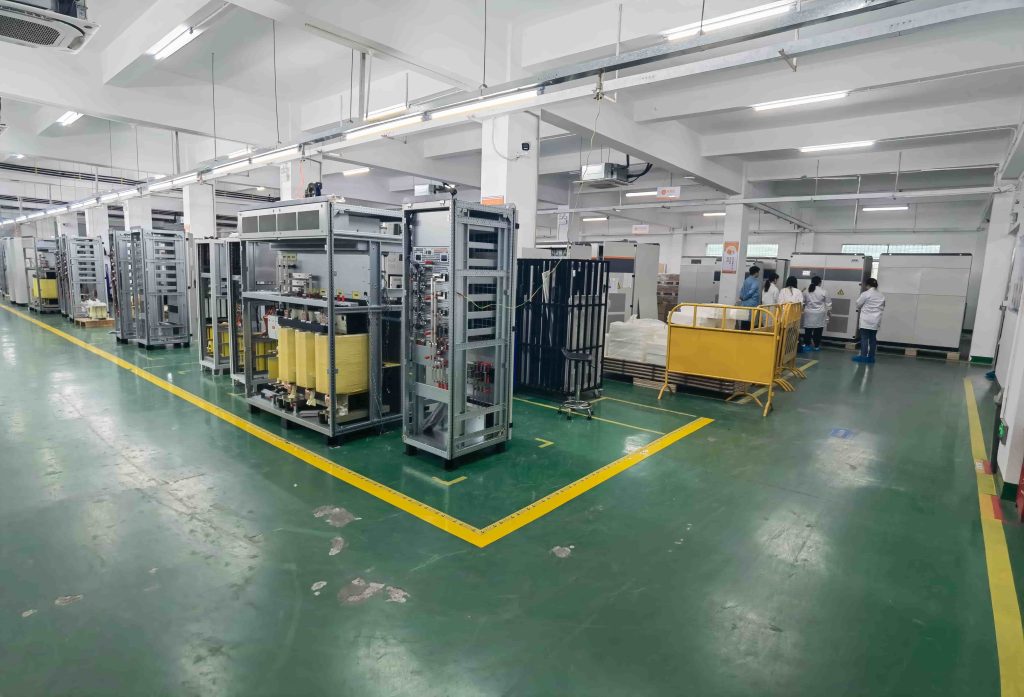
Common Procurement Failure Scenarios
Comparing suppliers only by $/kWh is the most common C&I BESS procurement failure.
A common procurement mistake occurs when buyers compare ESS suppliers only by $/kWh. A lower-priced cabinet may exclude critical project deliverables, turning initial savings into significant EPC cost increases during installation. Excluded items often include:
- Commissioning engineering and site acceptance testing (SAT)
- Grid compliance testing and active filtering tuning
- Thermal validation documents and environmental chamber FAT
- Spare module allocation for warranty replacements
- Local service support and remote diagnostic setup
When these omissions are discovered on-site, the project faces severe delays and retroactive engineering fees, destroying the intended CapEx savings.
How to Size a C&I BESS Before RFQ
Accurate system sizing is the foundational step of BESS procurement. Oversizing leads to unnecessary CapEx, while undersizing fails to achieve peak shaving ROI. EPCs must evaluate the following parameters before requesting supplier quotations:
- Load Profile Analysis: Monitor the facility's 15-minute interval power consumption over a representative 30-day period to identify baseline and peak demand.
- Peak Demand (kW): Determine the maximum power draw that needs to be shaved to avoid costly demand charges.
- Duration (Hours): Calculate how many hours per day the peak demand persists. This dictates the required battery capacity (kWh) for a given power rating (kW).
- PCS Power Rating: The Power Conversion System must be rated to handle the maximum continuous charge/discharge current and the inrush current of facility motors.
- Future Expansion: Procure a modular architecture that allows for capacity augmentation (e.g., adding parallel 215kWh cabinets) if facility loads increase in Phase 2.
The 10 Mandatory Engineering Documents (BESS Procurement Checklist)
Before signing a supply agreement, buyers must demand the following documentation from the manufacturer. If the supplier cannot provide these, the procurement process should be halted immediately to mitigate safety and financial risks.
- BOM Batch Traceability: Documentation linking the IEC 62619 cell certification to the specific production batch installed in the cabinet.
- UL 9540A Test Report: Thermal runaway propagation test results demonstrating the system's response under specified abuse conditions.
- Factory Acceptance Testing (FAT) Protocol: The documented procedure that will be executed at the factory prior to shipment, including communication latency and thermal validation.
- Grid Compliance Certificates: Evidence that the PCS meets local standards (e.g., IEEE 1547-2018, AS 4777.2, VDE-AR-N 4105).
- THDi Performance Guarantee: Written confirmation that Total Harmonic Distortion of Current remains <3% under rated load.
- Thermal Management Schematics: Detailed flow diagrams of the liquid cooling loop, including coolant viscosity specifications and antifreeze concentrations.
- Fire Suppression Schematics: Interlock logic diagrams between the BMS, fire panel, and exhaust fans (NFPA 72 compliance).
- SOH Degradation Curve: A 10-year capacity fade projection validated by internal laboratory accelerated aging tests.
- Site Acceptance Testing (SAT) Checklist: The procedure for commissioning the system upon arrival, including insulation resistance and phase synchronization tests.
- UN38.3 Test Summary: Certification for the safe global transport of lithium-ion batteries.
Ask every bidder for the same package—batch-linked—before PO.
How to Evaluate a C&I BESS Supplier Before Procurement
Beyond the document package, score every bidder on factory capability, traceability, certification scope, FAT, and after-sales support. Use the same criteria for all quotes.
|
Criteria
|
What to ask
|
Red flag
|
|---|---|---|
|
Manufacturing
|
In-house production capacity and lead time for your MWh
|
Trading company with no factory access
|
|
Traceability
|
Cell-to-cabinet BOM batch link (IEC 62619)
|
Certificates not tied to the shipped batch
|
|
Certification
|
UL 9540A / IEC 62619 scope for this configuration
|
Generic PDF, wrong model or outdated test
|
|
FAT
|
Multi-cabinet parallel + chamber test before ship
|
“We’ll test on site” only
|
|
After-sales
|
Remote diagnostics, spare modules, response SLA
|
No named engineering contact
|
If a bidder fails any row, pause the PO until the gap is closed in writing.
Identifying Hidden Costs in BESS Procurement
The CapEx line item is rarely the full project cost. Budget these three buckets before you compare bids—architecture choices can reduce them, but only if they’re specified in the RFQ.
1. Civil Engineering and Crane Logistics
A monolithic 5MWh containerized ESS can weigh over 30,000 kg and requires a reinforced concrete pad foundation and a 100-ton mobile crane. Sourcing a modular cabinet design, Prefer modular outdoor cabinets that can sit on a standard industrial slab and move with a forklift, instead of a single heavy container that needs a reinforced pad and large crane. These cabinets can be deployed on standard industrial slabs using an appropriately rated industrial forklift, eliminating heavy crane logistics and civil foundation work.
2. Grid Compliance and Harmonic Penalties
Standard inverters without advanced active power filtering often produce a THDi of 5% or more. When interconnected to the grid, this harmonic pollution can cause transformer overheating and trigger severe utility penalties. The cost of retrofitting external harmonic filters can exceed $20,000. Procurement directors should mandate a PCS with a built-in isolation transformer. Require PCS THDi < 3% (IEEE 519) with documentation. If the bid needs external filters, add that CapEx and install time to the quote comparison.
3. Mid-Life Battery Augmentation
Many commercial lithium-ion LFP systems are commonly designed around approximately 3,000–6,000 cycle warranties depending on operating conditions (C-rate, DoD, temperature, SOC window). In a heavy C&I peak-shaving application, a system rated at the lower end of this spectrum may require significant battery augmentation or replacement in Year 8, costing hundreds of thousands of dollars. Procuring a hybrid solid-state architecture, Ask for cycle life under your DoD/C-rate, the 10-year SOH curve, and whether Year-8 augmentation is assumed. Hybrid solid-state architectures targeting ≥5,000 cycles (IEC 62619) can lower mid-life replacement risk—verify on the quoted cell batch. with ≥5,000 cycles (IEC 62619 validated) supports typical 10-year commercial warranty periods with reduced battery replacement risk.
Figure 1: BESS Hidden Cost Breakdown. Battery augmentation and civil works constitute the majority of unexpected project costs over a 15-year lifecycle.
This chart illustrates why evaluating initial CapEx alone is insufficient. Procurement directors must model the full lifecycle impact of cycle life and logistical requirements.
15-Year TCO Example: Liquid LFP vs Hybrid Solid-State
Note: This TCO model is an engineering illustration rather than a universal market benchmark. Actual results vary depending on electricity tariff structure, cycling frequency, climate conditions, warranty terms, augmentation requirements, and installation requirements.
The model below compares two 1 MWh C&I systems over 15 years: a conventional liquid LFP baseline vs a hybrid solid-state architecture. Treat it as a worksheet template—swap in your tariff, cycles/day, and local civil/grid costs.
Lifecycle Cost Drivers
|
Cost Driver
|
Impact on Liquid LFP
|
Impact on Solid-State
|
|---|---|---|
|
Initial hardware
|
Lower
|
Higher
|
|
Installation
|
Higher (heavy crane/pad)
|
Lower (modular forklift)
|
|
Augmentation risk
|
High (Year 8 capacity top-up)
|
Reduced (5,000+ cycles)
|
|
Grid retrofit
|
Higher (external filters)
|
Reduced (built-in isolation)
|
|
Service complexity
|
Higher
|
Reduced
|
Step 1: Assumptions Breakdown
- System Size: 1 MWh (500 kW PCS)
- CapEx (Liquid LFP): $450,000 (Initial hardware cost)
- CapEx (Solid-State): $500,000 (Initial hardware cost)
- Civil & Logistics (Liquid): $50,000 (Container pad & heavy crane)
- Civil & Logistics (Solid-State): $10,000 (Forklift installation)
- Mid-Life Augmentation (Liquid): $200,000 (Year 8 capacity top-up)
- Mid-Life Augmentation (Solid-State): $0 (5,000+ cycles covers 15-year lifecycle)
Step 2: 15-Year TCO Calculation
|
Cost Parameter
|
Standard Liquid LFP
|
Hybrid solid-state (example)
|
|---|---|---|
|
Initial CapEx
|
$450,000
|
$500,000
|
|
Civil & Logistics
|
$50,000
|
$10,000
|
|
Grid Compliance Retrofit
|
$20,000 (THDi filters)
|
$0 (Built-in isolation)
|
|
Mid-Life Augmentation
|
$200,000 (Year 8)
|
$0
|
|
15-Year Total Cost
|
$720,000
|
$510,000
|
Mapped to MegSolid hybrid solid-state ESS configurations on request.
Step 3: Financial Results
Based on this transparent calculation, the 15-year TCO of the hybrid solid-state BESS is approximately 29% lower than the standard liquid LFP system. Although the initial CapEx of the solid-state system is higher, the elimination of mid-life augmentation and civil retrofits results in a modeled simple payback period advantage of approximately 1.5 years over the liquid LFP alternative. Example calculation only.
Figure 2: 15-Year TCO Comparison Curve. The solid-state architecture avoids the massive mid-life CapEx spike associated with liquid LFP battery augmentation.
This curve demonstrates the financial advantage of procuring a system with ≥5,000 validated cycles. The initial higher CapEx is rapidly offset by the elimination of replacement costs.
Next: map these cost drivers to a short product selection table for your site constraints.
C&I BESS Selection Guide
Match site constraints to architecture first, then request the document package and TCO inputs from the sections above.
|
Site need
|
Typical size
|
Architecture
|
Start here
|
|---|---|---|---|
|
Space-constrained factory / rooftop edge
|
~215 kWh modules, parallel as needed
|
Modular outdoor cabinet (forklift)
|
C&I cabinet / 215 kWh product
|
|
Higher density C&I, liquid-cooled
|
~261 kWh class
|
Liquid-cooled cabinet
|
261 kWh product
|
|
Multi-MWh / limited footprint tradeoff
|
1–5 MWh+
|
Containerized BESS
|
Container / 5000INTL
|
|
Weak grid / high harmonic sensitivity
|
Sized to peak kW
|
PCS with documented THDi < 3%
|
PCS / inverter page
|
Standards Referenced in This Guide
|
Standard
|
Purpose
|
|---|---|
|
IEC 62619
|
Industrial lithium battery safety requirements
|
|
UL 9540A
|
Thermal runaway propagation testing methodology
|
|
NFPA 855
|
ESS fire safety installation standard
|
|
IEEE 1547
|
Grid interconnection requirements
|
|
IEEE 519
|
Power quality and harmonic control (THDi)
|
Project Implementation Workflow
To ensure successful procurement and deployment, EPCs must follow a structured workflow from initial sizing to commercial operation.
Figure 3: BESS Procurement Workflow. A structured approach ensuring document validation and FAT before the purchase order is finalized.
This workflow ensures that all UL 9540A documentation and grid compliance schematics are validated before payment, minimizing hidden cost risks.
Get a C&I BESS Engineering Review
Send load profile, country, target kW/kWh, and grid standard—we’ll return a sizing note and the document checklist mapped to your bid.
- Load profile / peak demand (kW)
- Target capacity (kWh) and duration
- Grid voltage and interconnection standard
- Site location and ambient range
Imibuzo Ebuzwa Rhoqo
Q1: Liyintoni elona xwebhu libalulekileyo ekufuneka licelwe xa kufunyanwa i-BESS?
Ingxelo yovavanyo lwenqanaba lweyunithi ye-UL 9540A ibaluleke kakhulu. Inika iziphumo zovavanyo lokunwenwa kokuqhuba okugqithisileyo okubangelwa bubushushu, ezibonisa indlela inkqubo esabela ngayo phantsi kweemeko zokusetyenziswa gwenxa ezichaziweyo, nto leyo elunyanzeliso ukuze kufunyanwe imvume ye-AHJ kwiindawo ezininzi ezilawulayo.
Q2: Ziziphi iindleko ezifihlakeleyo zokuthenga i-BESS engabizi?
Iindleko ezifihlakeleyo ziquka ubunjineli bezakhiwo (iziseko zekhonkrithi eyomeleziweyo zeekontenela ezinzima), uhlaziyo lokuthobela umraro wombane (izihluzo zangaphandle zeharmonic ze-THDi > 5%), kunye nokongezwa kwamandla ebhetri ephakathi nobomi bayo (iibhetri zolwelo lwe-LFP ezonakaliswa luluphindaphindo lwe-3,000).
Q3: How does modular cabinet design reduce procurement costs?
Modular cabinets (e.g., 5x 215kWh) can be installed using a standard industrial forklift on existing concrete slabs, eliminating the need for a 100-ton mobile crane and reinforced foundation required by monolithic containers.
Q4: Why is a 15-year TCO model better than evaluating initial CapEx?
A 15-year TCO model accounts for mid-life battery augmentation. A system with a lower initial CapEx but only 3,000 cycles will require a $200,000+ capacity top-up in Year 8, making it more expensive over 15 years than a solid-state system with 5,000+ cycles.
Q5: What is the difference between FAT and SAT?
FAT (Factory Acceptance Testing) is conducted at the manufacturer's facility before shipment to verify functionality. SAT (Site Acceptance Testing) is conducted at the project site upon installation to verify grid interconnection and local compliance.
Q6: Does the BESS procurement checklist include BOM traceability?
Yes. BOM traceability links the IEC 62619 cell certification to the specific production batch installed. This is essential for warranty claims and isolating field anomalies without recalling the entire system.
Q7: How does solid-state chemistry reduce the 15-year TCO?
Hybrid solid-state batteries achieve ≥5,000 cycles, significantly reducing the probability of mid-life battery augmentation. They also tolerate higher ambient temperatures without thermal derating, reducing HVAC energy consumption.
Q8: What is the typical payback period for a solid-state BESS?
Based on the 15-year TCO model, the elimination of mid-life augmentation and civil retrofits results in a modeled simple payback period advantage of approximately 1.5 years over the liquid LFP alternative.
Q9: Can I visit the factory for FAT?
Yes. Direct manufacturers like MegSolid welcome EPC teams to our Huzhou, China facility for Factory Acceptance Testing (FAT) to validate the 8–10ms seamless transfer and BMS interlocks prior to shipment.
Q10: Does the system include a built-in isolation transformer?
Yes. The PCS features a built-in isolation transformer, providing galvanic isolation and ensuring THDi remains <3%, complying with IEEE 519 standards without the need for external harmonic filters.
Q11: How to avoid hidden costs in BESS procurement?
Avoid hidden costs by procuring a modular cabinet design that eliminates heavy crane logistics, demanding a PCS with a built-in isolation transformer (THDi < 3%) to avoid grid penalties, and selecting a solid-state battery with 5,000+ cycles to eliminate mid-life augmentation costs.
Q12: What is the 15-year TCO of a solid-state BESS?
The 15-year TCO of a solid-state BESS is approximately 29% lower than a standard liquid LFP system. Although the initial CapEx is higher, the elimination of mid-life battery augmentation (Year 8) and civil retrofits results in a lower total cost of ownership.
Q13: What documents are required for BESS procurement?
Buyers must request UL 9540A test reports, IEC 62619 BOM batch traceability, FAT protocols, grid compliance certificates (e.g., IEEE 1547, AS 4777.2), and a 10-year SOH degradation curve to validate the system's safety and lifecycle economics.