 Yiya kumxholo
Uvavanyo lomgangatho wamandla lwe-BESS yorhwebo lunika i-EPC, umnini kunye nomthengisi indlela efanayo yokwamkela inkqubo ye-AC efakiweyo. I-MegSolid ixhasa amaqela eeprojekthi afuna iziphumo ze-harmonic, ze-power-factor kunye nezilawulo ze-P/Q ezidityaniswe kwimitha enye ye-PCC, isiseko sexesha esinye kunye nerekhodi yobungqina enokuphononongwa. Ngethuba lokunikezelwa, isigqibo sisebenzisekayo: ingaba i-BESS ilandele imiyalelo yombane ekuvunyelwene ngayo kumda ochaziweyo phantsi kweemeko zokusebenza ezivunyelweneyo?

Eli phepha lenzelwe abathengi esele benendlela ye-cabinet, i-PCS okanye i-BESS edityanisiweyo abayicingelayo, kwaye badinga indlela yokuqalisa umsebenzi ekhusela umthwalo womsebenzi wezorhwebo. Ijongana nokusebenza kwe-AC kwindawo yokudibana. Umthamo, ukusebenza kobushushu, imisebenzi yokhuseleko kunye nonxibelelwano ngamnye unendlela yawo yobungqina; isicwangciso sokuqalisa umsebenzi kufuneka sizidibanise ngelixa zigcina imilinganiselo yazo icacile.
| Umbuzo wokunikezela | Ubungqina bokuvumelana | Isigqibo sikhuselwe |
|---|---|---|
| Ukusebenza kwamandla ombane kulinganiswa phi? | Indawo ye-PCC, isalathiso sedayagramu yomgca omnye kunye ne-ID yemitha | Umda wamkelwano we-AC ekwabelwana ngawo |
| Ingakwazi na le nkqubo ukwenza umsebenzi wayo we-power-factor? | kW, kvar, kVA, umyalelo we-power-factor kunye noloyiko lwe-priority | Ubuchule be-PCS kwindawo yokusebenza efunekayo |
| Iziphumo zeharmonic ziya kutolikwa njani? | Umgangatho osisiseko, iimeko zokusebenza, useto lwesixhobo sokuhlalutya kunye nomda weprojekthi | Uthelekiso olufanelekileyo nesinyanzeliso sokudibanisa |
| Yintoni exhasa ukugunyaziswa? | Uthumelo olungavuthiweyo, iilogi ezihambelana nexesha, ukuphambuka kunye nengxelo esayiniweyo | Ukunikezelwa kwe-EPC kunye nokusombulula iingxaki kwixesha elizayo |
Misela umda we-PCC phambi kokuba kufike izixhobo zovavanyo
Indawo yokudibanisa efanayo isoloko isisikhokelo esiluncedo kakhulu sokwamkelwa kuba ibonakalisa indawo yokudibana kombane eyaziwayo liziko kunye nenkampani yombane. Indawo yayo kanye isafanele ibe kwishedi yomgca omnye evunyiweyo. I-mitha ekwi-terminal ze-PCS, kwibhodi yombane onamandla aphantsi nakwi-PCC nganye inokubonelela ngedatha exabisekileyo, kodwa nganye ichaza inxalenye eyahlukileyo yofakelo. Inkqubo yokuqalisa umsebenzi kufuneka ichaze igama lendawo ekhethiweyo, indlela i-mitha ejongwe ngayo, imithombo yombane namandla o-current, umthombo wewotshi kunye neendima zabangqina phambi kokuba kubekho umbane.
Uvavanyo lwendawo lwandisa amalungiselelo agqityiweyo ngexesha le- Uvavanyo lokwamkelwa kwemveliso yefektri ye-BESS. I-FAT iseka ubungqina bephakheji enikiweyo phambi kokuba ithunyelwe. Ukwamkelwa kwendawo kungqina udibaniso lombane olufakelweyo, amalungiselelo okhuseleko, imephu yesilawuli kunye nemida yemitha. Ukugcina omabini la manqanaba edityanisiwe kunika umnini-ndawo umkhondo wobungqina ukusuka kulungiselelo lwasefektri ukuya kwintsebenzo yokwenene yasendaweni.
- 📍 Phawula i-PCC, isiphumo se-BESS, umthwalo wesiza kunye nokudibana kwe-utility kumzobo womgca omnye olawulwayo.
- ⏱️ Dibanisa umhlalutyi womgangatho wamandla, i-PCS event log, i-EMS record kunye nokuthunyelwa kwemitha kwireferensi enye yexesha leprojekthi.
- 🔌 Rekhoda inombolo yesiriyeli yemitha, umlinganiselo we-CT/PT, imephu yejelo, umgaqo weempawu kunye nexesha eliphakathi kwedatha.
- 🧭 Chaza indlela yokusebenza kulo lonke ugqatso: ukuphumla, ukutshaja, ukukhupha, ulawulo lwamandla asabela okanye indlela edityanisiweyo evunyiweyo yiprojekthi.
- Yabela iqela eliqala uvavanyo, elilubeka esweni, elilungisa ukuphambuka, kwaye elisayina ingxelo yokugqibela.
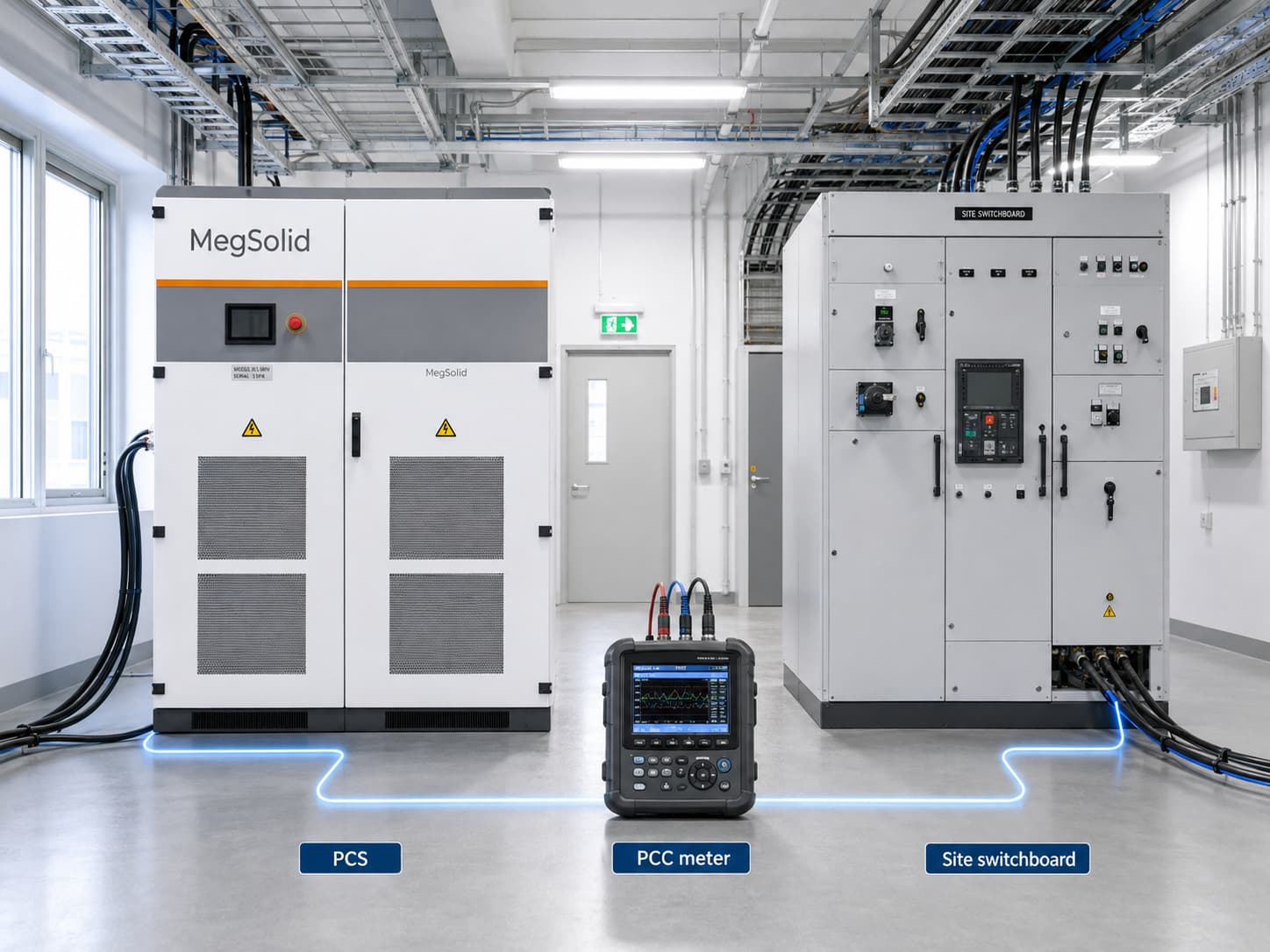
Bhala iMatrix yoVavanyo ukusuka kwiMfuno yoqhagamshelwano
Iphakheji yokudibanisa yeprojekthi kufuneka ibonelele ngomda owamkelweyo, i-avareji yefestile, iindlela zokusebenza, umda wobungqina kunye nendlela yokuphatha ukuphumelela/ukungaphumeleli. Oku kususa ukungacaci phambi kokuba umsebenzi wasentsimini uqale. Isikhokelo se-EPRI sokuqaliswa kokusebenza sidwelisa ukuqinisekiswa kokusebenza kwe-harmonic-distortion njengomsebenzi wokudibanisa kwaye sigxininisa umda ovavanyo obanzi ofunekayo xa inkqubo yokugcina isenza imisebenzi ye-four-quadrant efana nenkxaso yevoltheji okanye yefreyikhwensi. Sebenzisa i- Isikhokelo Sokufakwa Kokugcinwa Kwamandla se-ESIC njengesalathiso socwangciso ecaleni kwenkqubo yommandla esebenzayo yeenkonzo ezisisiseko.
| Uvavanyo losapho | Iimeko ezilawulwayo | Irekhodi lokwamkelwa |
|---|---|---|
| Umgangatho wamandla osisiseko | Umthwalo wesiza okhoyo kunye nemeko ye-BESS evunyelweneyo | I-voltage, i-current, i-frequency, ukungalingani, i-harmonic trend kunye ne-time window |
| Impendulo yamandla asebenzayo | Iindawo ezimisiweyo zokutshaja nokukhupha | Umyalelo, i-kW elilinganisiweyo, indlela yokunyuka kombane, i-SOC kunye nemida esebenzayo |
| Ulawulo lwe-power factor | Ubunye, izikhombo zokukhokela nezokulandela apho kufuneka khona | kW, kvar, kVA, ifaktha yamandla elinganisiweyo kunye nempendulo yomyalo |
| Uphambili lweP/Q | Ukuphambili kwamandla asebenzayo nokuphambili kwamandla asabela apho kucacisiwe khona | Ulandelelwano lomyalelo, umthamo oqunyulweyo kunye nomda wamandla abonakalayo |
| Uqinisekiso lweharmoni | Iimeko ze-BESS ezichaziweyo kunye nomthwalo we-site othelekisekayo | Uqwalaselo lwe-Analyzer, isiphumo se-THDi/THDv, i-spectrum ye-harmonic kunye nokuthunyelwa ngaphandle kwedatha ekrwada |
The document should also identify conditions that pause or reschedule a run: abnormal site load, protection alarms, incomplete communications, changing utility state or any safety hold defined by the project. That discipline gives the owner a usable test record rather than a snapshot taken during an unknown site condition. The broader EPC evaluation of energy storage systems helps place this acceptance matrix within the complete delivery scope.
Test Power Factor as an Apparent-Power Decision
Power-factor acceptance requires more than a single meter screenshot. The PCS must follow the requested active-power and reactive-power commands within its available apparent-power envelope. The engineering relationship is S² = P² + Q², where S is apparent power in kVA, P is active power in kW and Q is reactive power in kvar. When the operating point approaches the equipment limit, the approved P/Q priority determines which requested quantity receives preference.
A useful test plan therefore pairs every power-factor setpoint with an active-power setpoint, the calculated or measured kVA, the required priority and a sustained observation window. A ComEd microgrid SAT example used active-power priority, reactive-power priority, Volt/VAR control and leading/lagging power-factor control as separate acceptance functions. Its P/Q and power-factor SAT record shows why the command, measured response and apparent-power limitation belong in the same test narrative.
| Acceptance decision | Commanded condition | Evidence that resolves it |
|---|---|---|
| Can the PCS hold the required power factor? | Specified kW plus leading or lagging PF setpoint | Time-stamped P, Q, S and measured PF |
| Which function takes priority at the kVA limit? | P-priority or Q-priority sequence | Command, limiting event and resulting curtailment trace |
| Can site voltage support be demonstrated? | Approved Volt/VAR curve or reactive-power command | Voltage, kvar response, mode status and project comparison |
| Can the owner audit the result later? | Approved duration and sampling interval | Raw analyzer export plus PCS/EMS event log |
PCS architecture and control interfaces deserve their own review before the test day. The PCS and grid-compliance engineering guide covers the interface questions that shape the test plan, while the PCS and BMS integration guide helps teams define command authority, BMS limits and feedback signals before commissioning.
Run Harmonic Tests With a Baseline and Controlled Operating States
A harmonic result has value when the test team can distinguish the BESS contribution from the site condition. Start with a baseline at the agreed PCC and retain the concurrent facility load, grid voltage and equipment state. Repeat the measurement during each relevant BESS mode. The report can then show how the waveform changed as the project moved through its approved charge, discharge and reactive-power states.
- 📊 Capture the baseline with the same analyzer, CT/PT arrangement and time reference used for the operating runs.
- ⚡ Use the interconnection document to select each BESS operating point, loading interval and harmonic-reporting method.
- 📈 Preserve harmonic spectrum, THDi and THDv values where the project requires them, plus the accompanying voltage and current data.
- 🏭 Record major site loads, variable-speed drives, PV inverters, generators and switching events that influence the PCC waveform.
- 📝 Log deviations with the test time, source device, corrective action and retest outcome.
Avoid a universal project limit in a supplier article. The contractual target belongs to the utility agreement and applicable study. Product-level PCS data can support a preliminary test matrix: the MegSolid MEGA0030TS–MEGA0500TS PCS series publishes grid-current THD below 3% and adjustable power factor from 1 lagging to 1 leading. The supplied model, controller version, site voltage, connection arrangement and project test method determine the acceptance comparison.
Confirm the Test Envelope With Model-Level Product Data
Published ratings help an EPC prepare a realistic test envelope. They never replace the signed project datasheet, single-line diagram and interconnection requirement. MegSolid keeps model data separate so that a rated energy value, a kW value, a kVA value and a PCS performance value retain their own engineering meaning.
| Model or component route | Verified public data | Power-quality planning use |
|---|---|---|
| ESSA0100B-0215 | 100kW AC; 215.04kWh; LFP; ukupholisa komoya okukrelekrele | Define the required active-power duty, PCC boundary, operating mode and recorded thermal condition for the installed model |
| Meg-Solid Energon-261kWh | 261.24kWh; 125kVA; 314Ah LFP; 1P260S; liquid cooling | Pair any kW and reactive-power command with the agreed apparent-power envelope and site acceptance method |
| PMA080 / PMA0105 / PMA0125 | 80 / 105 / 125kW rated AC power; grid-current THD below 2%; adjustable PF from -1 to +1 | Use the exact selected PCS model in the controlled test matrix |
| MEGA0030TS–MEGA0500TS | 30–500kW rated power; 33–550kVA maximum apparent power; grid-current THD below 3% | Review kW, kVA, PF and isolation-transformer route together for the selected model |
I- 100kW / 215kWh outdoor BESS selection guide helps with the earlier system-sizing decision. For a liquid-cooled route, the Meg-Solid Energon product page provides the current public product route. The published 90% figure for the 261.24kWh system is maximum system efficiency; it remains separate from a project round-trip-efficiency requirement and from a site acceptance result.
Temperature management also belongs in the test record because it provides the operating context for a controlled run. The liquid-cooled and air-cooled BESS selection guide addresses the equipment decision. An acceptance record should state ambient conditions and the active thermal-management state for the supplied configuration.
Build an Evidence Package That Supports Commercial Handover
A passing display becomes useful commercial evidence when the owner can reproduce the story from controlled records. The acceptance package should let a future operations team trace a meter reading to the relevant equipment state, control command and contract clause. This also shortens technical review when a project later changes its dispatch profile, adds load or investigates a reported deviation.
- 📄 Approved test procedure, document revision and acceptance clause.
- 🗺️ Controlled single-line diagram with the PCC and measurement chain marked.
- 🧪 Analyzer identification, setup record, calibration evidence where the contract requires it and raw export files.
- 🧠 PCS, BMS and EMS records showing mode, command, feedback, limits, alarms and timestamps.
- 📌 Baseline and operating-run comparison with site-load context and any corrective-action record.
- ✍️ Acceptance summary stating witness roles, open items, retest result and approved handover status.
I- commercial energy storage procurement guide shows where these documents fit into supplier responsibility, warranty boundaries and project interfaces. Power-quality acceptance gives that procurement scope a measurable field record.

Prepare the Acceptance Plan Before the Site Test
Detailed engineering is the right stage to settle a power-quality test, while the team can still select meter locations, reserve test windows and map the control interfaces. Share the proposed model, single-line diagram, PCC definition, interconnection requirement, required kW/kvar/kVA duty, power-factor range, control modes, site-load profile and owner sign-off format. MegSolid can use those inputs to frame a project-specific acceptance discussion around the actual operating duty.
Imibuzo Ebuzwa Rhoqo
What is commercial BESS power-quality testing?
It is a controlled site test that verifies electrical behaviour through an agreed AC measurement boundary. The team records voltage, current, frequency, active power, reactive power, apparent power, power factor and harmonic data for defined BESS operating states. The result supports project acceptance when it is compared with the approved interconnection and commissioning requirements.
Where should BESS power quality be measured?
The project should identify one acceptance boundary on the controlled single-line diagram, often the PCC. The selected location should match the commercial duty and utility interface. Record the meter ID, CT/PT ratios, sign convention, time source and data interval so every party can trace the final result to the same electrical point.
Which electrical values belong in a BESS power-quality report?
A useful report includes kW, kvar, kVA, power factor, voltage, current, frequency and the project-required harmonic values. It also includes BESS mode, PCS command, measured response, SOC, active limits and the concurrent site-load condition. Time-synchronised records make the electrical data useful during both handover and later diagnostics.
Why does a power-factor test need kVA as well as kW?
kW represents active power and kVA represents apparent power. Reactive power consumes part of the available apparent-power envelope, so a setpoint must be evaluated as a combined P and Q operating point. The test should record kW, kvar, kVA, measured power factor and the selected P/Q priority to explain the result clearly.
What is P/Q priority in a BESS acceptance test?
P/Q priority defines which requested output receives preference as the inverter approaches its apparent-power limit. Active-power priority preserves the kW duty as far as the approved capability allows. Reactive-power priority preserves the kvar duty. The commissioning record should show the command sequence, measured response and any resulting curtailment.
Why is a baseline needed before harmonic testing?
The PCC waveform can be influenced by existing site loads, drives, generators, PV inverters and grid conditions. A baseline measured with the same instrument and wiring arrangement creates the comparison point for BESS operating states. The final report can then connect changes in harmonic data with the actual operating condition rather than an unexplained snapshot.
Who sets the harmonic and power-factor acceptance limit?
The applicable utility or interconnection requirement, project technical annex and approved study establish the contractual criterion. The test procedure should state the required limit, calculation method, averaging window, operating point and witness process before the field run. Product-page figures help scope equipment capability, while the project documents define acceptance.
How do FAT and site acceptance testing work together for BESS power quality?
FAT provides factory evidence for the delivered package and approved functional scope. Site acceptance verifies the installed PCC, protection interfaces, metering chain, controller mapping and live operating conditions. Linking the two records lets the owner compare the configured system with the completed project and identify the correct evidence source during technical review.
Does a 125kVA BESS deliver the same kW at every power factor?
The kW available at a given operating point depends on the required reactive-power duty and the approved apparent-power capability. A 125kVA value expresses apparent capacity, so the test plan should state the active-power setpoint, reactive-power request, power factor and P/Q priority. Use the signed model documents for the exact project envelope.
What evidence should an owner receive after BESS power-quality testing?
The handover package should include the approved procedure, single-line diagram, meter and analyzer details, raw exports, operating-state logs, test summary, comparison with the acceptance criterion, deviation record and signatures. This structure lets operations teams understand the measurement boundary and reproduce the project decision when conditions change later.
How should a United States commercial BESS project organise power-quality acceptance?
Align the procedure with the local utility interconnection agreement, project study and witness process. Define the PCC meter, test states, data format, protection coordination and record retention before energisation. IEEE-based requirements may apply through the local project documents; the exact test scope belongs to the approved utility and owner package.
How should a South African C&I BESS project document power-quality testing?
Use the applicable municipal or utility interconnection requirements together with the approved single-line diagram and project acceptance procedure. Record the PCC measurement chain, site-load conditions, BESS mode, power-factor commands and raw analyzer export. This creates an evidence package that the EPC, facility team and local network stakeholder can review from the same boundary.
How should a Saudi Arabia BESS project account for high ambient temperature during testing?
Record the actual ambient temperature, BESS thermal-management state, output duty, active limits and test time beside the power-quality data. The project procedure should use the supplied model’s approved operating envelope and any project-specific derating documents. That context keeps the electrical acceptance record tied to the actual test condition.
Yintoni uvavanyo lokwamkelwa komgangatho wamandla lwe-BESS?
Uvavanyo lokwamkelwa lomgangatho wamandla lwe-BESS yinkqubo yokuqalisa elawulwayo ethelekisa ukusebenza kombane okulinganisiweyo kumda we-AC ovunyelwene ngawo nemigangatho emisiweyo yeprojekthi. Ngokuqhelekileyo iquka impendulo yefactor yamandla, ukubekwa phambili kwe-P/Q, idatha ye-harmonic kunye neerekhodi ezixhasayo zemitha, izilawuli kunye neziganeko. Le nkqubo isayiniweyo ichaza iimeko zokusebenza kunye nothelekiso lokwamkelwa.
Yeyiphi idatha ekufuneka irekhodwe ngexesha lovavanyo lomgangatho wamandla e-BESS?
Ngenisa indawo ye-PCC, isazisi semitha, useto lwe-analyzer, umthombo wexesha, ivoltage, i-current, i-frequency, i-kW, i-kvar, i-kVA, i-power factor kunye nedatha ye-harmonic efunekayo kwiprojekthi. Yongeza imo yokusebenza ye-BESS, umyalelo we-PCC, impendulo elinganisiweyo, i-SOC, umda okhutheleyo, imeko yomthwalo wesiza kunye nayo nayiphi na irekhodi le-alam okanye lokuphambuka. Gcina idatha ekrwada ethunyelweyo kunye nengxelo esayiniweyo.
Yintoni umnini ekufuneka ayivume phambi kokuqaliswa kokusebenza kwe-BESS malunga nomgangatho wamandla?
Vuma imida yokulinganisa, isalathiso sedayagramu yomgca omnye, ulungiselelo lwezixhobo zovavanyo, iimeko zokusebenza, imiyalelo yamandla kunye namandla asabela, uphahla lwe-P/Q, indlela ye-harmonic, imigqaliselo yokwamkelwa, iindima zabangqina, indlela yokugcina idatha kunye nenkqubo yokuphambuka. Oku kuvunywa kunika i-EPC kunye nomthengisi isiseko esinye esicacileyo sokwenza uvavanyo lwasenkundleni nokulungiselela ingxelo yokunikezela.
