 الانتقال إلى المحتوى
Global Electricity Gap and Strict Requirements for New Energy Storage Systems
Germany’s industrial energy storage market is shifting from grid support functions to core infrastructure roles. The same trend is amplified in power-deficit regions such as Africa, South Asia, and the Middle East, where أنظمة تخزين الطاقة often function as primary or critical power supply infrastructure.
Engineering requirements in these regions are defined by operational constraints rather than financial metrics:
- Continuous high-temperature operation capability (45–55°C)
- Long maintenance-free operation cycles (≥6 months without site intervention)
- Long lifecycle stability (>6000 cycles @ 80% DoD)
- Weak-grid / off-grid parallel operation capability
- Stable power output under fluctuating load conditions
These parameters determine whether a system can operate reliably as infrastructure in underdeveloped grid environments.
Physical Limitations of Conventional Liquid Lithium Batteries in Hot Climate Regions
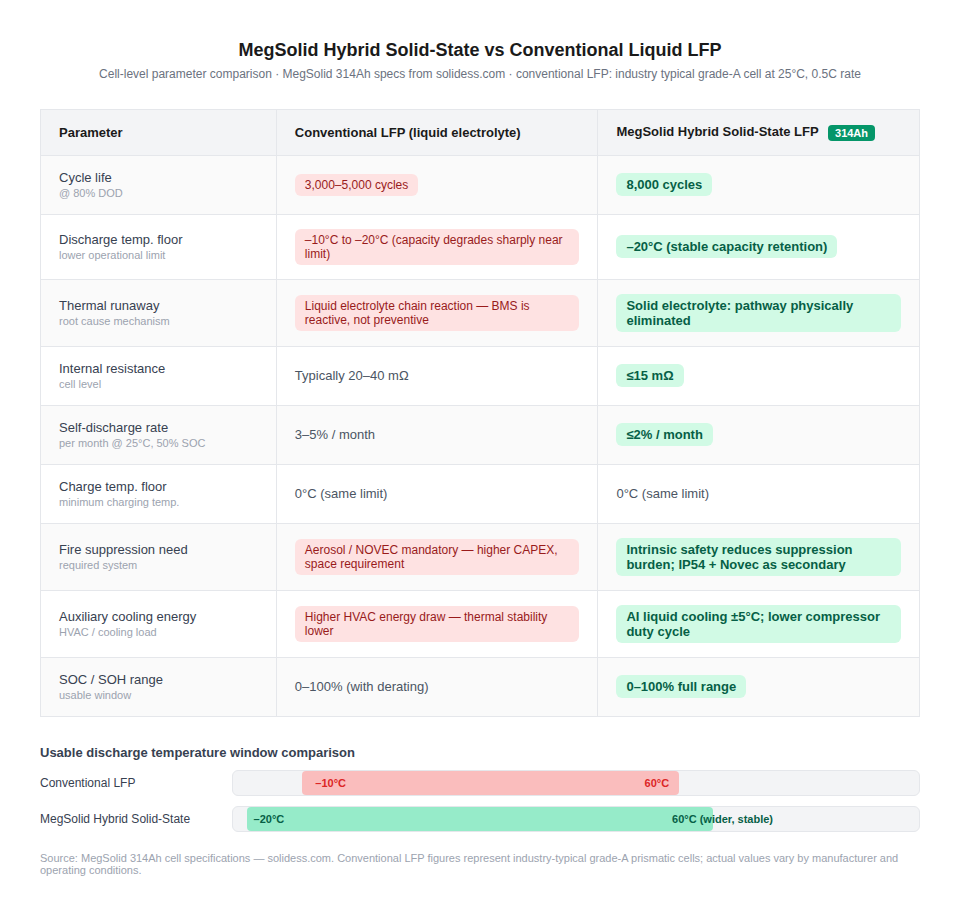
Liquid lithium-ion batteries exhibit well-defined degradation mechanisms under high-temperature conditions.
Electrolyte thermal instability
At elevated temperatures (>45°C):
- Organic carbonate electrolytes accelerate evaporation
- Continuous decomposition and regeneration of SEI layers
- Increased lithium dendrite formation probability
This results in accelerated capacity fade and reduced cycle consistency.
Increased thermal runaway risk
Under high state-of-charge (SOC) and high temperature conditions:
- Cathode oxygen release is triggered
- Electrolyte oxidation reactions accelerate
- Internal short-circuit probability increases
Additional thermal management systems (air conditioning or liquid cooling) are required in hot climate deployments.
Increased auxiliary system dependency
Typical deployments require:
- HVAC or liquid cooling systems
- Thermal control modules
- Frequent maintenance of cooling infrastructure
This significantly increases system complexity and operational overhead.
Strong Demand for “Maintenance-Free” and Long-Life Systems in Off-Grid Microgrids
In power-deficit countries and remote regions, maintenance capability is a critical constraint.
Typical field conditions include:
- Lack of professional battery maintenance personnel
- Long inspection cycles
- Unstable spare parts supply chains
- Limited monitoring infrastructure
Therefore, system design priorities focus on:
- Long-term operational stability
- Reduced on-site maintenance dependency
- Remote recoverability and monitoring
Battery lifetime stability directly determines system continuity in off-grid architecture.
Global Leading Solid-State Battery Manufacturers’ Technology Roadmap
Asian Manufacturing Cluster: Transition Toward Large-Capacity Cells and Semi-Solid-State Systems
The Asian energy storage industry is converging around large-capacity cell platforms:
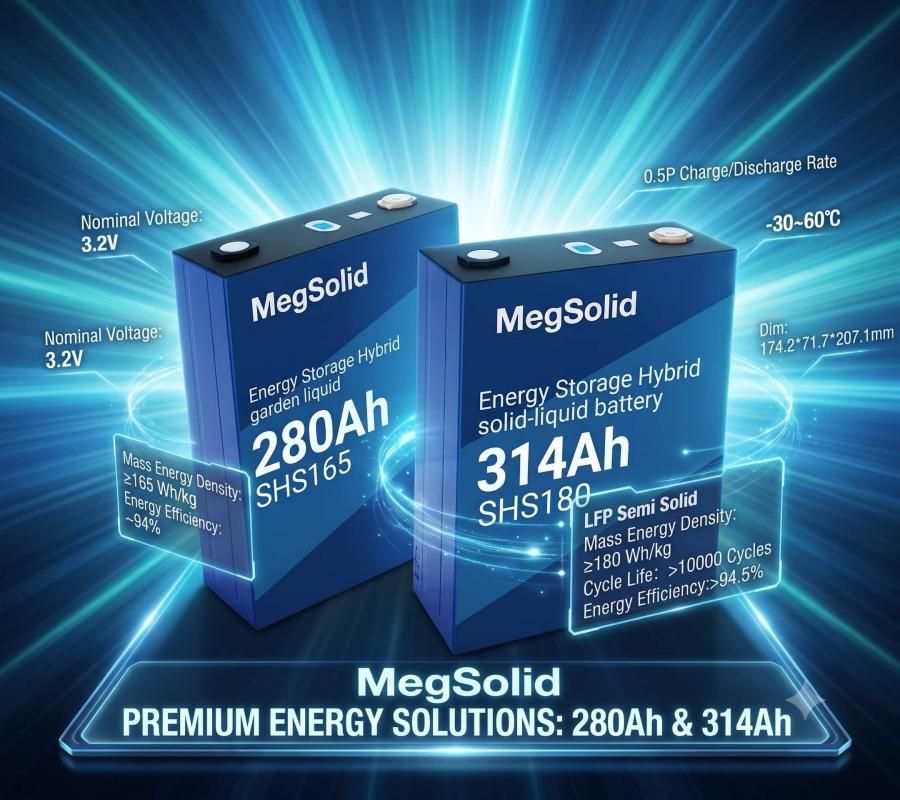
- 280Ah / 314Ah cells becoming mainstream
- Semi-solid-state technologies entering cabinet-level applications
- Structural optimization for higher energy density and consistency
Key engineering developments:
- Thicker electrode coating to increase volumetric energy density
- Optimized tab structures to reduce internal resistance
- Higher PACK integration reducing external system complexity
Challenges remain:
- Manufacturing consistency in large-format cells
- Narrower process control windows
- Sensitivity to upstream material fluctuations
European and US Startup Matrix: Extreme Environment Solid-State Material Systems
Some European and German-focused companies are developing:
- Inorganic ceramic solid electrolytes
- Oxide/sulfide composite electrolyte systems
- High-stability interfacial coating technologies
Technical objectives include:
- Higher thermal stability (>80°C material-level stability)
- Reduced flammability risk
- Improved long-term material durability
Engineering constraints:
- High manufacturing complexity (sintering and deposition processes)
- Difficult consistency control at scale
- Limited large-scale production capacity
Cost and Performance Trade-offs: Engineering Barriers of Full Solid-State Commercialization
Key engineering challenges of full solid-state batteries:
|
Dimension |
Full Solid-State |
Hybrid / Semi-Solid-State |
|---|---|---|
| Interface impedance | High | Medium to low |
| Manufacturing maturity | Low | Medium-high |
| Production complexity | High | Moderate |
| Large-scale storage suitability | Limited | Proven applicability |
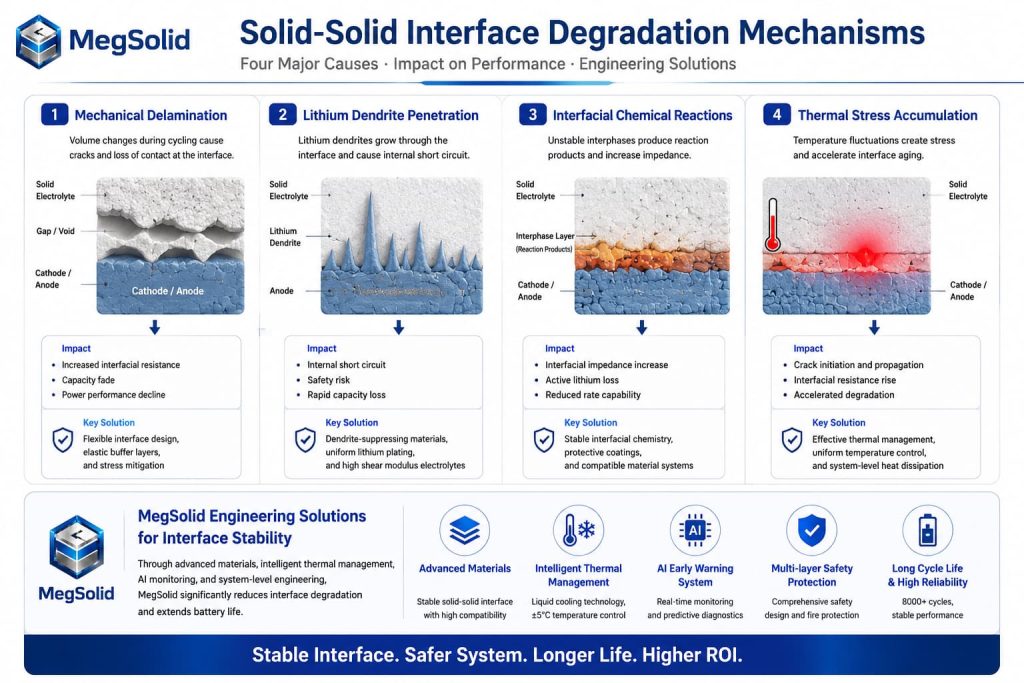
Core issues include:
- Instability of solid-solid interfaces
- Micro-crack propagation due to volume changes
- Complex high-pressure manufacturing processes
Therefore, full solid-state technology is currently more suitable for niche applications rather than large-scale energy infrastructure deployment.
MegSolid Hybrid Solid-State Advantages
ميغ صوليد adopts a hybrid solid-state electrolyte system focused on structural stability and environmental adaptability at the energy storage cabinet level.
Flexible Composite Electrolyte: Mechanical Stress Management
The hybrid solid-state structure combines:
- Polymer electrolyte phase
- Inorganic ceramic filler phase
Engineering functions:
- Mitigation of volume expansion during charge/discharge cycles
- Reduction of interfacial crack propagation
- Improved cycling structural consistency
System-level impact:
- Improved module structural stability
- More uniform stress distribution in PACK design
- Smoother long-term degradation behavior
Wide Temperature Operation Capability for No-Cooling Environments
The system is designed for high-temperature and high-radiation environments:
- Stable operation above 50°C
- Reduced dependence on active cooling systems
- Lower thermal management system complexity
Applicable environments:
- Desert regions
- Tropical high-humidity regions
- Weak infrastructure power regions
Cost and Delivery Logic for Power-Deficit Markets
The hybrid solid-state approach emphasizes:
- Compatibility with mature lithium battery production lines
- Upgrade-based manufacturing process
- Reduced supply chain dependency
Engineering outcomes:
- Suitable for mass production of storage cabinets
- Compatible with standardized export projects
- Predictable delivery and deployment cycles
Reshaping Off-Grid Ecosystems: “PV + Solid-State Storage” Integration
Transient Support and Power Quality Stabilization in Weak Grids
Typical scenarios include:
- Diesel generator switching transients
- Rapid photovoltaic output fluctuations
- Grid frequency instability
System functions:
- Instantaneous power support
- Voltage fluctuation smoothing
- Improved power continuity
Modular Cabinet Integration and Decentralized Deployment
Energy storage systems are designed as standardized cabinets:
- Factory pre-assembled systems
- Plug-and-play installation
- Multi-cabinet parallel expansion
Engineering advantages:
- Reduced on-site construction complexity
- Shorter installation and commissioning time
- Faster project replication capability
Overseas Energy Project Procurement and Compliance Guidelines
Transportation Ratings and Certification Systems
Typical export requirements include:
- UN38.3 lithium battery transportation safety test
- IEC 62619 industrial battery safety standard
- CE electrical safety certification
- UL grid interconnection certification
- Class 9 dangerous goods shipping compliance
Hybrid solid-state systems offer engineering advantages:
- Lower thermal runaway risk
- Improved structural stability during transport
- Higher safety margin in logistics handling
Supplier Capability Evaluation Framework
Key evaluation dimensions include:
- Production continuity and capacity stability
- Verified high-temperature operation datasets
- Overseas spare parts response mechanisms
- BMS/EMS system maturity
- Local technical support capability
These factors determine operational continuity in real-world deployments.
MegSolid Positioning in Germany and European Market
In Germany and Europe, energy storage applications are segmented:
- Grid-scale applications: high stability systems
- Commercial & industrial storage: lithium and semi-solid hybrid adoption
- Off-grid international deployments: hybrid solid-state priority
MegSolid focuses on:
- High-temperature environmental adaptability
- Long-cycle operational stability
- Standardized energy storage cabinet delivery
- Weak-grid compatibility
The system design prioritizes engineering reliability and scalable deployment capability rather than laboratory-level material limits.
الأسئلة الشائعة
السؤال 1: ما هو الفرق الرئيسي بين بطاريات الليثيوم الهجينة ذات الحالة الصلبة وبطاريات الليثيوم التقليدية في المناخات الحارة؟
تقلل الأنظمة الهجينة ذات الحالة الصلبة من تقلب الإلكتروليت وعدم الاستقرار الحراري من خلال الجمع بين المراحل البوليمرية وغير العضوية، مما يحسن الاستقرار عند درجات حرارة تزيد عن 50 درجة مئوية مقارنةً بأنظمة الليثيوم السائلة التي تتطلب تبريدًا نشطًا.
السؤال 2: لماذا تتدهور بطاريات الليثيوم التقليدية بسرعة أكبر في مناخات أفريقيا وجنوب آسيا؟
تؤدي درجة الحرارة المحيطة المرتفعة إلى تسريع تحلل الإلكتروليت، وعدم استقرار طبقة SEI، وزيادة المقاومة الداخلية، مما يؤدي إلى تدهور السعة بشكل أسرع وارتفاع مخاطر التعطل.
السؤال 3: هل أصبحت بطاريات الحالة الصلبة الكاملة جاهزة للاستخدام على نطاق واسع في تخزين الطاقة؟
تواجه الأنظمة الحالية التي تعتمد بالكامل على تقنية الحالة الصلبة مقاومة عالية في الواجهة وتعقيدًا في التصنيع، مما يحد من استخدامها ليقتصر على تطبيقات متخصصة بدلاً من التخزين على نطاق الشبكة.
السؤال 4: ما الذي يجعل البطاريات الهجينة ذات الحالة الصلبة مناسبة للشبكات الصغيرة غير المرتبطة بالشبكة الرئيسية؟
فهي توفر تشغيلًا مستقرًا على مدى دورات طويلة، وتقلل من احتياجات الصيانة، وتتمتع بقدرة أفضل على تحمل الظروف البيئية غير المستقرة في المناطق النائية.
السؤال 5: هل لا تزال الأنظمة الهجينة ذات الحالة الصلبة تحتاج إلى أنظمة تبريد؟
In many deployments, cooling requirements are significantly reduced, and in some high-temperature scenarios, simplified thermal management is sufficient.
Q6: What is the typical lifespan of hybrid solid-state energy storage systems?
Engineering designs target long-cycle stability beyond 6000 cycles at 80% depth of discharge, depending on operating conditions.
Q7: Can hybrid solid-state batteries operate in desert environments?
Yes. They are designed for high-temperature environments above 50°C and can operate under sand, dust, and high radiation conditions with reduced cooling dependency.
Q8: How do modular energy storage cabinets improve deployment speed?
Factory pre-assembled cabinet systems allow plug-and-play installation, reducing on-site construction and commissioning time.
Q9: What certifications are required for exporting energy storage systems to Europe?
Common requirements include UN38.3, IEC 62619, CE marking, and in some cases UL certification for grid-connected applications.
Q10: What factors determine long-term reliability of energy storage suppliers?
Key factors include production stability, environmental test data, spare parts availability, and maturity of BMS/EMS systems.
