
South African deep-level mining operations face an existential threat from dual forces: persistent Eskom load shedding and mounting global pressure to decarbonize. According to the Minerals Council South Africa (MCSA) Annual Report, power disruptions cost the mining sector billions of Rand annually. Furthermore, the International Council on Mining and Metals (ICMM) mandates aggressive decarbonization targets, making diesel backup generation for underground ventilation economically and environmentally unsustainable.
Standard liquid lithium-ion Battery Energy Storage Systems (BESS) pose severe thermal runaway risks in confined underground shafts. Deploying them near critical life-safety infrastructure violates strict mine safety protocols. A mine energy storage system must simultaneously address safety, power continuity, and decarbonization requirements. This engineering approach reflects the design philosophy adopted in ميغ صوليد's mining-oriented BESS solutions for high-risk industrial environments.
In this guide you'll learn:
- Why Eskom load shedding threatens underground mine ventilation and life-safety compliance.
- How solid-state chemistry mitigates thermal runaway risks in confined underground spaces.
- Engineering strategies for integrating BESS with high-inertia loads like ventilation fans and hoists.
- How to calculate the transparent ROI of diesel replacement in remote mining operations.
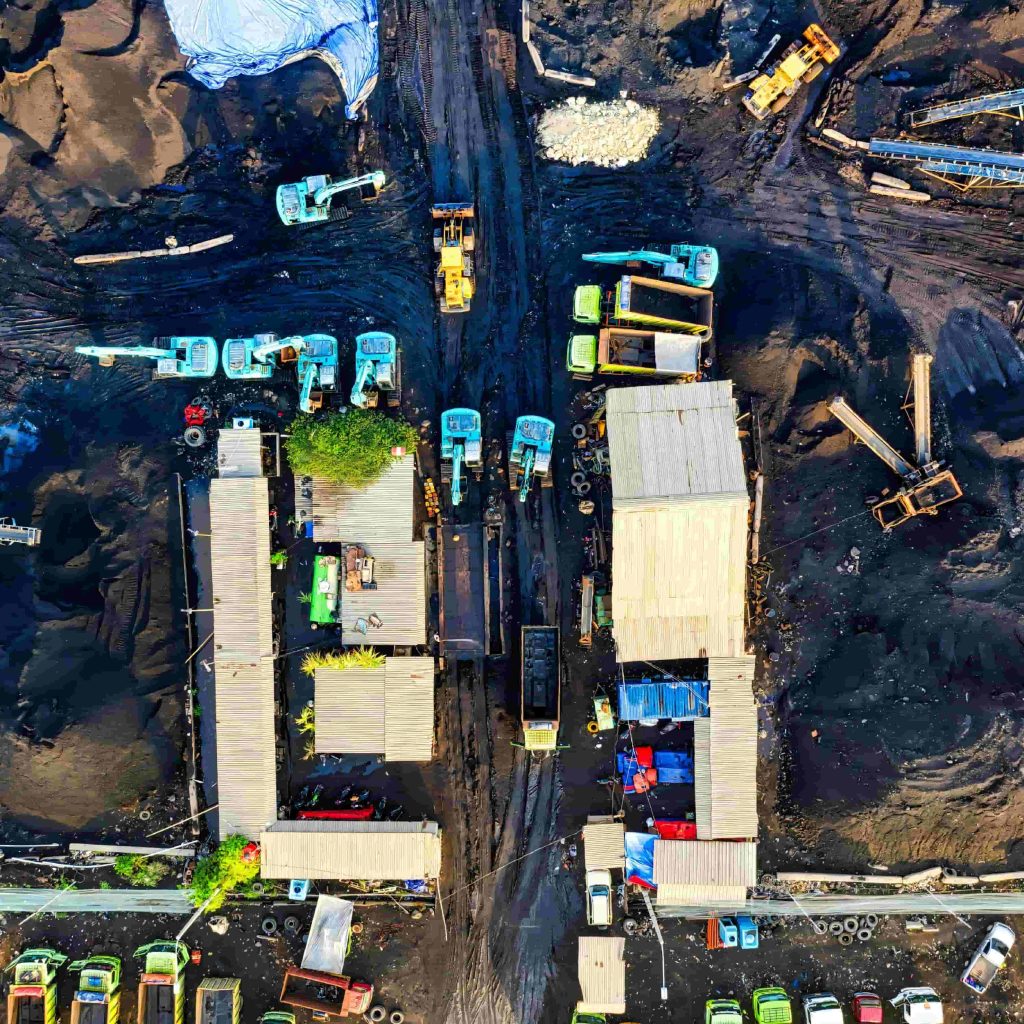
The Underground Life-Safety Challenge During Load Shedding
Deep-level mining in South Africa (e.g., gold and platinum reefs in the Witwatersrand basin) relies heavily on continuous ventilation and water pumping. Ambient rock temperatures can exceed 60°C, requiring massive surface ventilation fans to force cooled air underground.
Ventilation Failure and Methane Accumulation
When Eskom implements Stage 4 or Stage 6 load shedding, grid power is lost. If backup diesel generators fail to sync within seconds, ventilation stops. According to ISO 19296 (Mining Machinery Safety), a ventilation interruption exceeding 15 minutes creates a critical risk of methane accumulation and heat stress for personnel. Standard transfer switches cause a 10-30 second power break, which can trip high-inertia fan motors and damage variable speed drives (VSDs).
Solid-State Chemistry for Underground Deployment
Deploying BESS underground or in adjacent surface bomb shelters requires stringent fire safety compliance under the South African Mine Health and Safety Act (MHSA). Conventional liquid-electrolyte lithium-ion systems, including many LFP-based architectures, rely on flammable electrolyte formulations that require dedicated thermal propagation management.
Mitigating Thermal Runaway Propagation
Modern hybrid solid-state architectures utilize a stable solid electrolyte matrix. Designed according to UL 9540A evaluation methodology, this chemistry is designed to reduce the release of flammable electrolyte under thermal stress compared with conventional liquid-electrolyte systems. Depending on site-specific hazard assessments and local mining regulations, the reduced thermal propagation characteristics may simplify civil protection requirements compared with conventional liquid-electrolyte systems. MegSolid hybrid solid-state systems are engineered around this safety philosophy, combining cell chemistry, BMS, PCS coordination, and thermal management into a unified protection architecture. (For foundational knowledge, read our دليل BESS لمنع الانفلات الحراري).
Engineering High-Inertia Load Support
Mining ventilation fans and cage hoists present unique engineering challenges compared to standard C&I loads. They possess high rotational inertia and require massive reactive power during startup.
PCS Synchronization and Reactive Power Support
The Power Conversion System (PCS) must feature a built-in isolation transformer and advanced grid-forming capabilities. When a ventilation fan (often 500kW+) starts, the inrush current can destabilize a weak microgrid. The EMS commands the BESS to inject instantaneous reactive power to support the grid voltage, preventing the VSDs from tripping offline. The ultra-fast 8–10ms switching time ensures the VSDs ride through the grid transfer without resetting. In MegSolid deployments, PCS control logic is optimized for high-inertia industrial loads such as mine ventilation fans and hoisting systems. This is a critical component of a robust microgrid solution for weak grid environments.
Thermal Resilience in High-Dust and High-Humidity Environments
South African mining environments present extreme ambient conditions, including high dust particulates (silica) and high humidity from cooling sprays. Standard outdoor cabinets suffer from filter clogging and condensation.
IP54 Enclosure and Liquid Cooling Engineering
The BESS utilizes an IP54-rated enclosure to prevent silica dust ingress into high-voltage compartments. Furthermore, the intelligent liquid cooling system is a closed-loop design, meaning it does not rely on external air for heat exchange. This advanced liquid cooling ESS technology allows the system to maintain a strict temperature gradient even in 40°C ambient heat and 95% humidity, without thermal derating.
How Much Can South African Mines Save? (Transparent ROI Derivation)
The primary search intent for mining EPCs is understanding the financial return of replacing diesel with BESS in remote operations. According to the International Energy Agency (IEA), mining off-grid diesel costs are projected to remain volatile, further improving BESS margins. A credible ROI model requires a step-by-step financial derivation based on local assumptions.
Step 1: Assumptions Breakdown
- Diesel Baseline: 1,000 Liters/day @ R 25.00/L = R 25,000/day ($1,350/day).
- Load Profile: 500kW continuous ventilation load.
- Battery Degradation Cost: 2% capacity fade per year, requiring a $ 6,000/year replacement reserve.
- CapEx: 1MWh BESS + 500kW PCS = $ 480,000 (Based on average 2025 EPC turnkey quotations for mining-grade IP54 systems; representative engineering assumption for ROI modelling only).
Step 2: Calculation Steps
- Diesel Offset: BESS handles 80% of the backup runtime (grid handles 20%). *Savings = 800 Liters/day * R 25.00 = R 20,000/day ($1,080/day).
- Demand Charge Reduction: BESS shaves 200kW of peak fan startup load. *Savings = $ 50/day.
- Gross Daily Savings: $1,080 + $50 = $1,130/day.
- Annual Gross Savings: $1,130 * 330 operating days = $372,900.
- Net Annual Savings (after degradation): $372,900 - $6,000 = $366,900.
Step 3: Financial Results
Based on this transparent calculation, the modeled payback period for a South African mining operation is approximately 1.3 years. The modeled 10-year project return can exceed 35% under favorable operating conditions, depending on diesel consumption, tariff structures, and load shedding frequency.
Figure 1: 10-Year Cumulative Cash Flow. The initial CapEx is recovered within 1.3 years, followed by sustained operational savings driven by diesel offset.
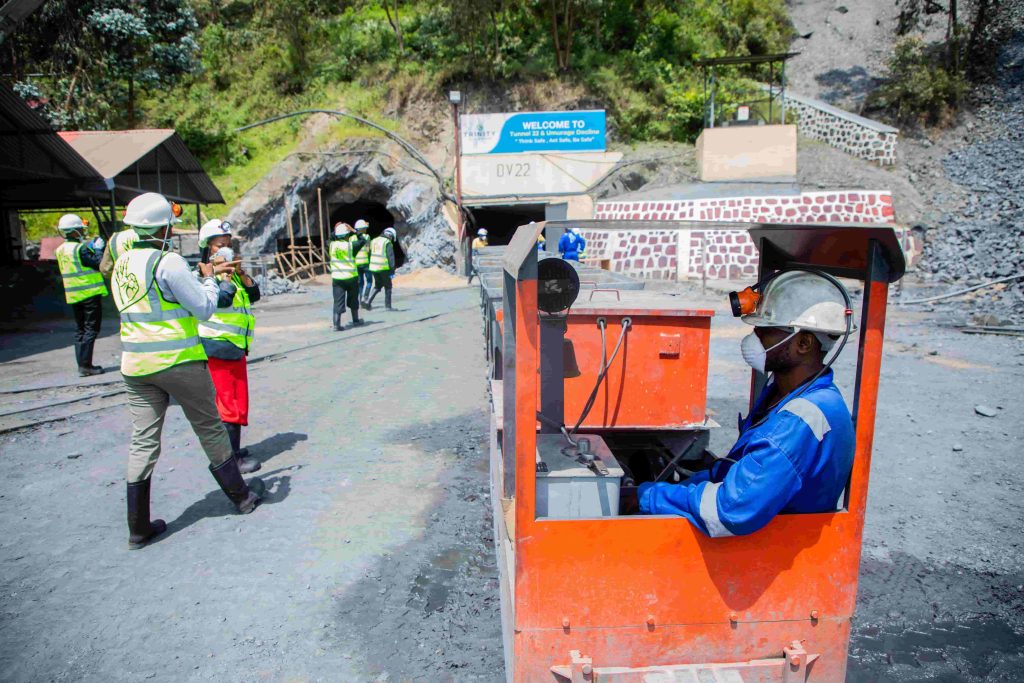
Field Experience: 2025 Platinum Mine Deployment in Rustenburg
Case Verification Statement: Project data presented in this section is based on internal commissioning records, FAT documentation, and anonymized engineering reports. Customer identity is withheld due to confidentiality obligations.
In Q1 2025, a deep-level platinum mine in Rustenburg faced severe safety compliance issues due to ventilation trips during Eskom Stage 6 load shedding. To solve this, a 1MWh hybrid solid-state BESS array was deployed in a surface bomb shelter, integrated with the 500kW main ventilation fan.
Project Parameters & System Configuration
- Project Type: Deep Platinum Mine
- الموقع: North West Province, South Africa
- Installed Capacity: 1 MWh (5x 215kWh cabinets)
- PCS: 500 كيلوواط
- التشغيل: March 2025
- Ambient: 41.5°C (measured)
Engineering Lessons Learned (Based on commissioning records)
- VSD Ride-Through: During FAT, engineers observed repeated VSD trips whenever the mine switched from Eskom supply to battery mode. Oscilloscope measurements showed a transient phase displacement of approximately 9°. After modifying the PCS PLL synchronization window and extending the synchronization hold time by 40 ms, the VSD remained online during subsequent switching tests.
- Silica Dust Mitigation: The initial air filter design clogged within 2 weeks due to fine silica dust. The system was upgraded with a cyclonic pre-filter separator before the IP54 intake, extending maintenance intervals to 6 months.
- High-Temperature Performance: During a summer heatwave where the ambient temperature was measured at 41.5°C, the intelligent liquid cooling system maintained the internal battery rack temperature at a stable 31°C, with no thermal derating.
Verifiable Project Outcomes
- Ventilation Continuity: Maintained uninterrupted ventilation fan operation during the monitored 68 load shedding events in Q1 2025, verified using EMS event logs.
- Diesel Reduction: Reduced underground diesel generator runtime by 80%, eliminating toxic exhaust gases in the shaft.
- Safety Compliance: No thermal runaway hazards were identified during the documented site acceptance inspection.
- Note: Results vary depending on site configuration, local tariffs, and environmental conditions.
Underground Mining BESS Safety Architecture
Understanding the electrical and safety topology is critical for ensuring that the BESS supports high-inertia loads without tripping protection relays or violating MHSA regulations.
Figure 2: Underground Mining BESS Safety Architecture. Surface BESS integration with dedicated fire/thermal monitoring, powering critical underground loads via protected shaft cables.
Project Implementation Workflow
To ensure successful mining deployment, EPCs must follow a structured engineering workflow from initial site assessment to commercial operation.
Figure 3: Project Implementation Workflow. A structured approach ensuring mine safety compliance at every stage.
Engineering Comparison: Diesel Genset vs. Solid-State BESS for Mining
Mine operators must evaluate the total cost of ownership and safety profile of their backup power systems.
|
Metric
|
Underground Diesel Genset
|
Solid-State BESS
|
|---|---|---|
|
Ventilation Continuity
|
Low (10-30 sec break)
|
High (8-10ms seamless)
|
|
Underground Safety
|
High Risk (Toxic exhaust)
|
High Safety (No emissions)
|
|
VSD Ride-Through
|
Poor (Phase jumps trip VSDs)
|
Excellent (PLL Pre-synchronization)
|
|
Maintenance (Dust/Humidity)
|
High (Frequent filter changes)
|
Low (Closed-loop liquid cooling, IP54)
|
|
Diesel Logistics Cost
|
High (Remote transport)
|
Zero (Uses grid/off-peak power)
|
|
Overall Economics
|
Negative (OPEX drain)
|
Reduced fuel dependency (Modeled payback: 1.3 yr)
|
Engineering Checklist for Selecting a Mining-Ready BESS Manufacturer
The following engineering checklist reflects the evaluation criteria commonly applied by MegSolid engineering teams during mining EPC projects. When evaluating suppliers, EPC contractors should prioritize manufacturers capable of demonstrating FAT records, mining-grade environmental testing, documented UL 9540A evaluations, and proven high-inertia load integration.
MegSolid is one example of a manufacturer providing this level of integration. Operating as a direct manufacturer, MegSolid offers comprehensive التصنيع وفقًا لمعايير OEM/ODM services for global mining EPC partners. (Explore our C&I outdoor cabinet ESS for modular mining deployments).
المراجع والمعايير الصناعية
MegSolid's engineering design and testing protocols align with the following regulatory frameworks and industry standards:
- MCSA: Minerals Council South Africa Annual Report.
- ICMM: International Council on Mining and Metals Decarbonization Guidelines.
- IEA: International Energy Agency Mining Energy Outlook.
- MHSA: South African Mine Health and Safety Act.
- ISO 19296: Mining machinery safety requirements.
- UL: 9540A Standard for Safety of Energy Storage Systems and Equipment.
- IEEE: 1547-2018 Standard for Interconnection and Interoperability of Distributed Energy Resources.
- IEC: 62619 Safety requirements for secondary lithium cells and batteries in industrial applications.
- NFPA: 855 Standard for the Installation of Stationary Energy Storage Systems.
الأسئلة الشائعة
السؤال 1: لماذا تُعد كيمياء الحالة الصلبة ضرورية لنظام تخزين الطاقة بالبطاريات (BESS) في التعدين تحت الأرض؟
تعتمد أنظمة الإلكتروليت السائل التقليدية على تركيبات قابلة للاشتعال. وقد صُممت كيمياء الحالة الصلبة لتقليل انبعاث الإلكتروليت القابل للاشتعال تحت الضغط الحراري، مما يوفر مستوى أمان أعلى للاستخدام تحت الأرض.
السؤال 2: كيف يمنع نظام BESS انقطاع تشغيل مراوح تهوية المناجم أثناء عمليات تخفيف الأحمال؟
يتميز نظام PCS بنقل سلس يستغرق 8–10 مللي ثانية مع مزامنة مسبقة باستخدام PLL. وهذا يمنع حدوث قفزة في زاوية الطور التي تؤدي إلى انقطاع تشغيل محركات السرعة المتغيرة (VSD) التي تتحكم في المراوح.
السؤال 3: هل يمكن لنظام تخزين الطاقة بالبطاريات (BESS) أن يتحمل مستويات الغبار والرطوبة العالية في مناجم جنوب أفريقيا؟
نعم. يستخدم النظام غلافًا بمعيار IP54 مزودًا بمرشح أولي للغبار من النوع الدوامي ونظام تبريد سائل ذي حلقة مغلقة لا يعتمد على الهواء الخارجي للتبادل الحراري.
السؤال 4: ما هو العائد على الاستثمار المعتاد عند استبدال الديزل بأنظمة تخزين الطاقة بالبطاريات (BESS) في قطاع التعدين؟
استنادًا إلى حسابات شفافة تشمل تعويض استهلاك الديزل وتخفيض رسوم الطلب، تبلغ فترة الاسترداد المتوقعة حوالي 1.3 سنة. ويمكن أن يتجاوز العائد المتوقع للمشروع على مدى 10 سنوات 35% في ظل ظروف تشغيل مواتية.
السؤال 5: هل يتوافق النظام مع معايير السلامة في المناجم في جنوب أفريقيا؟
نعم. تم تصميم النظام وفقًا لمنهجية التقييم UL 9540A، وهو يتوافق مع قانون الصحة والسلامة في المناجم في جنوب أفريقيا (MHSA) ومتطلبات المعيار ISO 19296.
Q6: How does the EMS handle high-inertia loads like cage hoists?
The EMS commands the BESS to inject instantaneous reactive power during the startup of high-inertia loads, supporting the grid voltage and preventing VSD trips.
Q7: Is the BESS safe to install near critical infrastructure?
Yes. The solid electrolyte matrix is fundamentally more stable than volatile liquid electrolytes, significantly reducing the probability of thermal runaway propagation.
Q8: What communication protocols are supported for remote monitoring?
The EMS Controller supports Ethernet-based Modbus TCP for SCADA integration, allowing remote monitoring of ventilation continuity, SOC, and system health.
Q9: How fast must a microgrid inverter switch to prevent factory downtime?
A microgrid inverter must switch typically within 8–10ms under pre-synchronized conditions. Industrial PLCs generally have a ride-through capability of 10-20ms.
Q10: What are Network Demand Charges, and how does BESS reduce them?
Network Demand Charges are fees based on a facility's peak power draw. The EMS discharges the BESS during peak load periods to "shave" the peak, reducing the measured demand and lowering the monthly charge.
Q11: How to ensure mine ventilation continuity during load shedding?
دمج نظام تخزين الطاقة بالبطاريات (BESS) ذي الحالة الصلبة مع وحدة تزويد الطاقة (PCS) التي تتميز بنقل سلس يستغرق 8–10 مللي ثانية ومزامنة مسبقة باستخدام دائرة PLL. ويمنع ذلك محركات السرعة المتغيرة (VSD) لمراوح التهوية من الانقطاع أثناء الانتقال من الشبكة إلى البطارية، مما يضمن استمرار تدفق الهواء.
Q12: Is battery energy storage safe for underground mining?
Yes, if using solid-state chemistry. Solid-state batteries are designed to reduce flammable electrolyte release, mitigating thermal runaway risks in confined underground spaces, complying with MHSA and ISO 19296 standards.
Q13: How does BESS reduce mining operational costs?
BESS replaces expensive and logistically challenging diesel generators. By charging during off-peak grid hours and discharging during load shedding, it eliminates diesel fuel costs and reduces maintenance, yielding a typical payback period of 1.3 years.
Get Your Custom Microgrid Engineering Consultation
For technical consultation, microgrid system selection, OEM/ODM cooperation, and distributor opportunities, contact our engineering team:
المبيعات العالمية والمقر الرئيسي (هونغ كونغ):
الشقة رقم 7، الطابق 11، المبنى C، مركز هانغ واي الصناعي، 6 شارع كين تاي، توين مون، هونغ كونغ
- البريد الإلكتروني: [email protected]
- الهاتف: +852 59811073
منشأة البحث والتطوير والتصنيع (هوتشو):
جمهورية الصين الشعبية، مقاطعة تشجيانغ، مدينة هوتشو، منطقة تايهو الجنوبية الجديدة، شارع منغشي رقم 898
- الموقع الإلكتروني: https://www.solidess.com/