 Aller au contenu
Selecting a commercial battery energy storage manufacturer is one of the most important decisions during an energy storage project. A competitive quotation does not necessarily indicate strong engineering capability, consistent manufacturing quality, or reliable project delivery.
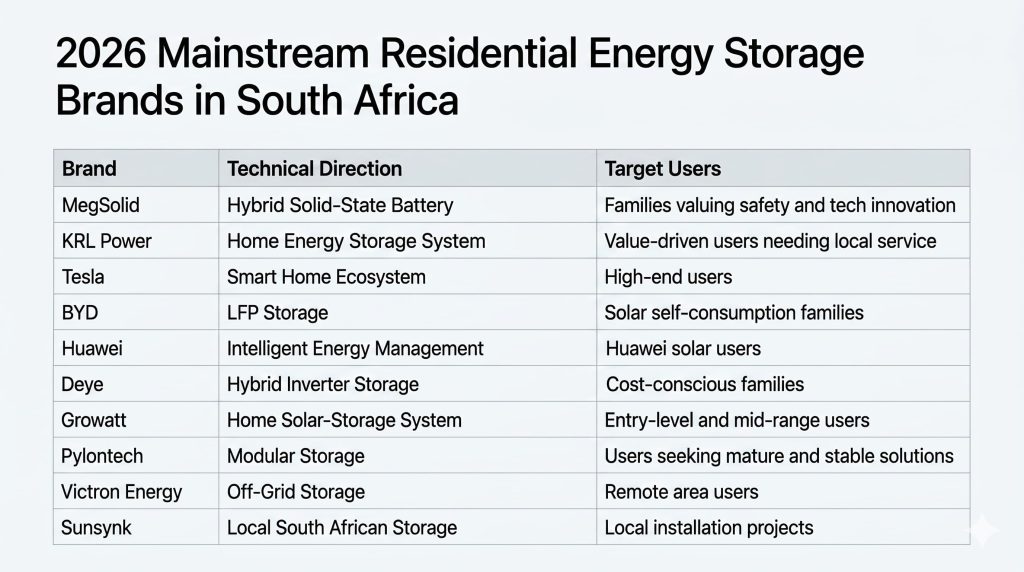
MegSolid manufactures hybrid solid-state battery energy storage systems, outdoor cabinet ESS, containerized ESS, PCS products, and OEM/ODM solutions for global EPC contractors. However, the evaluation framework in this guide is designed to help buyers compare any commercial battery energy storage manufacturer objectively before requesting a quotation.
Focusing on engineering evidence instead of marketing claims allows procurement teams to reduce technical risk, shorten project schedules, and improve long-term system reliability.
Why Choosing the Right Commercial Battery Energy Storage Manufacturer Matters
Many buyers compare manufacturers based on price, warranty period, and battery capacity.
These factors are important, but they rarely determine whether a project will be delivered successfully.
Commercial battery energy storage systems combine batteries, PCS equipment, thermal management, fire protection, software, and electrical integration into a complete engineered system. A manufacturer that lacks integration capability may create commissioning delays, documentation gaps, or long-term maintenance challenges even if the initial quotation appears competitive.
The objective of supplier selection is therefore not to identify the lowest price, but to identify the manufacturer with the lowest engineering risk.
What Defines a Qualified Commercial Battery Energy Storage Manufacturer?
A qualified commercial battery storage manufacturer should demonstrate measurable engineering capability throughout the project lifecycle.
Instead of relying on company introductions, buyers should request technical evidence that confirms manufacturing consistency and engineering competence.
The following evaluation areas should be reviewed before requesting a formal quotation.
|
Evaluation Area |
Ce que les acheteurs doivent vérifier |
Procurement Value |
|---|---|---|
| Compétences en ingénierie | ESS integration, PCS, EMS, BMS | Lower commissioning risk |
| Capacités de production | Production process and quality control | Stable product quality |
| Documentation | Engineering drawings and manuals | Faster project execution |
| Compliance | Test reports and certifications | Simplified approvals |
| Delivery Capability | Production planning and logistics | Predictable schedules |
| Technical Support | Engineering response and warranty | Lower lifecycle cost |
A manufacturer capable of providing engineering evidence across all six areas generally offers greater long-term value than suppliers competing only on price.
Compare Engineering Capability Before Comparing Product Specifications
Product specifications describe performance.
Engineering capability determines whether that performance can be delivered consistently across multiple projects.
Before comparing battery capacities or cycle life, procurement teams should understand how each battery energy storage manufacturer manages complete system integration.
Key evaluation topics include:
- ESS system architecture
- PCS integration
- EMS functionality
- BMS protection strategy
- Gestion thermique
- Fire suppression integration
- Factory testing methodology
Manufacturers with integrated engineering teams are usually able to resolve technical issues more efficiently during design, commissioning, and after-sales support.
MegSolid's commercial ESS portfolio combines outdoor cabinet systems, containerized solutions, PCS products, and batterie hybride à semi-conducteurs technology within a unified engineering platform, helping maintain consistency from design verification through manufacturing and delivery.

Manufacturing Transparency Creates Procurement Confidence
Production capacity alone does not indicate manufacturing quality.
Procurement teams should focus on manufacturing transparency rather than factory size.
A professional commercial ESS manufacturer should be able to explain how products move through production, inspection, testing, and final validation.
Useful evidence includes:
- Production workflow documentation
- Incoming quality inspection procedures
- Assembly quality control
- Electrical testing records
- Factory Acceptance Test procedures
- Product traceability system
Transparent manufacturing processes enable buyers to understand how quality is controlled before equipment is delivered to site.
Engineering Documentation Should Influence Supplier Selection
Engineering documentation provides objective evidence that cannot be replaced by product brochures.
Before requesting quotations, buyers should compare the completeness of documentation supplied by each commercial battery energy storage manufacturer.
Typical documentation includes:
- General Arrangement Drawing
- Single Line Diagram
- Fiche technique de la batterie
- Fiche technique PCS
- Communication Architecture
- FAT Procedure
- SAT Procedure
- Operation Manual
- Warranty Documentation
Well-prepared documentation reduces engineering uncertainty while simplifying design review and project approval.
Procurement Tool: Commercial Battery Energy Storage Manufacturer Scorecard
The following scorecard can be used during supplier comparison before issuing an RFQ.
|
Evaluation Category |
Weight |
Score (0–10) |
|---|---|---|
| Compétences en ingénierie | 25% | |
| Manufacturing Transparency | 20% | |
| Documentation Quality | 15% | |
| Compliance Readiness | 15% | |
| Factory Acceptance Testing | 10% | |
| Delivery Capability | 10% | |
| Technical Support | 5% | |
This evaluation method helps procurement teams compare manufacturers using measurable engineering criteria instead of subjective impressions.
Common Mistakes When Selecting a Commercial Battery Energy Storage Manufacturer
Many procurement risks originate before the RFQ stage.
Common mistakes include selecting suppliers primarily on purchase price, accepting marketing brochures instead of engineering documentation, skipping manufacturing verification, overlooking factory testing procedures, and assuming that product certifications automatically guarantee project compliance.
Each of these decisions increases engineering uncertainty and may lead to higher costs during installation or commissioning.
A structured comparison process allows buyers to identify capable manufacturers before commercial negotiations begin.
FAQ
Q1 : Comment choisir le bon fabricant de systèmes de stockage d'énergie par batterie à usage professionnel ?
Le choix d'un fabricant de systèmes de stockage d'énergie par batterie à usage commercial doit se fonder en priorité sur ses capacités techniques plutôt que sur le prix. Les acheteurs doivent déterminer si le fabricant est en mesure de concevoir, fabriquer, tester et assurer le suivi d'un système de stockage d'énergie (ESS) complet tout au long de son cycle de vie. Un fournisseur disposant de processus d'ingénierie transparents et d'une expérience avérée en matière de projets constitue généralement un choix moins risqué qu'un concurrent qui mise principalement sur le prix.
Q2 : Que doivent vérifier les acheteurs avant de choisir un fabricant de systèmes de stockage d'énergie par batterie à usage professionnel ?
Before selecting a manufacturer, buyers should confirm that the supplier has the engineering and manufacturing capability required for commercial projects.
Key verification items include:
Capacités de production
Engineering integration
Quality management system
Essais de réception en usine (FAT)
Engineering documentation
Documentation relative à la conformité
Warranty support
Reviewing these areas before issuing an RFQ helps reduce procurement risk and improves supplier selection.
Q3 : Comment les acheteurs peuvent-ils comparer deux fabricants de systèmes de stockage par batterie à usage professionnel ?
Il ne faut jamais comparer deux fabricants de systèmes de stockage par batterie à usage commercial uniquement sur la base de la capacité des batteries ou du devis. Les acheteurs devraient plutôt évaluer les compétences techniques, la transparence du processus de fabrication, l’expérience en matière de réalisation de projets, la qualité de la documentation, la conformité aux normes et l’assistance technique. Comparer les fabricants à l’aide de critères techniques mesurables permet d’avoir une vision beaucoup plus claire de la valeur à long terme d’un projet.
Q4 : Un fabricant d'ESS à usage commercial est-il différent d'un fournisseur de batteries ?
Oui. Un fournisseur de batteries propose généralement des cellules ou des modules de batterie, tandis qu'un fabricant commercial de systèmes de stockage d'énergie (ESS) fournit une solution complète de stockage d'énergie qui intègre des batteries, un système de conversion de puissance (PCS), un système de gestion de l'énergie (EMS), un système de gestion des batteries (BMS), un système de gestion thermique, des systèmes de protection et la documentation technique au sein d'une seule et même plateforme commerciale.
Q5 : Pourquoi les compétences techniques sont-elles importantes lors du choix d'un fabricant de systèmes de stockage d'énergie par batterie ?
Les capacités d'ingénierie déterminent si un fabricant est en mesure d'intégrer avec succès tous les sous-systèmes d'un système de stockage d'énergie (ESS) au sein d'une solution commerciale fiable. En l'absence de ressources d'ingénierie suffisantes, les projets peuvent être confrontés à des révisions de conception, à des retards de mise en service, à des problèmes de communication ou à des coûts d'exploitation plus élevés tout au long du cycle de vie, même si l'équipement lui-même répond aux spécifications de base.
Q6: Should buyers choose a local manufacturer or a battery energy storage manufacturer in China?
Location should not be the primary selection criterion. Instead, buyers should compare engineering capability, manufacturing consistency, documentation quality, Factory Acceptance Testing procedures, delivery performance, and after-sales support. Many global EPC contractors work successfully with battery energy storage manufacturers in China when these engineering requirements can be fully demonstrated.
Q7: What documents should a commercial battery energy storage manufacturer provide before an RFQ?
Engineering documentation is one of the strongest indicators of manufacturer capability.
Typical documents include:
Plan d'ensemble (GA)
Schéma unifilaire (SLD)
Fiche technique de la batterie
Fiche technique PCS
Description fonctionnelle de l'EMS
Procédure d'essai de réception en usine
Warranty Documentation
These documents enable engineering teams to review system capability before commercial negotiations begin.
Q8: Why should buyers compare manufacturers before requesting quotations?
Comparing manufacturers first helps procurement teams eliminate suppliers that cannot meet technical or project requirements. Once only technically qualified manufacturers remain, commercial quotations become easier to evaluate because engineering capability has already been verified. This approach shortens procurement cycles and reduces project uncertainty.
Q9: What makes a reliable commercial battery energy storage manufacturer?
A reliable commercial battery energy storage manufacturer demonstrates consistent engineering capability, transparent manufacturing processes, complete technical documentation, structured quality management, and responsive technical support. Rather than relying on marketing claims, buyers should evaluate manufacturers using verifiable engineering evidence throughout the supplier qualification process.
Q10: How can buyers identify long-term value instead of simply choosing the lowest quotation?
The lowest quotation rarely represents the lowest total project cost. Buyers should compare manufacturers based on engineering quality, manufacturing capability, documentation completeness, Factory Acceptance Testing, delivery reliability, warranty support, and lifecycle service. Evaluating these factors together helps identify suppliers capable of delivering long-term value rather than short-term cost savings.
Q11: How do I find a reliable commercial battery energy storage manufacturer?
A reliable commercial battery energy storage manufacturer should be evaluated using engineering capability instead of marketing claims. Buyers should review manufacturing transparency, technical documentation, Factory Acceptance Testing procedures, compliance readiness, delivery capability, and long-term technical support before selecting a supplier. This evaluation process helps reduce procurement risk and improves project reliability.
Q12: What should EPC contractors look for in a commercial battery energy storage manufacturer?
EPC contractors should prioritize manufacturers that can demonstrate complete system integration, documented engineering capability, transparent manufacturing processes, and structured project delivery. A qualified commercial battery energy storage manufacturer should also provide comprehensive engineering documentation, quality management procedures, and technical support throughout the project lifecycle.
Q13: How can buyers compare commercial battery energy storage manufacturers before issuing an RFQ?
Buyers should compare manufacturers using engineering evidence rather than quotations alone. Important evaluation criteria include manufacturing capability, engineering integration, documentation quality, compliance readiness, Factory Acceptance Testing, delivery performance, and warranty support. Completing this comparison before issuing an RFQ allows procurement teams to shortlist technically qualified manufacturers and improve procurement efficiency.
Résumé
Choosing the right commercial battery energy storage manufacturer requires far more than comparing quotations or battery specifications. Engineering capability, manufacturing transparency, technical documentation, compliance readiness, and project delivery should all be evaluated before requesting a formal proposal. Procurement teams that establish objective comparison criteria early in the supplier selection process are more likely to reduce project risk, improve commissioning efficiency, and achieve predictable long-term system performance. Manufacturers able to demonstrate these capabilities through verifiable engineering evidence provide greater confidence throughout the entire procurement lifecycle.
