 Skip to content
Choosing a commercial energy storage supplier is not a battery price decision. It is an engineering risk decision involving:
- Safety compliance and thermal runaway mitigation
- Lifecycle degradation and mid-life augmentation risk
- Installation complexity and civil engineering constraints
- Long-term service and diagnostic capability
For EPC contractors, IPPs, industrial facility owners, and energy developers, evaluating battery storage companies solely on initial $/kWh is a procurement trap. This engineering guide provides the framework to evaluate battery energy storage systems (BESS), ensuring your selected supplier can deliver safe, compliant, and profitable industrial energy storage.
Need Help Evaluating a Commercial BESS Supplier?
Secure your project timeline with our standardized verification tools.
Is Commercial Energy Storage Suitable for Your Project?
Before issuing an RFQ, EPCs must verify that a commercial battery storage system aligns with the facility's operational profile.
|
Application Scenario |
BESS Suitability |
Recommended Focus |
|---|---|---|
| Factory Peak Shaving | ✓ Suitable | High C-rate capability, demand charge reduction |
| Solar Self-Consumption | ✓ Suitable | Cycle life (≥5,000 cycles), EMS ToU arbitrage |
| Diesel Generator Hybrid | ✓ Suitable | Grid-forming PCS, <10ms off-grid switching |
| Microgrid Backup | ✓ Suitable | UL 9540A safety, explosion control compliance |
| Grid Services (FCAS) | ✓ Suitable | Fast response time, AEMO/API integration |
If your project falls into these categories, proceed with rigorous supplier evaluation.
Core Parameters for Evaluating Battery Storage Companies
When assessing battery storage companies, procurement teams must demand verifiable engineering data across three core pillars.
1. Battery Chemistry and Lifecycle Degradation
LFP describes the cathode chemistry, while solid-state describes the electrolyte architecture. These classifications are not mutually exclusive. MegSolid’s ESSA0100B-0215 outdoor C&I platform can be configured with solid-state battery cells according to project requirements. Procurement teams should require the quotation, signed datasheet and BOM to identify the exact cell model, electrolyte architecture, cycle-life test conditions and certification scope.
2. Thermal Runaway Propagation Risk
Fire safety and AHJ approval are paramount. Liquid electrolytes vaporize and propagate fire rapidly. Procurement teams should verify that the supplier utilizes a solid electrolyte matrix that provides a wider thermal stability window and lower thermal propagation tendency. Systems should be designed according to UL 9540A evaluation methodology to mitigate cell-to-cell propagation risk. (For foundational knowledge, read our BESS thermal runaway prevention guide).
3. Grid Code Compliance (PCS Tuning)
A commercial battery storage system must interconnect seamlessly. Standard inverters may produce THDi >5%, leading to utility penalties. EPCs should mandate that the supplier integrates PCS with built-in isolation transformers, designed to achieve <3% THDi under specified grid conditions, complying with IEEE 519 standards without external retrofits.
Physical Footprint & Logistics Evaluation
The physical footprint, transport dimensions, equipment weight, lifting points, foundation loads and maintenance clearances can materially affect BESS installation cost and project schedules. EPC teams should compare these requirements using model-specific general arrangement drawings and verified logistics data.
- Large containerized BESS: Request the complete transport weight, point loads, center of gravity, lifting plan, foundation requirements, access clearances and on-site assembly scope. Crane and civil-work requirements depend on the selected model and site conditions rather than capacity alone.
- Modular outdoor cabinets: The ESSA0100B-0215 is a 100kW/215.04kWh intelligent air-cooled outdoor C&I energy storage platform. Its referenced technical table lists dimensions of 2,450 × 1,550 × 2,400mm and a net weight of approximately 3,900kg. The platform can be configured with solid-state battery cells according to project requirements.
The final cell model, electrolyte architecture, operating weight, center of gravity, lifting points, forklift requirements and foundation loads must be confirmed in the signed project datasheet, general arrangement drawing and BOM.
A modular cabinet architecture may simplify phased installation and future capacity expansion. However, the EPC must still verify slab loading, equipment access and the approved lifting method for the specific project.
Field Deployment Example: Southeast Asia Industrial Site
- Project Type: Industrial manufacturing facility
- Application: PV self-consumption + peak shaving
- System: 5 × 215kWh outdoor ESS cabinets
- Deployment: 2025
- Observed Result: Reduced onsite installation duration from 5 working days to <2 working days
How to Verify a Commercial Energy Storage Supplier Before RFQ Approval
Before entering technical discussions, procurement teams must verify the foundational reliability of the supplier.
|
Verification Item |
Purpose |
|---|---|
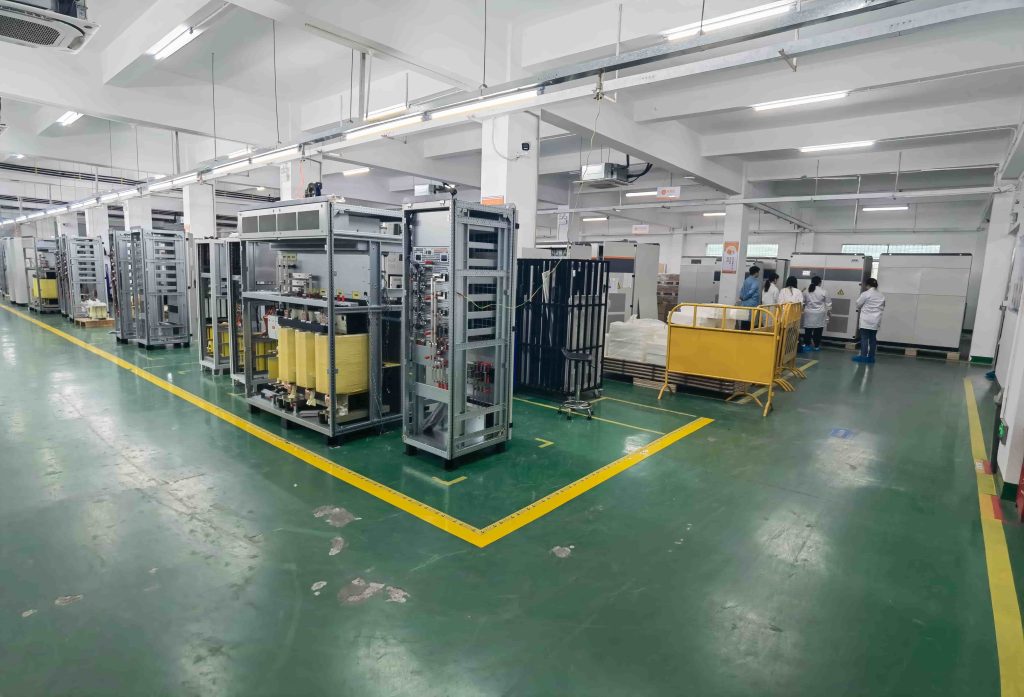
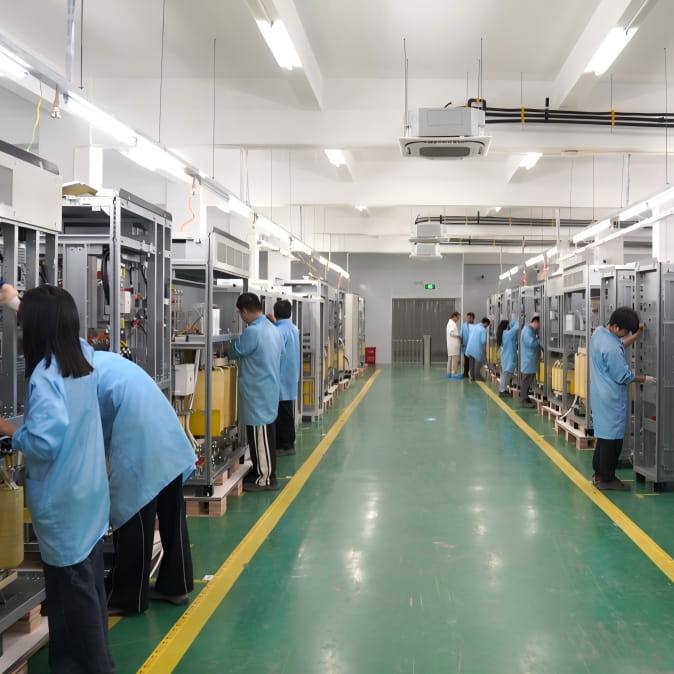
| Factory Audit | Confirm manufacturing capability and automated production lines |
| Cell Traceability | Verify quality control and consistency via IEC 62619 batch records |
| Production Capacity | Ensure delivery reliability and adherence to project lead times |
| Warranty Terms | Clarify lifecycle risk, capacity fade guarantees, and augmentation policies |
| Service Network | Confirm O&M support availability and remote diagnostic capabilities |
What EPC Contractors Should Ask Battery Storage Companies
To verify engineering claims, EPC procurement teams must ask these technical questions during the RFQ phase:
- Is the solid-state claim supported by cell-level documentation? Request IEC 62619 certification and impedance spectroscopy data.
- What is the thermal validation method? Ask for UL 9540A unit-level test reports.
- How is SOH degradation modeled? Request 10-year capacity fade projections under C&I peak-shaving profiles.
- Can the supplier provide PCS compatibility data? Verify custom-tuned firmware for <3% THDi and IEEE 1547 compliance.
- Does the supplier provide third-party validation data? Ensure test reports are backed by independent bodies like TÜV, UL, or SGS.
Illustrative Lifecycle Cost Model for Industrial Energy Storage
A commercial battery energy storage system combines battery modules, battery management systems (BMS), power conversion systems (PCS), and energy management systems (EMS) to deliver reliable energy control. The true financial impact is illustrated below.
Assumptions: 1 cycle/day; 15-year evaluation period; No electricity revenue included; No financing included; Regional installation cost varies. Actual project economics vary based on electricity tariffs, demand charges, incentives, and operating strategy. This model represents an engineering scenario and does not constitute a commercial quotation.
Engineering Validation Checklist for Commercial BESS Procurement
The following checklist reflects the evaluation criteria commonly applied during the procurement of commercial energy storage systems.
|
Validation Item |
Why It Matters |
|---|---|
| BOM Batch Traceability (IEC 62619) | Cell consistency and quality control |
| Cell consistency and quality control | Thermal propagation validation |
| Designed <3% THDi (IEEE 519) | Power quality and grid compliance |
| 15-Year SOH Degradation Curve | Lifecycle planning and augmentation risk |
| Modular Cabinet Design (Forklift) | Civil engineering and installation cost reduction |
| Declared Cell Chemistry and Electrolyte Architecture | Verify the exact model’s cell chemistry and supporting documentation |
| Model-Specific Thermal Management Specification | Confirm whether the ordered model uses intelligent air cooling or liquid cooling and request the applicable operating and derating data |
| Fire Suppression Schematics (NFPA 72) | Explosion control and AHJ approval |
(Explore our comprehensive C&I ESS solution for industrial energy storage deployments).
FAQ
Q1: What is the main difference between solid-state and Tier 1 liquid LFP commercial energy storage?
The primary difference is the electrolyte state and cycle life. Liquid LFP uses volatile electrolytes and typically offers 3,000-6,000 cycles. Solid-state utilizes a stable matrix, offering ≥5,000 cycles under specified conditions, reducing mid-life augmentation risk.
Q2: Does solid-state chemistry really eliminate thermal runaway in commercial battery storage?
No battery is completely immune. However, the solid electrolyte matrix provides a wider thermal stability window and lower thermal propagation tendency compared to conventional liquid systems, mitigating cell-to-cell propagation risk.
Q3: Why does a modular 215kWh cabinet reduce civil engineering costs?
Modular cabinets weigh approximately 3,900 kg and can be installed using a standard industrial forklift on existing slabs. This eliminates the need for 100-ton mobile cranes and reinforced concrete pads required by heavier liquid containers.
Q4: Can the 215kWh outdoor cabinet use solid-state batteries?
Yes. The ESSA0100B-0215 platform can be configured with solid-state battery cells according to project requirements. The supplied cell model, electrolyte architecture, cycle life and certification scope must be confirmed in the project-specific quotation, signed datasheet and BOM.
Q5: Is the initial CapEx of a solid-state BESS higher?
Yes, the initial hardware CapEx is typically higher. However, the illustrative 15-year TCO is approximately 29% lower because solid-state architecture eliminates the Year 8 battery augmentation and heavy civil retrofit costs associated with liquid LFP.
Q6: Does the system include a built-in isolation transformer?
Yes. The PCS features a built-in isolation transformer, providing galvanic isolation and is designed to achieve <3% THDi under specified grid conditions, complying with IEEE 519 standards without the need for external harmonic filters.
Q7: How to evaluate commercial energy storage suppliers?
Evaluate commercial energy storage suppliers based on cycle life (solid-state offers ≥5,000 cycles vs. liquid's 3,000-6,000), thermal propagation tendency (solid-state offers a wider stability window), grid compliance (PCS designed for <3% THDi), and 15-year TCO (eliminating mid-life augmentation).
Q8: What is a battery energy storage system (BESS) for commercial use?
A commercial BESS is a system that combines battery modules, BMS, PCS, and EMS to deliver reliable energy control. A solid-state commercial BESS utilizes a hybrid matrix for intrinsic safety and ≥5,000 cycles, supporting typical 10-year commercial warranty periods.
Q9: How much does a commercial battery storage system cost?
The EMS Controller supports Ethernet-based Modbus TCP for SCADA integration, allowing remote monitoring of arbitrage revenue, SOC, and system health.
Get Your Custom Microgrid Engineering Consultation
For technical consultation, microgrid system selection, OEM/ODM cooperation, and distributor opportunities, contact our engineering team:
Global Sales & HQ (Hong Kong):
FLAT 7, 11/F BLK C HANG WAI IND CTR, 6 KIN TAI ST, TUEN MUN, HONG KONG
- Email: [email protected]
- Phone: +852 59811073
R&D & Manufacturing Facility (Huzhou):
No. 898 Mengxi Road, South Taihu New Area, Huzhou City, Zhejiang Province, P.R.China
- Website: https://www.solidess.com/
