
According to information released by China’s Ministry of Science and Technology, Academician Chen Liquan received the National Highest Science and Technology Award, in a ceremony personally presented by President Xi Jinping. The event not only became a focal point for the national science community but also prompted broad discussion within the new energy sector—bringing solid-state batteries and solid-state energy storage back into the spotlight for industrial upgrading and commercial deployment.
For the energy storage industry, the award recognises the importance of battery research and industrial development. It does not validate a particular commercial BESS or establish its deployment readiness. For industrial projects, microgrids and C&I energy storage systems, the practical test remains the offered configuration, applicable reports and project operating evidence.
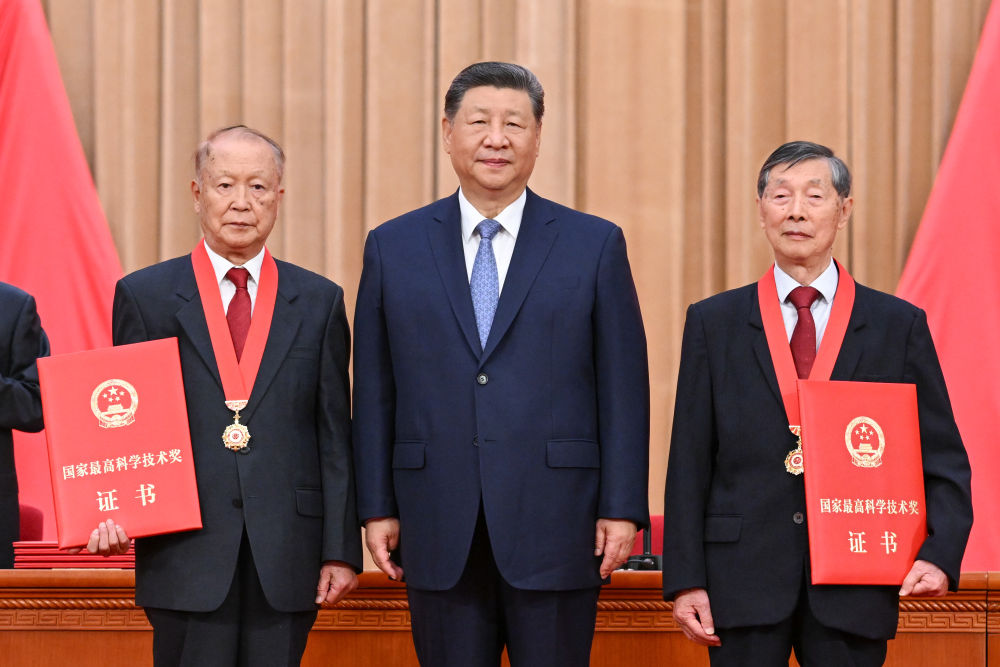
From Scientific Breakthroughs to Commercial Use
Academician Chen Liquan has long worked in lithium battery and solid-state battery research and is regarded as an important contributor to the development of China’s lithium battery technology. In earlier stages of battery development, the discussion often centered on chemistry, energy density, and cell-level performance. Today, however, the real question is whether a battery technology can be translated into a system that works reliably in the field.
That shift matters. Once solid-state batteries move from research toward commercial storage use, the competitive focus changes from the battery alone to the full system architecture. Thermal management, BMS protection logic, PCS compatibility, system integration, and field operation experience become the factors that determine whether a project can truly succeed.
Solid-State Battery Is Not Only About Battery Chemistry
Unlike conventional battery discussions that focus mainly on cell chemistry and energy density, commercial BESS projects require coordination between battery cells, thermal management, PCS control, BMS protection logic, and system integration.
The transition from solid-state battery research to commercial BESS depends on manufacturing scalability, interface stability, thermal management and system integration. In other words, the value of solid-state technology is not just about having a more advanced battery cell. The real challenge is whether that technology can be integrated into a scalable, stable, and commercially deployable energy storage system.
This is where the industry often separates into two groups. One group speaks mainly about battery chemistry. The other group understands that the solid-state cell is only one part of the larger engineering picture. For buyers, EPCs, and project developers, that distinction matters because the final project outcome depends on the entire system, not on one technical layer alone.
Industry View: System Capability Is Becoming the Core Competition in Solid-State Storage
As solid-state battery technology moves from laboratory research toward commercial energy storage applications, system integration capability becomes a key competitive factor. Battery chemistry alone cannot determine project success. Thermal management, BMS algorithms, PCS compatibility, and long-term field operation experience will define the next generation of BESS suppliers.
These standards reflect a broader shift in the commercial storage industry: the focus is moving away from cell-level performance alone and toward system-level safety validation, grid compatibility, and engineering reliability. For storage projects, this means suppliers are no longer judged only by whether they provide a battery product. They are judged by whether they can deliver a system that performs reliably in real-world conditions.
For MegSolid, this trend is very clear. The value of solid-state storage does not come from the battery alone. It comes from how the system performs in real operating environments, under real load conditions, and across long operating cycles. When customers need a solution that can run for years, is easier to deploy, maintain, and scale, engineering capability matters more than any single headline specification.
That is why MegSolid emphasizes engineering over slogans. Instead of focusing only on concept innovation, the more important question is how to apply solid-state technology reliably in C&I storage, campus energy systems, and microgrid scenarios.
Safety Standards and Engineering Validation
Commercial BESS deployment increasingly requires compliance with international safety frameworks, including UL 9540A thermal runaway testing methodology and IEEE 519 power quality requirements. For suppliers, this means solid-state storage must be evaluated not only by cell performance, but also by system-level safety design, electrical compatibility, and field validation.
These standards reflect a broader shift in the commercial storage industry: the focus is moving away from cell-level performance alone and toward system-level safety validation, grid compatibility, and engineering reliability. This is especially important in projects where safety, downtime risk, and power quality directly affect business continuity.
For that reason, engineering validation is not a secondary issue. It is one of the most important parts of commercial energy storage deployment. The best battery chemistry in the world still needs a system architecture that can support safe operation, stable performance, and practical integration.
Technical Example: 100kW/215.04kWh C&I ESS with Optional Solid-State Battery Configuration
MegSolid’s ESSA0100B-0215 is an intelligent air-cooled outdoor C&I energy storage platform rated at 100kW/215.04kWh. The current technical table specifies 280Ah LFP cells, and project-specific solid-state battery configurations are also available. The final cell model and electrolyte architecture must be identified in the signed datasheet and project BOM.
Technical Specification Example
|
Item
|
Specification
|
|---|---|
|
System Capacity
|
215.04 kWh
|
|
Rated AC Power
|
100 kW
|
|
Cycle Life
|
5,000 cycles
|
|
C-rate
|
0.5C
|
|
Protection
|
IP54 Outdoor Cabinet
|
|
Configuration
|
Battery + PCS + EMS
|
|
Cell Chemistry
|
280Ah LFP
|
|
Electrolyte Architecture
|
Project-specific; optional solid-state configuration
|
The above parameters are based on MegSolid’s product technical materials, and the actual configuration may vary depending on project requirements and regional standards.
This kind of system-level presentation is more useful than isolated product language because it helps buyers understand how the solution fits a real project. For many commercial users, the key question is not whether a storage cabinet looks advanced. The key question is whether the system can be deployed smoothly, operate safely, and deliver predictable value over time.
From a system integration perspective, whether a supplier has a complete PCS portfolio is an important reference point for engineering delivery capability. MegSolid’s PCS lineup includes 30 kW, 50 kW, 100 kW, 150 kW, 250 kW, and 500 kW models, covering a wide range of commercial and microgrid applications. This makes the company’s position clear: MegSolid is not only offering components, but also building system-level solutions around real application needs.
Why Customers Care About Solid-State Storage
Customers care about solid-state storage for three main reasons: safety, lifespan, and system stability. In high-safety scenarios, the value of solid-state technology is not simply that it is “more advanced.” It is that it gives engineers more room to optimize thermal stability and overall safety strategy.
That said, the language should remain precise. Instead of saying the technology eliminates all risk, it is better to say it can help reduce thermal runaway propagation risks. This is more accurate from an engineering perspective and more credible to professional buyers.
The same principle applies to cycle life, efficiency, and operating temperature. These should always be described using verified product documentation rather than unsupported marketing claims. For overseas buyers, EPCs, and technical procurement teams, accurate and traceable data is far more persuasive than exaggerated language.
Suitable Application Scenarios
MegSolid solid-state energy storage products and systems are suitable for a wide range of B2B applications. The most typical ones include peak shaving, backup power, campus energy management, microgrids, distributed renewable integration, and critical-load scenarios that require continuous power supply.
For these customers, the key question is not who sounds more exciting. It is which system is better suited for long-term operation. If a storage system can balance safety, installation convenience, maintenance convenience, and electrical compatibility, it is much more likely to make it into the project shortlist.
That is also why MegSolid prefers expressions such as “designed for” rather than “perfectly matches.” The first is engineering language. The second sounds like marketing. Engineering buyers usually trust the first one more because it signals a real application mindset rather than a promotional claim.
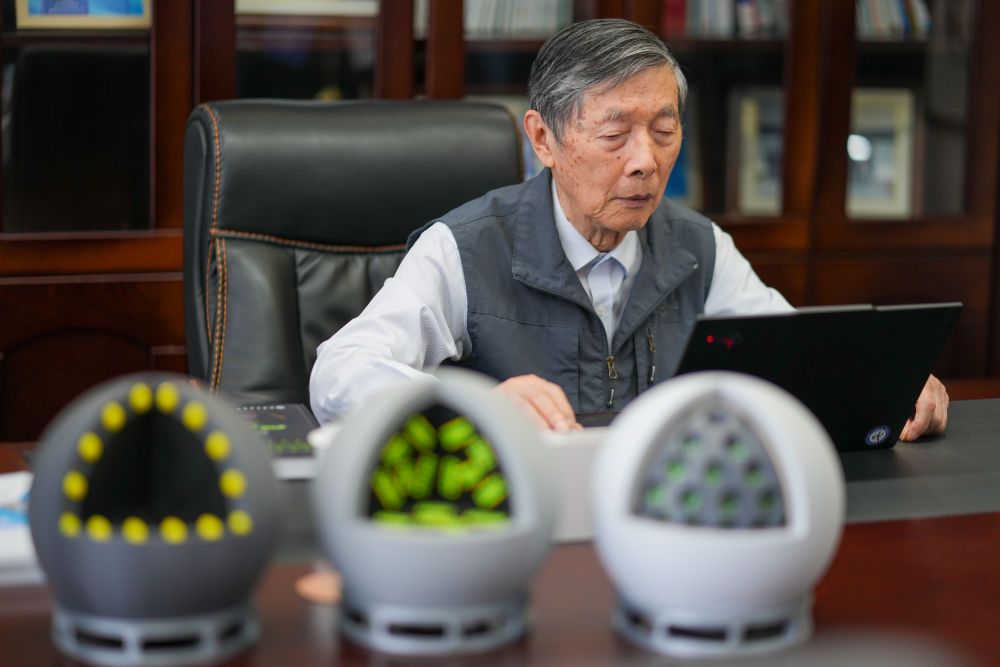
Bridging Research and Commercial Deployment
Chen Liquan’s award does not mean one technology has reached its final form. It means the solid-state direction deserves sustained investment. For storage companies, that means turning research progress into products that customers can actually use, buy, and deploy.
MegSolid’s role is to serve as that bridge: connecting solid-state technology, system integration capability, and real project needs. Only when chemistry, thermal management, BMS, PCS, installation, and operations work together does an energy storage system become truly competitive.
This is the dividing line for the next stage of the industry. Many companies can tell stories. Far fewer can deliver engineering results. The manufacturers that consistently win inquiries, projects, and long-term cooperation are usually the ones that understand technology, application, and customer decision-making all at once.
Conclusion
Solid-state energy storage is moving from a technology concept to an engineering choice. Chen Liquan’s award reminds the market of the long-term value of this direction and draws attention to the companies that truly have system-level capability.
Turn interest in solid-state research into an equipment decision. Review MegSolid’s ESSA outdoor cabinet specifications for your C&I duty, and identify the exact cell configuration in the offer. Send the required kW, operating hours and site conditions through the inquiry form to compare a model and supply scope. MegSolid can use those inputs to propose equipment and a supply boundary that your project team can evaluate.
FAQ
Q1: What is a Hybrid Solid-State Battery?
A Hybrid Solid-State Battery combines solid-state electrolyte or partial solid-state structures with conventional lithium battery materials to improve thermal stability and system safety while retaining competitive energy density.
Q2: What are the key advantages of a hybrid solid-state BESS versus a traditional LFP BESS?
Key advantages include improved thermal stability (reduced thermal runaway propagation risk), potential for longer lifecycle, and greater system integration flexibility—provided these benefits are realized through proper thermal management and system engineering.
Q3: Can the ESSA0100B-0215 use solid-state batteries?
Yes. The ESSA0100B-0215 platform can be configured with solid-state battery cells according to project requirements. The exact cell model, electrolyte architecture, cycle life and certification scope should be confirmed in the project-specific BOM and signed datasheet.
Q4: How is cycle life defined, and what does “5,000 cycles” mean?
Cycle life refers to the number of full charge/discharge cycles to a defined end-of-life (usually a specified capacity retention threshold) under defined conditions (DoD, temperature, C-rate). The 5,000-cycle figure is a nominal value from product data; actual life depends on operating conditions.
Q5: What environmental and safety considerations apply to outdoor cabinet BESS installations?
Key considerations include ingress protection (IP) rating, fire detection and suppression, ventilation and thermal management, electrical isolation and grounding, local grid interconnection rules, and compliance with regional safety and fire codes.
Q6: What engineering and delivery services does MegSolid typically provide during project delivery?
Typical services include system design, PCS and BMS integration, installation and commissioning, grid interconnection support, safety and electrical acceptance testing, and ongoing O&M and remote monitoring support (scope defined by contract).
Q7: Does solid-state technology completely eliminate thermal runaway risk?
No—absolute elimination is not accurate. Hybrid solid-state architectures can significantly reduce thermal runaway propagation risk, but system-level safety still depends on thermal management, fire mitigation, and verified engineering measures.
Q8: What technical docs should buyers request to evaluate a supplier?
Requested materials should include technical datasheets, system BOM/configuration, thermal management and fire protection designs, BMS protection logic, third-party test reports (e.g., UL 9540A), field case studies, and O&M records.
Q9: Can MegSolid’s PCS be paralleled or integrated with third-party PCS?
MegSolid’s PCS lineup supports paralleling (limits and methods depend on model and site design). Integration with third-party PCS requires communication and control compatibility and should be defined during early project design.
Q10: How do I request a project quote or technical consultation?
Provide project basics—required capacity, application scenario, target power, grid connection mode, location, and timeline—and authorized MegSolid contacts or distributors will prepare a tailored proposal and technical response.
Q11: Can Hybrid Solid-State Battery systems be deployed outdoors in China (or a specific city)?
Yes. MegSolid’s hybrid solid-state outdoor cabinets support IP54 (or higher) protection and can be deployed in most Chinese cities and industrial parks, subject to local grid interconnection and fire-code requirements; site-specific engineering is required.
Q12: What compliance items should I consider for deployment in Europe?
European projects should address CE and EN standards (including EMC requirements under EN 61000 series), grid-code compatibility, regional fire and environmental rules, and may require equivalent third-party certification when UL/IEC reports are unavailable.
Q13: What certifications or tests are typically required for North American deployment?
North American projects commonly require UL 9540A (thermal runaway test), UL 1973/1741 for ESS and inverters, and utility interconnection requirements; early engagement with local EPCs and utilities and provision of test documentation accelerates approvals.
Get Your Custom Microgrid Engineering Consultation
For technical consultation, microgrid system selection, OEM/ODM cooperation, and distributor opportunities, contact our engineering team:
Global Sales & HQ (Hong Kong):
FLAT 7, 11/F BLK C HANG WAI IND CTR, 6 KIN TAI ST, TUEN MUN, HONG KONG
- Email: [email protected]
- Phone: +852 59811073
R&D & Manufacturing Facility (Huzhou):
No. 898 Mengxi Road, South Taihu New Area, Huzhou City, Zhejiang Province, P.R.China
- Website: https://www.solidess.com/