 Skip to content
German homeowners are increasingly frustrated by the declining feed-in tariffs (FIT) under the EEG (Erneuerbare-Energien-Gesetz) and skyrocketing grid electricity prices. Purchasing a solar PV system without an integrated residential Battery Energy Storage System (BESS) is no longer economically viable. However, many homeowners remain hesitant due to the fire risks associated with traditional liquid lithium-ion batteries installed in basements or garages.
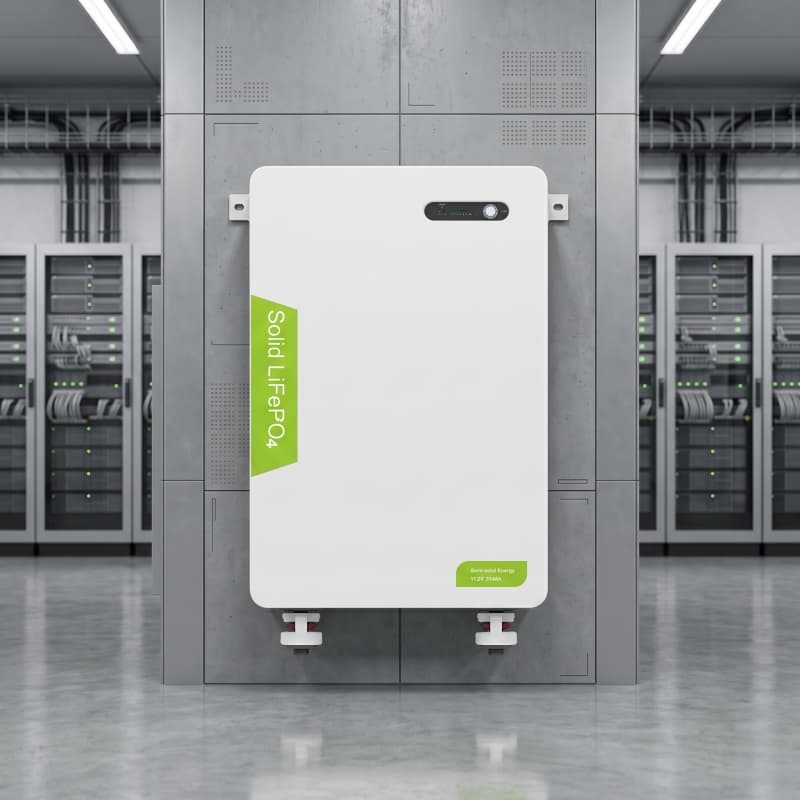
According to BSW-Solar (German Solar Industry Association), residential storage capacity in Germany must triple by 2030 to support the Energiewende. To meet this demand safely and profitably, MegSolid(SOLID ESS), a leading hybrid solid-state battery manufacturer, introduces the MEG-Solid-512314FL1 51.2V 314Ah Energy Storage Battery. This engineering analysis deconstructs how this module is optimized for German solar-storage integration, offering unparalleled safety and cycle life.
Key Takeaways
- Maximizes solar self-consumption, protecting homeowners from dropping FITs and rising grid tariffs.
- 16.07kWh capacity per module, scalable via parallel connection to suit various German household sizes.
- Proprietary solid electrolyte matrix significantly reduces thermal runaway risk for safe basement installation.
- Validated 8,000 cycles (80% DOD), matching the 20-year lifespan of standard rooftop PV panels.
- Seamless communication (RS485/CAN) with leading residential hybrid inverters.
Why Must German Homeowners Shift from FIT to Solar Self-Consumption?
The German renewable energy landscape has fundamentally shifted. The guaranteed 20-year FIT for early PV adopters is expiring, and current remuneration rates for exported solar power are far lower than the cost of purchasing grid electricity.
The Economics of Residential Solar-Storage Integration
Without a BESS, a typical German household exports surplus solar energy during the day at a low feed-in tariff and buys it back at night at a premium grid rate (often exceeding €0.35/kWh). By integrating a Hybrid Solid-State Battery Technology module, the system stores the excess daytime PV generation and discharges it during the evening peak, maximizing self-consumption rates from 30% to over 70%. This fundamental shift in energy economics accelerates the Return on Investment (ROI) for residential solar installations.
Why is MEG-Solid-512314FL1 the Optimal Capacity for Home Solar Batteries?
Selecting the correct capacity and voltage topology is critical for residential efficiency. The 51.2V 314Ah architecture is engineered specifically to balance footprint, safety, and compatibility with standard residential hybrid inverters.
High-Density 16.07kWh Modular Architecture
The MegSolid module delivers a nominal capacity of 16.07kWh. For a standard 10kWp rooftop PV system in Bavaria, two parallel modules (32.14kWh total) effectively cover the overnight base load of a 4-person household. The 51.2V nominal voltage (working range: 43.2V~57.6V) aligns perfectly with the DC input windows of mainstream single-phase residential hybrid inverters, ensuring minimal conversion losses.
Cycle Life Validated for 20-Year PV Lifespans
Traditional residential liquid LFP batteries often require replacement after 8-10 years. MegSolid’s 51.2V 314Ah module is validated through internal laboratory accelerated aging tests to achieve 8,000 cycles at 80% Depth of Discharge (DOD). This longevity ensures the BESS matches the operational lifespan of the solar panels, eliminating mid-life replacement Capex and solidifying long-term residential peak shaving ROI.
How Does Solid-State Chemistry Ensure Safe Basement Installations?
Fire safety is the primary concern for German homeowners when installing a BESS in a residential garage or basement. The confined space amplifies the risks of thermal runaway propagation seen in volatile liquid electrolytes.
Intrinsic Safety and Solid Electrolyte Stability
MegSolid replaces the flammable liquid electrolyte with a stable solid electrolyte matrix. This proprietary chemistry significantly reduces the probability of thermal runaway propagation even under physical puncture or extreme overcharge conditions. Designed according to UL 9540A evaluation methodology, the module provides an intrinsically safe architecture. (For foundational knowledge, read our BESS thermal runaway prevention guide).
VDE-AR-N 4105 Compatibility
German grid operators require strict compliance with VDE-AR-N 4105 for residential generating units. The 51.2V module integrates seamlessly with certified hybrid inverters that provide active power limitation and grid-forming support, ensuring zero grid-export violations and stable off-grid backup during power outages.
Field Experience: 2025 Munich Residential Villa Retrofit
In early 2025, a homeowner in Munich, Bavaria, sought to retrofit their existing 9.5kWp rooftop PV system. Their original 10kWh liquid LFP battery had degraded by 25% in just 4 years and triggered a minor thermal off-gassing event in the basement, causing insurance concerns.
Our engineering team replaced the failing system with two parallel MegSolid 51.2V 314Ah modules (32.14kWh total).
MegSolid's Engineering Solution & Commissioning Data
- Inverter Compatibility: The 51.2V voltage range seamlessly integrated with the existing Fronius Symo hybrid inverter via CAN protocol, requiring no rewiring of the DC bus.
- Thermal Validation: During the July 2025 heatwave, basement ambient temperatures reached 32°C. BMS logs confirmed the module’s internal temperature remained stable at 28°C, with no thermal derating, thanks to the solid matrix's superior high-temperature tolerance.
- SOH Tracking: After 150 deep cycles, the BMS reported zero capacity fade, projecting a linear lifespan well beyond 15 years.
Quantified ROI & Field Data (Based on project monitoring records)
- Self-Consumption Increase: Homeowner self-consumption jumped from 35% to 78%.
- Annual Energy Savings: €1,450 saved annually by avoiding high night-time grid tariffs and low FIT exports.
- Insurance Approved: The UL 9540A-aligned safety architecture passed the homeowner's property insurance underwriting without premium penalties.
- Note: Results vary depending on site configuration, local tariffs, and household consumption patterns.
Engineering Comparison: Traditional Liquid LFP vs. MegSolid Solid-State Residential Module
Homeowners and installers must evaluate total cost of ownership and safety.
|
Engineering Feature |
Traditional Liquid LFP Module |
MegSolid 51.2V Solid-State Module |
|---|---|---|
| Capacity per Module | ~5-10 kWh | 16.07 kWh (314Ah) |
| Cycle Life (80% DOD) | ~3,000 - 4,000 Cycles | 8,000 Cycles (Validated) |
| Thermal Runaway Risk | Higher (Volatile liquid electrolyte) | Significantly Reduced (Solid matrix) |
| Lifespan vs. PV Panel | Needs mid-life replacement | Matches 20-year PV lifespan |
| High-Temp Performance | Derating above 35°C | Stable operation up to 45°C |
MegSolid Manufacturing Authority
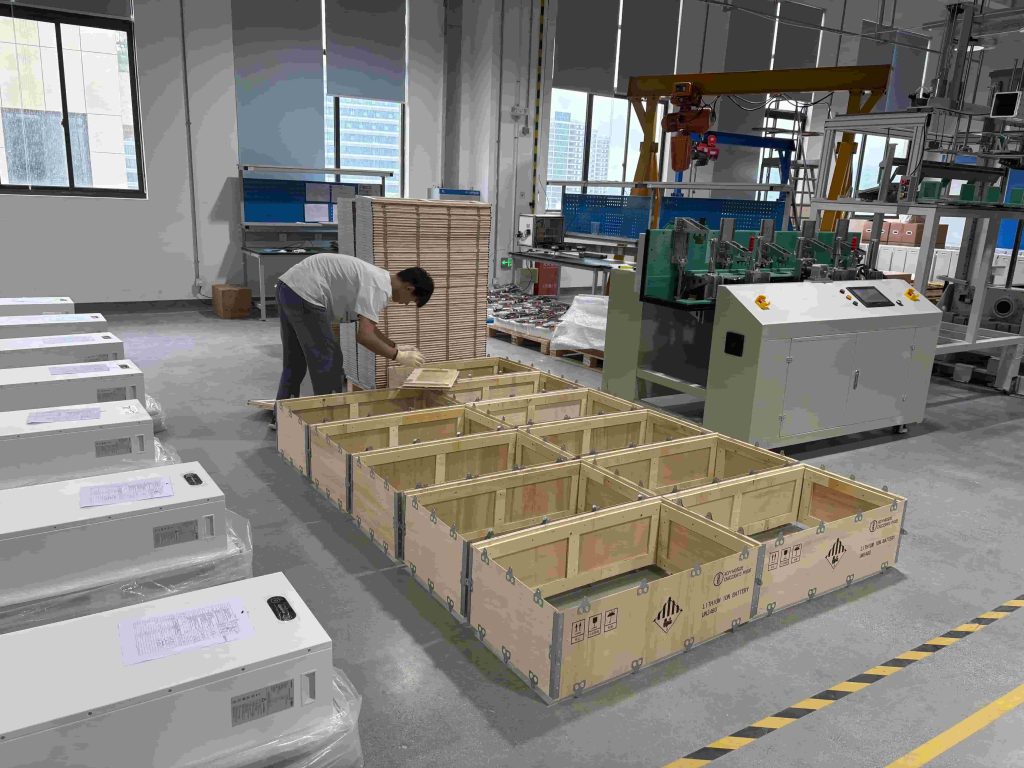
MegSolid is a world-class hybrid solid-state battery manufacturer with a dedicated team of 50+ battery and PCS engineers. Our advanced R&D and manufacturing facility in Huzhou, China, is capable of delivering GWh-scale annual production. We provide comprehensive OEM/ODM manufacturing services, empowering global residential distributors and EPC partners with safe, high-density BESS modules tailored to European grid codes.
References & Industry Standards
MegSolid's residential engineering design and testing protocols align with the following international standards:
- BSW-Solar: German Solar Industry Association guidelines for residential storage integration.
- VDE-AR-N 4105: Technical Connection Rules for Generating Units Connected to the Low-Voltage Network (Germany).
- UL 9540A: Standard for Safety of Energy Storage Systems and Equipment (Thermal Runaway Test Methodology).
- IEC 62619: Safety requirements for secondary lithium cells and batteries in industrial applications.
- UN38.3: Recommendations on the Transport of Dangerous Goods - Lithium Battery Testing Requirements.
FAQ
Q1: Why should German homeowners choose a solid-state battery for their basement?
Solid-state chemistry replaces the volatile liquid electrolyte with a stable solid matrix. This significantly reduces the probability of thermal runaway propagation, providing an intrinsically safe architecture that is ideal for confined residential spaces like basements and garages.
Q2: How many 51.2V 314Ah modules do I need for a standard German home?
A single module provides 16.07kWh. For a typical 4-person household with a 10kWp PV system, two parallel modules (32.14kWh total) are recommended to cover overnight consumption and maximize self-consumption rates.
Q3: Can the MegSolid 51.2V module integrate with existing German hybrid inverters?
Yes. The 51.2V nominal voltage (43.2V~57.6V range) is compatible with mainstream residential hybrid inverters (e.g., Fronius, SMA, Victron). It supports standard RS485 and CAN communication protocols for seamless EMS integration.
Q4: What is the cycle life of the MegSolid residential solid-state battery?
Validated through internal laboratory accelerated aging tests, the 51.2V 314Ah module achieves 8,000 cycles at 80% DOD. This ensures the battery matches the 20-year lifespan of standard rooftop PV panels without mid-life replacement.
Q5: How does the battery handle high summer temperatures in a garage?
The solid electrolyte matrix offers superior high-temperature tolerance compared to liquid LFP. In a 2025 Munich field deployment, the module maintained stable operation at 28°C internal temperature even when garage ambient temperatures reached 32°C, without thermal derating.
Q6: Does the residential system support off-grid backup during a power outage?
Yes. When paired with a compatible grid-forming hybrid inverter, the module supports off-grid AC coupling. It provides seamless backup power to critical household loads during grid faults, complying with VDE-AR-N 4105 requirements.
Q7: Is the MegSolid residential battery certified for safety?
Yes. The module is designed according to UL 9540A evaluation methodology to mitigate thermal runaway propagation. It also complies with IEC 62619 and UN38.3 standards for global transport and installation safety.
Q8: How does the 51.2V 314Ah module maximize solar self-consumption?
The 16.07kWh capacity is optimized to store surplus daytime PV generation. By discharging this stored energy during evening peak hours, the system reduces reliance on expensive grid electricity, increasing self-consumption rates from 30% to over 70%.
Q9: What is the internal resistance of the 51.2V 314Ah module?
The module features a low internal impedance of ≤15mΩ. This precision matching by MegSolid’s automated manufacturing ensures high round-trip efficiency and minimizes heat generation during high-current PV charging.
Q10: Does MegSolid provide OEM/ODM services for residential distributors?
Yes. Being a hybrid solid-state battery manufacturer, we offer comprehensive OEM/ODM services, including custom module casings, branded BMS interfaces, and specific communication protocol tuning for regional distributor requirements.
Q11: What is the best battery chemistry for residential solar storage in Germany?
Hybrid Solid-State LFP is the best chemistry. It offers 8,000 cycles (matching 20-year PV lifespans) and utilizes a non-flammable solid electrolyte matrix, significantly reducing thermal runaway risks in confined basement installations compared to traditional liquid LFP.
Q12: How does residential energy storage reduce electricity bills in Germany?
Residential BESS reduces bills by maximizing solar self-consumption. Homeowners store surplus daytime PV power instead of exporting it at low FITs. They discharge the battery at night to avoid purchasing expensive grid electricity, increasing self-consumption from 30% to 70%+.
Q13: What voltage is best for a home solar battery?
A 51.2V nominal voltage is optimal for residential solar batteries. It aligns with the DC input windows of standard single-phase hybrid inverters, minimizing conversion losses. The 43.2V~57.6V working range ensures safe, efficient charging from rooftop PV arrays.
Get Your Direct Manufacturer Engineering Consultation
For technical consultation, BOM traceability verification, OEM/ODM cooperation, and distributor opportunities, contact our manufacturing engineering team:
Global Sales & HQ (Hong Kong):
FLAT 7, 11/F BLK C HANG WAI IND CTR, 6 KIN TAI ST, TUEN MUN, HONG KONG
- Email: [email protected]
- Phone: +852 59811073
R&D & Manufacturing Facility (Huzhou):
No. 898 Mengxi Road, South Taihu New Area, Huzhou City, Zhejiang Province, P.R.China
- Website: https://www.solidess.com/
