A residential Energy Storage System becomes your customer’s daily experience: the lights, fridge, pump, internet and solar bill. If battery current, inverter settings or backup reserve are wrong, the installer receives the complaint. Specify the household duty and compatible equipment before shipping a battery. Capacity, protection, communication and service need to agree in one proposal.
For solar installers, integrators, distributors, EPCs and developers, MegSolid offers residential battery routes that can be reviewed by model. Ask for the chemistry/BOM, usable-energy and current limits, inverter-match evidence, installation inputs and warranty/support scope. Those deliverables help you sell a configuration your team can install and support.

Why Residential Energy Storage Matters More Than Ever
Residential Energy Storage can serve solar self-consumption, tariff shifting or backup. Define which duty the customer is buying and how the battery will recharge. An inverter, meter and protection arrangement are part of that solution; the pack alone does not establish the household operating behavior.
Maximizing Solar Energy Utilization
As rooftop solar installations continue to expand worldwide, homeowners require efficient energy storage systems to capture excess solar power generated during the day and use it at night or during periods of low solar production.
By increasing solar self-consumption rates, residential energy storage systems help homeowners:
- Reduce reliance on the utility grid
- Lower electricity bills
- Improve return on solar investment
- Achieve greater energy independence
Enhancing Energy Security
Extreme weather events, grid instability, and unexpected outages have made reliable backup power a necessity rather than a luxury.
List the essential circuits and their continuous/startup demand. Specify the allowed interruption and recovery behavior of the inverter/backup path. The following loads can have very different continuity requirements:
- Refrigerators
- Medical equipment
- Internet connectivity
- Security systems
- Home office equipment
Smart Energy Management and Cost Savings
In regions with Time-of-Use (TOU) electricity pricing, homeowners can charge batteries during off-peak periods and discharge stored energy during peak-rate hours.
HEMS integration requires compatible commands, meter data, reserve priorities and permitted operating modes. Check any demand-response participation and customer permissions under the actual program. Do not assume every battery/inverter pairing supports all smart-home functions.
Make Residential Battery Safety a Model-Specific Review
Despite the rapid growth of residential energy storage, conventional lithium-ion batteries that rely on liquid electrolytes continue to face safety concerns.
Under certain conditions such as:
- Overcharging
- Internal short circuits
- Mechanical damage
- Thermal abuse
traditional batteries may experience thermal runaway, potentially leading to fire risks.
The installer needs evidence for the actual cell, battery, inverter and installation. Model-specific report scope, electrical protection, thermal limits and accepted operating conditions are more useful than a chemistry-wide safety slogan.
Review the offered hybrid solid-state battery against those requirements. Confirm the actual electrolyte/cell architecture and reports, then map them to the delivered product and site. A label does not remove installation or fire-response responsibilities.
Review the MegSolid Residential Battery Evidence by Model
Confirm the named manufacturer, supplier entity, warranty counterparty and actual model/BOM in the order. Any high-tech-enterprise, patent or qualification claim needs an identifiable holder and document scope; it does not automatically apply to every entity selling the battery.
Tie the proposed MegSolid residential, C&I or container route to its own chemistry, electrical ratings, thermal design, reports and warranty. Evidence for one low-voltage battery cannot establish the performance or safety of the entire portfolio.
Advanced Hybrid Solid-State Electrolyte Technology
The separate MEG-Solid-512314FL1 hybrid battery uses documented semi-solid LiFePO4 wording. The movable lithium battery discussed below is a distinct model and must have its own chemistry, current and cycle-test evidence. Do not combine their claims into one product.
Ask for the actual material/electrolyte classification and relevant tests. The hybrid design’s contribution to performance must be supported under the cell and product conditions being purchased.
Put these evidence fields into the procurement review:
Safety Evidence for the Offered Configuration
Verify the offered cell/battery reports and safety functions at their actual test boundary. Do not infer a quantified reduction in thermal-runaway risk or universal superiority over conventional LFP from hybrid wording alone.
A defined protection and installation package gives the customer and service team concrete limits, alarm behavior and remedy routes.
Use the Actual Charging and Discharging Temperature Limits
The movable product’s public table specifies charging 0°C–50°C and discharging −15°C–50°C. Have the installer compare the site with the offered model’s limits, derating and enclosure instructions. The existence of a discharge range does not permit charging at the same lower temperature.
- Maximum site temperature and thermal/derating basis
- Minimum charge/discharge temperature and permitted recovery
- Humidity, enclosure, location and seasonal duty
Connect Lifetime Claims to the Test and Warranty
Request cycle-test temperature, current, SOC/DOD window, retained-capacity endpoint and production identity. Compare those conditions with the household duty. A design-life figure is not the warranty period or proof that every installation reaches the same lifetime.
Make the supplier state:
- Retained-capacity and usable-energy test basis
- Warranty conditions, throughput and remedy
- Maintenance and inspection responsibilities
Verify Technology Rights and Product Traceability
If technology ownership matters to the partnership, request patent numbers, holders, legal status and relevance to the offered model. Review the same identity and rights questions for:
- Solid-state electrolyte technologies
- Battery material innovation
- Cell structure optimization
- Battery management systems
- Energy storage system integration
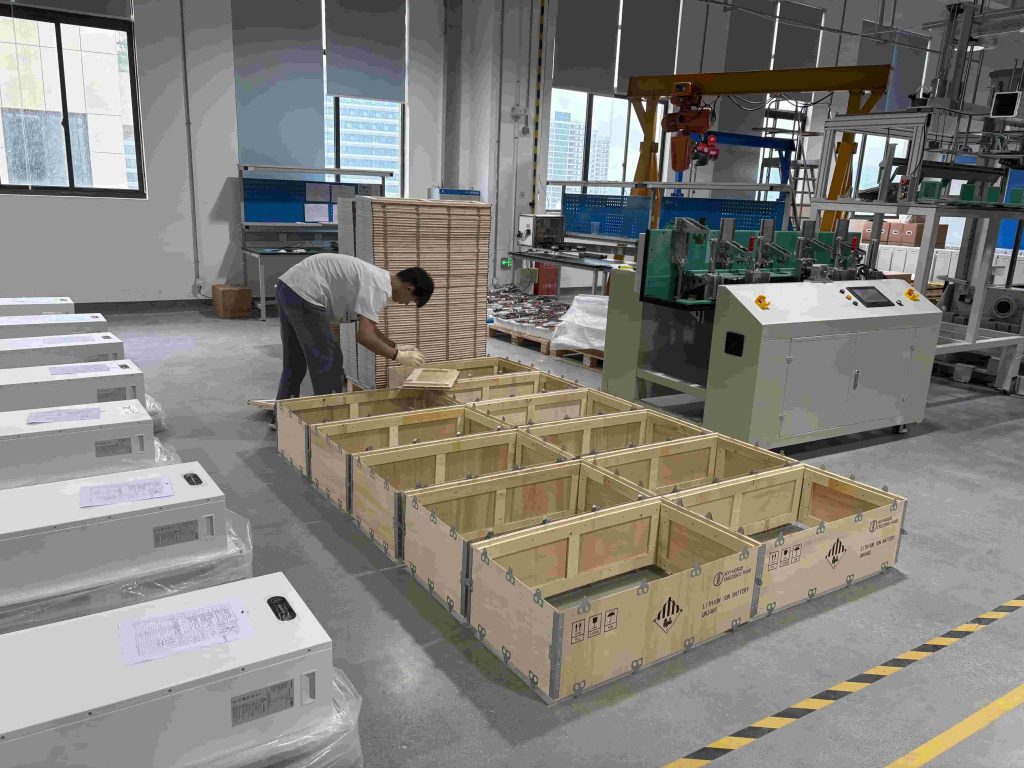
The order should connect supplier/manufacturing identity, controlled BOM, document revisions and warranty responsibility. A general R&D description does not prove every model’s certification, lifetime or IP rights.
Advanced Manufacturing and System Integration
MegSolid's expertise extends beyond battery chemistry.
Identify the entity and responsibility at each delivered stage:
- Actual cell source and specification
- Module/BOM and production revision
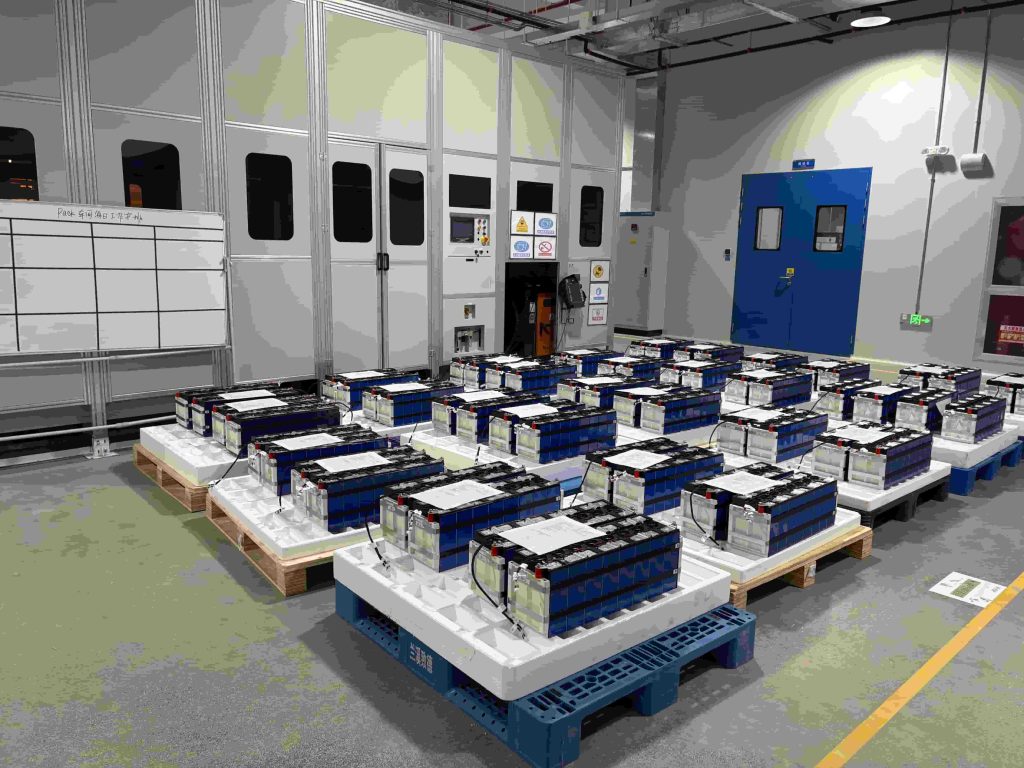
- Pack assembly and serial/acceptance records
- Model-specific thermal/control configuration
- Battery-to-inverter/site integration scope
Request production/serial mapping, acceptance records, revision control and the equipment-to-site boundary. The evidence package, not a full-stack slogan, determines what your installation and service teams can verify.
Featured Product: MegSolid Movable Lithium Battery Pack
Review the MegSolid movable lithium battery pack for its actual household duty. The public product page lists a 51.2V/314Ah battery with 16.076kWh nominal energy, a 40–58.4V operating window and 200A maximum charge/discharge current. Confirm the datasheet revision and inverter pairing in the quote; usable AC energy depends on the operating window and conversion path.
Flexible Installation
The wheeled enclosure can help position the pack within the approved installation. Its public IP21 rating and 135kg weight still need a suitable location, handling method, access and electrical protection. Do not treat wheels as permission to move an energized installation or expose it outdoors.
Have the qualified installer assess the actual proposed location:
- Dry, protected garage location where approved
- Suitable utility-room location and required access
- Basement conditions, flood/ventilation/access limits
- Actual site layout and enclosure instructions
Confirm the Inverter and BMS Protocol Match
The system supports multiple communication protocols, including:
- CAN
- RS485
- RS232
RS485, CAN and RS232 ports do not prove protocol compatibility with every inverter or smart-home platform. Confirm the approved model/firmware pairing and witness current limits, alarms, shutdown and recovery for:
- Exact solar/backup inverters and firmware pairing
- Delivered EMS/monitoring interface
- Any supported home-control integration separately defined
Scalable Energy Storage Capacity
The movable product publishes parallel capability of up to six battery units. Confirm the approved branch protection, wiring/current, master/BMS communication and inverter arrangement for the offered quantity. This is a battery-pack capability, not permission to parallel any six PCS models.
Long Service Life
The movable product lists ≥6,000 cycles at 25°C and 80% EOL, alongside a 5-year warranty field. Request the remaining test conditions and contractual remedy. Do not convert the cycle statement into a universal 15-year operating guarantee:
- Published movable-model cycle basis: ≥6,000 cycles at 25°C and 80% EOL
- Published warranty field: 5 years; confirm contractual terms
- Duty-specific usable energy, temperature/current limits and remedy
Intelligent Monitoring
The current movable product table lists an LED status/power display. Confirm the delivered panel and signals rather than promising a touchscreen or complete real-time energy-flow view. Ask which information is available locally or through the inverter:
- Delivered battery indicators and alarm meanings
- Available power/status signals and limitations
- SOC reporting through the supported interface
- Logs and service escalation data actually available
Give the homeowner a clear handover: state what the indicators mean, what limits apply and when to contact the installer. Remote monitoring requires a separately confirmed device, protocol and service scope.
Residential Buyer Scenarios: Specify the Evidence Before Claiming Results
Illustrative California Solar-Plus-Storage Review
Consider a California household comparing rooftop PV with battery storage. Use actual load, solar production, import/export tariff, permitted settings and critical circuits to define the duty. This is a procurement example, not a verified MegSolid customer installation or a claimed 40% bill reduction.
Measure the Project Against These Criteria
- Measured usable solar surplus and battery dispatch
- Actual import/export and backup-reserve behavior
- Tariff-based bill comparison including losses and installed costs
- Witnessed critical-load continuity and recovery
A monitoring view helps when its data supports the operating plan. Record actual import/export, charge/discharge, reserve, alarms and costs before claiming the outcome.
Illustrative Multi-Family Residential Review
For an apartment project, determine whether storage serves common loads, individual units or another metered boundary. Confirm load coincidence, tenant/owner responsibilities, permitted connection, access, service and the actual battery/inverter scope. Do not treat multiple packs as a verified community project.
Define the Meter and Operating Boundary
- Defined common-load or tenant meter boundary
- Actual dispatch and financial allocation
- Owner/operator/installer service responsibilities
- Approved electrical and control expansion scope
A shared project needs an agreed meter, dispatch policy, ownership and maintenance plan. Measure financial and environmental results from the actual duty and charging source; the presence of storage alone does not establish them.
Make the MegSolid Partner Offer Installable and Supportable
For distributors, EPC contractors, solar installers, and system integrators, selecting the right battery technology partner is critical.
Ask MegSolid to make each part of the offered package reviewable:
Named Model and Technology Evidence
Request the actual hybrid or movable battery’s cell/BOM identity, relevant report scope and supported duty. Keep portfolio research claims separate from the model your customer will receive.
Reliable Product Performance
Put usable energy, current/temperature limits, acceptance records and warranty remedies into the agreement. Compare lifetime value using the actual household duty and complete installed/service costs.
User-Centered Design
Request installation, operator and troubleshooting documents for the delivered model. Verify the panel, alarms, settings and reset route during handover; simple marketing language does not replace those records.
Comprehensive Technical Support
Partners benefit from:
- Technical consultation
- Product training
- Installation guidance
- System commissioning support
- After-sales service assistance
Certifications and Compliance
Request the actual model-specific conformity, safety, transport and environmental documents that apply to the destination and configuration.
Keep report, test-method, conformity and chemical-information roles separate:
- UL 1973: applicable battery safety/report scope where required
- UL 9540A: fire-propagation test method and relevant tested configuration
- IEC 62619: industrial lithium cell/battery safety scope where applicable
- IEC 61000: identify the applicable EMC parts and tested model
- UN 38.3: actual cell/battery transport test summary and shipping requirements
- CE: applicable conformity duties and declaration/document scope
- RoHS: applicability and actual documentation
- SDS/MSDS: chemical information; not a battery safety certification
Check issuer, holder, model, revision, test/configuration scope and applicable requirements. No portfolio-wide list establishes that every battery has every certificate, or guarantees installation approval.
Partner Ecosystem Support
Build the partnership around the product, evidence, service responsibility and delivery schedule your customers need.
Technical Collaboration
Submit the requested customization and identify the review, validation and delivery boundaries for:
- Requested battery/current/energy and enclosure changes
- Brand/OEM/ODM scope, rights and responsibilities
- Any development work with defined validation and acceptance
- Actual inverter/BMS/site interface requirements
- Named engineering deliverables and review milestones
Marketing and Business Development Support
Agree the technical and commercial material deliverables for the actual model:
- Exact-model datasheet and installation documents
- Releasable case evidence only where available
- Agreed test/report material and its scope
- Approved model/brand marketing material
- Training and application guidance in the agreed package
Identify the available documents, permissions, revisions and delivery milestones. Do not promise a technical white paper or releasable customer case merely because the general marketing list includes it.
FAQ
Q1: What makes MegSolid hybrid solid-state batteries safer than traditional lithium batteries?
Review safety model by model. A hybrid material architecture does not establish a universal quantified reduction in leakage or thermal-runaway risk. Request relevant cell/battery reports, electrical and thermal limits, protection and installation scope for the actual configuration.
Q2: How long can a MegSolid residential energy storage battery last?
The movable model publishes ≥6,000 cycles at 25°C and 80% EOL, with a 5-year warranty field. The separate MEG-Solid-512314FL1 hybrid model lists 8,000 cycles at 80% DOD. Request full test conditions and contractual terms for the supplied product; neither statement guarantees 15 years for every home system.
Q3: Are MegSolid batteries compatible with solar power systems?
Verify the exact inverter, firmware, voltage/current window and supported BMS protocol. Communication ports alone do not prove compatibility with most brands. Include alarm, shutdown, current-limit and recovery behavior in the pairing/commissioning evidence.
Q4: Can MegSolid residential batteries provide backup power during outages?
Backup needs a defined inverter/UPS or switching path, protection and critical-load scope. Specify interruption, startup current, duration, reserve and recharge, then witness the actual grid-loss/recovery behavior. The battery pack alone does not guarantee uninterrupted support to every appliance.
Q5: Does MegSolid support battery capacity expansion?
The movable product lists up to six battery units in parallel. Confirm approved wiring, branch protection, current, communication and inverter capacity for the offered quantity. This does not permit any six PCS units or arbitrary packs to be paralleled.
Q6: What communication protocols are supported by MegSolid battery systems?
The movable battery lists RS485, CAN and RS232 interfaces. Confirm the delivered protocol, firmware, data map and inverter/monitoring pairing. Ports do not by themselves establish seamless integration with every EMS or smart-home platform.
Q7: Does MegSolid provide OEM and ODM energy storage services?
Submit the proposed battery duty, enclosure, branding, region, quantity, compatible inverter and required documents for an OEM/ODM review. Ask MegSolid to identify supported changes, validation work, IP/brand rights, acceptance and delivery scope. Do not assume every requested change is already available.
Q8: What industries can benefit from MegSolid solid-state battery technology?
Choose the actual product and chemistry for the application. The movable low-voltage battery, hybrid 16.07kWh product, air-cooled LFP C&I cabinet and container systems have different ratings and evidence. A portfolio description does not make every model a hybrid solid-state system or suitable for every duty.
Q9: What technical support does MegSolid provide to global partners?
Ask MegSolid for the preliminary model route, inverter-match evidence, available reports, installation inputs, acceptance/warranty terms and missing information for a firm quote. Send household/critical loads, backup hours, PV/grid data, inverter/firmware, location and quantities. These deliverables help a partner sell an installable and supportable residential package.