
Why Energy Storage Inverters Matter More Than Ever in the Solid-State Battery Era
As global demand for renewable energy and energy storage continues to accelerate, solid-state and hybrid solid-state batteries are emerging as one of the most promising technologies for residential, commercial, and utility-scale energy storage systems.
Compared with conventional lithium-ion batteries, hybrid solid-state batteries offer:
- Higher energy density
- Enhanced thermal stability
- Longer cycle life
However, battery performance alone does not determine the success of an energy storage project.
The inverter—or more precisely, the Energy Storage Inverter (PCS)—is the critical bridge connecting batteries, photovoltaic systems, the utility grid, and electrical loads.
Without an intelligent and highly efficient inverter, even the most advanced solid-state battery cannot fully realize its performance potential.
For this reason, inverter technology is becoming a key focus for solid-state battery manufacturers, energy storage integrators, and battery manufacturing equipment suppliers worldwide.
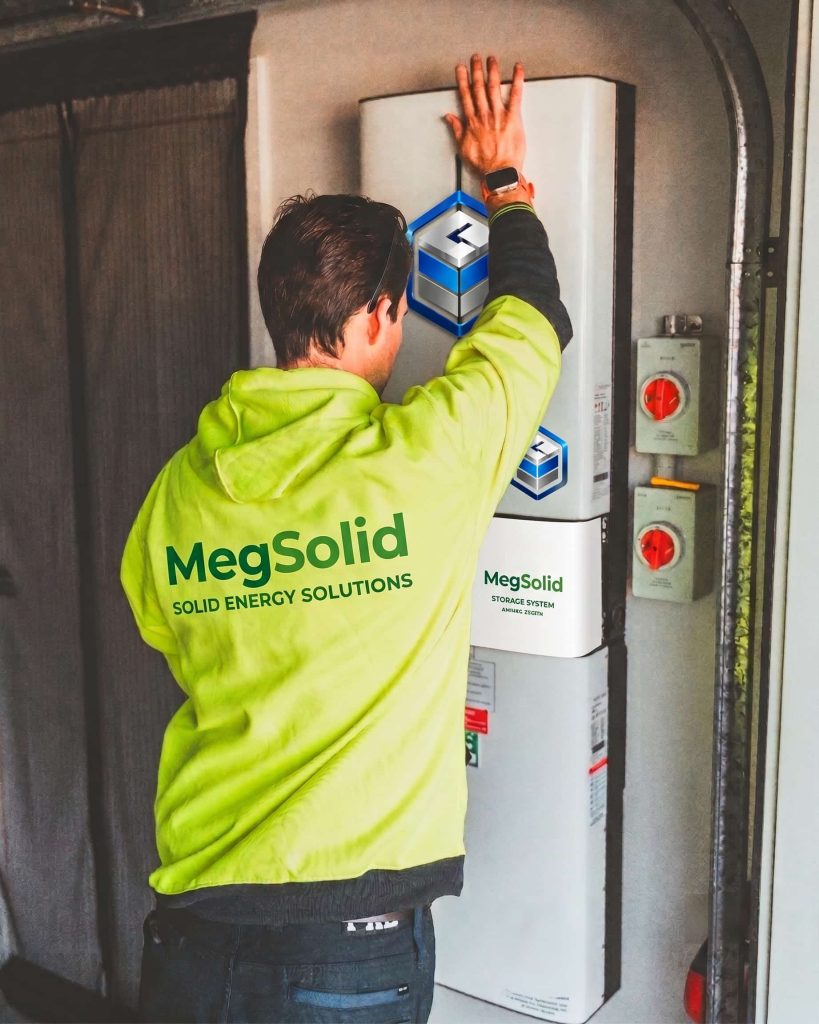
What Is a Solid-State Battery Inverter?
Although the industry often uses the term "Solid-State Inverter," the more accurate definition is:
- An advanced energy storage inverter designed to operate with solid-state or hybrid solid-state battery systems.
Its primary function is converting DC power stored inside batteries into usable AC electricity while simultaneously managing:
- Battery charging and discharging
- Grid interaction
- Solar energy integration
- Energy management systems (EMS)
- Battery management system (BMS) communication
Modern energy storage inverters rely on advanced power electronics such as:
- IGBT technology
- Silicon Carbide (SiC) MOSFETs
- High-frequency PWM control
- Real-time DSP algorithms
These technologies ensure stable voltage, low harmonic distortion, and rapid response during changing load conditions.
Compatibility Challenges: Why Solid-State Batteries Need Advanced Inverters
As battery technology evolves, inverter requirements become increasingly demanding.
Wider Battery Voltage Range
Unlike traditional lead-acid systems, modern hybrid solid-state batteries operate across broader voltage windows.
For example, MegSolid's 8kW and 10kW hybrid inverter systems support:
- Battery voltage range: 40V–58V
- Rated battery voltage: 48V
- Lithium-ion and lead-acid compatibility
This flexibility allows system integrators to deploy the same inverter architecture across multiple energy storage applications.
Faster Charging and Discharging
Hybrid solid-state batteries are capable of higher power throughput.
MegSolid's residential inverter platform supports:
- Up to 10kW charge/discharge power
- Charge current up to 200A
- Discharge current up to 200A
To fully utilize these capabilities, the inverter must communicate continuously with the Battery Management System (BMS) through CAN and RS485 protocols.
This coordination improves battery protection, extends cycle life, and maximizes energy utilization.
Higher System Efficiency
Every percentage point of inverter efficiency directly affects project profitability.
MegSolid's MG-ESS-500W-230 residential ESS inverter achieves:
- Peak inverter efficiency: 88%
- UPS switching time: ≤20ms
- THD: <3%
For larger systems, MegSolid's R30KH3, R40KH3, and R50KH3 commercial energy storage inverters deliver:
- Power factor >0.99
- THDi <3%
- Backup switching time <10ms
These specifications are essential for maintaining stable operation in critical power environments.

PCS–BMS Integration Checklist
Before connecting an energy storage inverter to a battery system, engineers should verify the following parameters:
|
Check
|
What to Verify
|
|---|---|
|
DC voltage range
|
The PCS operating voltage must cover the battery’s minimum and maximum pack voltage.
|
|
Charge/discharge current
|
PCS current commands must remain within the battery and BMS limits.
|
|
Communication protocol
|
Confirm CAN or RS485 protocol, baud rate, message format and update frequency.
|
|
SOC and SOH data
|
Verify that the PCS receives valid SOC, SOH, voltage, current and temperature values.
|
|
Protection commands
|
Test overvoltage, undervoltage, overcurrent, overtemperature and emergency shutdown responses.
|
|
Operating modes
|
Confirm grid-tied, off-grid, black-start and backup modes where applicable.
|
|
Fault handling
|
Define how the PCS responds when communication is interrupted or battery data becomes invalid.
|
|
Warranty responsibility
|
Clarify which supplier is responsible for PCS–BMS compatibility and firmware updates.
|
Compatibility should be verified using the exact battery, BMS firmware and PCS model intended for the project. A shared communication interface alone does not guarantee system compatibility.
How to Match Inverter Power to Battery Capacity
Battery capacity and inverter power describe two different parts of an energy storage system. Battery capacity, measured in kilowatt-hours, determines how much energy the system can store. Inverter power, measured in kilowatts, determines how fast the system can charge or discharge that energy.
A 215 kWh battery does not require one fixed inverter size. The correct PCS rating depends on the site load, discharge duration, charging window, battery current limit and operating conditions.
Start with the Required Discharge Power
Use measured load data to calculate the power that the battery must supply. For a peak-shaving project, subtract the permitted grid demand from the measured site peak:
Required discharge power = Site peak demand − Target grid demand
A factory with a 250 kW peak and a 150 kW grid-demand target requires about 100 kW of battery discharge power. Engineers must also check motor starting current, load steps and the PCS overload rating. These short-duration events may exceed the continuous power requirement.
For backup applications, calculate the combined power of the critical loads that must remain online during a grid outage. Do not size the PCS from the total connected load if the backup system will supply only selected equipment.
Check the Battery Power Limit
The battery and BMS set the maximum power that the PCS can draw. Confirm the permitted continuous charge current, continuous discharge current and short-duration peak current.
A conservative DC power check uses:
Battery DC power limit = Minimum operating voltage × Maximum continuous current ÷ 1,000
You can also estimate the battery power limit from its C-rate:
Battery power limit = Battery capacity × Permitted C-rate
For example, a 215 kWh battery operating at 0.5C supports about 107.5 kW before voltage, current, temperature and BMS limits. Use the model-specific datasheet and BMS settings for the final calculation.
Calculate the Required Charging Power
The available charging window may require a larger PCS. Divide the energy that must be restored by the available charging time:
Required charging power = Energy to be restored ÷ Charging time
A system that must restore 180 kWh within three hours needs at least 60 kW of charging power before conversion losses and auxiliary consumption. Available PV power, transformer capacity and grid import limits may reduce the permitted charging rate.
Apply Site Derating
Ambient temperature, altitude, enclosure temperature and ventilation affect continuous PCS output. Check the manufacturer’s derating curves instead of relying on the nameplate rating alone.
The final usable system power equals the lowest limit imposed by the PCS, battery, BMS, transformer and grid connection. Engineers should verify these limits during system design and confirm them during FAT and SAT.
For model-specific voltage ranges, power ratings and communication options, review the MegSolid energy storage inverter portfolio.
Technical Analysis of MegSolid Energy Storage Inverter Solutions
Designed for off-grid and backup power applications, the MG-ESS-500W-230 combines inverter, battery storage, and emergency power supply functions into a compact solution.
|
Parameter
|
Value
|
|---|---|
|
Rated Output Power
|
500W
|
|
AC Output Voltage
|
230Vac
|
|
Battery Capacity
|
314Ah
|
|
Battery Energy
|
1004.8Wh
|
|
Battery Chemistry
|
Lithium-ion
|
|
UPS Switching Time
|
≤20ms
|
|
Peak Efficiency
|
88%
|
|
Operating Temperature
|
-10°C to 50°C
|
|
Storage Temperature
|
-15°C to 60°C
|
Ideal Applications:
- Home backup power
- RV power systems
- Remote cabins
- Telecom backup
- Small solar storage systems
Its integrated battery architecture simplifies installation while reducing system footprint.
For larger residential and small commercial projects, MegSolid's hybrid inverter platform provides enhanced flexibility.
|
Parameter
|
8kW Model
|
10kW Model
|
|---|---|---|
|
Battery Voltage
|
48V
|
48V
|
|
Charge/Discharge Power
|
8kW
|
10kW
|
|
Maximum Charge Current
|
160A
|
200A
|
|
Maximum Discharge Current
|
160A
|
200A
|
|
Grid Voltage Range
|
176–270V
|
176–270V
|
|
Communication
|
RS485/CAN
|
RS485/CAN
|
|
Protection Level
|
IP65
|
IP65
|
Project Benefits:
- Supports lithium-ion and lead-acid batteries
- Compatible with hybrid solar systems
- Fast BMS communication
- High environmental adaptability
- Easy integration into residential ESS projects
As C&I Energy Storage projects continue to scale, higher power and greater reliability become essential.
MegSolid's RKH3 Series is engineered for factories, microgrids, data centers, and large-scale solar-plus-storage projects.
|
Parameter
|
R30KH3
|
R40KH3
|
R50KH3
|
|---|---|---|---|
|
Rated Power
|
30kW
|
40kW
|
50kW
|
|
Max PV Power
|
45kW
|
60kW
|
75kW
|
|
Max PV Voltage
|
1000V
|
1000V
|
1000V
|
|
MPPT Voltage Range
|
150–850V
|
150–850V
|
150–850V
|
|
MPPT Trackers
|
4
|
4
|
4
|
|
Power Factor
|
>0.99
|
>0.99
|
>0.99
|
|
Protection Level
|
IP65
|
IP65
|
IP65
|
|
Operating Temperature
|
-35°C to 60°C
|
-35°C to 60°C
|
-35°C to 60°C
|
Typical Applications:
- Commercial buildings
- Manufacturing plants
- Industrial parks
- Utility microgrids
- EV charging infrastructure
- Renewable energy integration
With 4 MPPT trackers and up to 75kW PV input capacity, the system can maximize solar harvest while maintaining stable energy storage operation.
How to Validate PCS–BMS Integration Before Commissioning
PCS–BMS compatibility should be verified during Factory Acceptance Testing (FAT) and confirmed again during Site Acceptance Testing (SAT).
Recommended tests include:
- Verify normal charge and discharge commands at different SOC levels.
- Confirm that voltage, current, temperature, SOC and alarm data are transmitted correctly.
- Disconnect the communication cable and verify that the PCS enters a safe operating state.
- Simulate battery overvoltage, undervoltage, overcurrent and overtemperature alarms.
- Test PCS power derating when the BMS reduces the permitted charge or discharge current.
- Verify emergency shutdown and restart procedures.
- Confirm grid-loss, backup and black-start behavior where supported.
- Record firmware versions, protocol files and test results for future maintenance.
Actual response times and operating limits depend on the selected PCS, BMS, battery configuration and project requirements. They should be supported by model-specific test records rather than general assumptions.
Real-World Applications of Solid-State Battery Inverters
Residential Solar + Storage Systems
Homeowners increasingly seek energy independence and reliable backup power.
solid state battery for home backup systems are becoming a key solution for residential energy resilience:
- Store excess daytime solar energy
- Reduce peak electricity costs
- Provide emergency backup power
- Increase self-consumption rates
Commercial Peak Shaving
Factories and commercial facilities face rising electricity costs worldwide.
By combining:
- Solar PV
- Hybrid solid-state batteries
- Intelligent energy storage inverters
Businesses can significantly reduce demand charges while improving energy resilience.
Industrial Microgrids
Industrial users often require uninterrupted power for mission-critical operations.
MegSolid's high-power inverter systems provide:
- Grid-forming capability
- Fast transfer times
- Multi-energy source integration
- Reliable off-grid operation
This makes them ideal for industrial parks, mining sites, and remote infrastructure projects.
How MegSolid Optimizes Solid-State Battery and Inverter Integration
As a hybrid solid-state battery manufacturer, MegSolid focuses on more than just battery cells.
The company integrates:
- Hybrid solid-state batteries
- Energy storage inverters
- Battery Management Systems (BMS)
- Energy Management Systems (EMS)
into a unified energy storage ecosystem.
By coordinating battery behavior with inverter control strategies, MegSolid helps customers achieve:
- Higher energy efficiency
- Longer battery lifespan
- Improved system safety
- Lower Levelized Cost of Storage (LCOS)
- Greater return on investment
For EPC contractors, distributors, and system integrators, this integrated approach reduces deployment complexity while improving long-term project performance.
The Future of Energy Storage Inverters
The future of energy storage is no longer defined solely by battery chemistry.
It is increasingly determined by how effectively batteries, inverters, EMS platforms, and renewable generation assets work together.
As hybrid solid-state batteries move toward mainstream adoption, next-generation inverters will feature:
- AI-driven energy optimization
- Faster BMS communication
- Higher conversion efficiency
- Enhanced grid-forming capabilities
- Intelligent virtual power plant (VPP) integration
Companies that can deliver complete battery-plus-inverter solutions will be best positioned to support the global transition toward cleaner, safer, and more resilient energy systems.
FAQ
Q1: What is a solid-state battery inverter?
A solid-state battery inverter is an energy storage inverter designed to work with solid-state or hybrid solid-state battery systems. It converts DC power stored in batteries into usable AC electricity while managing battery charging, discharging, grid interaction, and communication with the Battery Management System (BMS).
Q2: Do solid-state batteries require a special inverter?
Not always, but advanced energy storage inverters are recommended. Hybrid solid-state batteries often operate with wider voltage ranges, higher energy density, and faster charge/discharge rates, requiring intelligent inverter control for optimal performance and safety.
Q3: What is the difference between a solid-state battery inverter and a conventional inverter?
The main difference lies in system compatibility and control capability. Inverters designed for solid-state battery applications typically offer faster BMS communication, enhanced energy management, wider voltage adaptability, and better support for high-performance energy storage systems.
Q4: Why is inverter efficiency important in an energy storage system?
Inverter efficiency directly impacts the amount of usable energy delivered to loads. A higher-efficiency inverter reduces energy losses during conversion, improves overall system performance, and lowers the long-term cost of energy storage operation.
Q5: Can hybrid solid-state batteries work with solar energy systems?
Yes. Hybrid solid-state batteries are commonly integrated with photovoltaic (PV) systems. When combined with a compatible energy storage inverter, they can store excess solar energy during the day and supply electricity during nighttime or grid outages.
Q6: What applications are best suited for solid-state battery inverter systems?
Solid-state battery inverter systems are widely used in: Residential solar storage Commercial and industrial (C&I) energy storage Microgrids Telecom backup power Data centers EV charging stations Utility-scale renewable energy projects
Q7: What communication protocols should an energy storage inverter support?
Modern energy storage inverters should support industry-standard communication protocols such as CAN and RS485. These protocols enable real-time communication with the BMS and EMS, improving battery protection, monitoring, and overall system efficiency.
Q8: How does a hybrid solid-state battery improve energy storage performance?
Hybrid solid-state batteries combine the safety advantages of solid electrolytes with the performance benefits of conventional lithium battery technology. They typically offer higher thermal stability, longer cycle life, improved safety, and higher energy density compared with traditional lithium-ion batteries.
Q9: What should I consider when selecting a commercial energy storage inverter?
Key factors include: Rated output power PV input capacity MPPT tracker quantity Conversion efficiency IP protection rating Grid compatibility BMS and EMS communication Backup switching speed Operating temperature range Selecting the right inverter is critical for maximizing project reliability and return on investment.
Q10: Why choose MegSolid for solid-state battery and inverter solutions?
MegSolid provides integrated energy storage solutions that combine hybrid solid-state batteries, energy storage inverters, Battery Management Systems (BMS), and Energy Management Systems (EMS). This integrated approach helps customers achieve higher efficiency, improved safety, longer battery lifespan, and lower total system costs across residential, commercial, and industrial applications.