 Skip to content
Your tower's backup target must cover the operating bus and load profile, not the cabinet's largest kWh label. Discuss MegSolid ESSA or an engineered PCS-and-battery configuration after identifying the AC/DC interface and required reserve hours. Share the actual tower demand and longest outage so the proposal separates running power, usable energy and the controls that keep the agreed loads online.
Without verified high C-rate thermal management and PCS compatibility, telecom energy storage system projects face severe thermal risks and grid code rejection.
Procuring a solid-state BESS engineered for high C-rate resilience reduces thermal propagation risks through enhanced thermal stability and system-level safety design, protecting your CapEx.
Need Help Evaluating a Telecom BESS Supplier?
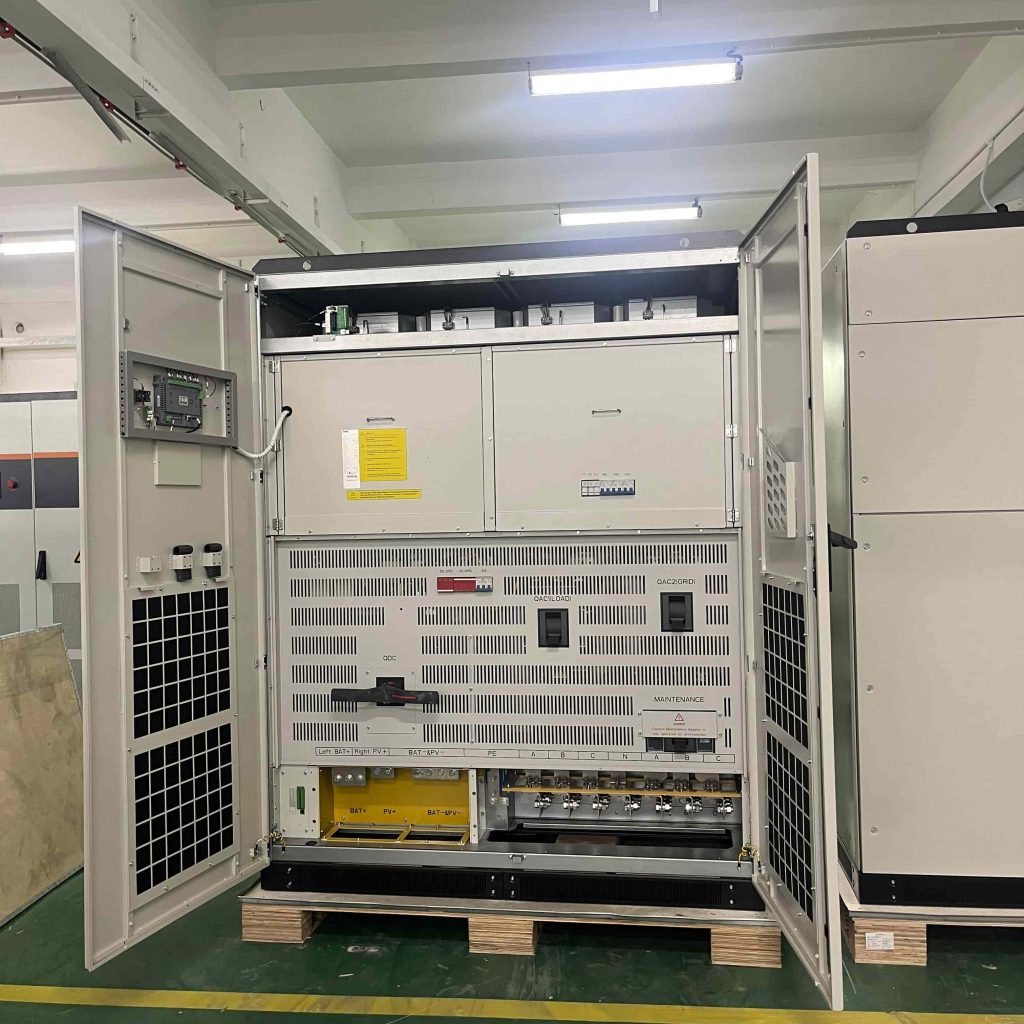
Cell Supplier vs. Integrated BESS Supplier: Engineering Comparison
EPC contractors must understand that procuring bare cells shifts the engineering risk entirely to the project site. An integrated BESS supplier mitigates these risks through factory validation.
|
Engineering Parameter |
Raw Cells |
Integrated MegSolid BESS |
|---|---|---|
| High C-Rate Thermal Management | EPC Design Risk | Model-specific cooling and thermal test scope in the quotation |
| PCS Compatibility | ❌ (EPC must integrate separately) | Approved battery/PCS/BMS limits and witnessed interface tests |
| Grid Compliance | EPC Responsibility | Exact model/firmware/report register; local connection acceptance assigned |
| High-Power EMS Control | ❌ (No system controller) | Named SOC-reserve and load-shedding scenarios for the delivered controller |
| Warranty Responsibility | Split (Cell vs. PCS) | Quoted complete-system scope and remedies; third-party exclusions explicit |
The Engineering Risks of Fragmented Procurement for Telecom Towers
Many telecom developers attempt to reduce CapEx by sourcing raw cells and assembling BESS cabinets locally.
However, this fragmented approach introduces critical engineering failures for high-power 5G sites:
- Thermal Runaway at High C-Rate: 5G macro cells require continuous high-power discharge. Liquid electrolytes suffer accelerated degradation under high C-rate stress without an integrated closed-loop liquid cooling system. (For foundational knowledge, read our BESS thermal runaway prevention guide).
- PCS Incompatibility: Bare cells lack a PCS. High-power telecom loads require a PCS tuned for rapid transient response. Without factory integration, the system will fail to protect the critical bus during grid faults.
- Grid Compliance Failure: Without a PCS tuned for local grid codes, the project will face grid operator rejection.
Core Datasheet Parameters for High-Power Telecom BESS
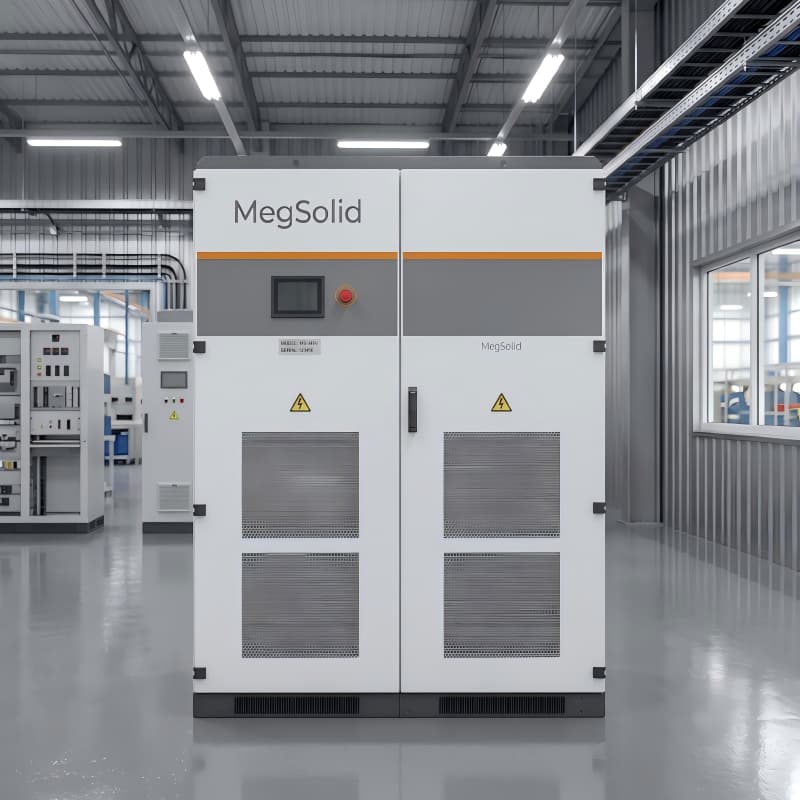
When assessing a telecom battery storage manufacturer for deployments, procurement teams must demand verifiable engineering data across three critical pillars.
1. High C-Rate Thermal Validation
Liquid electrolyte LFP systems require careful thermal management during continuous high-power discharge.
MegSolid's hybrid solid-state matrix is designed to reduce thermal propagation risk and improve intrinsic safety characteristics compared to conventional liquid electrolyte systems.
Validated to ≥5,000 cycles under specified operating conditions; safety is validated according to IEC 62619. (Explore our previous analysis on solid-state vs. liquid LFP BESS).
2. PCS Compatibility for Transient Loads
High-power telecom loads (e.g., 5G macro cell clusters) require rapid transient response.
Start with the telecom power path. A 48 V DC radio/rectifier bus and a 400 V AC service bus are different interfaces. MegSolid's ESSA0100B-0215 outdoor cabinet publishes 100 kW AC and 215.04 kWh nominal energy with LFP cells and intelligent air cooling; it can be screened only after the rectifier, critical AC/DC loads, surge and site connection are defined. A separate MEGA PCS with a built-in isolation transformer is another engineered route. Choose the equipment boundary the tower or cluster actually needs, then price the battery, rectifier/PCS, controls, protection and acceptance together.
Furthermore, the EMS must be capable of autonomous load management to prevent battery deep discharge during extended outages.
3. High-Density Modular Deployment
Standard liquid LFP containers require reinforced pads.
Direct manufacturers like MegSolid engineer modular 215kWh outdoor cabinet architectures.
The 215kWh C&I Energy Storage Cabinet publishes a 3,900 kg weight and 2,450×1,550×2,400 mm envelope. Use them to check the tower site's access and lifting route before a delivery date is accepted. A cabinet footprint does not approve the slab, anchor loads, rigging or replacement path. The supplier/EPC scope should identify the controlled GA, support/anchor interface, lifting instructions and local civil work. The logistics advantage is a package the installer can plan around, rather than an assumed standard slab or forklift.
Engineering Field Experience: 5G Tower Backup ESS Deployment in Southeast Asia
The following scenario demonstrates how MegSolid evaluates a typical high-power telecom BESS architecture during technical pre-assessment.
- Project environment under review: Macro BTS or telecom-cluster inquiry; 38°C/90% humidity, 8-hour target and 180 kW peak are inputs requiring an actual load trace.
- Engineering challenge: Define the critical AC/DC bus, rectifier, outage reserve, generator recovery, available recharge energy and restricted lifting route.
- Proposed equipment screen: Two ESSA0100B-0215 cabinets total 200 kW rated AC and 430.08 kWh nominal energy using standard air-cooled LFP. They are not proof of 8 hours at 180 kW; the full power/energy/control duty needs engineering.
- Validation required before acceptance: Agree FAT/SAT for load steps, critical-bus voltage, SOC reserve, source transfer, communications loss and the site temperature duty. No completed FAT result is established by this illustrative scenario.
- Quotation result: Identify the supported load and duration, recharge plan, included interfaces, exclusions and supplier/EPC/service responsibilities; price that scope rather than an unverified runtime.
MegSolid Engineering Validation Reference Data
To support procurement decisions, the following engineering evidence is available for review:
|
Parameter |
Evidence Available |
|---|---|
| Cell Safety | IEC 62619 test documentation |
| Thermal Performance | Environmental chamber test records |
| Cycle Performance | Internal cycle validation report |
| Manufacturing Quality | Cell batch traceability records |
| System Safety | UL 9540A evaluation documentation availability depends on project configuration and certification scope |
7 Questions to Ask Before Selecting a Telecom BESS Supplier
To ensure system integrity and project success, EPC procurement teams must ask these critical questions during the RFQ phase:
- Does the supplier provide complete PCS + EMS integration? Verify that the system is delivered as a turnkey solution, not just a collection of components.
- How is thermal propagation tested under high C-rate? Ask for UL 9540A unit-level test reports verifying safety under continuous high-power discharge.
- Is cell traceability available? Request IEC 62619 certifications linked directly to specific production batches.
- What is the SOH warranty model? Request 10-year capacity fade projections under telecom load profiles.
- Can FAT be performed before shipment? Confirm that Factory Acceptance Testing protocols are available and can be witnessed.
- Who owns system responsibility after commissioning? Ensure single-supplier warranty for the complete BESS, avoiding split responsibilities.
- Can the EMS prevent deep battery discharge? Verify that the EMS logic protects the battery from deep discharge during extended grid faults.
Need a Technical Review?
Upload your project requirements:
- Load profile
- Backup duration
- Grid voltage
- Installation environment
Give MegSolid the measured telecom load/time trace, required backup window, AC/DC bus and rectifier data, generator start/recovery sequence, recharge source, site heat/humidity and installation access. Ask the offer to return the supported kW / kVA, usable AC or DC energy at a named point, selected models, SOC reserve and acceptance scenarios. If the 180 kW example load were continuous for 8 hours, it would require 1,440 kWh delivered; two 215 kWh cabinets cannot establish that duty. The buyer should see the supported service window and remaining engineering work before ordering the rollout quantity.
How to Verify a Telecom BESS Supplier Before RFQ Approval
Before entering technical discussions, procurement teams must verify the foundational reliability of the supplier.
|
Verification Item |
Purpose |
|---|---|
| Factory Audit | Confirm manufacturing capability and automated production lines |
| Cell Traceability | Verify quality control via IEC 62619 batch records |
| Production Capacity | Ensure delivery reliability for 5G rollout timelines |
| Warranty Terms | Clarify lifecycle risk and capacity fade guarantees |
| Service Network | Confirm O&M support and remote diagnostic capabilities |
Illustrative TCO Factors
Example only. Not a guaranteed saving. Based on internal engineering assumptions, not market pricing. Actual results depend on duty cycle, climate conditions, warranty terms and maintenance strategy.
The following model demonstrates potential lifecycle cost differences under defined assumptions. The following values are illustrative assumptions for engineering comparison and should be replaced by project-specific quotations and operating conditions.
|
Cost Factor |
Conventional Liquid LFP UPS |
MegSolid Dual-Purpose Solid-State |
|---|---|---|
| Civil Installation | High logistics complexity | Lower logistics complexity |
| Augmentation Frequency | Higher (Depends on degradation profile) | Lower (Reduced augmentation requirements under specified conditions) |
| PCS Integration | High integration engineering risk | Reduced integration engineering (Factory validated) |
Telecom BESS Supplier Evaluation Matrix
To assist in the objective selection of a BESS supplier, EPC teams can utilize the following weighted evaluation matrix:
|
Evaluation Criteria |
Weight |
|---|---|
| Applicable site/utility electrical requirements and safety | 25% |
| Cycle Degradation Data | 20% |
| Ambient, heat and humidity resilience | 20% |
| Factory FAT Capability | 15% |
| BOM Traceability | 10% |
| 15-Year TCO Model | 10% |
About MegSolid Engineering Team
MegSolid operates large-scale energy storage manufacturing facilities in Huzhou, China.
Founded in 2018, MegSolid delivers integrated solid-state ESS solutions to EPC contractors across Europe, Africa, and Southeast Asia.
- Battery System Design: Hybrid solid-state matrix development.
- PCS Integration: Custom firmware tuning for grid compliance and transient response.
- Thermal Safety Validation: Environmental chamber FAT and UL 9540A testing protocols.
Regulatory References
MegSolid's engineering design aligns with the following external standards:
- IEC 62619: Safety requirements for secondary lithium cells and batteries used in industrial applications.
- UL 9540A: Test Method for Evaluating Thermal Runaway Fire Propagation in Lithium-Ion Energy Storage Systems.
(Explore our comprehensive C&I ESS solution and OEM/ODM manufacturing services).
FAQ
Q1: Why is buying raw cells instead of an integrated BESS risky for high-power telecom towers?
Procuring raw cells shifts the engineering risk to the EPC. Without factory-integrated PCS and EMS, the system cannot guarantee grid compliance, cannot manage high C-rate thermal loads, and risks thermal runaway.
Q2: How does an integrated BESS ensure grid compliance for telecom sites?
Match the exact PCS or rectifier, battery and control interface to the telecom bus. A built-in transformer or THDi below 3% supports a particular product comparison; it does not guarantee grid approval or eliminate all site retrofits. The offer should identify the model/firmware, available reports, protection settings and the party responsible for local acceptance.
Q3: How does the EMS prevent battery deep discharge during extended grid faults?
The EMS autonomously manages load profiles and prevents deep battery discharge by disconnecting non-critical loads and maintaining a minimum SOC threshold, protecting battery health during extended outages.
Q4: What are the thermal management risks for liquid LFP cells at high C-rates?
Compare the actual discharge current, ambient conditions and thermal limits of the offered model. ESSA0100B-0215 uses intelligent air cooling in its public configuration; liquid cooling is a separate model/design choice. A 5G label alone does not establish a high-C-rate duty or require one universal cooling architecture.
Q5: How does warranty responsibility differ between buying cells vs. an integrated BESS?
Require the quoted warranty schedule to name the covered battery, PCS/rectifier, controls and other equipment, remedies, exclusions and responsibility for local labour and freight. A single integrated supplier can simplify the interface, but it does not automatically warrant third-party equipment or every part of the installed telecom site.
Q6: How does modular cabinet design reduce civil engineering risks for telecom sites?
The ESSA0100B-0215 lists 3,900 kg and 2,450×1,550×2,400 mm. Check the approved support/anchor interface, lifting method, access and ground conditions before selecting the civil and rigging plan. A modular cabinet does not automatically fit a standard tower slab or remove the crane requirement.
Q7: Why is cell traceability critical for telecom BESS procurement?
EPCs must request IEC 62619 cell certifications linked directly to specific production batches. Direct manufacturers like MegSolid provide complete BOM documentation, ensuring cell consistency and simplifying warranty claims.
Q8: Does procuring a solid-state BESS reduce mid-life augmentation requirements?
The public ESSA0100B-0215 lists at least 5,000 cycles with standard LFP cells. Its separate maximum charge/discharge-rate entry is 0.5C at 25°C; that is not a complete cycle-test method. Obtain the cycle conditions and offered warranty for that exact model; IEC 62619 safety evidence is not a cycle-life warranty. A different hybrid solid-state or high-C-rate configuration needs its own signed model/BOM and test boundary.
Q9: Why is PCS compatibility data essential when evaluating telecom BESS suppliers?
High-power telecom loads require rapid transient response. Without custom-tuned firmware, the BESS may fail to protect the critical bus during grid faults.
Q10: Can MegSolid customize the PCS firmware for specific telecom grid codes?
Yes. As a direct manufacturer, MegSolid engineers tune active power filtering and anti-islanding parameters at the factory level to meet specific regional standards.
Q11: How to evaluate telecom battery storage suppliers for 5G applications?
Evaluate suppliers based on high C-rate thermal validation, PCS compatibility for transient loads, cycle life (solid-state offers ≥5,000 cycles), and single-supplier warranty.
Q12: What is a high-power BESS for telecom towers?
A telecom BESS is the battery and conversion/control/protection package selected to support the agreed radio/rectifier or AC load bus. Define critical power, outage duration, reserve, recharge and source-recovery behaviour. Two 215.04 kWh cabinets offer 430.08 kWh nominal energy; a 180 kW continuous 8-hour duty needs 1,440 kWh delivered before battery-side allowances. The quotation must identify the actual supported service window.
Q13: How much does a telecom battery storage system cost?
Based on an illustrative lifecycle cost model (215kWh capacity, 365 cycles/year, 15-year evaluation), the 15-year TCO of a solid-state BESS demonstrates a potential lifecycle cost reduction compared to a standard liquid LFP system, primarily due to reduced mid-life augmentation requirements.
Get Your Custom Microgrid Engineering Consultation
For technical consultation, microgrid system selection, OEM/ODM cooperation, and distributor opportunities, contact our engineering team:
Global Sales & HQ (Hong Kong):
FLAT 7, 11/F BLK C HANG WAI IND CTR, 6 KIN TAI ST, TUEN MUN, HONG KONG
- Email: [email protected]
- Phone: +852 59811073
R&D & Manufacturing Facility (Huzhou):
No. 898 Mengxi Road, South Taihu New Area, Huzhou City, Zhejiang Province, P.R.China
- Website: https://www.solidess.com/
