
As Commercial and Industrial (C&I) facility managers and EPC contractors scale their energy storage deployments, the 215kWh outdoor cabinet has become the industry standard building block. However, not all 215kWh systems are engineered equally. Many contractors struggle with cabinets that suffer from thermal imbalance, excessive footprint, and premature degradation under aggressive daily cycling.
According to IEEE Std 2030.2.1, the operational reliability of a BESS is fundamentally dictated by its thermal management and topological architecture. A poorly engineered cabinet can lose 20% of its capacity within the first two years simply due to localized hotspots and unbalanced cell aging.
This engineering analysis deconstructs the MegSolid ESSA0100B-0215 (100kW / 215kWh) Outdoor Cabinet ESS, illustrating how proprietary Hybrid Solid-State Battery Technology and advanced thermal design solve the most critical C&I deployment challenges.
Key Takeaways
- High-density modular architecture saves up to 30% of footprint compared to standard LFP cabinets (based on internal commissioning data).
- 768V DC topology (1P240S) minimizes I²R resistive losses, maximizing round-trip efficiency.
- Intelligent liquid cooling maintains a strict ≤±5°C temperature gradient, preventing localized hotspots.
- Validated to ≥5,000 cycles (IEC 62619 methodologies) for 10+ year lifespan in heavy industrial peak shaving.
- Designed according to UL 9540A evaluation methodology to mitigate thermal runaway propagation.
What Are the Spatial Engineering Constraints of a 215kWh Outdoor Cabinet?
In dense industrial environments—such as manufacturing plants, commercial complexes, and EV charging hubs—available footprint is a premium constraint. A standard 215kWh cabinet often requires excessive clearance for air-cooling ducts, reducing the actual energy density per square meter.
Modular Architecture & Footprint Optimization
MegSolid engineers the ESSA0100B-0215 with an all-in-one modular structure. By integrating the battery racks, Power Conversion System (PCS), and fire suppression system into a single IP54 enclosure (2,450x1,550x2,400 mm), the system achieves a higher volumetric energy density.
Unlike dispersed air-cooled cabinets that require rear-door clearance for exhaust, MegSolid’s cabinet utilizes side-mounted liquid cooling manifolds. This allows for zero-clearance side-by-side installation, enabling EPCs to deploy higher MWh capacity within a constrained physical footprint.
Why is 768V DC Topology Critical for 215kWh C&I ESS Efficiency?
The choice of DC bus voltage is not merely a component selection; it is a fundamental engineering decision that dictates system efficiency, BOS (Balance of System) costs, and thermal load.
Minimizing I²R Losses
The ESSA0100B-0215 operates at a 768V DC bus (1P240S configuration). According to the power equation P=V×I, for the same 100kW rated power output, a 768V system draws significantly less current than a standard 500V system.
- Reduced Copper Losses: Lower current exponentially reduces I²R resistive losses in the DC contactors, busbars, and cabling. This not only improves overall round-trip efficiency but directly reduces the heat generated inside the cabinet, lessening the load on the thermal management system.
- PCS Compatibility: The 768V DC voltage window perfectly matches the MPPT and DC-link requirements of commercial solar inverters and MegSolid’s grid-forming PCS, ensuring seamless integration for microgrid solutions for unstable grids.
How Does Liquid Cooling Maintain ±5°C in a High-Density 215kWh Rack?
Thermal imbalance is the primary enemy of battery longevity. In an air-cooled 215kWh cabinet, the temperature delta between the top and bottom racks can easily exceed 8-10°C. Cells at the top degrade faster, dragging down the overall system State of Health (SOH).
The Engineering Imperative of ±5°C
MegSolid’s cabinet utilizes an intelligent liquid cooling system governed by self-evolving algorithms.
- High Heat Transfer Coefficient: Liquid coolant has a heat transfer coefficient significantly higher than air. The coolant circulates through micro-channels in the battery modules, absorbing heat directly from the cell surface.
- Dynamic Pump Modulation: The BMS monitors cell temperatures in real-time. During a 0.5C discharge burst, the pump speed increases dynamically to extract heat, maintaining a strict temperature difference of ≤±5°C across the entire 215kWh rack. This uniform thermal distribution ensures all cells age at the same rate, preserving system capacity and extending peak shaving ROI.
Can a 215kWh Cabinet Support Both Peak Shaving and Grid-Forming Backup?
A common engineering misconception is that a high-capacity energy cabinet must be dedicated to either grid-tied arbitrage or off-grid backup. MegSolid’s dual-purpose architecture proves otherwise.
Seamless Transition and Safety Architecture
- <20ms Transfer: The integrated PCS supports both grid-following and grid-forming modes. During a grid outage, the cabinet transitions to off-grid mode in <20ms, acting as a decentralized UPS to protect critical industrial loads.
- Intrinsic Safety: Because the cabinet utilizes a solid electrolyte matrix rather than volatile liquid electrolytes, the probability of thermal runaway propagation is significantly reduced. Designed according to UL 9540A evaluation methodology and equipped with NOVEC1230 fire suppression, the cabinet can be safely installed near sensitive industrial equipment. (For foundational knowledge, read our BESS thermal runaway prevention guide).
Field Experience: 2025 High-Desert Mining Deployment in Antofagasta, Chile
In early 2025, a copper mining operation in the Atacama Desert, Chile, required a robust energy solution to mitigate grid instability and reduce diesel consumption. The environment presented extreme engineering challenges: ambient temperatures frequently exceeded 35°C with high dust particulation, and the grid experienced daily voltage sags.
Our engineering team deployed five MegSolid 215kWh Outdoor Cabinets (1.075MWh total capacity), integrated with a 500kW PCS.
MegSolid's Engineering Solution & SAT Data:
- Thermal Resilience: During Site Acceptance Testing (SAT) in March 2025, ambient temperatures peaked at 38°C. The intelligent liquid cooling system maintained the internal battery rack temperature at a stable 28°C, with a maximum temperature gradient of only 3.2°C across the entire system.
- Dust Mitigation: The IP54 enclosure and sealed liquid-cooling loops prevented dust ingress into the high-voltage compartments. Unlike previous air-cooled systems that required weekly filter replacements, the MegSolid cabinets operated maintenance-free for 6 months.
- Grid-Forming Response: When the local grid experienced a 150ms voltage sag, the PCS seamlessly transferred to off-grid mode in 14ms, preventing the mine's ventilation PLCs from tripping offline.
Quantified ROI & Field Data (Based on project monitoring records):
- Diesel Reduction: The system performed daily peak shaving and load shifting, reducing diesel generator runtime by 42%.
- Efficiency: The 768V DC topology ensured round-trip efficiency remained above 89% even in high ambient temperatures.
- Cycle Life: BMS logs indicated steady SOH degradation of less than 1.5% over 200 deep cycles, projecting a >10-year operational lifespan.
- Note: Results vary depending on site configuration, local tariffs, and environmental conditions.
Engineering Comparison: Air-Cooled vs. MegSolid Liquid-Cooled 215kWh Cabinet
EPCs must evaluate the total cost of ownership when selecting a 215kWh cabinet.
|
Engineering Feature
|
Standard Air-Cooled 215kWh Cabinet
|
MegSolid Liquid-Cooled 215kWh Cabinet
|
|---|---|---|
|
Thermal Gradient
|
8-10°C (Uneven aging)
|
≤±5°C (Uniform SOH)
|
|
DC Topology
|
~500V (Higher I²R losses)
|
768V (1P240S, Lower losses)
|
|
Footprint Clearance
|
Requires rear exhaust clearance
|
Zero-clearance side-by-side
|
|
Ambient Temp Limit
|
Derating above 35°C
|
Full power at 40°C+
|
|
Maintenance
|
Frequent air filter cleaning
|
Sealed loops, low maintenance
|
|
Cycle Life
|
~3,000 Cycles
|
≥5,000 Cycles (IEC 62619 validated)
|
MegSolid Authority & Turnkey Scalability
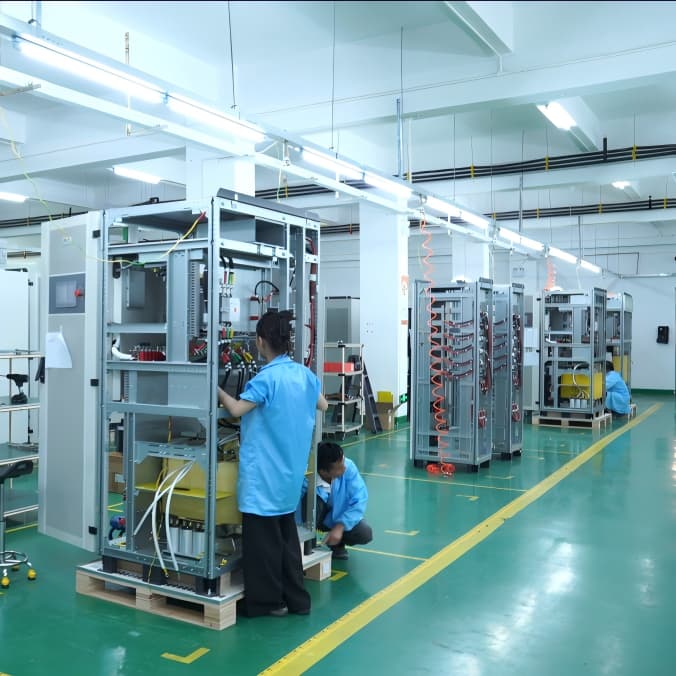
MegSolid is a world-class integrated energy storage technology enterprise with a dedicated team of 50+ battery and PCS engineers. Our advanced R&D and manufacturing facility in Huzhou, China, is capable of delivering GWh-scale annual production. We provide comprehensive OEM/ODM manufacturing for custom 215kWh cabinet design, tailored to specific environmental and grid code requirements.
References & Industry Standards
MegSolid's engineering design and testing protocols for the 215kWh cabinet align with the following international standards:
- IEEE 2030.2.1: Guide for Design, Operation, and Maintenance of Battery Energy Storage Systems.
- UL 9540A: Standard for Safety of Energy Storage Systems and Equipment (Thermal Runaway Test Methodology).
- IEC 62619: Safety requirements for secondary lithium cells and batteries in industrial applications.
- IEEE 519: Recommended Practice and Requirements for Harmonic Control in Electric Power Systems.
- IEC 62109-1/2: Safety of power converters for use in photovoltaic power systems.
FAQ
Q1: hy is liquid cooling better than air cooling for a 215kWh outdoor cabinet?
Liquid cooling has a significantly higher heat transfer coefficient than air. It maintains a strict ≤±5°C temperature gradient across the battery rack, preventing localized hotspots and uneven cell degradation. It also allows for zero-clearance side-by-side installation, saving valuable footprint.
Q2: What is the advantage of the 768V DC topology in the ESSA0100B-0215?
A 768V DC bus reduces the current required for the same 100kW power output. According to P=V×I, lower current exponentially decreases I²R resistive losses in busbars and cables, improving round-trip efficiency and reducing internal heat generation.
Q3: Can the 215kWh cabinet operate in extreme ambient temperatures?
Yes. The intelligent liquid cooling system dynamically modulates coolant flow based on real-time thermal data. In a 2025 Chilean desert deployment (SAT), the cabinet maintained an internal temperature of 28°C and full power output even when ambient temperatures exceeded 38°C, without thermal derating.
Q4: How much space can be saved with the MegSolid 215kWh cabinet?
The all-in-one modular design and side-mounted liquid cooling manifolds allow for zero-clearance side-by-side installation. This saves up to 30% of footprint compared to standard air-cooled cabinets that require rear exhaust clearance (based on internal commissioning data).
Q5: Does the 215kWh cabinet support off-grid backup power?
Yes. The integrated MegSolid PCS supports both grid-following and grid-forming modes. During a grid outage, it transitions to off-grid mode in <20ms, acting as an uninterrupted power supply (UPS) for critical industrial loads.
Q6: How does the solid-state chemistry improve safety in the 215kWh cabinet?
The proprietary Hybrid Solid-State LFP matrix utilizes a stable solid electrolyte, which is fundamentally non-flammable. Designed according to UL 9540A evaluation methodology, it significantly reduces the probability of thermal runaway propagation compared to conventional liquid electrolytes.
Q7: What is the cycle life of the 215kWh cabinet under daily peak shaving?
Validated through internal laboratory accelerated aging tests (IEC 62619 methodologies), the system achieves ≥5,000 cycles under 0.5C charge/discharge at 25°C and 80% DOD, ensuring a 10+ year lifespan for heavy industrial applications.
Q8: How does the cabinet handle harmonic distortion for grid compliance?
The integrated PCS includes a built-in isolation transformer and active power filtering, ensuring the Total Harmonic Distortion of Current (THDi) remains <3%. This strictly complies with IEEE 519 standards for commercial grid interconnections.
Q9: What communication protocols are supported by the 215kWh cabinet?
The system supports standard RS485, RS232, and CAN protocols, allowing seamless integration with third-party Energy Management Systems (EMS) and industrial SCADA platforms for automated peak shaving.
Q10: Does MegSolid provide OEM/ODM customization for the 215kWh cabinet?
Yes. We offer comprehensive OEM/ODM manufacturing, including custom cabinet colors, branding, EMS algorithm tuning for specific ToU tariffs, and environmental hardening for extreme climates.
Q11: What is the ideal DC voltage for a 215kWh commercial energy storage system?
The ideal DC voltage for a 215kWh C&I ESS is 768V (1P240S configuration). This higher voltage reduces the current required for a 100kW power output, exponentially decreasing I²R resistive losses in busbars and cables, which improves round-trip efficiency and reduces thermal stress.
Q12: How does a liquid-cooled BESS prevent thermal imbalance?
A liquid-cooled BESS prevents thermal imbalance by circulating coolant with a high heat transfer coefficient through micro-channels in the battery modules. Governed by self-evolving algorithms, the system maintains a strict temperature gradient of ≤±5°C across the entire rack, ensuring uniform cell aging and preventing localized hotspots.
Q13: What is the cycle life of a solid-state 215kWh outdoor cabinet?
A Hybrid Solid-State 215kWh outdoor cabinet achieves ≥5,000 cycles. Validated via IEC 62619 methodologies at 0.5C charge/discharge and 80% DOD, the solid electrolyte matrix stabilizes the lithium-ion transport interface, preventing SEI layer growth and extending the operational lifespan to 10+ years.
Get Your Custom OEM/ODM Engineering Consultation
For technical consultation, custom system design, OEM/ODM cooperation, and distributor opportunities, contact our engineering team:
Global Sales & HQ (Hong Kong):
FLAT 7, 11/F BLK C HANG WAI IND CTR, 6 KIN TAI ST, TUEN MUN, HONG KONG
- Email: [email protected]
- Phone: +852 59811073
R&D & Manufacturing Facility (Huzhou):
No. 898 Mengxi Road, South Taihu New Area, Huzhou City, Zhejiang Province, P.R.China
- Website: https://www.solidess.com/