 Skip to content
Why Interface Stability Matters More Than Energy Density
For years, the global energy storage industry has focused on one headline metric: energy density.
Whether discussing electric vehicles, residential batteries, or commercial energy storage systems, manufacturers often highlight higher capacity, faster charging speeds, and longer cycle life.
However, after spending years developing next-generation hybrid solid-state and solid-state battery systems, I believe the most important challenge is not energy density.
It is interface stability.
More specifically, it is a phenomenon known as Solid-Solid Interface Degradation.
In laboratory environments, many solid-state batteries demonstrate impressive performance. Yet when deployed in real-world operating conditions—daily charging, discharging, temperature fluctuations, vibration, and long-term aging—the interfaces between battery materials become the deciding factor for safety, reliability, and lifespan.
At MegSolid, we view interface engineering as one of the most critical factors in building commercially viable solid-state energy storage systems.
What Is Solid-Solid Interface Degradation?
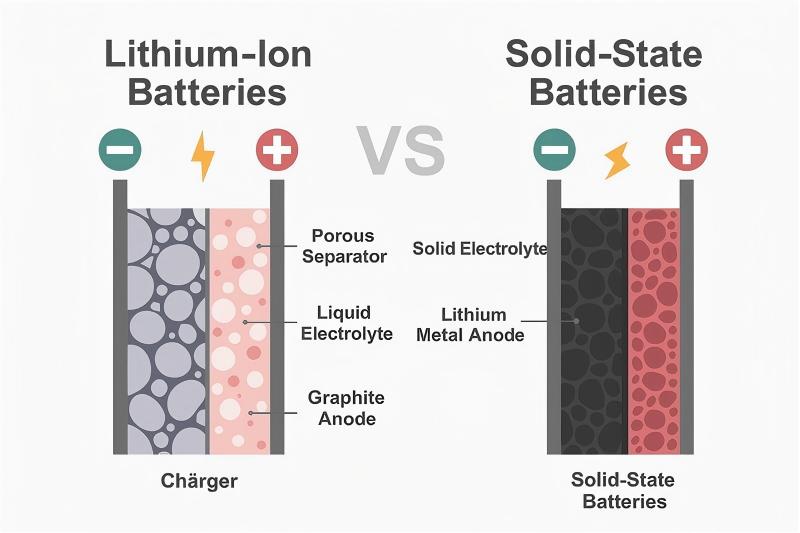
In traditional lithium-ion batteries, liquid electrolytes naturally fill microscopic gaps between electrodes.
Solid-state batteries are fundamentally different.
Instead of liquid electrolytes, they use solid electrolytes to transport lithium ions between the cathode and anode.
While this architecture improves safety and energy density potential, it introduces a new engineering challenge.
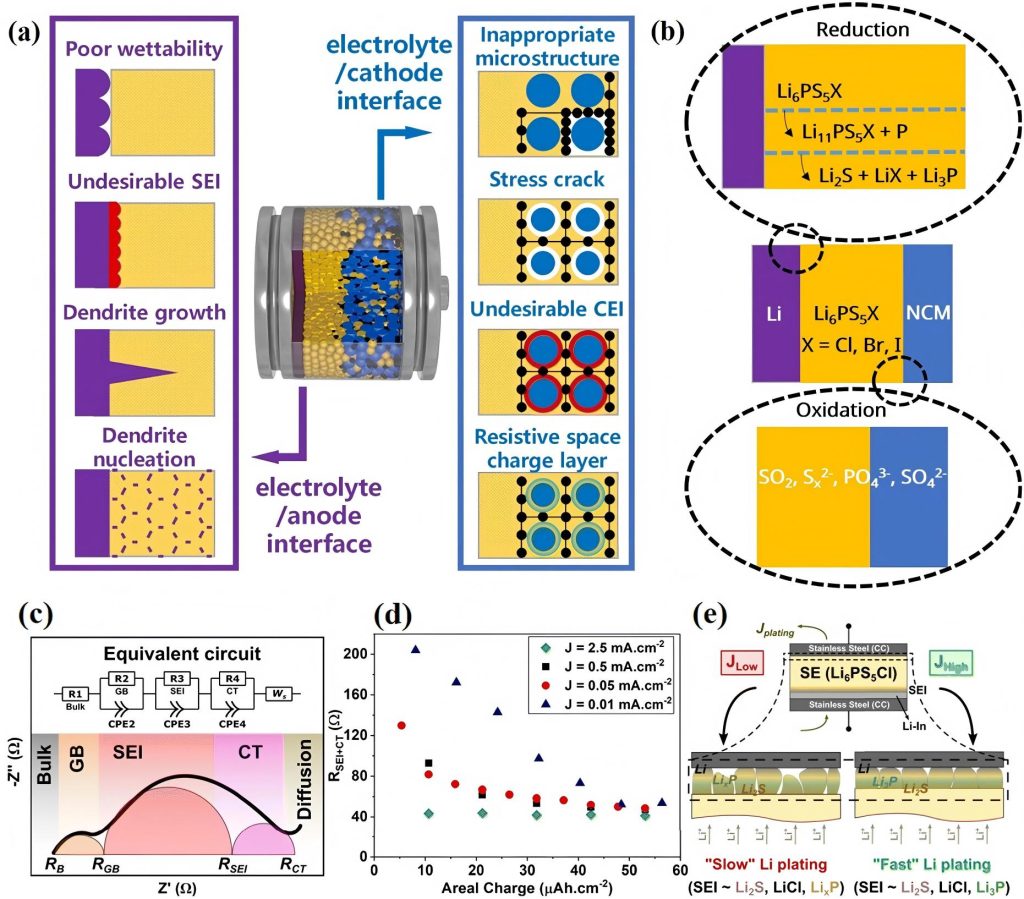
Solid materials do not automatically maintain perfect contact with one another.
Over time, interfaces may experience:
- Mechanical separation
- Micro-crack formation
- Chemical side reactions
- Lithium dendrite penetration
- Increased interfacial resistance
Collectively, these phenomena are referred to as Solid-Solid Interface Degradation.
Once degradation begins, battery performance gradually declines.
The result can include:
- Reduced energy capacity
- Higher internal resistance
- Increased heat generation
- Lower charging efficiency
- Shortened cycle life
For energy storage investors, EPC contractors, and project developers, these effects directly impact project ROI.
Four Major Mechanisms Behind Interface Degradation
1. Mechanical Delamination
Every battery experiences expansion and contraction during charge and discharge cycles.
In solid-state batteries, even microscopic dimensional changes can create stress at the interface.
Over thousands of cycles:
- Contact pressure decreases
- Interfacial gaps appear
- Ion transport pathways become restricted
This process is known as delamination.
Once contact quality deteriorates, battery impedance rises and efficiency falls.
2. Lithium Dendrite Penetration
One common misconception is that solid-state batteries completely eliminate lithium dendrites.
In reality, dendrite formation can still occur under certain conditions.
If interfacial defects exist:
- Current density becomes uneven
- Localized lithium deposition develops
- Metallic filaments may grow through weak regions
When dendrites penetrate the electrolyte layer, safety risks increase dramatically.
This is one reason why interface quality remains a primary focus across the industry.
3. Interfacial Chemical Reactions
Different materials rarely remain perfectly stable when placed in long-term contact.
Cathode materials, solid electrolytes, and anodes can gradually react with one another.
These reactions may form:
- Resistive interphase layers
- Unwanted byproducts
- Reduced ion-conductive regions
As these layers grow thicker, ion movement slows.
The battery must work harder to deliver the same power output.
4. Thermal Stress Accumulation
Temperature differences accelerate nearly every degradation mechanism.
Uneven heating can create:
- Local expansion
- Mechanical strain
- Material fatigue
In large-scale ESS deployments, thermal management becomes equally important as cell chemistry.
Without proper temperature control, interface degradation accelerates significantly.
Why Many Solid-State Battery Startups Struggle to Scale
Many startups have demonstrated remarkable laboratory breakthroughs.
Companies such as QuantumScape and major automotive manufacturers including Toyota continue investing heavily in next-generation solid-state technologies.
Yet scaling from laboratory cells to commercial energy storage systems remains difficult.
The challenge is not creating a high-performance prototype.
The challenge is maintaining interface stability over thousands of cycles across thousands of cells.
This explains why many promising technologies remain years away from mass deployment.
Commercial customers require:
- Predictable performance
- Long-term reliability
- Bankable project economics
Without solving interface degradation, none of these objectives can be achieved consistently.
Why MegSolid Focuses on hybrid solid-state Technology Today
At MegSolid, our engineering team takes a pragmatic approach.
Rather than chasing laboratory records, we focus on technologies that can deliver measurable value today.
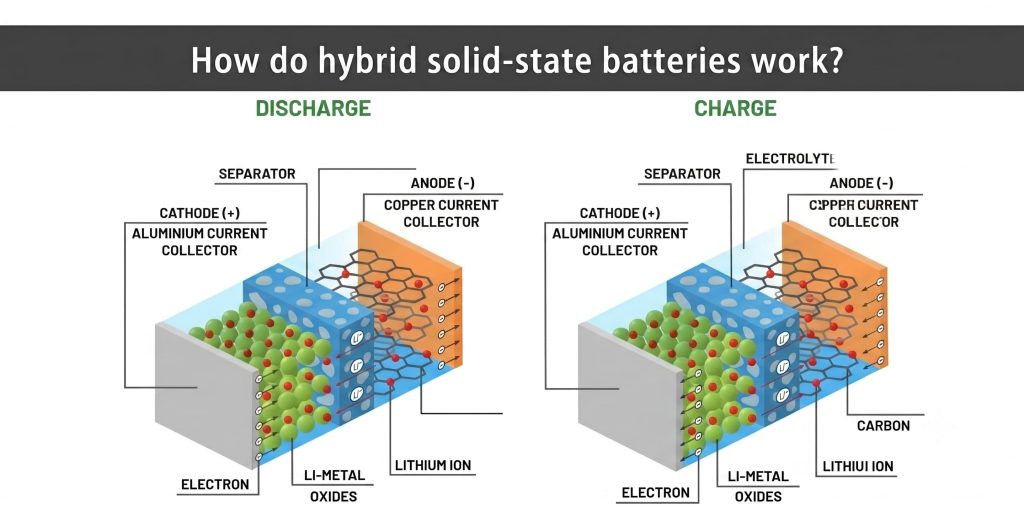
Our current hybrid solid-state battery platform combines the safety advantages of solid electrolyte technology with the maturity and manufacturability of LiFePO4 chemistry.
For example, the MegSolid 51.2V 314Ah hybrid solid-state Energy Storage Battery provides:
- 16.07kWh energy storage
- 314Ah capacity
- Up to 8,000 cycles at 80% DOD
- UL and CE certification support
- Integrated BMS architecture
- Communication via CAN, RS485 and RS232
These specifications were designed with long-term reliability in mind rather than short-term laboratory performance.
How MegSolid Reduces Interface Degradation Risks
Advanced Thermal Management
Temperature consistency is essential for interface stability.
MegSolid's commercial and industrial energy storage systems incorporate intelligent thermal management architectures designed to minimize temperature variation throughout the battery pack.
Our solid-liquid energy storage platform integrates:
- Liquid cooling technology
- AI-driven monitoring
- Intelligent thermal balancing
The system maintains temperature differences within ±5°C, helping reduce localized stress accumulation and improving long-term performance consistency.
AI-Based Early Warning Systems
Interface degradation rarely appears overnight.
Subtle changes often emerge long before capacity loss becomes visible.
MegSolid's AI-powered monitoring architecture continuously evaluates operational data, identifying abnormal patterns that may indicate developing issues.
This enables:
- Preventive maintenance
- Reduced downtime
- Improved asset utilization
- Enhanced system safety
For commercial operators, early intervention often means avoiding costly system interruptions.
System-Level Engineering
Battery performance is not determined by cells alone.
The interaction between:
- Battery packs
- BMS
- EMS
- PCS
- Thermal management systems
ultimately determines long-term reliability.
MegSolid designs energy storage systems as integrated ecosystems rather than isolated components.
This holistic approach reduces stress throughout the entire energy storage architecture.
MegSolid vs CATL vs BYD vs Tesla Megapack:
Which Technical Route Is Better for Long-Term Interface Stability?
When evaluating energy storage systems, many buyers focus on brand recognition.
However, from an engineering perspective, the more important question is:
Which technology route can maintain performance, safety, and interface stability over the next 10 to 15 years?
The answer depends on how each manufacturer balances safety, energy density, thermal management, and degradation control.
CATL: Pursuing Ultra-High Cell Performance
As one of the world's largest battery manufacturers, CATL continues investing heavily in advanced cell chemistry.
Key strengths include:
- Large-scale manufacturing capability
- Advanced cell design
- Strong supply chain integration
- High energy density products
CATL's focus has historically centered on maximizing cell performance and reducing battery costs through manufacturing scale.
For utility-scale projects, this strategy offers significant advantages.
However, as energy density increases, interface engineering becomes increasingly important.
Higher energy density often means:
- Greater internal stress
- More thermal challenges
- Higher demands on interface stability
Future success will depend not only on cell chemistry but also on maintaining long-term interfacial integrity.
BYD: Integration and Safety-Driven Design
BYD follows a different philosophy.
The company's Blade Battery architecture focuses heavily on safety and structural optimization.
Advantages include:
- Strong thermal stability
- Excellent manufacturing consistency
- High mechanical robustness
- Proven large-scale deployment
BYD's approach prioritizes reliability over extreme energy density.
This makes it attractive for long-duration applications where safety and predictability are more important than maximum capacity per cubic meter.
From an interface degradation perspective, conservative system design can often reduce long-term stress accumulation.
Tesla Megapack: Software-Centric Energy Storage
The Tesla Megapack represents another technical philosophy.
Tesla's competitive advantage extends beyond batteries.
The company combines:
- Battery systems
- Thermal management
- AI optimization
- Grid software integration
into a unified platform.
This software-first approach improves:
- Energy dispatch
- Asset utilization
- Operational efficiency
However, regardless of software sophistication, every battery system eventually faces material-level degradation mechanisms.
Interface stability remains a fundamental physical challenge.
Software can mitigate stress.
It cannot completely eliminate it.
Where MegSolid Takes a Different Path
At MegSolid, our engineering philosophy is centered around one question:
How do we maximize real-world lifecycle value rather than laboratory performance records?
Many emerging solid-state battery projects aim to achieve:
- Extremely high energy density
- Ultra-fast charging
- Aggressive material innovation
While these goals are exciting, commercial customers often have different priorities.
They want:
- Stable operation
- Predictable maintenance costs
- Long cycle life
- High system availability
- Lower safety risk
This is why MegSolid has focused heavily on hybrid solid-state and solid-liquid hybrid technologies.
MegSolid's hybrid solid-state Strategy
Rather than waiting for fully solid-state batteries to become commercially mature, MegSolid has developed hybrid solid-state solutions that balance innovation and reliability.
For example:
Key specifications include:
- 314Ah capacity
- 16.07kWh energy storage
- 8000-cycle lifespan at 80% DOD
- hybrid solid-state LiFePO4 chemistry
- UL certification support
- CAN / RS485 / RS232 communication
These parameters enable practical deployment today while reducing many interface risks associated with fully solid-state architectures.
MegSolid's Thermal Engineering Advantage
In our experience, thermal consistency is one of the most underestimated factors affecting interface degradation.
Many battery failures are not caused by catastrophic defects.
They originate from small temperature differences accumulating over thousands of cycles.
MegSolid's Solid-Liquid Energy Storage System incorporates:
- AI early warning algorithms
- Intelligent thermal balancing
- Liquid cooling architecture
- Multi-layer protection design
The system maintains temperature differences within ±5°C, helping reduce uneven aging and interface stress.
Why Commercial Projects Care More About Stability Than Marketing Claims
Consider a commercial facility operating a battery system every day for 10 years.
The owner does not ask:
"Which battery achieved the highest laboratory energy density?"
The owner asks:
- Will my system still perform after 5 years?
- What is my maintenance cost?
- How often will downtime occur?
- How safe is the installation?
- What is the total lifecycle ROI?
These questions are directly connected to degradation control.
And interface degradation sits at the center of that equation.
Case Example:
Interface Stability in a 215kWh Commercial ESS
MegSolid's Outdoor Cabinet ESSA0100B-0215 provides:
- 215.04kWh capacity
- 100kW AC output
- 768V nominal system voltage
- ≥5000 cycle life
- Integrated fire suppression
- IP54 protection
For commercial facilities operating daily charge-discharge cycles, maintaining low internal resistance over time becomes critical.
Even small increases in interfacial resistance can affect:
- Round-trip efficiency
- Heat generation
- System availability
- Revenue generation
This is why MegSolid places equal emphasis on:
- Cell engineering
- Thermal management
- PCS efficiency
- AI monitoring
- System integration
rather than focusing on any single metric.
Why EPC Contractors Are Increasingly Evaluating Interface Engineering
Five years ago, EPC firms primarily evaluated:
- Battery capacity
- Price per kWh
- Warranty period
- ≥5000 cycle life
- Integrated fire suppression
- IP54 protection
Today, evaluation standards have evolved significantly.
Leading EPC contractors now examine:
- Thermal consistency
- Cell architecture
- Safety strategy
- Degradation mechanisms
- Lifecycle economics
because these factors ultimately determine project profitability.
A battery system that loses performance slowly often generates more value than one that starts with higher specifications but degrades rapidly.
This shift is one reason why interface engineering is becoming a major differentiator in next-generation energy storage systems.
MegSolid's Long-Term Vision
The future of solid-state batteries will not be defined solely by energy density.
It will be defined by durability.
The companies that successfully solve interface degradation will become the leaders of the next energy storage era.
At MegSolid, our goal is not merely to build batteries.
Our goal is to build energy storage systems capable of delivering safe, predictable, and profitable performance throughout their entire lifecycle.
That is why interface stability remains at the core of our research, product development, and engineering strategy.
FAQ
Q1: What exactly is Solid-Solid Interface Degradation in solid-state batteries?
Solid-Solid Interface Degradation refers to the gradual loss of contact stability between solid electrolyte and electrodes in solid-state batteries.
Unlike liquid-based systems, solid materials cannot self-fill gaps, so microscopic separation naturally occurs over time, leading to:
Increased internal resistance
Reduced ion mobility
Efficiency loss
Long-term capacity decay
This is one of the key reasons why interface engineering is now considered more important than energy density in next-generation energy storage systems.
Q2: Why is interface degradation the key barrier for solid-state battery commercialization?
Because it directly determines whether performance can remain stable beyond laboratory conditions.
In real-world ESS applications:
daily cycling stress accumulates
temperature variation accelerates micro-cracks
pressure relaxation reduces contact quality
Even if a battery performs well initially, interface instability can significantly reduce lifecycle value, which directly affects ROI for EPC and investors.
Q3: How do different companies approach this problem differently (CATL vs BYD vs Tesla vs MegSolid)?
Each company follows a different engineering philosophy:
CATL focuses on high-performance cell chemistry and large-scale manufacturing optimization.
BYD prioritizes structural safety and system-level integration (Blade Battery philosophy).
Tesla Megapack emphasizes software-driven energy optimization and grid-level dispatch intelligence.
MegSolid focuses on interface stability engineering through semi-solid architecture + system-level thermal control.
Q4: Why does higher energy density sometimes increase interface degradation risk?
Higher energy density usually means:
tighter electrode stacking
higher stress concentration
more aggressive ion movement
increased thermal load
These factors intensify mechanical and chemical stress at the solid-solid interface, accelerating degradation if not properly managed.
This is why interface engineering becomes more critical as energy density increases.
Q5: Is Tesla Megapack affected by solid-solid interface degradation?
Yes, but in a different way.
The Tesla Megapack is based on lithium-ion chemistry, not fully solid-state architecture.
However, it still experiences:
electrode-electrolyte interface aging
thermal cycling stress
long-term impedance growth
Tesla mitigates these issues primarily through:
advanced thermal management
software optimization
predictive dispatch algorithms
But the underlying physical degradation mechanisms still exist.
Q6: Which technical route is more stable for long-term ESS operation?
From a lifecycle engineering perspective:
CATL: strong scalability, optimized lithium-ion maturity
BYD: high safety + structural robustness
Tesla Megapack: system intelligence + software optimization
MegSolid: interface stability + semi-solid hybrid architecture
For long-duration commercial ESS (10–15 years), the key differentiator is not initial performance, but degradation rate control, where interface engineering plays a decisive role.
Q7: How does MegSolid reduce interface degradation in real systems?
MegSolid adopts a system-level strategy rather than relying only on cell chemistry.
Key mechanisms include:
semi-solid LiFePO4 hybrid structure (314Ah / 16.07kWh platform)
liquid cooling with ±5°C temperature uniformity
AI-based early warning system
integrated BMS + EMS coordination
optimized PCS matching (up to 98.7% inverter efficiency in system architecture)
These reduce both mechanical stress and thermal imbalance, which are the main drivers of interface degradation.
Q8: Why is thermal management so important for interface stability?
Because temperature inconsistency creates uneven expansion inside the battery stack.
This leads to:
micro-crack formation
localized resistance increase
accelerated aging zones
Even small temperature differences over long cycles can significantly amplify degradation rates.
This is why advanced ESS designs now treat thermal control as a core part of interface engineering.
Q9: How does interface degradation impact ROI in C&I energy storage projects?
It affects ROI through multiple layers:
reduced usable capacity over time
lower round-trip efficiency
higher cooling energy consumption
increased maintenance frequency
shorter effective system lifespan
In large-scale projects, even a small degradation improvement can translate into significant lifecycle revenue difference.
Q10: Which technology route is best for future solid-state energy storage?
There is no single “winner” today.
But the industry is converging toward three directions:
improved solid electrolyte materials
hybrid semi-solid architectures
AI-driven system-level control
Among these, MegSolid’s approach represents a practical commercialization bridge, balancing:
safety
scalability
interface stability
real-world ROI
This is why interface engineering is increasingly becoming the central competitive factor in next-generation energy storage systems.
