 Skip to content
Africa's energy sector is undergoing a structural transition. Across mining operations, agricultural processing facilities, manufacturing plants, commercial parks, and utility-scale renewable projects, energy storage is becoming a critical infrastructure asset rather than a backup power solution.
For investors, EPC contractors, and industrial energy users searching for a reliable battery energy storage systems supplier in Africa, project success depends on more than battery capacity alone. Thermal management, environmental adaptability, lifecycle economics, system safety, and long-term operating performance are increasingly becoming the primary evaluation criteria.
At the same time, the rapid growth of the BESS South Africa market is influencing energy storage investment strategies across neighboring countries. Lessons learned from large-scale battery deployments in South Africa are now shaping project development in Namibia, Botswana, Zambia, Kenya, Nigeria, and other emerging markets.
The expansion of the broader thermal energy storage market is also attracting attention from industrial users seeking alternative methods of energy management. However, for applications requiring fast response, backup power, renewable integration, and grid stabilization, battery energy storage systems remain the dominant technology choice.
Why Demand for Battery Energy Storage Systems Is Accelerating Across Africa
BESS South Africa: A Response to Grid Instability and Load Shedding
Grid reliability remains one of the largest operational risks for industrial facilities throughout Africa.
South Africa provides the clearest example. Load shedding events have forced factories, mines, cold-storage facilities, food processors, and logistics operators to seek alternatives to traditional grid dependency.
Production interruptions create direct financial losses through:
- Production downtime
- Equipment restart costs
- Raw material waste
- Contract delivery delays
- Reduced equipment lifespan
The rapid expansion of the BESS South Africa market is largely driven by these operational challenges.
Unlike conventional diesel generators, modern battery systems can provide power support almost instantly. Through integrated Battery Management Systems (BMS), Power Conversion Systems (PCS), and Energy Management Systems (EMS), industrial facilities can transition between power sources within milliseconds.
For critical industrial loads, this enables:
- Continuous production
- Voltage stabilization
- Reduced equipment stress
- Improved power quality
- Lower operational risk
As a result, many industrial operators now view battery storage as a core production asset rather than a backup energy system.
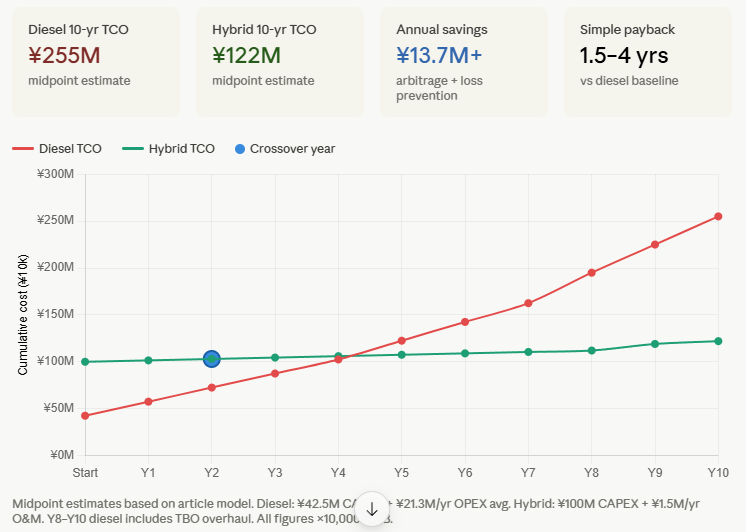
Diesel Replacement Economics
Diesel generation remains common across remote mining sites, agricultural operations, and industrial facilities.
The challenge is no longer equipment availability. The challenge is operating cost.
A typical diesel-based power strategy includes:
- Fuel procurement
- Long-distance transportation
- Generator maintenance
- Lubricants
- Spare parts
- Engine overhaul costs
When fuel logistics are included, diesel electricity costs often become significantly higher than utility power or renewable generation.
Battery storage changes this cost structure.
Solar and wind generation can be stored and dispatched when needed, reducing generator runtime and lowering fuel consumption.
For many industrial users, diesel replacement creates measurable benefits through:
- Reduced fuel expenditure
- Lower maintenance costs
- Reduced carbon emissions
- Improved energy security
- More predictable operating expenses
Storage Architectures for African Industrial Applications
Hybrid Mini-Grids for Mining and Heavy Industry
Many mining projects operate far from stable transmission infrastructure.
In these environments, Hybrid Mini-Grid systems have become one of the most effective energy architectures.
A typical system includes:
- Solar PV
- Wind generation
- Diesel generators
- Battery Energy Storage Systems
- Energy Management Systems
The EMS continuously evaluates:
- Load demand
- Renewable generation output
- Battery State of Charge (SOC)
- Generator availability
The dispatch strategy typically follows:
Solar and wind generation can be stored and dispatched when needed, reducing generator runtime and lowering fuel consumption.
- Renewable generation serves active loads.
- Excess renewable energy charges the battery.
- Batteries discharge when renewable output declines.
- Diesel generators operate only when necessary.
This structure reduces fuel consumption while maintaining system reliability.
For industrial developers evaluating a battery energy storage systems supplier in Africa, hybrid microgrid compatibility has become an increasingly important procurement factor.
Energy Time-Shifting and Peak Demand Management
Time-shifting has become one of the most profitable applications of industrial battery storage.
The concept is straightforward:
- Charge during low-price periods.
- Discharge during high-price periods.
The same principle applies to renewable energy generation.
Stored energy can be deployed during:
- Morning factory startup periods
- Agricultural irrigation cycles
- Industrial production peaks
- Utility demand peaks
Many successful BESS South Africa projects have been designed specifically around peak shaving and energy arbitrage strategies.
As electricity tariffs continue rising across Africa, time-shifting applications are expected to become a major source of project revenue.
Battery Storage Versus the Thermal Energy Storage Market
Understanding the Difference
The broader thermal energy storage market includes technologies that store energy in the form of heat or cooling capacity.
Examples include:
- Molten salt storage
- Ice storage systems
- Industrial heat storage
- Concentrated solar thermal systems
These technologies serve important roles in specific industrial applications.
Battery energy storage systems address a different challenge.
They provide:
- Instant power delivery
- Grid stabilization
- Renewable integration
- Backup power
- Peak shaving
- Frequency regulation
For industrial operators seeking operational continuity and power reliability, battery storage offers greater flexibility than many technologies within the traditional thermal energy storage market.
Why Thermal Stability Matters in African Conditions
Environmental conditions across many African regions create unique engineering challenges.
Common operating conditions include:
- Ambient temperatures above 40°C
- High dust concentrations
- Strong solar radiation
- Limited cooling infrastructure
These conditions place significant stress on battery systems.
The ability to maintain stable operating temperatures directly affects:
- Cycle life
- Safety performance
- Efficiency
- Maintenance requirements
- Total cost of ownership
This is one reason why thermal management has become a critical differentiator among battery suppliers operating across Africa.
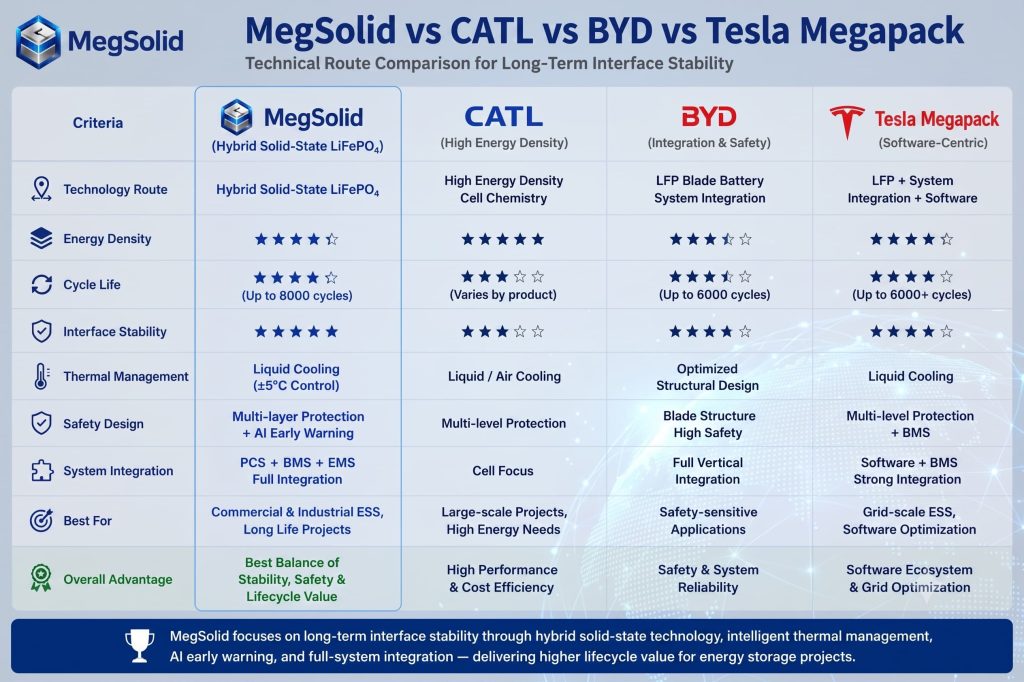
MegSolid's Hybrid Solid-State Technology Pathway
Enhanced Thermal Stability for High-Temperature Deployment
MegSolid's Hybrid Solid-State architecture combines advanced electrolyte design with intelligent thermal management systems.
Compared with conventional battery systems, hybrid solid-state technology provides:
|
Technical Factor |
Conventional LFP |
MegSolid Hybrid Solid-State |
|---|---|---|
| Electrolyte Structure | Liquid | Hybrid Solid-State Electrolyte |
| Thermal Stability | Good | Higher Material Stability |
| Thermal Runaway Resistance | Moderate | Enhanced Intrinsic Safety |
| Environmental Adaptability | Standard | Better High-Temperature Suitability |
| Safety Layering | System-Level Protection | Material + System Protection |
Improved thermal stability reduces dependence on oversized cooling infrastructure.
Benefits include:
- Reduced HVAC demand
- Lower auxiliary energy consumption
- Improved system efficiency
- Lower maintenance requirements
For projects located in regions with extreme temperatures, these factors directly affect project profitability.
Long-Life Operation and Safety Architecture
Industrial users require systems capable of supporting:
- Daily cycling
- High utilization rates
- Elevated ambient temperatures
- Continuous operation
MegSolid's architecture incorporates multiple protection layers:
- Intelligent BMS
- Multi-sensor monitoring
- AI-based early warning
- Liquid cooling systems
- Integrated fire suppression
Safety and lifecycle performance are increasingly becoming key selection criteria when choosing a battery energy storage systems supplier in Africa.
ROI Analysis for a Typical Agricultural Processing Facility
Baseline Operating Profile
Consider a medium-sized agricultural processing facility operating in a region with unstable grid access.
Project assumptions:
|
Parameter |
Value |
|---|---|
| Daily Energy Consumption | 1,200 kWh |
| Operating Days | 330 Days/Year |
| Peak Tariff | $0.25/kWh |
| Off-Peak Tariff | $0.10/kWh |
| Existing Backup | Diesel Generator |
| Generator Runtime | 6 Hours/Day |
These assumptions are representative of many commercial BESS South Africa projects currently deployed in agricultural and food-processing sectors.
Revenue Stream One: Peak-Valley Arbitrage
Electricity price differential:
$0.25 - $0.10 = $0.15/kWh
If 600 kWh is shifted daily:
Daily savings:
600 × $0.15 = $90/day
Annual savings:
$90 × 330 = $29,700/year
Revenue Stream Two: Diesel Displacement
Battery deployment significantly reduces generator runtime.
Savings include:
- Fuel purchases
- Fuel transportation
- Oil replacement
- Scheduled maintenance
- Engine servicing
- Spare parts replacement
For many remote African facilities, diesel savings often exceed electricity arbitrage revenue.
CAPEX and Payback Evaluation
Project CAPEX typically includes:
- Battery Energy Storage System
- PCS equipment
- Transformers
- Switchgear
- EMS integration
- Civil construction
- Installation and commissioning
Compared with many projects within the wider thermal energy storage market, battery storage systems typically provide greater flexibility for industrial load management and backup power applications.
Recommended financial evaluation metrics include:
- Payback Period
- Net Present Value (NPV)
- Internal Rate of Return (IRR)
- Levelized Cost of Stored Energy (LCOS)
Projects combining diesel reduction and peak shaving generally achieve faster payback than single-revenue-stream projects.
Full-Cycle Project Delivery and Local Ecosystem Development
Engineering Services Throughout the Project Lifecycle
Successful projects begin long before equipment installation.
Critical project stages include:
- Site assessment
- Load analysis
- Capacity sizing
- System design
- Grid integration studies
- Commissioning
- Long-term monitoring
Industrial buyers increasingly evaluate the service capabilities of a battery energy storage systems supplier in Africa alongside product specifications.
Projects combining diesel reduction and peak shaving generally achieve faster payback than single-revenue-stream projects.
Workforce Development and Regional Value Creation
Energy storage projects create value beyond electricity generation.
- Engineering employment
- Technical training
- Maintenance capability development
- Renewable energy workforce expansion
As renewable energy adoption accelerates, demand for BESS South Africa deployments is expected to continue expanding across mining, agriculture, manufacturing, and commercial sectors.
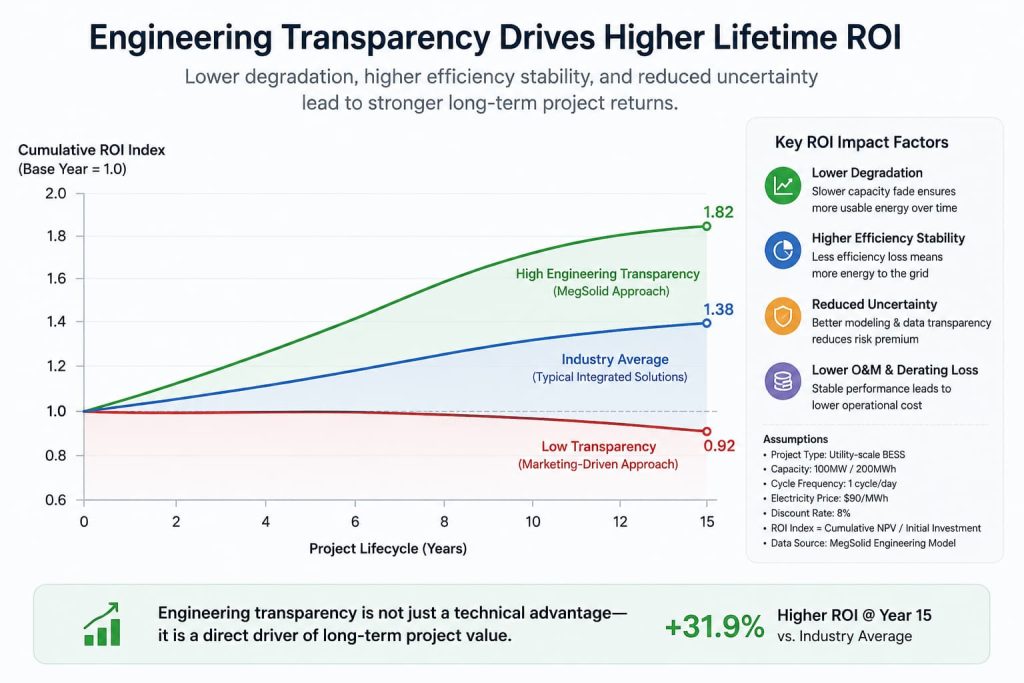
For project developers evaluating solutions within both the battery storage sector and the broader thermal energy storage market, the most important decision factors remain measurable engineering metrics: thermal stability, lifecycle performance, operational efficiency, safety architecture, and long-term project economics.
FAQ
Q1: How do I choose a reliable battery energy storage systems supplier in Africa?
When evaluating a battery energy storage systems supplier in Africa, focus on technical capability rather than price alone. Key factors include battery safety architecture, thermal management performance, local service support, project experience, and the supplier's ability to provide system integration, commissioning, and long-term maintenance. Suppliers with proven deployments in African industrial environments typically deliver lower operational risk and better lifecycle economics.
Q2: Why is BESS South Africa growing so rapidly?
The rapid growth of the BESS South Africa market is largely driven by load shedding, rising electricity tariffs, and increasing renewable energy adoption. Battery energy storage systems help industrial users reduce production downtime, lower diesel consumption, and improve energy independence, creating measurable financial benefits.
Q3: What battery size is suitable for a commercial or industrial project in Africa?
The correct battery size depends on daily energy consumption, peak demand, backup duration requirements, and renewable energy generation capacity. Most commercial and industrial projects require a detailed load analysis before selecting a system. Oversizing increases CAPEX, while undersizing can limit operational savings and backup capability.
Q4: Can a battery energy storage system completely replace diesel generators?
In many applications, a battery system combined with solar PV can significantly reduce diesel generator runtime. Complete diesel replacement depends on load profile, renewable energy availability, storage capacity, and backup duration requirements. Hybrid microgrid designs often deliver the best balance between reliability and operating cost reduction.
Q5: What is the typical ROI for a BESS South Africa project?
The ROI of a BESS South Africa project depends on electricity tariffs, diesel consumption, operating hours, and available revenue streams. Projects that combine peak shaving, energy arbitrage, and diesel displacement generally achieve faster payback periods than systems relying on a single source of savings.
Q6: How does battery storage compare with the thermal energy storage market?
The thermal energy storage market focuses on storing energy in the form of heat or cooling capacity, while battery storage systems store electrical energy. For industrial users requiring backup power, renewable integration, peak shaving, and fast response times, battery energy storage systems usually provide greater operational flexibility.
Q7: Why is thermal management critical for battery energy storage projects in Africa?
Many African regions experience ambient temperatures above 40°C. Poor thermal management can accelerate battery degradation, reduce efficiency, and increase safety risks. Advanced thermal control systems help maintain stable battery temperatures, improve cycle life, and lower long-term operating costs.
Q8: What industries benefit most from battery energy storage systems in Africa?
Battery energy storage systems are widely used in mining, agricultural processing, manufacturing, telecommunications, commercial facilities, and utility-scale renewable energy projects. These industries often face grid instability, high diesel costs, or peak electricity demand charges that can be reduced through energy storage deployment.
Q9: What safety features should I look for when selecting a battery energy storage systems supplier in Africa?
A high-quality system should include intelligent BMS protection, thermal management systems, fire detection, fire suppression, remote monitoring, and multi-layer safety controls. Safety performance becomes especially important in high-temperature industrial environments common across Africa.
Q10: Can battery energy storage systems support future renewable energy expansion?
Yes. Modern battery energy storage systems are designed to integrate with solar PV, wind power, and hybrid microgrid architectures. Choosing a scalable system allows businesses to expand renewable generation capacity without redesigning their entire energy infrastructure.
