
A frequency-regulation bid can lose service revenue if the battery, PCS and meter respond on different timescales. Automatic Generation Control (AGC), frequency regulation and virtual synchronous generators (VSG) require an agreed grid-support duty, not merely a high-C-rate slogan. MegSolid's standard 5000INTL lists 2.7 MW / 5.0159 MWh; that ratio does not establish a custom high-C-rate service by itself. Bring the grid-service power trace and energy window so the proposal specifies the required PCS, battery and control package.
For Battery Energy Storage Systems, grid-service duty is more demanding than a capacity label: it combines power reversals, ramp rate, partial-state-of-charge (PSOC) throughput, temperature and recovery time. Neither liquid LFP nor a solid-state label determines the outcome alone. Compare the offered cell and converter against the actual charge/discharge trace and its retention terms; lithium-plating risk depends on the materials and operating conditions, not simply participation in frequency regulation.
Make the fast charging solid-state ESS offer earn its place in the contracted service. The published 5000INTL provides a 2.7 MW AC / 5015.9 kWh nominal starting point; MegSolid’s Hybrid Solid-State Battery selection must then match each burst’s power, duration, repetition and SOC reserve. Put the battery/PCS configuration, control response and acceptance scope in the same quotation, so the EPC can see what it is buying. A higher-C-rate custom variant carries its own operating limits.
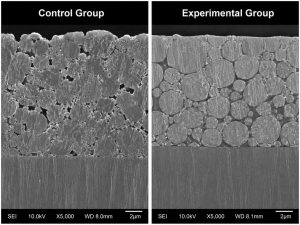
The Engineering Challenge: High C-Rate PSOC Cycling in Frequency Regulation
Frequency regulation follows the specific operator’s service envelope. Charge/discharge intervals, frequency thresholds, ramp requirements and SOC headroom vary by service and controller. A 5–15-minute burst is an energy interval, not a universal response-time requirement. Use the contracted signal and a time-series energy balance to set recovery, reserve and saturation handling instead of assuming every asset stays between 30% and 70% SOC.
What the offered cell must withstand in PSOC duty
- Charge acceptance: Check the supplied cell’s charge-current limits at the relevant SOC and temperature; anode/electrolyte design and operating conditions affect plating risk.
- Repeated heat load: Evaluate loss, temperature rise and recovery across the actual PSOC trace, not only one burst or a chemistry label.
Engineering requirement 1: Cell limits and interface stability
Separate the cathode chemistry from the electrolyte architecture. LFP cells can use liquid or semi-solid electrolytes; the offered cell/BOM identifies the actual design. Reduced use of flammable liquid may change some failure pathways, but it does not establish freedom from internal short circuits, lithium plating or gas generation. Use the supplied cell’s current, temperature and ageing records to define the operating window.
Evidence and Explanation
- Interface evidence: Match high-current tests to the offered cell/BOM and temperature/SOC window; no universal mechanical barrier establishes zero internal-short risk.
- Retention scope: Use measured throughput, rate, temperature and end-of-life conditions; a solid electrolyte is not universally non-reactive at every interface or temperature.
Engineering requirement 2: Thermal control for the actual duty
Choose cooling against the heat load, ambient conditions and continuous/burst duty. Air cooling is not automatically unsuitable, and liquid cooling does not establish a particular temperature spread without a measured map. The offered available-power curve, auxiliaries and sensor layout determine whether the configuration can repeat the required service.
Evidence and Explanation
The published 5000INTL uses liquid cooling and lists an intelligent early-warning system. Turn those features into an acceptance scope: sensor coverage, alarm/derating actions, pump and auxiliary load, loss of cooling, and the temperature map for the agreed service. The public listing does not verify self-evolving algorithms or a universal ±5°C rack guarantee.
- Temperature map: Set allowed cell temperatures and spread for the agreed duty, then verify the offered cooling configuration. A ±5°C claim needs its model-specific test record.
- Cooling and fault actions: Define pump/fan operation, auxiliaries, loss of cooling, derating and shutdown. Cooling control does not itself prove propagation is prevented. BESS thermal runaway prevention guide
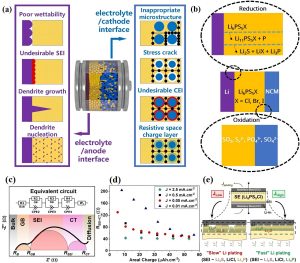
Engineering requirement 3: PCS and end-to-end grid-service response
Time the whole control chain: operator signal, EMS processing, communications, PCS power response and measurement at the agreed point. A converter’s local switching figure is not the end-to-end AGC response. The required ramp, delay, overshoot and sustained power must come from the contracted service and the offered configuration.
Evidence and Explanation
MegSolid’s Power Conversion Systems (PCS) with Isolation Transformers provide model-specific AC/DC ratings and published BMS/EMS interfaces. Select the converter rating, DC range and transformer against the supplied battery and connection point. Price the required grid-forming or grid-following control, firmware and protection with the configuration; the EPC needs an agreed function set, not an assumption that every model includes the same VSG or AGC mode.
- Service timing: Test the offered MegSolid PCS with its controller: signal-to-power delay, ramps, recovery and saturation at the agreed measurement point. Frequency thresholds and a <20 ms headline are not universal operating settings.
- Harmonic scope: Verify the supplied PCS and complete-site behavior at agreed operating points. A component THDi figure does not establish IEEE 519 compliance for every ramp or installation.
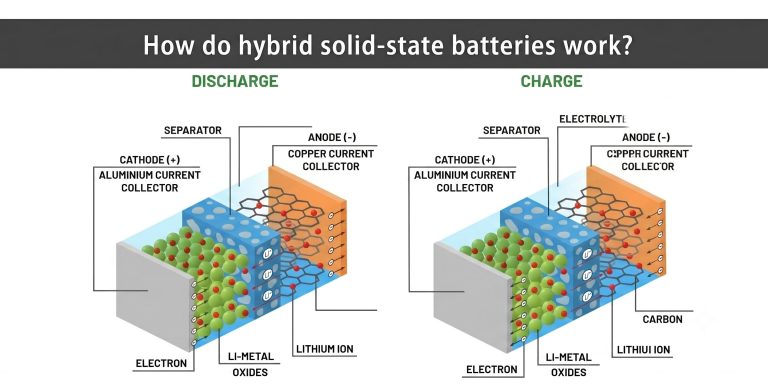
West Yorkshire scenario: Project records needed for a grid-service comparison
The previously described 2025 West Yorkshire scenario concerns a 5 MWh liquid-LFP asset reported to have lost 18% capacity over 18 months and encountered grid-compliance problems. Those are project-specific assertions, not established performance of all liquid LFP. Owner-approved monitoring, capacity-test and compliance records are needed before this scenario can be presented as a verified deployment.
For a replacement proposal, start with MegSolid’s Containerized Energy Storage System 5000INTL: 5015.9 kWh nominal storage and 2.7 MW AC from six 450 kW converter sections. Put the required service power and kWh per burst beside that block, then define any higher-power ODM configuration with its own cells, PCS and operating limits. The standard product gives the EPC a priceable baseline; a claimed Yorkshire as-built or continuous 1C variant needs its separate project specification.
MegSolid's Engineering Solution:
- Cell/configuration: The standard 5000INTL lists SHS180-314 cells. The claimed custom 1C duty requires its own cell, converter and thermal limits; no-plating performance cannot be inferred from the model name.
- Cooling record: The stated 25–28°C rack range needs the original sensor map and duty/ambient record. It is not a universal result established by the liquid-cooling catalogue.
- Control record: The stated National Grid ESO integration and <10 ms response need the as-built point map and end-to-end timing evidence, including the measurement boundary.
Commercial comparison: What the project records must establish
The previously stated six-month results need dated, owner-approved evidence before they can support a purchase decision. Compare the same measurement boundary, duty, temperature, availability and contract rules—not unequal operating periods presented as a technology ranking.
- Capacity retention: The stated <1.5% fade over six months and 18% over eighteen months are unequal periods. Use matched throughput, temperature and capacity-test methods before claiming an architecture advantage.
- Market return: A claimed 22% monthly revenue increase needs dispatch, availability, settlement and contract records. Response speed alone does not establish the revenue result.
- Insurance terms: A claimed 12% premium reduction needs the insurer’s written policy comparison; no solid electrolyte establishes a zero-accident design.
- Lifecycle economics: The claimed ≥5,000 cycles and four extra profitable years need matched ageing and cash-flow assumptions. IEC 62619 safety scope is not proof of an AGC cycle-life result.
Engineering comparison: Match the offered configuration to grid-service duty
Grid operators and EPCs must evaluate battery chemistry based on the specific duty cycle of the application.
|
Engineering Feature
|
Offered liquid-electrolyte LFP configuration
|
Offered MegSolid solid-state/semi-solid configuration
|
|---|---|---|
|
Primary Application
|
Services within the named model’s ratings and duty scope
|
5000INTL base: 2.7 MW AC / 5015.9 kWh nominal; service/configuration to be confirmed
|
|
Response to PSOC Cycling
|
Matched cell, SOC, current and temperature test
|
Matched offered-cell test; no universal no-plating guarantee
|
|
Charge/Discharge Speed
|
0.5C: two-hour nominal full-energy exchange before limits/losses
|
1C: one hour; 2C: half an hour. 5–15-minute bursts exchange partial energy and need offered limits.
|
|
Thermal Management
|
Cooling and temperature map for the actual duty
|
5000INTL lists liquid cooling; temperature spread and auxiliary duty need model evidence
|
|
Cycle Life under AGC
|
Duty-matched throughput/retention evidence
|
Duty-matched retention offer; no generic ≥5,000 AGC-cycle validation from IEC 62619
|
|
Safety under High Stress
|
Matched cell/system protection and propagation scope
|
Matched offered configuration; no chemistry-wide zero-risk conclusion
|
MegSolid Authority & Turnkey Scalability
Do not buy grid-service storage from a headline C-rate alone. Send MegSolid the service signal or duty trace, charge/discharge kW, kWh per burst, repetition, SOC reserve, site voltage and thermal conditions for an OEM/ODM manufacturing proposal. Ask the quotation to return a named cell/PCS configuration, guaranteed operating envelope, EMS point map, acceptance evidence, delivery milestones and commissioning responsibility. That gives your EPC a package to price and your asset team a service boundary to approve.
References & Industry Standards
The references below describe different technical scopes. Determine which applies to the offered equipment and project jurisdiction, then identify the actual report, certificate or acceptance requirement. Listing a standard is not evidence that the complete grid-support configuration has passed it.
- IEEE 1547: Standard for Interconnection and Interoperability of Distributed Energy Resources.
- IEC 62109-1/2: Safety of power converters for use in photovoltaic power systems.
- IEEE 519: Recommended Practice and Requirements for Harmonic Control in Electric Power Systems.
- UL 9540A: Test method for evaluating thermal runaway fire propagation in battery energy storage systems; distinct from UL 9540 equipment certification.
- IEC 62619: Safety requirements for secondary lithium cells and batteries in industrial applications.
FAQ
Q1: What affects liquid LFP ageing in frequency-regulation duty?
Liquid LFP does not inherently fail in frequency regulation. High-current charging can create lithium-plating and ageing risks under particular anode, SOC and temperature conditions. Compare the actual PSOC duty and cell-test window, then use a matched retention or throughput obligation for the supplied configuration.
Q2: How does MegSolid's solid-state battery handle high C-rate fast charging?
Use the offered cell’s published charge/discharge limits and supporting duty tests. A solid-state or semi-solid label does not prove safe continuous 1C–2C operation or eliminate internal short circuits. At 1C, a nominal full-energy exchange takes one hour before losses and limits; a 5–15-minute burst moves only a fraction of that energy.
Q3: What is the response time of the MegSolid PCS for grid support?
The local PCS and the whole AGC chain must be evaluated separately. The existing isolated PCS catalogue does not establish a universal <20 ms charge/discharge response for every model. Agree the service delay, ramp, measurement point and communications-loss behavior, then verify them on the supplied controller and converter.
Q4: How does the liquid cooling system manage heat during high C-rate bursts?
The 5000INTL lists liquid cooling and an intelligent early-warning system. The accepted thermal scope should state sensor coverage, allowed cell temperatures/spread, cooling auxiliaries, derating and fault actions for the offered duty. The catalogue alone does not verify self-evolving algorithms or ±5°C rack uniformity.
Q5: What is the cycle life of MegSolid's solid-state ESS under AGC cycling?
A grid-service life claim needs the supplied cell/BOM, current rate, SOC window, temperature, throughput and end-of-life criterion. Neither a generic ≥5,000-cycle claim nor IEC 62619 establishes the offered asset’s AGC ageing result; IEC 62619 addresses industrial lithium-battery safety. Put the matched retention obligation in the commercial offer.
Q6: Does the system comply with grid-tied harmonic standards?
Check the specific PCS and the site measurement boundary. A listed current-distortion value is not proof of complete-site IEEE 519 compliance through every power reversal. The applicable harmonic assessment, operating points and protection tests belong in the agreed connection and acceptance scope.
Q7: Can the 5000INTL containerized system be used for frequency regulation?
Evaluate the standard 5000INTL at its published 2.7 MW AC and 5015.9 kWh nominal rating. Its ability to deliver a particular frequency-regulation service depends on the required signal, usable energy, reserve, converter/control mode and accepted response tests. Quote any high-C-rate or grid-forming customization as a separate configuration.
Q8: How does solid-state chemistry improve safety during fast charging?
An electrolyte architecture may reduce particular flammability or failure pathways, but solid-state batteries can still generate heat, gas or short-circuit hazards. Compare the supplied model’s safety and propagation test scope. UL 9540A is a fire-propagation test method; it does not make a chemistry universally non-flammable or risk-free.
Q9: What communication protocols are supported for grid EMS integration?
The isolated PCS lists RS485/CAN for BMS and RS485/TCP-IP for EMS. Interfaces alone do not establish a complete protocol or seamless AGC integration. Define the register/point map, supported commands, update timing, limits, time synchronization and fallback behavior for the offered firmware.
Q10: Does MegSolid provide OEM/ODM customization for grid-support projects?
Use OEM/ODM quotation to define the required market controller, PCS firmware, battery duty, protection and integration responsibilities. Confirm what is included, what is project engineering, and the deliverable and acceptance evidence for each function. The offer should make the customization boundary and commissioning schedule clear.
Q11: What is the best battery technology for grid frequency regulation?
The best configuration is the one that meets the contracted signal at a priced and accepted duty. Compare cell/PCS power limits, usable-energy headroom, recovery, degradation obligation, thermal auxiliaries and support on the same basis. LFP cathode chemistry can coexist with a semi-solid electrolyte; the labels are not competing proof of performance.
Q12: How does a BESS respond to grid frequency deviations?
The offered EMS/controller interprets the signal and commands the PCS within the agreed limits. Response includes sensing, communications, processing and converter ramp at the measurement point. Grid-following frequency response and grid-forming/VSG operation have different control requirements; neither should be assumed from a switching-time headline.
Q13: How should liquid and semi-solid systems be evaluated for Dynamic Containment?
Liquid lithium batteries do not universally fail in Dynamic Containment markets or inevitably lose 15–20% capacity in 18 months. Assess the actual duty, cell selection, SOC control, thermal limits and retention evidence. Compare offered liquid and semi-solid configurations on a matched service and lifecycle boundary.
Get Your Custom Microgrid Engineering Consultation
Bring the grid-service requirement, not just a capacity target. Send the contracted power/energy trace, site voltage, reserve and recovery requirement, operating climate and commissioning responsibilities. MegSolid can use those inputs to define the product/configuration quotation, engineering scope, delivery and support route for your project or distributor proposal.
Global Sales & HQ (Hong Kong):
FLAT 7, 11/F BLK C HANG WAI IND CTR, 6 KIN TAI ST, TUEN MUN, HONG KONG
- Email: [email protected]
- Phone: +852 59811073
R&D & Manufacturing Facility (Huzhou):
No. 898 Mengxi Road, South Taihu New Area, Huzhou City, Zhejiang Province, P.R.China
- Website: https://www.solidess.com/