
A cheap cabinet becomes expensive when your EPC has to add the transformer, commissioning or spare-parts scope after payment. Compare MegSolid ESSA0100B-0215 (100 kW / 215.04 kWh) and Energon 261 (125 kVA / 261.24 kWh) with the same installed duty and supply boundary. Bring the missing-cost lines from your bids so the next proposal states what your project receives.
In this guide you'll learn:
- How to accurately size a C&I BESS before issuing a PO.
- Ten document groups to adapt to the supplied configuration, destination and contracted release scope.
- How to evaluate a C&I BESS supplier before procurement.
- How to identify and calculate hidden costs (civil work, grid compliance, battery augmentation).
- How to perform a 15-year Total Cost of Ownership (TCO) comparison.
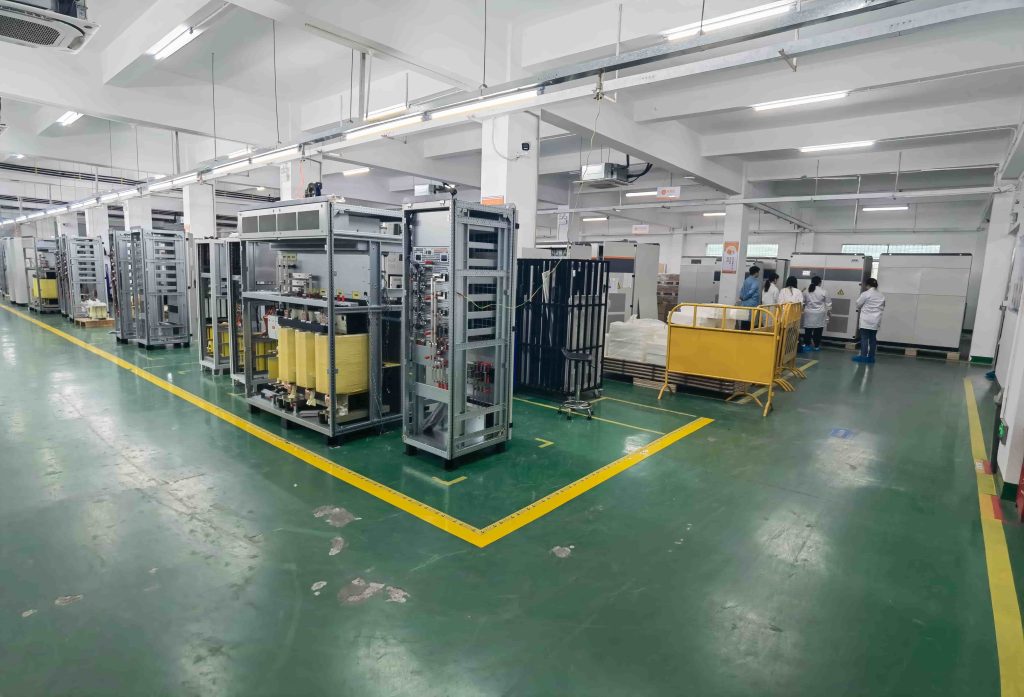
Common Procurement Failure Scenarios
A $/kWh comparison misses the interfaces that decide whether the project can be handed over. Normalize supplied equipment, usable AC duty, installation, documents, acceptance and support before deciding which quote is cheaper.
A common procurement mistake occurs when buyers compare ESS suppliers only by $/kWh. A lower-priced cabinet may exclude critical project deliverables, turning initial savings into significant EPC cost increases during installation. Excluded items often include:
- Commissioning engineering and site acceptance testing (SAT)
- Grid compliance testing and active filtering tuning
- Thermal validation documents and environmental chamber FAT
- Spare module allocation for warranty replacements
- Local service support and remote diagnostic setup
When these omissions are discovered on-site, the project faces severe delays and retroactive engineering fees, destroying the intended CapEx savings.
How to Size a C&I BESS Before RFQ
Accurate system sizing is the foundational step of BESS procurement. Oversizing leads to unnecessary CapEx, while undersizing fails to achieve peak shaving ROI. EPCs must evaluate the following parameters before requesting supplier quotations:
- Load Profile Analysis: Monitor the facility's 15-minute interval power consumption over a representative 30-day period to identify baseline and peak demand.
- Peak Demand (kW): Determine the maximum power draw that needs to be shaved to avoid costly demand charges.
- Duration (Hours): Calculate how many hours per day the peak demand persists. This dictates the required battery capacity (kWh) for a given power rating (kW).
- PCS Power Rating: The Power Conversion System must be rated to handle the maximum continuous charge/discharge current and the inrush current of facility motors.
- Future Expansion: Procure a modular architecture that allows for capacity augmentation (e.g., adding parallel 215kWh cabinets) if facility loads increase in Phase 2.
Ten Engineering Document Groups for the BESS Procurement Checklist
Agree the document groups applicable to the supplied configuration and destination, then assign their release dates and responsible parties before the PO. The ten groups below are a practical checklist, not a universally mandatory legal package. Close any critical safety, compatibility or acceptance gap before release.
- BOM traceability:Released components and serial/batch mapping, with applicable model/report coverage; no automatic per-batch certificate assumption.
- UL 9540A Test Report: Thermal runaway propagation test results demonstrating the system's response under specified abuse conditions.
- Factory Acceptance Testing (FAT) Protocol: The documented procedure that will be executed at the factory prior to shipment, including communication latency and thermal validation.
- Grid Compliance Certificates: Evidence that the PCS meets local standards (e.g., IEEE 1547-2018, AS 4777.2, VDE-AR-N 4105).
- Harmonic performance:Offered PCS parameter and project measurement point/operating states/acceptance criterion; not a universal THDi<3% contract rule.
- Thermal scope:Offered air- or liquid-cooling design, limits, derating, auxiliaries and service—not a universal liquid loop requirement.
- Fire strategy:Detection, suppression, isolation, cause/effect and installation interfaces for the actual project and applicable requirements.
- Retention/lifecycle:Matched rate, DoD, temperature, throughput, end-of-life and written warranty/augmentation terms; no universal 10-year accelerated test guarantee.
- Site Acceptance Testing (SAT) Checklist: The procedure for commissioning the system upon arrival, including insulation resistance and phase synchronization tests.
- Transport:Applicable UN 38.3 test summary and actual packaging/shipping documents for the supplied battery and route; not safe-global-transport certification.
Ask every bidder for the same model/BOM-linked package, document revision and release schedule. Cell-batch traceability and report coverage are related but different records; a certificate is not automatically issued for each batch.
How to Evaluate a C&I BESS Supplier Before Procurement
Beyond the document package, score every bidder on factory capability, traceability, certification scope, FAT, and after-sales support. Use the same criteria for all quotes.
|
Criteria
|
What to ask
|
Red flag
|
|---|---|---|
|
Manufacturing
|
In-house production capacity and lead time for your MWh
|
No responsible traceability/FAT route to the actual manufacturer
|
|
Traceability
|
Released BOM and serial/batch records plus model/report scope
|
No linkage between the offered configuration and applicable records
|
|
Certification
|
UL 9540A / IEC 62619 scope for this configuration
|
Generic PDF, wrong model or outdated test
|
|
FAT
|
Agreed FAT functions, witness and release records
|
No contracted release evidence for the supplied scope
|
|
After-sales
|
Remote diagnostics, spare modules, response SLA
|
No named engineering contact
|
If a bidder fails any row, pause the PO until the gap is closed in writing.
Identifying Hidden Costs in BESS Procurement
The CapEx line item is rarely the full project cost. Budget these three buckets before you compare bids—architecture choices can reduce them, but only if they’re specified in the RFQ.
1. Civil Engineering and Crane Logistics
Price the actual delivery and placement route. ESSA0100B-0215 is a 3,900 kg cabinet; ESSC0500B-1075 is about 21,000 kg and ESSC1000B-2150 about 38,000 kg. Cabinet modularity can reduce individual lifts, but foundation capacity, lifting points, vehicle access and permitted equipment still need a site plan. Neither a standard forklift nor a 100 ton crane is a universal requirement or a substitute for the lifting/foundation design.
2. Grid Compliance and Harmonic Penalties
Compare Standard inverters and other supplied PCS harmonic parameters with the project’s accepted measurement point, operating states and connection criteria. A built-in transformer provides galvanic isolation but does not guarantee complete-site THDi or IEEE 519 acceptance. Quote any required filtering, study and commissioning work explicitly instead of assuming a universal 5% problem or US$20,000 retrofit.
3. Mid-Life Battery Augmentation
Put throughput, capacity retention and augmentation into the offer. One full cycle per day over 15 years is 5,475 cycles ; a ≥5,000-cycle listing alone cannot guarantee all 15 years without augmentation. ESSA lists ≥5,000 cycles , but IEC 62619 is a safety scope rather than a cycle-life validation. Use the offered rate, DoD, temperature, end-of-life and warranty terms to price any reserve, top-up or replacement.
Figure 1 is an illustrative allocation of hidden-cost buckets, not a measured universal share. Replace the 40/25/20/15 percentages with the actual augmentation, civil, connection and installation costs in the project offer.
This chart illustrates why evaluating initial CapEx alone is insufficient. Procurement directors must model the full lifecycle impact of cycle life and logistical requirements.
15-Year TCO Example: Liquid LFP vs Hybrid Solid-State
Note: This TCO model is an engineering illustration rather than a universal market benchmark. Actual results vary depending on electricity tariff structure, cycling frequency, climate conditions, warranty terms, augmentation requirements, and installation requirements.
The model below compares two 1 MWh C&I systems over 15 years: a conventional liquid LFP baseline vs a hybrid solid-state architecture. Treat it as a worksheet template—swap in your tariff, cycles/day, and local civil/grid costs.
Lifecycle Cost Drivers
|
Cost Driver
|
Impact on Liquid LFP
|
Impact on Solid-State
|
|---|---|---|
|
Initial hardware
|
Offered price and configuration
|
Offered price and configuration
|
|
Installation
|
Actual mass, access, lifting/foundation plan
|
Actual mass, access, lifting/foundation plan
|
|
Augmentation risk
|
Duty-matched retention/augmentation terms
|
Duty-matched retention/augmentation terms
|
|
Grid retrofit
|
Project connection/harmonic scope
|
Project connection/harmonic scope
|
|
Service complexity
|
Quoted maintenance/support boundary
|
Quoted maintenance/support boundary
|
Step 1: Assumptions Breakdown
- System Size: 1 MWh (500 kW PCS)
- CapEx (Liquid LFP): $450,000 (Initial hardware cost)
- CapEx (Solid-State): $500,000 (Initial hardware cost)
- Civil & Logistics (Liquid): $50,000 (Container pad & heavy crane)
- Civil & Logistics (Solid-State): $10,000 (Forklift installation)
- Mid-Life Augmentation (Liquid): $200,000 (Year 8 capacity top-up)
- Illustrative augmentation input B:US$0 assumed in this worksheet; validate against the actual throughput/retention terms, not a 5,000-cycle label.
Step 2: 15-Year TCO Calculation
|
Cost Parameter
|
Standard Liquid LFP
|
Hybrid solid-state (example)
|
|---|---|---|
|
Initial CapEx
|
$450,000
|
$500,000
|
|
Civil & Logistics
|
$50,000
|
$10,000
|
|
Grid Compliance Retrofit
|
$20,000 (THDi filters)
|
US$0 assumed; site harmonic/connection scope must be quoted
|
|
Mid-Life Augmentation
|
$200,000 (Year 8)
|
US$0 assumed; validate duty/retention and augmentation terms
|
|
Illustrative capital-cost subtotal
|
$720,000
|
$510,000
|
Map each cost line to the actual MegSolid cabinet/PCS or container offer, its usable-energy obligation and the local EPC scope before evaluating lifecycle cost.
Step 3: Financial Results
The listed capital-cost inputs sum to US$720,000 and US$510,000, a US$210,000 or approximately 29.2% difference in this example. That subtotal is not complete 15-year TCO: operating/charging losses, maintenance, retention, finance and discounting are absent. It also cannot establish a 1.5-year payback advantage without annual benefit/cash flow assumptions. Replace every input with matched offers and duty before using the comparison.
Figure 2 illustrates the assumed augmentation schedule for the two example offers; it does not prove liquid LFP must top up in Year 8 or solid-state needs none. Use the offered retention and project throughput to place any actual augmentation cost on the curve.
The curve shows the two example cashflows only. A catalogue cycle count does not eliminate replacement costs. Keep the actual throughput, retention, warranty and augmentation schedule visible beside the cash flow before claiming an architecture advantage.
Select the product class from power, duration, site access and controls, then ask each bid to price the same equipment, installation and lifecycle obligations.
C&I BESS Selection Guide
Match site constraints to architecture first, then request the document package and TCO inputs from the sections above.
|
Site need
|
Typical size
|
Architecture
|
Start here
|
|---|---|---|---|
|
Space-constrained factory site
|
~215 kWh modules, parallel as needed
|
Modular cabinet; site lifting/base/access design required
|
C&I cabinet / 215 kWh product
|
|
Higher density C&I, liquid-cooled
|
~261 kWh class
|
Liquid-cooled cabinet
|
261 kWh product
|
|
Multi-MWh / limited footprint tradeoff
|
1–5 MWh+
|
Containerized BESS
|
Container / 5000INTL
|
|
Weak grid / high harmonic sensitivity
|
Sized to peak kW
|
PCS with documented THDi < 3%
|
PCS / inverter page
|
Standards Referenced in This Guide
|
Standard
|
Purpose
|
|---|---|
|
IEC 62619
|
Industrial lithium battery safety requirements
|
|
UL 9540A
|
Thermal runaway propagation testing methodology
|
|
NFPA 855
|
ESS fire safety installation standard
|
|
IEEE 1547
|
Grid interconnection requirements
|
|
IEEE 519
|
Power quality and harmonic control (THDi)
|
Project Implementation Workflow
To ensure successful procurement and deployment, EPCs must follow a structured workflow from initial sizing to commercial operation.
Figure 3 is a planning sequence. Freeze the ordered configuration and critical document responsibilities before PO, then agree FAT release, SAT and payment milestones according to the contract and actual project requirements.
Assign the applicable safety/connection documents and deviation closure to agreed release and payment milestones. The workflow does not automatically validate all UL 9540A or grid evidence; named records and responsibility make the purchase enforceable.
Get a C&I BESS Engineering Review
Do not let the cheapest battery line hide the most expensive site obligation. Send MegSolid the load event, required AC power and hours, site voltage, climate and installation/access constraints. Ask for the named cabinet/PCS or container configuration, usable-energy basis, document/FAT/SAT package, priced supplier/EPC boundary, delivery and spares/warranty response. Compare that complete offer against the same lifecycle inputs in every bid.
- Load profile / peak demand (kW)
- Target capacity (kWh) and duration
- Grid voltage and interconnection standard
- Site location and ambient range
FAQ
Q1: What is the most important document to request when procuring a BESS?
Request the safety/propagation evidence applicable to the exact supplied configuration and project. UL 9540A evaluates propagation at defined cell/module/unit/installation scopes; it is not equipment certification or a universally mandatory unit-level AHJ requirement in every jurisdiction.
Q2: What are the hidden costs of buying a cheap BESS?
Price civil/lifting/access, connection studies or filtering, controls, acceptance, support and lifecycle work for the actual configuration. A generic chemistry or THDi threshold does not determine every project’s crane, filter or Year 8 augmentation requirement.
Q3: How does modular cabinet design reduce procurement costs?
Five 215.04 kWh cabinets total 1,075.2 kWh nominal and can reduce individual equipment-lift size compared with a larger container. The lifting equipment, foundation, access and electrical connection still need an approved plan; modularity does not universally eliminate cranes or reinforced foundations.
Q4: Why is a 15-year TCO model better than evaluating initial CapEx?
A 15-year TCO needs the actual duty, usable energy, retention, augmentation, operating costs and cashflows. A 3,000- or 5,000-cycle label does not by itself establish a Year 8 US$200,000 top-up or no augmentation. One cycle/day for 15 years requires 5,475 cycles before other conditions are considered.
Q5: What is the difference between FAT and SAT?
FAT (Factory Acceptance Testing) is conducted at the manufacturer's facility before shipment to verify functionality. SAT (Site Acceptance Testing) is conducted at the project site upon installation to verify grid interconnection and local compliance.
Q6: Does the BESS procurement checklist include BOM traceability?
Require the released BOM and cabinet-to-cell serial/batch mapping alongside applicable model/report coverage. That traceability supports diagnosis and warranty review; it does not by itself guarantee no recall or prove every cell batch has a separate certificate.
Q7: How does solid-state chemistry reduce the 15-year TCO?
Use the offered product’s actual test and retention terms. ESSA lists ≥5,000 cycles and 0–45°C air-cooled operation; Energon is liquid cooled and derates above 45°C. Hybrid architecture alone does not prove higher ambient output, no augmentation or lower HVAC energy.
Q8: What is the typical payback period for a solid-state BESS?
The example’s US$210,000 capital-cost difference does not establish a 1.5-year payback advantage. Calculate the site annual benefit and matched cashflows with actual quote, retention, operating and augmentation inputs.
Q9: Can I visit the factory for FAT?
Agree the factory or remote FAT witness, schedule, configuration and records before shipment. Test the supplied mode/load transfer and BMS protections against agreed criteria; the PCS catalogue does not establish a universal 8–10 ms seamless result.
Q10: Does the system include a built-in isolation transformer?
The isolated PCS range publishes transformer and harmonic parameters. Complete IEEE 519/site acceptance needs the actual measurement boundary and operating conditions; galvanic isolation does not by itself eliminate the possible need for filters.
Q11: How to avoid hidden costs in BESS procurement?
Expose each site obligation before PO: foundation/lifting, PCS/connection studies, controls, acceptance and lifecycle/augmentation. Ask for actual product and project evidence rather than assuming modularity, a transformer or solid-state chemistry eliminates those costs.
Q12: What is the 15-year TCO of a solid-state BESS?
The illustrative US$720,000/US$510,000 subtotal differs by about 29.2%, but those chosen inputs are not a universal technology ranking or complete 15-year TCO. Use matched offers, duty, retention and operating/augmentation cashflows for the actual decision.
Q13: What documents are required for BESS procurement?
Agree the relevant model/BOM safety and connection evidence, released BOM/serial-batch records, FAT/SAT scope, retention and warranty terms for the project. A 10-year SOH curve needs stated test/modeling conditions; standards names do not prove every project’s safety or lifetime economics.