 Skip to content
Battery energy storage procurement defines the equipment, site interfaces and acceptance evidence before an energy storage supplier quotes a project. Use the same RFQ scope to compare the following technical and cost risks:
- Safety compliance and thermal runaway mitigation
- Lifecycle degradation and mid-life augmentation risk
- Installation complexity and civil engineering constraints
- Long-term service and diagnostic capability
For EPC contractors, IPPs, industrial facility owners and energy developers, compare battery energy storage systems (BESS) against one RFQ: required kW and usable AC kWh, battery/PCS/EMS integration, metering and PV interfaces, installation and commissioning duties, warranty exclusions and handover records. MegSolid's C&I energy storage range provides product routes; the offered cabinet or container configuration must still match the site's electrical and operating requirements.
Need Help Evaluating a Commercial BESS Supplier?
Make every supplier price the same equipment, site interfaces and handover duties. A low cabinet price loses its advantage when the EPC has to buy missing controls, repeat commissioning or argue over service responsibilities.
Is Commercial Energy Storage Suitable for Your Project?
Start with the load window and the commercial reason for buying storage. A factory peak, surplus PV, generator hybrid and a backup duty need different operating limits and acceptance tests. Use the applications below to define the RFQ, then compare equipment that can deliver the required kW and usable AC kWh at your site.
|
Application Scenario |
Project Fit |
Recommended Focus |
|---|---|---|
| Factory Peak Shaving | Site-specific | Required kW and usable AC runtime; metering and demand-charge calculation |
| Solar Self-Consumption | Site-specific | Daily throughput, capacity retention, SOC window and EMS tariff/PV interfaces |
| Diesel Generator Hybrid | Site-specific | Off-grid control, generator/load coordination and witnessed transition tests |
| Microgrid Backup | Site-specific | Critical-load/UPS/ATS scope, model-specific thermal evidence and site approvals |
| Grid Services (FCAS) | Site-specific | Applicable FCAS qualification, response test, dispatch and communications scope |
A suitable application is only the starting point. Turn the operating case into priced power, energy, control and acceptance requirements so the lowest bid cannot win by leaving the difficult work outside its scope.
Core Parameters for Evaluating Battery Storage Companies
Ask battery storage companies to connect their quoted model to your duty: the delivered cell/BOM, usable-energy and ageing assumptions, fire-protection configuration and PCS/site interface. That gives the procurement team a basis to compare price with the risks it is actually buying.
1. Battery Chemistry and Lifecycle Degradation
LFP describes the cathode chemistry, while solid-state describes the electrolyte architecture. These classifications are not mutually exclusive. MegSolid’s ESSA0100B-0215 outdoor C&I platform can be configured with solid-state battery cells according to project requirements. Procurement teams should require the quotation, signed datasheet and BOM to identify the exact cell model, electrolyte architecture, cycle-life test conditions and certification scope.
2. Thermal Runaway Propagation Risk
Thermal behavior affects placement, approvals, recovery work and insurance discussions. A solid-state or semi-solid label alone does not establish lower propagation in the ordered system. Tie the cell/BOM and safety configuration to the applicable model-specific test evidence. The ESSA outdoor cabinet publishes air cooling and aerosol/NOVEC1230 fire-protection options; agree the supplied arrangement and site approval scope alongside the BESS thermal runaway prevention guide.
3. Grid Code Compliance (PCS Tuning)
Compare Standard inverters and the isolated PCS option against the actual AC interface, battery DC range, active/reactive duty and site acceptance criteria. MegSolid publishes built-in isolation and THDi <3% for the MEGA PCS series. Those are useful converter features; the EPC still needs the configured installation assessed against the applicable IEEE 519 and utility requirements, rather than a universal <3% PCC promise.
Physical Footprint & Logistics Evaluation
The physical footprint, transport dimensions, equipment weight, lifting points, foundation loads and maintenance clearances can materially affect BESS installation cost and project schedules. EPC teams should compare these requirements using model-specific general arrangement drawings and verified logistics data.
- Large containerized BESS: Request the complete transport weight, point loads, center of gravity, lifting plan, foundation requirements, access clearances and on-site assembly scope. Crane and civil-work requirements depend on the selected model and site conditions rather than capacity alone.
- Modular outdoor cabinets: The ESSA0100B-0215 is a 100kW/215.04kWh intelligent air-cooled outdoor C&I energy storage platform. Its referenced technical table lists dimensions of 2,450 × 1,550 × 2,400mm and a net weight of approximately 3,900kg. The platform can be configured with solid-state battery cells according to project requirements.
Put the ESSA0100B-0215's published configuration into the bid: 100 kW rated AC power, 215.04 kWh nominal storage, air cooling and an operating-temperature range of 0–45°C. Its 280 Ah LFP battery is listed at 768 V nominal with a 672–850 V DC operating window. Confirm the offered PCS/AC interface, usable-energy window and hot/cold-site provision. Keep the operating weight, center of gravity, lifting points, forklift requirements and foundation loads in the signed datasheet, general arrangement drawing and BOM.
A modular cabinet can make phased installation and service access easier to plan. Make that advantage concrete: check the 3,900 kg model's access route, lifting method, slab design and maintenance clearance before pricing the installation. A smaller cabinet does not automatically eliminate cranes, foundation work or site engineering.
Illustrative Procurement Example: Southeast Asia Industrial Site
- Project Type: Industrial manufacturing facility with a defined peak-load window and installation access constraints.
- Application: PV self-consumption and peak shaving, with dispatch limits set by the tariff, available PV and required operating reserve.
- Equipment Basis: Five ESSA0100B-0215 cabinets give 500 kW rated power and 1,075.2 kWh nominal energy. Specify the common connection, parallel controls and usable AC energy before calling it a 1 MWh duty.
- Delivery Scope: Put the production slot, shipping terms, site-ready date, unloading method and commissioning responsibility into the purchase schedule.
- Installation Decision: Compare the quoted lifting, civil work and site labor rather than promising a reduction from five days to fewer than two. This is an illustrative procurement scope; an actual project result needs its own installation record.
How to Verify a Commercial Energy Storage Supplier Before RFQ Approval
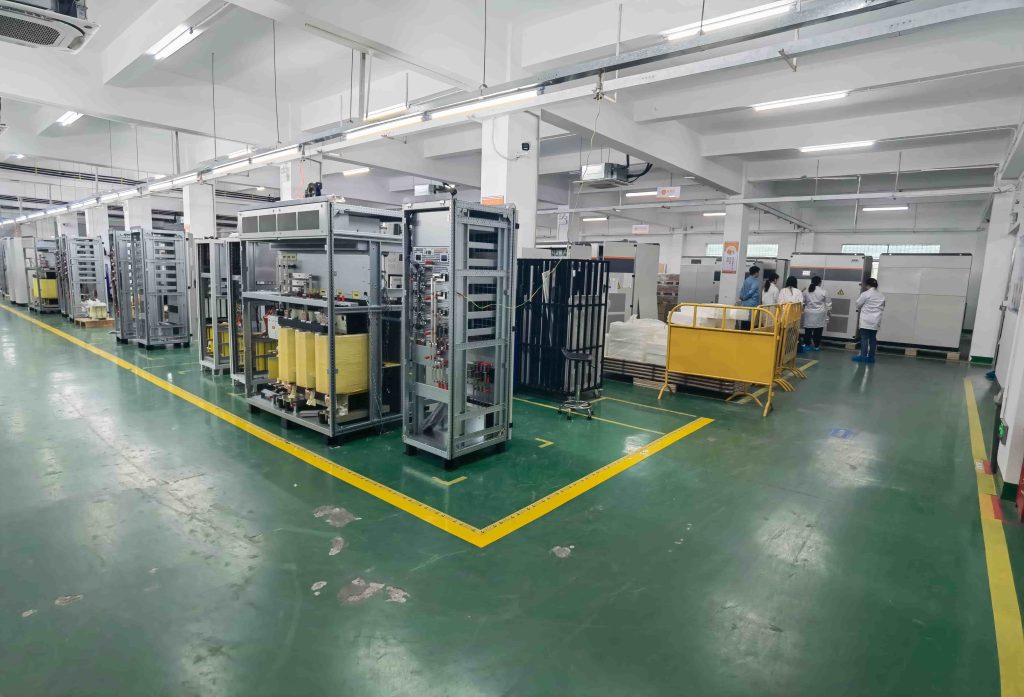
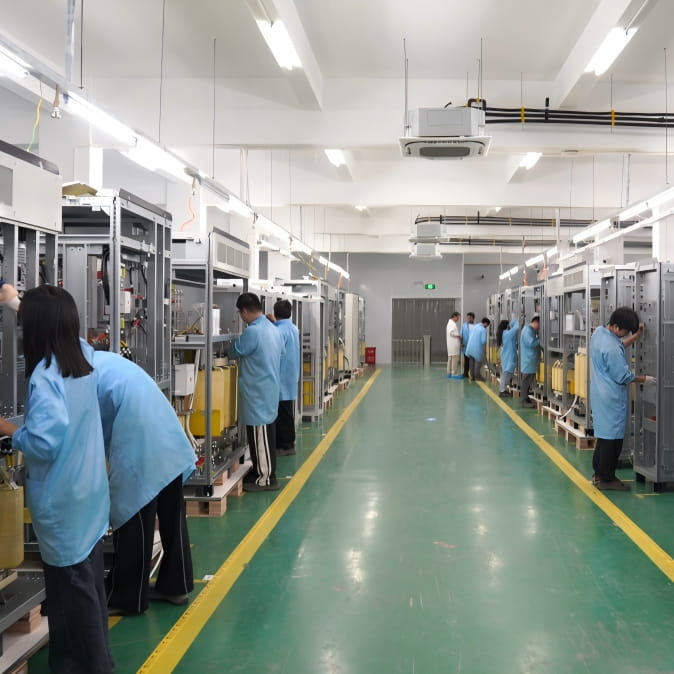
Complete commercial BESS supplier qualification before comparing final bids. Then require a project responsibility schedule for site metering, PCS/PV control, installation, commissioning and handover, with exclusions priced explicitly. A factory capability review and a complete site-delivery scope are separate items to verify in the purchase documents.
|
Verification Item |
Purpose |
|---|---|
| Factory Audit | Confirm the offered manufacturing, inspection and traceability process for the ordered model |
| Cell Traceability | Link cell/BOM batch identifiers and factory QC records to the applicable model safety evidence |
| Production Capacity | Agree the production slot, change-control process, shipping responsibility and committed delivery dates |
| Warranty Terms | Separate product warranty, capacity-retention terms, remedy, throughput limits and augmentation obligations |
| Service Network | Price remote diagnostics, on-site response, spare parts and escalation responsibility |
What EPC Contractors Should Ask Battery Storage Companies
To verify engineering claims, EPC procurement teams must ask these technical questions during the RFQ phase:
- What cell configuration is included? Identify the cell model, LFP or other cathode, declared electrolyte architecture and supplied BOM. A cycle count, IEC 62619 report or impedance reading alone does not identify the electrolyte formulation.
- What thermal evidence covers the ordered configuration? Ask for the applicable UL 9540A or other required test scope, configuration and results, then connect these to the supplied detection/suppression arrangement and site approval duties.
- What capacity will be available over the duty? Price usable AC energy, SOC window, temperature, daily throughput and retention assumptions. Compare the contract's warranty remedy and augmentation plan separately from the cycle-life listing.
- What PCS/site configuration will be delivered? State the battery voltage/current limits, AC connection, BMS/EMS protocol, export-control duty and applicable grid settings. Require the agreed FAT/SAT checks for that configuration, rather than assuming a THDi listing proves complete IEEE 1547 approval.
- What evidence and responsibility come with the quote? Identify the relevant independent reports and their exact model/configuration, then price delivery, commissioning, handover and support. A laboratory name without the report scope does not close the order's acceptance boundary.
Illustrative Lifecycle Cost Model for Industrial Energy Storage
Commercial BESS procurement buys more than battery modules, BMS, PCS and EMS. Compare the installed scope: equipment, controls and metering, shipping and unloading, civil/electrical work, commissioning, service and any replacement or augmentation. Put that cost model beside the usable AC energy and operating duty so the cabinet nameplate cannot hide an incomplete bid.
For a 15-year comparison at one cycle per day and 365 days per year, the duty is 5,475 cycles. A published ≥5,000-cycle listing does not guarantee that duty without capacity loss or augmentation. State the tested cycle conditions, retention model, replacement assumptions and warranty remedy for each bid. Keep electricity revenue, financing, tariffs, demand charges, incentives and regional installation costs explicit. A 29% difference between illustrative costs is not a proven chemistry advantage or a commercial quotation.
Engineering Validation Checklist for Commercial BESS Procurement
Use the checklist to close the priced configuration and handover responsibilities. The goal is a cabinet the EPC can install and the owner can operate, with the supplied cell model, controls, fire protection and lifecycle obligations identified before the deposit.
|
Validation Item |
Why It Matters |
|---|---|
| BOM and Batch Traceability | Identify the delivered cells, BMS/PCS configuration and factory QC records |
| Model-Specific Thermal Test Evidence | Match the cell/BOM, test configuration, results and required site approval scope |
| PCS THDi Listing and Applicable IEEE 519 Assessment | Separate converter performance from the installed PCC measurement and acceptance limits |
| 15-Year SOH Degradation Curve | Use the duty/retention model and replacement sensitivity; separate forecasts from warranty remedies |
| Modular Cabinet Access and Lifting Plan | Price the actual route, approved lifting method, slab design and service clearance |
| Declared Cell Chemistry and Electrolyte Architecture | Verify the exact model’s cell chemistry and supporting documentation |
| Model-Specific Thermal Management Specification | Confirm whether the ordered model uses intelligent air cooling or liquid cooling and request the applicable operating and derating data |
| Applicable Alarm and Fire-Protection Design (NFPA 72 Scope) | Coordinate required detection, suppression, emergency response and site/AHJ approval duties |
Use the C&I ESS solution to compare actual equipment routes, then close the quoted cabinet or container configuration. Set witnessed checks with the BESS FAT guide and the relevant zero-export SAT guide; factory inspection, export control, critical-load backup and utility acceptance are separate test duties.
FAQ
Q1: What is the main difference between solid-state and Tier 1 liquid LFP commercial energy storage?
LFP describes the cathode; solid-state or semi-solid describes the electrolyte architecture, so these are not opposing classes. Compare the exact offered cell/BOM and matched test conditions. The ESSA0100B-0215 is listed with 280 Ah LFP cells and ≥5,000 cycles, but that does not establish a universal advantage over every liquid-LFP model or a guaranteed no-augmentation life.
Q2: Does solid-state chemistry really eliminate thermal runaway in commercial battery storage?
No. A chemistry label does not eliminate thermal runaway or prove system-level propagation behavior. Match the offered cells, detection/suppression arrangement and applicable test results to the installation. Use the configuration-specific safety evidence to define placement and approval scope rather than promise zero risk.
Q3: Why does a modular 215kWh cabinet reduce civil engineering costs?
The published ESSA0100B-0215 weighs about 3,900 kg and measures 2,450 × 1,550 × 2,400 mm, which gives the EPC a concrete cabinet to plan around. Installation savings depend on site access, approved lifting method, point/slab loading and civil work. It is not a guarantee that an existing slab or a standard forklift will suit every site.
Q4: Can the 215kWh outdoor cabinet use solid-state batteries?
The ESSA0100B-0215 platform can be configured according to project requirements. Identify the supplied cell model and electrolyte architecture in the quotation, signed datasheet and BOM. Keep its published 100 kW / 215.04 kWh rating separate from the quoted usable AC energy, test conditions and certification scope.
Q5: Is the initial CapEx of a solid-state BESS higher?
Compare quotations for the same power, usable energy and installed scope. An upfront premium or lifecycle saving depends on the actual model, duty, installation, retention, service and replacement assumptions. A 29% illustrative cost difference does not prove that solid-state architecture avoids Year 8 augmentation; price the lifecycle obligation and warranty remedy explicitly.
Q6: Does the system include a built-in isolation transformer?
MegSolid's published ESSA and MEGA PCS configurations include isolation options, with the offered transformer arrangement identified in the model/project scope. The MEGA PCS page lists THDi <3%. Confirm the actual transformer, earthing and protection duties; a converter listing does not guarantee all-site IEEE 519 compliance or eliminate every need for external equipment.
Q7: How to evaluate commercial energy storage suppliers?
Compare commercial energy storage suppliers against one RFQ: required kW and usable AC kWh, offered cell/BOM, thermal evidence, PCS/site compatibility, installed/delivery scope, retention assumptions and service remedies. The ESSA0100B-0215 gives a 100 kW / 215.04 kWh air-cooled equipment reference; then price the site interfaces, FAT/SAT checks and lifecycle responsibilities.
Q8: What is a battery energy storage system (BESS) for commercial use?
A commercial BESS combines batteries, BMS, PCS and EMS to manage stored energy for duties such as peak shaving, PV self-consumption or a defined backup service. The ordered model's limits, usable-energy window and integration determine what it can deliver. A cycle-life listing or hybrid-solid-state label is not a generic 10-year warranty or guaranteed retention result.
Q9: How much does a commercial battery storage system cost?
Cost depends on required kW and usable AC kWh, equipment configuration, site interfaces, freight/unloading, civil/electrical work, commissioning and service scope. Send the tariff and peak trace, target runtime, PV/generator details, AC connection, climate and delivery location. Ask MegSolid to return a model-specific equipment proposal, responsibility schedule and quotation with exclusions identified.
Get Your Commercial BESS Procurement Proposal
Make the quote answer the decision you actually face: which equipment covers the load window, what the EPC must install and who owns the handover risk. Send MegSolid the peak trace and tariff, required runtime, site AC/PV/generator interfaces, climate, delivery location and target date. Request the selected model, usable-energy assumptions, priced delivery/commissioning scope and service terms in one procurement proposal.
Global Sales & HQ (Hong Kong):
FLAT 7, 11/F BLK C HANG WAI IND CTR, 6 KIN TAI ST, TUEN MUN, HONG KONG
- Email: [email protected]
- Phone: +852 59811073
R&D & Manufacturing Facility (Huzhou):
No. 898 Mengxi Road, South Taihu New Area, Huzhou City, Zhejiang Province, P.R.China
- Website: https://www.solidess.com/
