
تطبق فيتنام منهجية تسعير فعالة لتقييم أنظمة تخزين الطاقة بالبطاريات المستقلة. وبالنسبة لشركة «MegSolid» والمطورين الذين تحدثنا معهم، فإن السؤال المطروح محدد: ما هي بيانات المعدات وسجلات المحطات التي يمكن أن تدعم بنود السعة والطاقة في اتفاقية شراء الطاقة (PPA) الخاصة بأنظمة تخزين الطاقة بالبطاريات (BESS) في فيتنام؟
يربط التعميم رقم 62/2025/TT-BCT الإيرادات بالقدرة المركبة، وتكلفة الشحن، وكفاءة الشحن والتفريغ، والخسائر، والتدهور، وبيانات التشغيل المتعاقد عليها. وأي عرض أسعار يقتصر على ذكر وحدة الميغاواط (MW) والميغاواط/ساعة (MWh) يترك النموذج التجاري معلّقًا. يجب على أحد أعضاء فريق المشروع ربط كل عنصر من عناصر السعر بورقة بيانات، أو افتراض جدوى، أو حدود العداد، أو نقطة نظام إدارة الطاقة (EMS)/نظام التحكم والبيانات (SCADA)، أو سجل القبول.
تحول هذه الصفحة النشرة الدورية إلى قائمة مرجعية للمطورين وشركات هندسة التصميم والبناء (EPC) والمقرضين والمستشارين الفنيين المعنيين بأعمال أنظمة تخزين الطاقة بالبطاريات (BESS) على نطاق المرافق العامة في فيتنام.
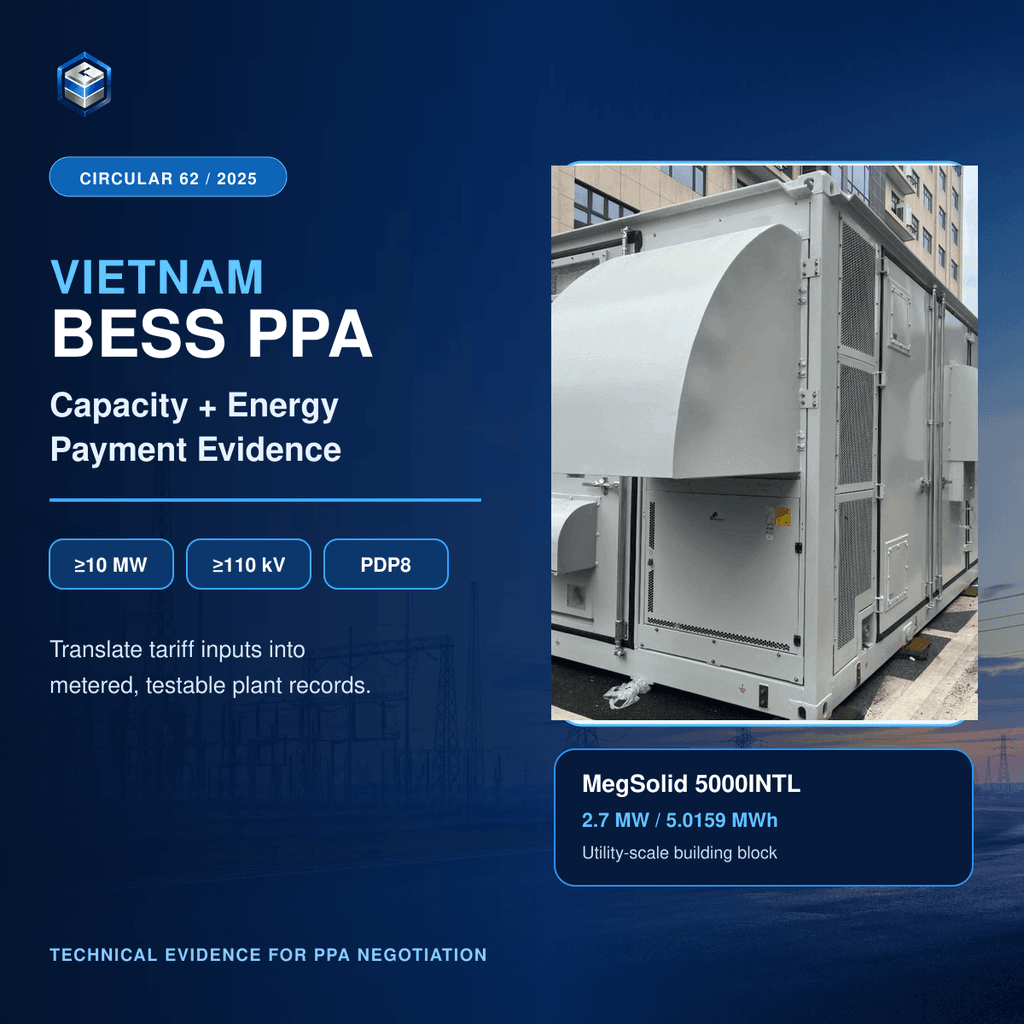
جدول القرارات ذو المسح السريع
| الكلمة المفتاحية | سؤال تجاري | الأدلة التي يجب الحصول عليها |
|---|---|---|
| التعميم رقم 62/2025/TT-BCT | هل يندرج المشروع ضمن نطاق هذه القاعدة؟ | مواءمة مع خطة التنمية العامة الثامنة (PDP8)، بقدرة ≥10 ميغاواط، وربط بالشبكة الوطنية بجهد 110 كيلوفولت أو أعلى |
| سعر السعة | ما هي التكاليف الثابتة التي يتم استردادها لكل كيلوواط؟ | السعة المركبة المعتمدة، وتكلفة الاستثمار، وتكاليف التشغيل والصيانة الثابتة، وجدول الأسعار السنوي |
| سعر الطاقة | ما هي تكاليف الشحن التي يتم استردادها لكل كيلوواط/ساعة؟ | تعرفة الشحن، وكفاءة الشحن والتفريغ المتفق عليها، والاستخدامات الإضافية، وفقدان الطاقة عند نقطة التسليم |
| السعة المتاحة | ما هي الطاقة التي يمكن للمحطة توفيرها للتوزيع؟ | نطاق التشغيل، حدود حالة الشحن (SOC)، قواعد خفض القدرة، سجلات الانقطاعات، سجلات التوزيع |
| تدهور أداء البطارية | ما هو الافتراض المتعلق بالطاقة على المدى الطويل الذي يتم إدراجه في النموذج؟ | منحنى التدهور المعتمد، وأسس الضمان، وطريقة الاختبار الدوري للسعة |
| الحد الأدنى لعدد الدورات | ما هي مدة الاستخدام المتوقعة للدراجة التي تستند إليها عملية حساب السعر؟ | بيانات دورة التشغيل الصادرة عن الشركة المصنعة، وظيفة التصميم، أساس الحساب المتفق عليه |
| حدود القياس | أين تُقاس الطاقة المُولَّدة والطاقة المُزودة؟ | مواقع العدادات الرئيسية والاحتياطية، وفقدان الطاقة في المحولات، وطريقة التسوية |
| EMS/SCADA | هل يمكن ربط تعليمات NSMO باستجابة النبات؟ | الأمر، الإقرار، القيمة المحددة، الطاقة الفعلية، نسبة شحن البطارية (SOC)، الإنذار، الطابع الزمني |
| الدهون الكلية (FAT) والدهون المشبعة (SAT) | هل يمكن فحص المدخلات التجارية قبل بدء التشغيل؟ | الإجراءات التي تمت بمحضر من الشهود، والأجهزة المعايرة، والملفات الأولية، والتقارير الموقعة |
حل التعميم رقم 62 محل المسودة
نشرت وزارة الصناعة والتجارة (MOIT) مقترح التسعير الأصلي لنظام BESS في أغسطس 2025. وكانت تلك المسودة قد فصلت بالفعل بين عنصر السعة المرتبط بالتوافر وعنصر الطاقة المرتبط بالإنتاج الفعلي. و إعلان وزارة الصناعة والتجارة و تقرير الطاقة في فيتنام تغطية تلك المرحلة.
أصدرت وزارة الصناعة والتجارة التعميم رقم 62/2025/TT-BCT في 10 ديسمبر 2025. ودخل التعميم حيز التنفيذ في 26 يناير 2026. و السجل الرسمي لوزارة الصناعة والتجارة يُبيّن أن التعميم ساري المفعول.
| التاريخ | الحالة | الاستخدام في وثائق المشروع |
|---|---|---|
| 21 أغسطس 2025 | أعلنت وزارة الصناعة والتجارة والطاقة عن مسودة المنهجية | إشارة سياسية تاريخية |
| 10 ديسمبر 2025 | صدر التعميم رقم 62 | مرجع قانوني رسمي |
| 26 يناير 2026 | تسري أحكام التعميم رقم 62 | الأسعار الحالية وإطار اتفاقيات شراء الطاقة (PPA) للمشاريع المؤهلة |
لا تستخدم مصطلح “مسودة” إلا عندما تقصد أعمال السياسة الخاصة بعام 2025. واستخدم مصطلح «التعميم رقم 62» عند تحديد النطاق أو التسعير أو قائمة مستندات اتفاقية شراء الطاقة (PPA) في الوقت الحالي.
تحقق من الأهلية قبل تقدير الإيرادات
يغطي التعميم رقم 62 مجموعة محددة من المشاريع. وينطبق على مالكي أنظمة تخزين الطاقة بالبطاريات (BESS) المستقلة التي تستوفي جميع الشروط التالية:
- قدرة مركبة لا تقل عن 10 ميغاواط
- الربط بالنظام الوطني بجهد 110 كيلوفولت أو أعلى
- تنمية تتماشى مع خطة تطوير الطاقة الثامنة المعدلة
- تلبية احتياجات شبكة الكهرباء الوطنية
كما يُلزم هذا الاتفاق شبكة EVN وشركات الكهرباء المعنية ومشغل الشبكة والسوق، بالإضافة إلى الأطراف الأخرى المشاركة في الصفقة. ويرد النطاق الكامل والاستثناءات في التعميم رقم 62.
| تكوين نظام BESS | العلاج وفقًا للتعميم رقم 62 | إجراءات المشروع |
|---|---|---|
| نظام تخزين الطاقة بالبطاريات (BESS) مستقل، ≥10 ميجاوات، 110 كيلوفولت فأكثر، ضمن خطة التنمية المحدثة (PDP8) | ضمن النطاق | تجميع الأدلة المتعلقة بسعر البناء واتفاقية شراء الطاقة (PPA) بموجب التعميم رقم 62 |
| شبكة BESS المرتبطة بمحطة طاقة متجددة | خارج هذه الطريقة | مراجعة التعميم رقم 12/2025/TT-BCT ومسار تسعير الطاقة المتجددة |
| محطة BESS التي أنشأتها شركة EVN للطاقة | خارج هذه الطريقة | مراجعة استرداد التكاليف بموجب التعميم رقم 17/2025/TT-BCT |
| نظام تخزين الطاقة بالبطاريات (BESS) للمصانع أو مراكز البيانات «خلف العداد» | خارج النطاق المحدد | تحليل التوفير في التجزئة، والمرونة، وقيمة تشغيل الموقع كل على حدة |
يمنع هذا التقسيم الفرق من تطبيق افتراض دفع السعة المتعددة الأغراض على مهمة خزانة C&I. للاطلاع على الاختلافات في التنسيق المادي، انظر الخزانات المعيارية مقابل أنظمة تخزين الطاقة في حاويات.
فصل الشريحة السعرية عن هيكل مدفوعات اتفاقية شراء الطاقة (PPA)
يُجري التعميم رقم 62 حسابين مترابطين. ويستخدمان وحدات قياس مختلفة ويجيبان على أسئلة مختلفة.
| طبقة | المكونات | الوحدة | الغرض |
|---|---|---|---|
| نطاق أسعار التوليد السنوي | متوسط السعر الثابت + السعر المتغير + السعر الثابت للتشغيل والصيانة | VND/كيلوواط/ساعة | يحدد النطاق من 0 إلى الحد الأقصى المسموح به |
| تحديد تكلفة المشروع - سعر الخدمة | سعر السعة + سعر الطاقة | دونغ فيتنامي/كيلوواط ودونغ فيتنامي/كيلوواط ساعة | يحدد السعر المتفق عليه المكون من جزأين للمشروع |
| التسوية الشهرية لاتفاقية شراء الطاقة | مكون السعة + مكون الطاقة | صيغة العقد | تحويل الشروط المتفق عليها والسجلات الشهرية إلى مدفوعات |
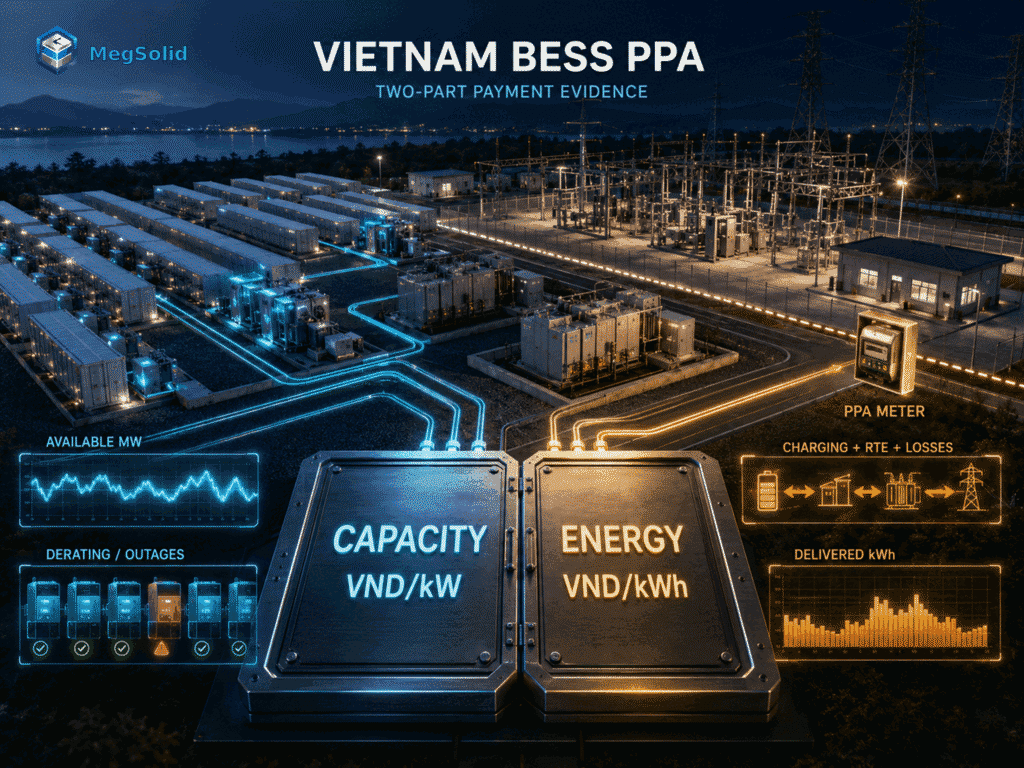
يُعد السعر الأقصى لتوليد الكهرباء سقفًا تفاوضيًا. ويُحدد على النحو التالي:
- متوسط السعر الثابت لاسترداد تكاليف الاستثمار
- سعر متغير للكهرباء المستخدمة في شحن نظام تخزين الطاقة بالبطاريات (BESS)
- سعر ثابت للتشغيل والصيانة يشمل تكاليف الإصلاحات الكبرى، وتكاليف اليد العاملة، وتكاليف التشغيل السنوية الأخرى
ثم يقسم سعر خدمة المشروع هذه العوامل الاقتصادية إلى:
- سعر السعة بالدونغ الفيتنامي/كيلوواط (سعر ثابت + تكاليف تشغيل وصيانة ثابتة)
- سعر الطاقة بالدونغ الفيتنامي/كيلوواط ساعة (الكهرباء المستخدمة في الشحن، وكفاءة الشحن والتفريغ المتفق عليها، والخسائر المطبقة)
كما يحدد التعميم رقم 62 سقفًا لمعدل العائد الداخلي المالي المستخدم في حساب سعر الخدمة عند 12%. وهذا يمثل حدًا تنظيميًا للنمذجة. وهو لا يمثل عائد المورد على المعدات، ولا يمثل العائد النهائي للمستثمر على رأس المال.
يحدد التعميم طريقة الحساب وإجراءات تحديد الشرائح السعرية السنوية. ولا ينشر التعميم رقم تعريفة ثابتًا واحدًا لكل مشروع.
افصل المشروع المرجعي عن المشروع المتفق عليه
يُدرج الملحق الأول المدخلات القياسية الخاصة بالشريحة السعرية السنوية القصوى. ثم يتم الاتفاق على عدد من مدخلات أسعار خدمات المشروع بين البائع والمشتري في إطار القواعد المنصوص عليها في التعميم.
| الإدخال | مرجع فئة السعر | التفاوض بشأن المشروع أو الأدلة |
|---|---|---|
| الحياة الاقتصادية | 15 سنة | يستخدم التعميم رقم 62 عمرًا افتراضيًا لسعر الخدمة مدته 15 عامًا، ما لم تنطبق موافقة أخرى صادرة عن الجهة المختصة |
| مدة التصريف التصميمية | ساعتان | القدرة المعتمدة للمشروع، والطاقة، ومدة التشغيل |
| الحد الأدنى لعدد الدورات خلال العمر الافتراضي | 8,000 | موافق على التصميم المعتمد، أو وثائق الشركة المصنعة، أو قرار الجهة المختصة |
| متوسط فقدان السعة السنوي | 2% سنويًا | القيمة المتفق عليها للمشروع، بحد أقصى 2% في السنة لحساب سعر الخدمة |
| كفاءة الشحن والتفريغ | 85% | القيمة المتفق عليها للمشروع استنادًا إلى التصميم المعتمد أو بيانات الشركة المصنعة، مع حد أدنى تنظيمي يبلغ 85% |
الافتراض القياسي الخاص بالدعامة لا يُعد ضمانًا للمعدات.
ما الذي يؤثر على سعر السعة؟
ويهدف سعر السعة إلى استرداد تكاليف الاستثمارات الثابتة المؤهلة وتكاليف التشغيل والصيانة الثابتة. ويبدأ هذا السعر من القدرة المركبة بالكيلوواط الواردة في التصميم المعتمد، ثم يتوقف على قدرة المحطة على البقاء جاهزة للتشغيل المجدول.
يتضمن إطار اتفاقية شراء الطاقة (PPA) السعر المتعاقد عليه، والقدرة المتاحة، والطاقة المتعاقد عليها. ولا يزال يتعين على الطرفين تحديد كيفية إدخال بيانات حالة المحطة وسجلات التشغيل في تلك الحقول.
| إدخال السعة والسعر | الأدلة الفنية | المخاطر في حالة تركه مفتوحًا |
|---|---|---|
| السعة المركبة | التصميم المعتمد، الجدول الزمني لنظام PCS، القيم التصنيفية للمحولات، المخطط الأحادي الخط | يتم التعامل مع الطاقة الاسمية للتيار المستمر على أنها طاقة تيار متردد قابلة للتوزيع |
| السعة المتاحة | نطاق التشغيل لنظام التحكم في الأداء (PCS)، نطاق حالة الشحن (SOC)، تخفيض السعة بسبب درجة الحرارة، حالة الانقطاع | يصبح توفر الوظائف الشهرية معركة |
| حدود الاستثمار الثابت | قائمة المعدات والبنية التحتية حتى نقطة التوصيل | تُغفل تكاليف المحولات أو الكابلات أو المحطات الفرعية أو أنظمة التحكم، أو تُحسب مرتين |
| تكاليف التشغيل والصيانة الثابتة | خطة الإصلاحات الكبرى، نطاق الأعمال، خطة قطع الغيار، مسؤولية الصيانة | لا يوجد مبرر للتكلفة السنوية |
| الحياة الاقتصادية | النموذج المالي المعتمد وافتراضات استبدال المعدات | تتعارض عملية استبدال التوقيت مع العمر التشغيلي المحدد بموجب اللوائح التنظيمية البالغ 15 عامًا |
| الملف السنوي للسعر الثابت | شروط القرض، وجدول السداد، والعملة الأجنبية المتفق عليها حسب السنة | تباعد بين خدمة الدين والتدفقات النقدية الناشئة عن اتفاقيات شراء الطاقة |
يجب على مورد المعدات تحديد الطاقة الاسمية للتيار المتردد، وحدود الحمل الزائد، وانخفاض السعة بسبب درجة الحرارة المحيطة، ونطاق الجهد، وقدرة معامل القدرة، وحدود التشغيل الإضافية. ثم يقوم مصمم المحطة بتحويل هذه الأرقام إلى تعريف للسعة المتاحة عند نقطة التسليم المنصوص عليها في العقد.
للاطلاع على حدود تشغيل نظام PCS ووظائف دعم الشبكة، انظر هندسة أنظمة توليد الطاقة الكهربائية (PCS) المكونة للشبكة والمتصلة بالشبكة. لا تزال القدرة النهائية للمحطة التي تعمل بجهد 110 كيلوفولت بحاجة إلى بيانات نظام التحكم في الطاقة (PCS)، وتصميم المحولات وشبكة التوزيع، ودراسات الحماية، وإعدادات التحكم على مستوى المشروع.
يتطلب التوفر رموز الأحداث
يجب أن يقسم ملف التوافر حدود المحطة حسب السبب التجاري.
| حالة الحدث | السجل المطلوب |
|---|---|
| متوفرة وجاهزة للشحن | القدرة المتاحة بالكيلوواط، نسبة الشحن (SOC)، الحدود الفعالة، حالة الاتصالات |
| الشحن المجدول | جدول NSMO، نقطة الضبط للشحن، القوة الفعلية بالكيلوواط، الكيلوواط-ساعة المستلمة |
| التسريح المقرر | تعليمات التشغيل، القوة الفعلية بالكيلوواط، الكيلوواط/ساعة المُولَّفة، مسار مستوى شحن البطارية (SOC) |
| الصيانة المجدولة | النافذة المعتمدة، المعدات المعزولة، السعة المتبقية المتاحة |
| انقطاع قسري للتيار الكهربائي | رمز الرحلة، الكتلة المتأثرة، السعة المفقودة، وقت البدء، وقت الاستعادة |
| تخفيض السعة بسبب العوامل البيئية | الظروف المحيطة، الحد الحراري، الطاقة المتأثرة، وقت الاستعادة |
| قيود على الشبكة أو الاتصالات | الحالة الخارجية، مسار الأوامر، حالة الاحتياط للمحطة |
يحدد التعميم رقم 62 طريقة التسعير ومحتوى نموذج اتفاقية شراء الطاقة (PPA). ولا يزال يتعين إدراج تعريفات الأحداث، وفترات الحساب، والاستثناءات، وإجراءات تسوية المنازعات المستخدمة في التسوية في اتفاقية المشروع.
ما الذي يدعم سعر الطاقة؟
يسترد عنصر الطاقة تكلفة الكهرباء المستخدمة في شحن وتشغيل نظام تخزين الطاقة بالبطاريات (BESS). وتربط المادة 11 ذلك بثلاثة مدخلات تقنية، وهي:
| مدخلات أسعار الطاقة | أساس التعميم رقم 62 | المستندات المطلوبة للمشروع |
|---|---|---|
| سعر شحن الكهرباء | سعر التجزئة التصنيعي المعمول به خلال ساعات الشحن التي يطلبها النظام ومشغل السوق | جدول الشحن المُؤرخ، وفترة التعرفة، وبيانات عداد الاستهلاك من الشبكة |
| كفاءة الشحن والتفريغ | تم الاتفاق عليه بناءً على دراسة الجدوى المعتمدة، أو التصميم الأساسي المُقيَّم، أو وثائق الشركة المصنعة؛ ولا يقل عن 85% | حدود الاختبار المحددة، وظروف التشغيل، ومعرّفات العدادات، وتقرير الكفاءة |
| الخسائر الناتجة عن الاستخدام الذاتي والتسليم | الاستهلاك الإضافي لنظام BESS بالإضافة إلى خسائر محول رفع الجهد وخسائر الخطوط حتى نقطة التسليم | عدادات مساعدة، حساب خسائر المحولات، دراسة الكابلات، مطابقة نقاط التسليم |
85% هو الحد الأدنى التنظيمي للمدخلات المتفق عليها. وتختار الأطراف قيمة المشروع استنادًا إلى التصميم المعتمد أو أدلة الشركة المصنعة.
يجب توخي الحذر عند صياغة العبارات المتعلقة بالكفاءة. تنص بيانات منتج 5000INTL الحالية لشركة MegSolid على ما يلي: 87.5% - الكفاءة القصوى. هذه التسمية تعني «الكفاءة القصوى». ولا تزال كفاءة الدورة الكاملة للشحن والتفريغ وفقًا للوائح التنظيمية عند نقطة التسليم بموجب اتفاقية شراء الطاقة (PPA) قيمة تخضع لسيطرة المشروع. يجب تحديد الحدود قبل أن يقوم أي شخص بإدخال أي رقم في النموذج المالي.
وتنطبق القاعدة نفسها على خسائر المحولات وخسائر الخطوط. فقراءة الجهد المنخفض في الحاوية لا تعادل الطاقة الصافية عند 110 كيلوفولت ما لم يتم تضمين خسائر الملحقات والتحويل والمحولات والكابلات في المجموع.
يتم إدراج افتراضات التدهور والدورة في النموذج التجاري
يسمح التعميم رقم 62 للبائع والمشتري بالاتفاق على الحد الأدنى لعدد دورات الشحن والتفريغ على مدى العمر الافتراضي للمنتج، استنادًا إلى التصميم المعتمد أو وثائق الشركة المصنعة. كما يتم الاتفاق على متوسط فقدان السعة السنوي استنادًا إلى دراسة الجدوى أو التصميم الأساسي أو معلومات الشركة المصنعة، مع حد أقصى تنظيمي يبلغ 2% سنويًّا لأغراض الحساب.
تُستخدم هذه القيم في حساب ساعات التشغيل القصوى المحسوبة والمقارنة بين سعر الخدمة المتفق عليه والشريحة السعرية السنوية.
| بيانات العقد | وثيقة المورد | التحقق من المالك أو شركة EPC |
|---|---|---|
| الحد الأدنى لعدد الدورات خلال العمر الافتراضي | افتراضات تشغيل الخلايا والأنظمة، وأسس الاختبار، وحدود التشغيل | مقارنة مع سيناريو التوزيع الخاص بـ NSMO والإنتاجية السنوية المخطط لها |
| الخسارة السنوية في السعة | منحنى التحلل الخاص بالنموذج والشروط المحددة | التحقق من درجة الحرارة، ومستوى شحن البطارية (SOC)، ومعدل التفريغ (DoD)، ومعدل الشحن (C-rate)، والتقادم الزمني |
| الطاقة في نهاية العمر الافتراضي | الطاقة المضمونة أو الطاقة التصميمية عند الحدود المتفق عليها | تحديد مواعيد لإجراء اختبارات دورية للقدرة وتحديد عوامل التصحيح |
| خطة الاستبدال | افتراضات استبدال البطاريات، وأنظمة PCS، وأنظمة التدفئة والتهوية وتكييف الهواء (HVAC)، والمكونات المساعدة | مواءمة عمليات الاستبدال مع نماذج التسعير الثابت ونماذج التشغيل والصيانة |
| احتياطي التشغيل | الحد الأدنى والحد الأقصى لمستوى الشحن (SOC) | تأكيد أن سياسة الحجز لا تزال تسمح بمدة الإرسال المنصوص عليها في العقد |
يُعتبر الجرد الدوري غير مكتمل إذا لم يستند إلى مبدأ «التخفيض عند الاستهلاك» (DoD) ودرجة الحرارة ومعدل استهلاك الطاقة. كما أن نسبة التدهور التي لا تستند إلى حدود اختبار السعة تعاني من نفس النقص.
لمعرفة كيفية تأثير افتراضات التدهور على الأداء المالي، انظر كيف يؤثر تدهور أداء البطارية على مدخلات العائد على الاستثمار في أنظمة تخزين الطاقة بالبطاريات (BESS).
يجب أن تنتج أنظمة إدارة الطوارئ (EMS) ونظام التحكم والرقابة والبيانات (SCADA) وأنظمة القياس سجلات التسوية
تقوم شركة NSMO بتخطيط سعة أنظمة تخزين الطاقة بالبطاريات (BESS) حسب المنطقة، وتضع جداول زمنية لعمليات الشحن والتفريغ وغيرها من الاحتياجات التشغيلية. ويحتاج المحطة إلى مسار واضح بدءًا من تعليمات التوزيع وصولاً إلى إجراءات نظام إدارة الطاقة (EMS)، واستجابة نظام التحكم في الأداء (PCS) ونظام إدارة البطاريات (BMS)، وصولاً إلى عداد الإيرادات.
| طبقة الأدلة | الحقول الدنيا للمشروع | مخرجات القبول |
|---|---|---|
| واجهة الإرسال | معرّف الأمر، الوضع المطلوب، نقطة الضبط للطاقة النشطة/التفاعلية، الوقت الساري | سجل الأوامر مع المصدر والطابع الزمني |
| نظام الإدارة البيئية | الأمر المستلم، الأمر الصادر، الحد الفعلي، احتياطي SOC، حالة اللجوء البديل | تصدير أحداث نظام إدارة الطوارئ (EMS) |
| PCS | القوة الفعلية بالكيلوواط (kW)، والكيلو فاراد (kVAr)، والجهد، والتردد، ووضع التشغيل، وخفض السعة، وحالة الانقطاع | ملف استجابة السلاسل الزمنية |
| نظام إدارة البطاريات | حالة التشغيل (SOC)، حالة الصحة (SOH)، طاقة الشحن/التفريغ المتاحة، تقدير الطاقة، الإنذارات، حالة العزل | سجل حالة البطارية |
| قياس الإيرادات | الطاقة المستلمة من الشبكة، والطاقة المرسلة، وإشارات جودة العداد | كشف الحساب الشهري للعداد |
| المعدات المساعدة للمصنع | التبريد، وأجهزة التحكم، والمضخات، ونظام مكافحة الحرائق، ومصادر الطاقة الأخرى الخاصة بخدمات المحطة | رقم قياسي في مجال الطاقة المساعدة |
| التوافر | القدرة المتاحة بالكيلوواط حسب الفترة الزمنية، ورمز سبب التخفيضات | التقرير الشهري عن التوافر |
| مزامنة الوقت | مصدر الوقت، المنطقة الزمنية، دقة الساعة، منبه الانحراف | الجدول الزمني للأحداث الشائعة |
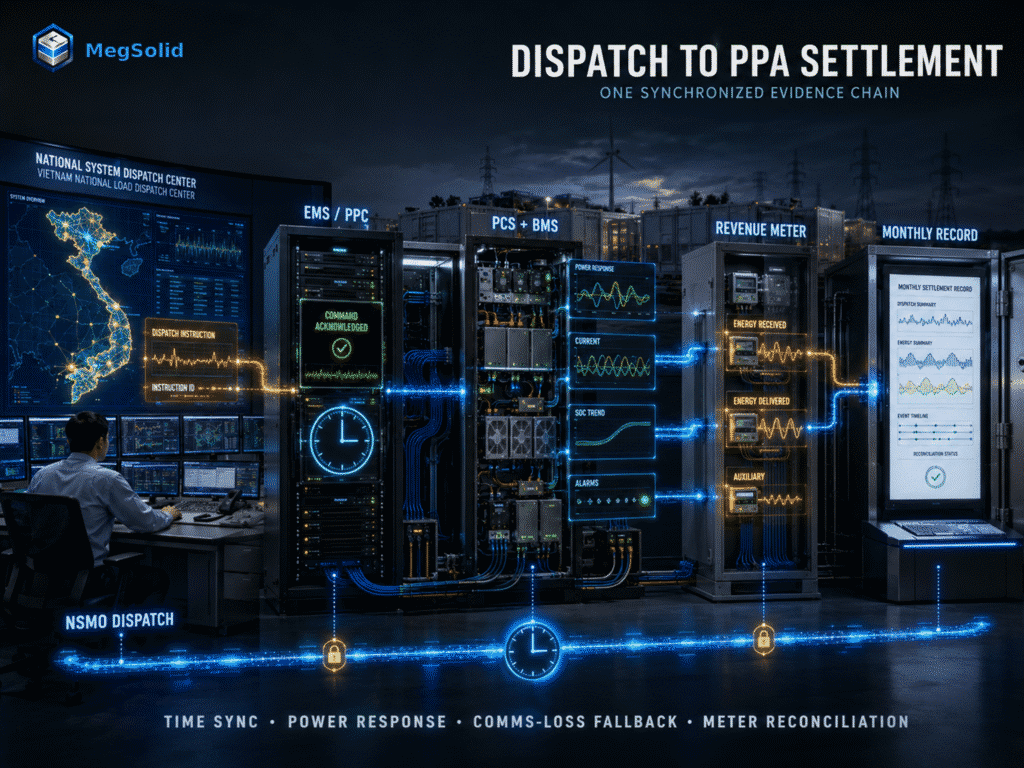
تعد قائمة النقاط الدقيقة أحد مخرجات المشروع. ويجب أن تتوافق مع مرفقات اتفاقية شراء الطاقة (PPA)، ومتطلبات كود الشبكة، وفلسفة الحماية، وواجهة NSMO. استخدم هيكل قائمة نقاط نظام BESS SCADA بالنسبة لحقول ملكية الإشارة وجودة البيانات. الـ بنية اتصالات أنظمة إدارة البطارية (BMS) وأنظمة إدارة الطاقة (EMS) يتناول التسلسل الهرمي للأوامر ومواءمة الطوابع الزمنية.
ينبغي أن يتم دمج جوانب الأمن السيبراني والوصول عن بُعد في تصميم الواجهة نفسه. انظر هندسة الأمن السيبراني لأنظمة تخزين الطاقة بالبطاريات (BESS) وفقًا لمعيار IEC 62443 لتقسيم الشبكة إلى مناطق والتحكم في الوصول.
تحويل مدخلات PPA إلى سجلات FAT و SAT
يتضمن نموذج اتفاقية شراء الطاقة (PPA) مرفقات تتناول خصائص المحطة، والقياس وجمع البيانات، وخصائص التشغيل، ونظام SCADA/EMS، والاتصالات، والحماية، والأتمتة، والتسعير، والدفع. وينبغي أن تتبع خطة القبول نفس التسلسل.
| اختبار | الأدلة التي تم جمعها | دعم PPA أو مدخلات التسعير |
|---|---|---|
| اختبار القدرة المقدرة | القيمة المرجحة، التيار المتردد (كيلوواط)، حالة التيار المستمر، الجهد، درجة الحرارة، المدة | السعة المركبة والسعة المتاحة |
| استجابة الشحن/التفريغ | أمر الإرسال، الإقرار، المنحدر، الخرج المستقر | القدرة التشغيلية المجدولة |
| اختبار سعة الطاقة | حالة التشغيل الأولية/النهائية، طاقة التيار المتردد، طاقة التيار المستمر (حيثما ينطبق ذلك)، المكونات المساعدة | مدة الإرسال وخط الأساس للتدهور |
| اختبار الكفاءة | طاقة الشحن، الطاقة الموردة، المعالجة المساعدة، حدود العداد | كفاءة الشحن والتفريغ المتفق عليها |
| اختبار الحمل الإضافي | الطلب على التبريد وخدمات المحطات حسب حالة التشغيل | معدل الاستخدام الشخصي |
| تسوية العدادات | عداد رئيسي، عداد احتياطي، عداد حاوية، حساب الفاقد | الطاقة المستلمة والمُوردة |
| اختبار انقطاع الاتصالات | الرابط المفقود، التنبيه، الإجراء البديل، الاستعادة | التوافر والإرسال الآمن |
| اختبار تخفيض السعة أو مراجعة الحسابات | المدخلات المحيطة، الحد الحراري، القدرة المتاحة بالكيلوواط | حساب السعة المتاحة |
| اختبار الحماية واختبار انقطاع التيار | حدث الترحيل، رحلة جهاز حماية الدائرة (PCS)، حالة القاطع، تسلسل إعادة الضبط | تصنيف الانقطاعات القسرية |
يُظهر اختبار FAT الوظائف والبيانات المتاحة قبل الشحن. أما اختبار SAT فيُثبت جاهزية المحطة بالكامل عند نقاط التوصيل والتسليم الفعلية. استخدم هيكل الشهود في اختبار القبول المصنعي لشركة BESS عند تخصيص الأجهزة، وملكية البيانات الأولية، والتوقيعات.
كما يتيح إطار اتفاقية شراء الطاقة (PPA) للأطراف الاتفاق على كيفية سداد تكاليف الاختبارات السابقة لتاريخ تسليم الطاقة (COD) والتشغيل التجريبي والاستلام، مع منع الاسترداد المزدوج من خلال إجمالي الاستثمار المعتمد. وينبغي أن تتشارك الفرق الفنية والتجارية في سجل اختبار واحد خاضع للرقابة.
الدور الذي يلعبه MegSolid في مشروع «Circular 62»
يصف التعميم رقم 62 مشروعًا متكاملًا لتوليد الطاقة. وتُعد الحاوية إحدى مكونات تلك المحطة.
تُعد منصة 5000INTL من MegSolid منصةً معبأة في حاويات على نطاق المرافق العامة، وتتميز بالحدود المعلنة التالية:
| المعلمة المنشورة | القيمة 5000INTL | استخدام مشروع التعميم رقم 62 |
|---|---|---|
| القدرة الكهربائية المقننة التي تعمل بالتيار المتردد | 2.7 ميغاواط | وحدة بناء داخل مصنع متعدد الوحدات |
| الطاقة المقدرة | 5,015.9 كيلوواط/ساعة | المدة الأولية ومعلومات التصميم الأولية |
| الجهد الكهربائي المتردد المقنن | 690 فولت تيار متردد | مدخلات لتصميم محولات المشروع وشبكات التوزيع |
| نطاق الجهد المستمر | 1,123.2–1,497.6 فولت تيار مستمر | حدود تشغيل نظام PCS والبطارية |
| تبريد | نظام التبريد السائل الذكي | المدخلات الحرارية لنمذجة التوافر |
| حماية الدخول | آي بي ٥٥ | ملحق مدخلات لاستعراض الظروف البيئية للموقع |
| درجة حرارة التشغيل | من -30 درجة مئوية إلى 55 درجة مئوية | مساهمة في مراجعة تخفيض السعة التصميمية للمشروع |
| الاتصال | إيثرنت و RS485 | نقطة البداية لواجهة SCADA/PPC الخاصة بالمصنع |
| أقصى كفاءة | 87.5% | قيمة المنتج التي لا تزال بحاجة إلى تأكيد الحدود قبل استخدامها وفقًا لمتطلبات RTE التنظيمية |
مزيد من المعلومات عن المنتج: البنية المعبأة في حاويات لـ MegSolid 5000INTL.
لا يزال المشروع المؤهل يحتاج إلى تخطيط متعدد الوحدات، وجهاز التحكم في طاقة المحطة، ومعدات الجهد المتوسط والعالي، وخط ربط بجهد 110 كيلوفولت أو أعلى، ونظام قياس الإيرادات، وأنظمة الحماية، والاتصالات، والأعمال المدنية، واستراتيجية مكافحة الحرائق، ونظام SCADA على مستوى المشروع. وتقع مسؤولية هذه العناصر على عاتق شركة EPC والأطراف الفيتنامية المعنية.
للاطلاع على الخط الفاصل بين وحدة BESS ووصلة الشبكة، انظر مسؤوليات محول نظام تخزين الطاقة بالبطاريات (BESS) المُعبَّأ في حاويات وربطه بالشبكة. قد يختلف نطاق المثال؛ لكن خريطة المسؤوليات تظل مفيدة.
قارن بين الموردين بناءً على أدلة الأداء
| حقل التقييم | عرض أسعار المعدات الأساسية | تقرير تقني متوافق مع اتفاقية شراء الطاقة (PPA) |
|---|---|---|
| الطاقة | لوحة تعريف الحاوية | الحد الأقصى لصافي قدرة المحطة بالكيلوواط، وخفض القدرة، والمعالجة المساعدة |
| الطاقة | القدرة الاسمية بالكيلوواط/ساعة للتيار المستمر | حدود توزيع التيار المتردد المحددة ومعيار نهاية العمر الافتراضي |
| الكفاءة | قيمة العنوان الفردي | طريقة اختبار الشحن والتفريغ، وأجهزة القياس، والمعدات المساعدة، وظروف التشغيل |
| التدهور | النسبة المئوية السنوية العامة | منحنى خاص بالنموذج مرتبط بإجراءات اختبار الحمولة والسعة |
| الاتصالات | اسم البروتوكول | قائمة الإشارات، خريطة السجلات، ملكية الأوامر، الطوابع الزمنية، حالات الفشل |
| التوافر | بيان الضمان | حساب الفترات الزمنية، رموز الأحداث، الاستثناءات، السجلات الأولية |
| الاختبار | قائمة مراجعة FAT القياسية | FAT بناءً على اتفاقية شراء الطاقة (PPA)، SAT الخاص بالموقع، مطابقة العدادات، حزمة البيانات الموقعة |
| حدود المشروع | حاوية البطارية | الحاوية، نظام التجميع، المحول، المحطة الفرعية، القياس، واجهات التحكم |
يمكن لـ«MegSolid» تنظيم المناقشة الفنية حول البطارية المتكاملة ونظام توزيع الطاقة (PCS) وحدود التحكم، ثم تحديد العناصر على مستوى المحطة التي تتطلب التنسيق بين شركات الهندسة والمشتريات والبناء (EPC) ومزودي الخدمات. ولا يزال يتعين إدراج قيم الأداء النهائية وشروط الضمان والواجهات ووثائق الامتثال في ورقة بيانات المشروع الخاضعة للرقابة وفي العقد.
ما تحتاجه شركة MegSolid لتقييم مشروع في فيتنام
يرجى إرسال هذه المعلومات قبل طلب التكوين الفني والتجاري:
- مرجع مشروع PDP8 وتاريخ التشغيل التجاري المقرر
- القدرة المركبة المطلوبة بالميغاواط والطاقة بالميغاواط/ساعة
- جهد التوصيل، نقطة التوصيل، المخطط الأحادي الأولي
- المدة المطلوبة للتفريغ والملف التشغيلي الأولي لمنظمة NSMO
- مصدر الشحن، عدد ساعات الشحن المتوقعة، أساس التعرفة
- الحد المقترح لكفاءة الشحن والتفريغ
- الافتراضات المتعلقة بالأحمال المساعدة، وفقدان المحولات، وفقدان الخطوط
- الركوب السنوي للدراجات، وزارة الدفاع، احتياطي SOC، هدف التخفيض
- بروتوكول SCADA، واجهة التحكم، مزامنة الوقت، متطلبات الاحتفاظ بالبيانات
- متطلبات FAT وSAT واختبار السعة ومطابقة العدادات
وبعد ذلك، يمكن لـ«MegSolid» فحص عدد الحاويات، وبنية التيار المتردد/التيار المستمر، وحدود الاتصال، والأدلة الناقصة. ويقوم المستشار القانوني الفيتنامي، ومقاول المشروع (EPC)، والمقرضون، وممثلو «EVN»/المشتري، و«NSMO» بالتصديق على الصيغة التنظيمية النهائية وصياغة اتفاقية شراء الطاقة (PPA).
تحويل صيغة التعريفة الجمركية إلى نموذج قابل للاختبار
يتيح التعميم رقم 62 لمشاريع أنظمة تخزين الطاقة بالبطاريات (BESS) المستقلة المؤهلة وسيلة رسمية للتفاوض بشأن أسعار السعة والطاقة. ولا يعمل النموذج التجاري إلا عندما تعود مدخلاته إلى وثائق التصميم وسجلات التشغيل المعتمدة.
بالنسبة للقدرة: تحديد حدود الطاقة المركبة، وقواعد القدرة المتاحة، ونطاق التشغيل والصيانة الثابت، وتصنيفات الانقطاعات. بالنسبة للطاقة: تحديد سعر الشحن، وكفاءة الشحن والتفريغ، والمعدات المساعدة، وخسائر المحولات، وعدادات نقاط التسليم. بالنسبة للتسوية الشهرية: ضمان التوافق بين الطوابع الزمنية لأنظمة إدارة الطاقة (EMS) ونظام SCADA وعدادات القياس.
تربط مواصفات نظام تخزين الطاقة بالبطاريات (BESS) المتوافقة مع اتفاقية شراء الطاقة (PPA) كل عنصر من عناصر الإيرادات بوثيقة محددة، وإشارة، وعداد، واختبار قبول. يجب إجراء هذا الربط قبل أن يقوم المطور بتثبيت نطاق المعدات أو تقديم نموذج التمويل.
الأسئلة الشائعة
ما هو التعميم رقم 62/2025/TT-BCT؟
التعميم 62 هو إطار التسعير الفعّال واتفاقية شراء الطاقة في فيتنام لمشاريع أنظمة تخزين الطاقة البطارية (BESS) المستقلة والمتصلة بشبكة الكهرباء والمؤهلة. أصدرته وزارة الصناعة والتجارة (MOIT) في 10 ديسمبر 2025، ودخل حيز التنفيذ في 26 يناير 2026.
ما هي مشاريع أنظمة تخزين الطاقة بالبطاريات (BESS) التي تندرج تحت نطاق التعميم رقم 62؟
يجب أن يكون المشروع نظام تخزين طاقة بالبطاريات (BESS) قائمًا بذاته بقدرة لا تقل عن 10 ميجاوات، وأن يكون متصلاً بشبكة الكهرباء الوطنية بجهد 110 كيلوفولت أو أعلى، وأن يلبي احتياجات الشبكة الوطنية، وأن يتوافق مع الخطة التنموية الثامنة المعدلة (PDP8). وتسري هذه الشروط مجتمعة.
هل ينطبق التعميم رقم 62 على نظام تخزين الطاقة الكهربائية (BESS) المثبت خلف العداد في المصنع؟
يقع نظام تخزين الطاقة بالبطاريات (BESS) الخاص بمصنع أو مركز بيانات، والذي يعمل خلف عداد العميل، خارج النطاق المحدد في التعميم رقم 62. وتستند الجدوى التجارية لهذا النظام إلى مرونة الموقع وإدارة الطلب وقواعد تعريفات البيع بالتجزئة المعمول بها.
هل يشمل التعميم رقم 62 نظام تخزين الطاقة بالبطاريات (BESS) المرتبط بمحطة طاقة شمسية أو طاقة رياح؟
يُستثنى من هذه المنهجية نظام تخزين الطاقة (BESS) المدمج مع محطة طاقة متجددة. ويحدد التعميم رقم 12/2025/TT-BCT مسار التسعير ذي الصلة لتلك الفئة من المشاريع.
ما هو سعر نظام تخزين الطاقة بالبطاريات (BESS) المكون من جزأين بموجب التعميم رقم 62؟
يتضمن سعر خدمة توليد الكهرباء في المشروع سعر السعة بالدونغ الفيتنامي لكل كيلوواط وسعر الطاقة بالدونغ الفيتنامي لكل كيلوواط/ساعة. وتشمل السعة الاستثمارات الثابتة المؤهلة وتكاليف التشغيل والصيانة الثابتة، بينما تعكس الطاقة الكهرباء المُولَّدة والخسائر الفنية المتفق عليها.
هل النطاق السعري السنوي هو نفسه صيغة الدفع المنصوص عليها في اتفاقية شراء الطاقة (PPA)؟
يحدد النطاق السنوي حدودًا تتراوح بين 0 والحد الأقصى المعتمد بالدونغ الفيتنامي لكل كيلوواط/ساعة. ويفصل اتفاق شراء الطاقة (PPA) الذي تم التفاوض عليه بين أسعار السعة وأسعار الطاقة، ثم يطبق أحكام التسوية الشهرية الواردة في العقد وسجلات التشغيل.
ما هي السجلات الفنية التي تدعم سعر السعة؟
يجب أن تتضمن حزمة الأدلة الطاقة الكهربائية المُعتمدة والمُركَّبة، والسعة المتاحة، وحدود مستوى شحن البطارية (SOC) ودرجات الحرارة، وقواعد تخفيض السعة، ورموز الانقطاع، ونطاق التشغيل والصيانة الثابت، وحدود الاستثمار حتى نقطة التوصيل.
ما هي العوامل التي تدعم سعر الطاقة؟
وتتمثل المدخلات الرئيسية في سعر الكهرباء المستخدمة في الشحن، وكفاءة الشحن والتفريغ المتفق عليها، والاستهلاك الذاتي لنظام تخزين الطاقة بالبطاريات (BESS)، وفقدان محول رفع الجهد، وفقدان الخط، والطاقة المقاسة المُوردة عند الحدود التعاقدية.
هل تضمن قيمة 85% كفاءة ذهابًا وإيابًا للمشروع؟
يُعد الرقم 85% الحد الأدنى التنظيمي لمدخلات الحساب المتفق عليها. ولا تزال قيمة المشروع بحاجة إلى دعم من دراسة الجدوى المعتمدة، أو التصميم الأساسي المُقيَّم، أو وثائق الشركة المصنعة الخاضعة للرقابة، وذلك ضمن حدود القياس المحددة.
هل يمكن إدخال قيمة الكفاءة القصوى 5000INTL مباشرةً كقيمة جاهزة للاستخدام (RTE) في PPA؟
تنشر شركة MegSolid قيمة 87.5% باعتبارها الحد الأقصى للكفاءة في نموذج 5000INTL. أما كفاءة PPA ذهابًا وإيابًا عند نقطة التسليم، فلها حدود منفصلة تشمل المعالجة المتفق عليها للخسائر في المرافق المساعدة، وخسائر التحويل، وخسائر المحولات، وخسائر الخطوط.
كيف يتعامل التعميم رقم 62 مع تدهور أداء البطاريات؟
يتفق البائع والمشتري على متوسط معدل فقدان السعة السنوي المستمد من التصميم المعتمد أو الأدلة المقدمة من الشركة المصنعة. ويحدد حساب سعر الخدمة سقفًا أقصى لهذا المعدل عند 2% سنويًّا.
ما هي مدة دورة الحياة ومدة التفريغ التي تظهر في الحساب المرجعي؟
يستخدم الملحق الأول مدة تصريف تصميمية مدتها ساعتان و8,000 دورة كحد أدنى طوال العمر التشغيلي كمرجع للفئة السعرية القصوى. ويجب أن تتطابق السعة التشغيلية المتفق عليها للمشروع مع التصميم المعتمد والأدلة المقدمة من الشركة المصنعة.
ما الذي يجب على نظام إدارة الطاقة (EMS) وأنظمة التحكم الإشرافية وتحصيل البيانات (SCADA) تسجيله لتسوية اتفاقيات شراء الطاقة (PPA)؟
يجب أن تربط السجلات بين تعليمات NSMO وإقرار EMS، ونقاط الضبط الخاصة بالطاقة النشطة والطاقة التفاعلية، ومخرجات PCS، ومستوى شحن البطارية (SOC)، وحالة صحة البطارية (SOH)، وخفض السعة، والإنذارات، وحالات القطع، وقيم العدادات، والطوابع الزمنية المتزامنة.
ما هي العدادات اللازمة لسلسلة إثبات استهلاك الطاقة؟
يجب أن يحدد المشروع عدادات الإيرادات الرئيسية والاحتياطية، وعدادات الطاقة المستلمة والموردة، والاستهلاك الإضافي، وأي عمليات فحص على مستوى الحاويات. ويجب أن تحدد طريقة التسوية نقطة التسليم المنصوص عليها في اتفاقية شراء الطاقة (PPA) وكيفية معالجة خسائر المحولات والخطوط.
ما الذي يجب أن تثبتاه معايير FAT وSAT في اتفاقية شراء الكهرباء (PPA) الخاصة بمشروع BESS في فيتنام؟
يجب أن تشمل خطة الاختبار الطاقة المقدرة، واستجابة الشحن والتفريغ، وسعة الطاقة، وحدود الكفاءة، والحمل الإضافي، ومطابقة العدادات، ونظام الاحتياطي في حالة انقطاع الاتصالات، وخفض القوة المقدرة، وحالات الحماية. وتتيح البيانات الأولية، والأجهزة المعايرة، والبيانات المميزة إمكانية مراجعة النتائج.
هل يمكن اعتبار مشروع «MegSolid 5000INTL» واحدًا من مشاريع «Circular 62»؟
تبلغ السعة المقدرة لوحدة واحدة من طراز 5000INTL 2.7 ميجاوات و5,015.9 كيلوواط/ساعة، لذا فهي تُعدّ لبنة أساسية في مشاريع الطاقة على نطاق المرافق العامة. ويشترط أن يبلغ إنتاج أي مشروع مؤهل بموجب التعميم رقم 62 ما لا يقل عن 10 ميجاوات، بالإضافة إلى وصلة ربط بقدرة 110 كيلوفولت أو أعلى، وتصميم محطة متعددة الوحدات، وأنظمة القياس والحماية، ونظام PPC/SCADA، والحصول على الموافقات الفيتنامية ذات الصلة.