 Skip to content
A negative wholesale price only helps your factory if its retail or market arrangement passes that value through. Pair the contract and dispatch window with a MegSolid ESSA0100B-0215 (100 kW / 215.04 kWh) cabinet or a larger energy configuration, then account for charging losses and reserve. Share the tariff and interval load so the proposal addresses an opportunity your site can use.
A negative wholesale price is not automatically a payment to every factory. The retail/import/export agreement, market access, network charges and settlement boundary determine the site’s actual opportunity. Use the linked AEMO/ARENA market context to frame the question, then test the signed bill and dispatch terms before valuing a commercial battery storage system.
This analysis connects negative energy prices to a priceable MegSolid hybrid solid-state BESS offer: accepted import/export terms, available AC power and energy, EMS dispatch, connection evidence and operating costs. A battery earns arbitrage value only when the site can access the spread and deliver the scheduled energy without sacrificing its demand or backup obligation.
In this guide you'll learn:
- How the site’s retail/export agreement determines exposure to negative wholesale prices.
- How an agreed price feed, tariff and EMS constraint set define accessible arbitrage.
- The technical hardware requirements for AS 4777.2 grid compliance in Australia.
- How to calculate the transparent ROI of a commercial battery storage system under NEM volatility.
The Economics of Negative Energy Prices in the NEM
The NEM operates on a 5-minute dispatch interval, where the wholesale spot price reflects real-time supply and demand. With millions of rooftop PV systems exporting surplus energy simultaneously at midday, the grid experiences severe oversupply.
Solar Curtailment and Export Penalties
At a−A$50/MWh wholesale event, an exposed export settlement may create a cost, but a fixed or protected retail/export agreement may be have differently. Check the facility’s actual contract before assuming it pays to export. Curtailment, self-consumption and storage should be compared using the same bill and usable-energy boundary; buying a battery is not the only possible response.
AEMO API Integration and EMS Arbitrage Logic
Translate the accessible tariff or market signal into net dispatch value. The EMS needs import/export permissions, demand limits, usable SOC, reserve, losses and recovery time beside the price feed. A positive price does not automatically mean discharge, and a negative spot value does not override a protected load or grid-import ceiling.
Figure1 is a simplified dispatch-plan gate. Evaluate accessible price/tariff data together with load, losses, SOC reserve and connection limits, then execute only an allowed charge/discharge plan. It is not a rule to discharge at every positive price or charge at every negative wholesale price.
- Data and authority:Agree the price/tariff feed, market access, import/export limits and controller responsibilities for the supplied EMS.
- Negative Revenue: During this charge period, where market participation arrangements permit, the facility may receive financial benefit by importing electricity during negative wholesale price periods, creating a negative energy cost (revenue).
- Dispatch priority:Use the actual high-value window, demand target and protected SOC; 18: 00 is not a universal profitable discharge time.
Daily Load and Price Curve Dynamics
Understanding the interaction between solar generation, facility load, and wholesale prices is critical for sizing the BESS and programming the EMS dispatch logic.
Figure2 illustrates one possible midday/evening pattern, not a guaranteed daily spread. Use the actual region, tariff/settlement terms, load and PV time series to identify accessible charging and discharge opportunities.
AS 4777.2 Grid Compliance Requirements
Distributed energy resources interconnected to Australian distribution networks (e.g., Ausgrid, Energex) are typically required by the relevant DNSP (Distribution Network Service Provider) to comply with AS 4777.2 inverter standards. Standard inverters without advanced grid support functions may not satisfy interconnection requirements.
Use the applicable Australian connection rules and DNSP-approved configuration to define voltage/reactive-power, ride-through, anti-islanding and control requirements. IEEE 1547 is a separate reference and does not automatically establish Australian compliance. A function label or generic inverter catalogue is not the exact model/firmware approval.
Figure3 shows separate PCS and EMS responsibilities. The supplied PCS/firmware and site protection must meet the applicable connection scope; the EMS implements the agreed economic and reserve logic. The drawing is an interface concept, not proof of AS 4777.2 certification.
How Much Can Australian Facilities Save? (Transparent ROI Derivation)
Make the return calculation expose the assumptions that decide the purchase: accessible import/export price, AC input and delivered energy, usable SOC, losses, cycling frequency, demand saving and operating costs. A declining market capex projection is not the site’s quote; use the actual supplied configuration and connection scope in the decision.
Step 1: Assumptions Breakdown
- Illustrative prices:−A$0.05/kWh accessible AC import; A$0.35/kWh avoided peak purchase. Actual contracts may differ.
- Load Profile: 300kW continuous daytime load.
- Illustrative reserve:A$4, 000/year is an assumed budget, not a deduct ion derived from a verified2%annual fade result.
- Illustrative supply capex:A$450, 000 for the 1 MWh-class/500 kW example; not a current MegSolid quote. Use actual connection/civil/control costs.
Step 2: Calculation Steps
- Favorable import:500 kWh AC/day×A$0.05/kWh=A$25/day benefit, only when the agreement gives that settlement.
- Delivered-energy offset:With an assumed88%AC round-trip delivery, 500 kWh input gives440 kWh output; 440×A$0.35=A$154/day.
- Illustrative gross daily value:A$25+A$154=A$179/day, not A$200.
- Illustrative annual gross value:A$179×365=A$65, 335, assuming every day has the modeled opportunity.
- Balance after the assumed reserve only:A$65, 335−A$4, 000=A$61, 335/year; other costs, finance and energy decline remain separate.
Step 3: Financial Results
With the explicit88%AC round-trip assumption below, 500 kWh charged delivers440 kWh AC: daily gross value is A$179 and the 365-day screen is A$65, 335. Deducting only the assumed A$4, 000 reserve leaves A$61, 335, giving approximately 7.34 years simple payback on A$450, 000. This is an idealized screening example before other costs, finance and degradation effects—not a validated site return or a 12–17%IRR result.
Thermal Resilience During Australian Summers
Australian summer conditions make available power and cooling important for any battery architecture. ESSA lists 0–45°C operation with air cooling; Energon lists −20–55°C liquid cooling and derating above 45°C. Use the named system’s curve at the actual intake-air conditions before assigning a universal liquid-battery disadvantage or promising no derating.
UL 9540A evaluates thermal-runaway fire propagation at defined cell/module/unit/installation scopes; it is not equipment certification or permission to install beside critical infrastructure. Reduced flammable electrolyte can change particular failure pathways, but solid-state cells can still release heat or gas. Use the supplied model’s test and installation scope with the project safety review. BESS thermal runaway prevention guide
Sydney Manufacturing Scenario: Price the Dispatch and Connection Scope
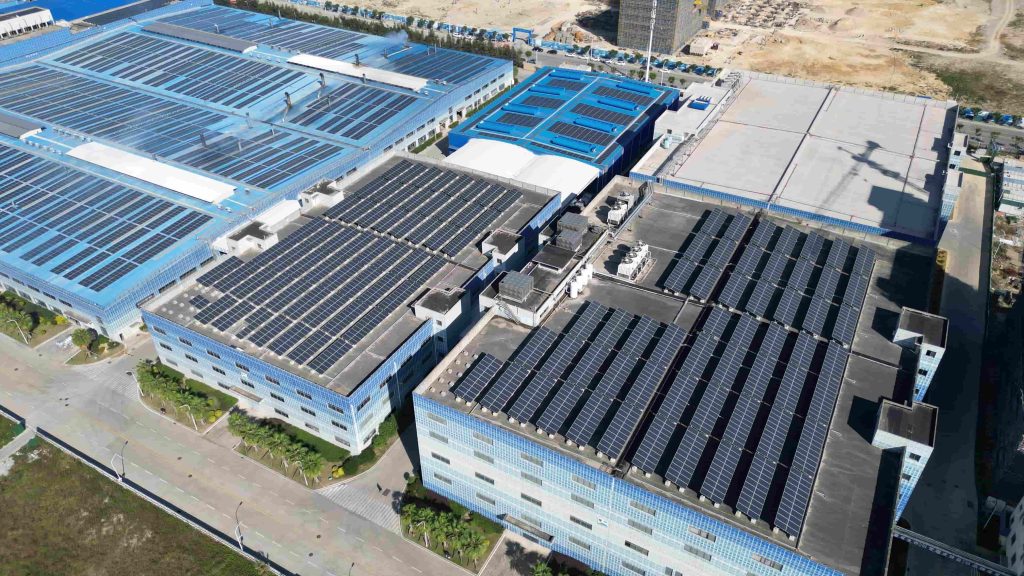
For a Sydney factory, losing an evening demand-saving window while charging at midday is a real dispatch conflict. Build the offer around the actual retail/market access, load/PV trace and required reserve. The previously described2025 private deployment is not established as a verified FAT/SAT case without its original records.
A five-ESSA0100B-0215 block would provide500 kW rated AC and 1, 075.2 kWh nominal storage by arithmetic. Specify its actual parallel architecture, usable-energy window, air cooling, EMS duties and connection package separately; a standard cabinet count does not prove the private Sydney as-built configuration.
Project Parameters & System Configuration
- Project Scope: 1MWh facility microgrid for a packaging plant.
- Cabinet arithmetic:Five215.04 kWh /100 kW units equal1, 075.2 kWh nominal/500 kW AC; the actual parallel/site configuration needs a released design.
- Grid Voltage: 400V AC, 3-phase.
- PCS: 500kW with isolation transformer.
- Commissioning Duration: 4 weeks.
- Acceptance Date: February 2025.
Dispatch and Commissioning Lessons to Resolve in the Offer
- Data timing:The claimed three-minute latency and predictive correct ion need original EMS records. Agree stale-feed, forecast and fallback behavior in the new configuration.
- Connection control:Agree applicable reactive/voltage behavior with the supplied PCS and DNSP package; the private tuning result needs its own records.
- Thermal scope:ESSA lists air cooling. The claimed 42.3°Cambient/30°Crack result and liquid-cooled as-built require their own BOM and monitoring record.
Commercial Results That Need Project Records
- Settlement result:The claimed 45negative-price events need the actual contract, settlement and matched EMS records.
- Demand result:The claimed 30%reduction needs actual bills, meter boundary and dispatch trace for the matched period.
- Connection result:The claimed AS 4777.2 acceptance needs the exact model/firmware and applicable operator/test documents.
- Note: Results vary depending on site configuration, local tariffs, and environmental conditions.
Project Implementation Workflow
To ensure successful NEM arbitrage deployment, EPCs must follow a structured engineering workflow from initial site assessment to commercial operation.
Figure 4: Project Implementation Workflow. A structured engineering approach from initial site audit to final commercial operation.
Engineering Comparison: Standard PV vs. PV + Negative Price BESS Arbitrage
EPCs and facility managers must evaluate the total cost of ownership when designing solar systems under NEM volatility.
|
Metric |
Standard PV System |
PV + BESS Arbitrage System |
|---|---|---|
| Negative Price Exposure | Depends on actual import/export settlement | Depends on accessible spread, reserve and dispatch limits |
| Solar Curtailment | Site/contract/PV conditions | Can reduce curtailment within available power/energy |
| Peak Demand (Example) | 300 kW | 150 kW (Peak Shaved) |
| Evening Grid Import | High (Retail Peak) | Reduced only within accepted AC energy and reserve duty |
| ROI Volatility | Contract and price exposure | Residual price/availability/duty exposure remains |
Engineering Checklist for Selecting an NEM Arbitrage-Ready Manufacturer
Define the functions and evidence the actual NEM/site arrangement requires, then put the responsible deliverables into the quote:
- Authorized price/tariff signal and agreed controller interface/limits
- Agreed FAT scope for economic dispatch, reserve, import/export protection andstale-data fallback
- Applicable Australian connection evidence and functions for the exact supplied PCS/firmware
- BMS data logging capabilities for negative price event auditing.
- Available power/energy at actual summer intake-air conditions using offered derating and thermal scope
- Actual model/BOM-matched safety/propagation evidence; standards names alone are not certification
Turn the accessible price spread into a configuration your EPC can install and the owner can operate. Use OEM/ODM manufacturing to define the cabinet/PCS block, usable AC-energy duty, EMS signal/limit logic, connection-document scope, delivery and commissioning/support responsibility. Compare microgrid solutions for unstable grids and 215 kWh Outdoor Cabinet ESS against the actual load and climate; the commercial offer should identify the required market integration and acceptance scope.
References & Industry Standards
These references address market context, equipment safety, inverter connection and installation scopes. Select what applies to the named equipment, Australian project and approved connection requirements. Their inclusion does not certify every MegSolid configuration or verify the private case.
- AEMO (2024): Australian Energy Market Operator Quarterly Dynamics.
- ARENA: Australian Renewable Energy Agency Market Integration Guidelines.
- CSIRO: GenCost Report (Battery Storage Projections).
- Clean Energy Council: Distributed Energy Resources Guidelines.
- AS 4777.2: Inverter requirements for grid connection.
- IEEE: 1547-2018 Standard for Interconnection and Interoperability of Distributed Energy Resources.
- IEC: 62619 Safety requirements for secondary lithium cells and batteries in industrial applications.
- UL: 9540A : Thermal-runaway fire-propagation test method for BESS; distinct from UL 9540 equipment certification
- NFPA: 855 Standard for the Installation of Stationary Energy Storage Systems.
FAQ
Q1: What is negative energy price arbitrage in Australia's NEM?
Negative-price arbitrage uses an accessible import/market settlement arrangement to charge during favorable periods and deliver energy during higher-value periods. A negative AEMO wholesale value does not automatically pay a factory; the signed contract, losses, fees, reserve and dispatch limits determine the net result.
Q2: How does the EMS integrate with AEMO dispatch data?
Agree the authorized price/tariff feed, timestamps, forecast use, fallback and controller limits for the offered EMS. Charging and discharge depend on accessible settlement value, SOC, loads and connection limits; a generic interface listing does not prove an implemented AEMO predictive dispatch system.
Q3: Does the BESS comply with Australian grid codes?
Require the applicable Australian model/firmware and connection evidence for the supplied PCS and site. Grid-support function names alone do not prove AS 4777.2/DNSP approval or the exact project requirements.
Q4: Can the BESS survive the high temperatures in Australian summers?
Use the offered temperature/derating curve and thermal test scope. ESSA is air-cooled and lists 0–45°C; Energon is liquid-cooled and derates above 45°C. The private42.3°Cambient/30°Crack/no-derating result needs its own as-built and monitoring record.
Q5: How fast must a microgrid inverter switch to prevent factory downtime?
Specify the protected loads’ actual interruption tolerance and the offered switchgear/PCS operating mode. The isolated PCS catalogue has no universal 8–10 ms guarantee, and PLC ride-through varies by equipment and supply. Verify interruption and recovery on the accepted configuration rather than using a generic timing figure.
Q6: Is the BESS safe to install near critical infrastructure?
Installation near critical infrastructure needs the supplied system’s safety/propagation scope, siting, ventilation, emergency access and authority review. A solid electrolyte or UL 9540A test-method reference does not establish a risk-free installation or automatic siting approval.
Q7: What is the typical ROI for a solar-storage system in Australia?
The revised screening example uses 500 kWh AC charge, 88%illustrative round-trip delivery, −A$0.05/kWh import and A$0.35/kWh avoided purchase. Its A$61, 335/year balance after only the assumed reserve gives about 7.34 years simple payback before other costs/finance. The actual project needs accessible settlement terms and a reproduced lifecycle cash flow; no generic IRR is established.
Q8: How do you size a BESS for negative price arbitrage?
Size from the actual accessible charge and discharge windows, required AC power, delivered energy, usable SOC reserve and recovery time. A fixed3–4hour negative-price window is not universal; demand protection and backup can compete for the same capacity.
Q9: What communication protocols are supported for remote monitoring?
Specify the offered EMS point/register map, supported protocols, timestamps, commands, limits and failure fallback. A listed Ethernet/RS485 interface does not automatically establish Modbus TCP or market-revenue monitoring for every configuration.
Q10: What are Network Demand Charges, and how does BESS reduce them?
Network Demand Charges are fees based on a facility's peak power draw. The EMS discharges the BESS during peak load periods to "shave" the peak, reducing the measured demand and lowering the monthly charge.
Q11: How to profit from negative energy prices in Australia?
Start with the contract: identify the price spread the facility can actually access, then simulate available AC energy, losses, demand limits, reserve and charging recovery. Ask MegSolid to quote the product/control package for that duty and the deliverables needed to commission it. A negative wholesale price alone is not guaranteed revenue.
Q12: What is AS 4777.2 compliance for inverters in Australia?
AS 4777.2 is the Australian standard for grid-tied inverters. It requires smart inverter functions like Volt-VAR control and active power limiting to prevent grid overvoltage during high solar generation periods.
Q13: How does a BESS reduce Network Demand Charges?
Network Demand Charges are based on peak power consumption. The EMS discharges the BESS during the facility's peak load periods, reducing the net power drawn from the grid and lowering the measured demand threshold for the billing period.
Get Your Custom Microgrid Engineering Consultation
For technical consultation, microgrid system selection, OEM/ODM cooperation, and distributor opportunities, contact our engineering team:
Global Sales & HQ (Hong Kong):
FLAT 7, 11/F BLK C HANG WAI IND CTR, 6 KIN TAI ST, TUEN MUN, HONG KONG
- Email: [email protected]
- Phone: +852 59811073
R&D & Manufacturing Facility (Huzhou):
No. 898 Mengxi Road, South Taihu New Area, Huzhou City, Zhejiang Province, P.R.China
- Website: https://www.solidess.com/
