
A cheap battery quote can become an expensive Australian project when the factory, EPC and network leave the same interface for someone else. If you are comparing a BESS EPC contractor in Australia or sourcing solid-state Battery Energy Storage Systems for a C&I site, start with one question: who owns the complete path from the quoted cabinet to accepted operation at your connection point? This guide turns that question into a product shortlist, an OEM-to-EPC delivery schedule and a usable RFQ.
MegSolid supplies the energy-storage equipment for EPC partners. Pair factory-supplied cabinets or containers with your appointed Australian EPC for the agreed local design, installation, connection and site commissioning. Give the factory a defined duty and ask for a defined package: selected battery and PCS, technical documents, factory tests, delivery boundary and integration-support scope. Give the local delivery team the interfaces it needs to engineer and accept the site. Put both scopes beside the price: that is how an equipment offer becomes a project decision. Australian contracting and network approval remain with the responsible local parties.
Use this guide to move from a supplier search to a comparable offer:
- Choose between 100kW/215.04kWh air-cooled cabinets, 261.24kWh/125kVA liquid-cooled cabinets and 500kW–1MW container routes using published specifications.
- Give the Australian EPC a dated OEM handoff: drawings, equipment revision, protection/control data, factory records and the exceptions still open.
- Screen the state, network, connection point, ambient conditions and tariff before treating a cabinet or a market-price signal as a complete solution.
- Test a clearly hypothetical 500kW/1.0752MWh buying decision, with usable energy, losses, recharge and AUD cash-flow boundaries shown.
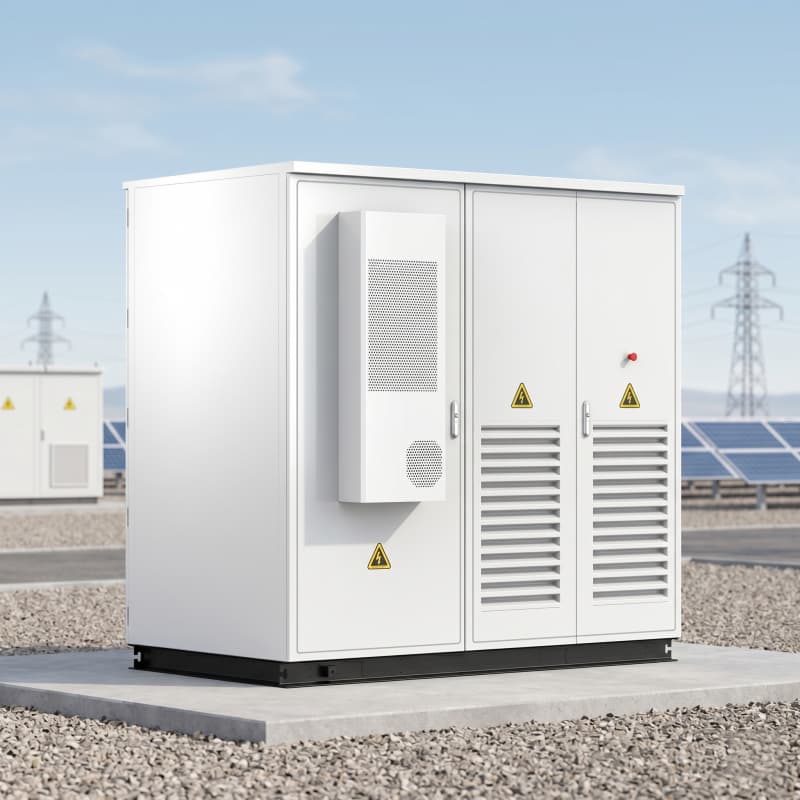
Australian BESS Procurement: Local EPC or Equipment Manufacturer?
Searching for a “solid-state battery manufacturer Australia” mixes several different jobs: battery-material research, equipment manufacturing, system integration and local EPC delivery. A materials development announcement does not establish a ready-to-install C&I system. An equipment data sheet does not establish a local contractor’s licence or an approved connection. Shortlist the Australian delivery partner against its actual jurisdiction, relevant work and scope; shortlist the factory against the exact equipment and evidence it will supply.
For a developer seeking a complete project, first appoint a party accountable for the installed scope and connection process. For an EPC buying the battery package, bring MegSolid the site duty and interface requirements so the equipment offer can be compared line by line. A split supply arrangement can work when design data, control authority, delivery dates and warranty boundaries have named owners. Leaving those items blank simply moves the cost into commissioning.
Shortlist BESS Suppliers in Australia by What They Will Deliver
Australian EPCs need an equipment package that fits the site and a delivery plan that another engineer can use. Ask every bidder for the same operating duty, connection boundary and document schedule. Compare the quoted configuration and exclusions before comparing the headline kWh price. The three roles below often appear on the same project, but each must remain visible in the contract.
- Australian EPC / local delivery team: confirm the relevant licences, design responsibility, civil and electrical scope, network liaison, commissioning, site access and O&M coverage for the actual state and project. MegSolid does not replace that appointment.
- MegSolid / selected equipment manufacturer: evaluate the named cabinet or container, battery/PCS/BMS configuration, model-specific evidence, factory acceptance scope, packing/shipping boundary and the technical support included in the offer. Have the factory confirm each deliverable and date.
- Owner / retailer / aggregator / network interfaces: nominate who supplies interval bills and export limits, who authorises operating schedules and remote access, and who settles any market or service revenue. A data feed alone does not make the battery a market participant.
OEM-to-EPC Delivery Matrix: Make Every Interface Purchasable
For each row below, add a named owner, document number/revision, due date and acceptance record to the purchase schedule. “Included” is not an acceptance criterion. Require an exception register showing the missing input, temporary assumption, responsible party and closure date. The following gates are proposed procurement requirements to agree with the supplier and EPC; they are not a claim that every document has already been issued for your project.
|
Package / interface
|
Required handoff, owner and release gate
|
|---|---|
|
Battery and PCS configuration
|
OEM: model, cell/BOM revision, serial traceability, firmware and selected options. EPC: confirm project ratings and required reports. Gate: signed data sheet and model/report applicability; substitutions need review.
|
|
Electrical and physical boundary
|
OEM: SLD, terminals, earthing/neutral arrangement, AC/DC ratings, auxiliary feeds, dimensions, mass, lifting and maintenance clearances. EPC/BoP: transformer, switchgear, foundations, cables and protection design. Gate: approved interface drawing before fabrication/site works.
|
|
Connection and power capability
|
EPC/network specialist: connection route and network conditions. OEM/PCS party: required certificates, P/Q and derating curves, settings and project models where applicable. Gate: selected PCS/firmware accepted for the actual connection before equipment release.
|
|
EMS / SCADA / control authority
|
Integrator: point list, protocol, units/scaling, time sync, command priority, access rights and log retention. OEM/EPC: assign lost-meter, lost-comms and high-SOC behaviour. Gate: witnessed control test and recorded setpoints, with one owner for each command.
|
|
Thermal and fire interfaces
|
OEM: permitted duty versus ambient, auxiliary load, cooling/fire-system scope and relevant reports. EPC/site team: ventilation/heat rejection, spacing, access and emergency interfaces. Gate: documented site fit and unresolved thermal/fire exceptions closed before shipment.
|
|
FAT, delivery and site acceptance
|
OEM: agreed FAT procedure, serial-linked records and punch list. EPC: receiving/SAT plan, energisation permissions and interface tests. Gate: agreed PASS/FAIL/HOLD criteria, transport-risk boundary, retest owner and signed release—not a generic FAT certificate.
|
|
Warranty, service and handover
|
Supplier/EPC/owner: capacity/throughput conditions, exclusions, monitoring rights, fault triage, labour/travel scope, spares and escalation contacts. Gate: operating manuals, training and accepted handover pack; payment milestones tied to the agreed evidence.
|
What Direct Factory Supply Must Add to Your EPC Package
The point of buying from a manufacturer is to get the equipment answers before a crew is waiting on site. Ask MegSolid to return a configuration, a document schedule and an explicit list of exceptions to your RFQ. A lower equipment price has little value if the transformer, control integration, local testing or service labour is priced by nobody. Compare those gaps alongside battery cost.
Freeze the BOM, Prove the FAT, Close the Punch List
Freeze the battery/PCS/BMS/EMS and firmware revisions that were priced; map the relevant certificates and reports to that supplied configuration. Agree FAT measurement points, tolerances, test equipment, witness rights and failure handling before testing. A factory test can prove the agreed equipment functions under the tested conditions; it cannot grant Australian site connection approval. Use MegSolid’s OEM/ODM enquiry route to request the configuration and factory-support scope, then carry the accepted values into the EPC handover schedule.
AS 4777.2, DNSP Approval and the Actual Connection Route
Start with the site’s network service provider and your appointed Australian connection engineer. State the connection voltage, aggregate inverter capacity, import/export limits and operating modes; then establish the standards, approvals and studies that apply. For an energy-storage inverter / PCS, verify the exact model and firmware against the required evidence and current applicable product listing. A product category or another model’s AS/NZS 4777.2 report is not approval for the quoted package.
Keep the connection route specific. A behind-the-meter LV C&I installation and a large HV-connected battery need different engineering inputs; do not import US IEEE 1547 requirements as an Australian approval shortcut. Where AS/NZS 4777.2 applies, check the edition/amendments, selected equipment, settings and listing required by the project. Where project-specific performance standards, studies, models or commissioning tests are required, assign their preparation and acceptance to the relevant parties. Obtain the applicable requirements from the network rather than promising that factory firmware tuning alone will deliver permission to operate.
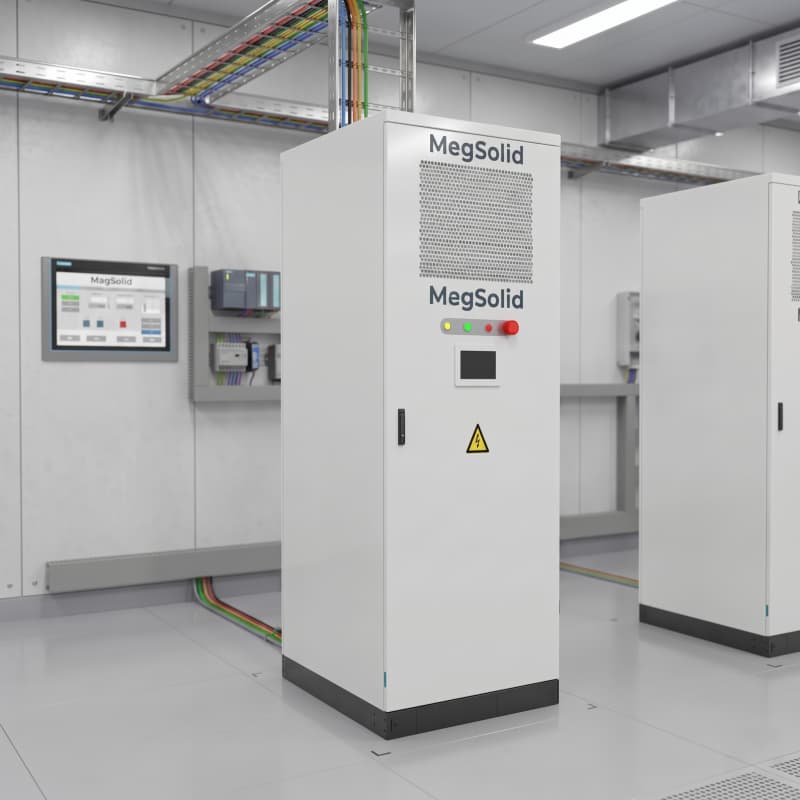
Australian Heat: Select the Cooling Route Before Promising Output
A battery bought for the afternoon factory peak must deliver in the afternoon weather. Use the site’s design ambient, solar exposure, altitude, humidity, dust/corrosion conditions and access constraints. Ask for the power/energy envelope and auxiliary demand at that duty. A general solid-state label does not replace thermal or fire engineering, and an enclosure IP rating does not establish flood, bushfire or coastal suitability.
215kWh Air Cooling and 261kWh Liquid Cooling Are Different Routes
The published ESSA0100B-0215 is 100kW / 215.04kWh, intelligent air cooling, 0–45°C. Energon 261 is 261.24kWh / 125kVA, liquid cooling, −20–55°C with derating above 45°C; its published altitude limit is 4000m with derating above 2000m. The air-cooled container range lists 0–45°C. That gives the EPC distinct cooling and equipment routes to assess against the hot-day duty. Size the heat-rejection path, ventilation/service clearances and auxiliaries alongside the battery; a closed coolant loop still transfers heat to its surroundings. Price the output required at the actual site conditions so the afternoon peak does not outlast the battery’s operating envelope. Use the BESS thermal runaway prevention guide for the separate fire-risk discussion.
Australian BESS Savings: Build the Bill Case Before the Payback Claim
The battery’s job is to remove a cost or deliver a service the customer can actually settle. Start with interval demand, the retail bill, the applicable demand-charge rule and the export agreement. NEM spot-price data can inform a control strategy; it is not the price every C&I customer pays. Identify the state and market first: do not apply a NEM/AEMO negative-price strategy automatically to a WA/SWIS site or another market.
Separate the value streams below, then test them against one dispatch schedule and reserve policy. Energy used for one service is unavailable for another at the same moment. Include recharge demand, losses, auxiliaries, degradation, downtime, O&M and software/aggregator fees; prevent double counting between self-consumption and energy arbitrage.
- Demand-charge reduction: model the tariff’s billing-demand interval and the peak that remains when the battery reaches reserve. Recharging must not create a replacement billing peak.
- Solar self-consumption: value avoided imports against the actual foregone export payment and storage losses. PV charging is not automatically free.
- Energy arbitrage / negative prices: use the delivered retail or aggregator settlement terms, metering and fees. Negative wholesale price alone does not guarantee a negative site charge or payment to charge.
- Grid services / FCAS: confirm the participant or aggregator arrangement, technical qualification, reserved capacity and commercial terms separately. No FCAS revenue is assumed in the example below.
Hypothetical buying screen—not a quote, Australian installation or savings forecast. Assume a facility wants 500kW of net peak reduction for 1.5 hours. Compare that 750kWh requirement with a 500kW / 1.0752MWh container route, using deliberately stated assumptions. All financial inputs below are AUD; none is a current equipment price or a customer result.
Step 1: State the Duty and Energy Assumptions
- Duty: assumed 500kW net reduction for 1.5 hours = 750kWh at the agreed AC measurement boundary. This is a peak-shaving duty, not a demonstrated whole-site backup rating.
- Product starting point: published container route 500kW / 1,075.2kWh nominal, 400V, air cooled. Its listed 500kW rating alone does not prove 500kW net at the connection point after auxiliaries/reactive duty.
- Illustrative energy assumptions: 90% starting SOC, 10% minimum SOC (80% window), 95% one-way discharge efficiency, 5kW AC auxiliaries for 1.5 hours. These are screening assumptions, not approved operating limits or measured efficiency.
- Tariff assumptions: AUD0.30/kWh avoided peak import, AUD0.10/kWh charging cost, and AUD15/kW/month demand charge. Assume 250 such cycles a year only to show the arithmetic.
- Commercial inputs still needed: quoted installed CapEx in AUD, finance/tax basis, firm O&M/software costs, degradation/augmentation, outage reserve and an approved control strategy. No assumed CapEx, IRR or payback is presented.
Step 2: Check Energy, Recharge and the Tariff Boundary
- Energy screen: 1,075.2 × 0.80 × 0.95 − (5 × 1.5) = 809.652kWh net under the stated assumptions. That exceeds the 750kWh target by about 59.7kWh before ageing, site derating and further reserve.
- Power screen: the required 500kW is net at the site boundary. If auxiliaries are additional to the load, the equipment must supply them too; reactive-power duties and derating can also limit active power. Resolve the measurement boundary before accepting the 500kW option.
- Charging screen: separately assume 90% AC round-trip efficiency measured at a common boundary including auxiliaries and matching SOC. To deliver 750kWh, estimated AC input is 750 ÷ 0.90 = 833.3kWh. Do not apply this efficiency again to measured output.
- Recharge window: at an assumed 250kW net AC charging allocation, 833.3 ÷ 250 = 3.33 hours before taper, availability and operating restrictions. Verify the next peak and the charging-demand effect.
- Energy-shifting value: 750 × AUD0.30 − 833.3 × AUD0.10 ≈ AUD141.67 per cycle; at the assumed 250 cycles, about AUD35,417/year gross before the listed costs and changes over life.
- Demand-charge scenario: only if all 12 applicable billing peaks are reduced by 500kW, 500 × AUD15 × 12 = AUD90,000/year gross. It is a separate conditional result—not an automatic saving to add without dispatch and billing-demand simulation.
Step 3: Decide What the Quotation Must Prove
This screen says the nominal energy could be worth investigating; it does not establish a complete 500kW net solution or a return on investment. Ask MegSolid and the EPC to return the net power/energy boundary, approved SOC window, hot-day duty, auxiliaries and recharge plan, then model the real interval data against the tariff. If the 500kW route cannot meet the net duty, revise the target or equipment configuration before fixing the price. Calculate payback only after a complete installed AUD quote and an agreed lifetime cash flow exist.
Control Architecture: Network Limits Before Price Signals
A commercial EMS needs a command hierarchy, not a “price below zero” switch. Agree the priority of protection, network import/export limits, backup reserve and economic scheduling. Define the meter location, update rate, stale-data detection, time synchronisation and which party can change settings. Test those rules before allowing unattended dispatch.
Figure 1. Illustrative control priority: validate the tariff/schedule and live data, enforce the site and battery limits, then issue an authorised setpoint. Price data is one input; stale information must trigger the agreed fallback rather than uncontrolled charging.
For zero-export sites, validate PCC metering direction and total PV/PCS coordination. For high SOC, define PV curtailment or other permitted response. For lost meter/EMS communication, define the safe state, alarm and recovery owner. Price-source access, retailer/aggregator commands and the battery’s local protections must not compete for uncontrolled authority.
Figure 2. Illustrative AC-coupled interface—not a construction SLD. The battery/PCS connects electrically to the site bus; the EMS receives meter data and sends control commands. Transformers, switchgear, earthing, protection and transfer arrangements must be drawn for the actual project.
Assign an owner to each interface: who provides the PCC CTs/meter, who signs off scaling and polarity, who configures the PCS, who grants remote access, and who witnesses the test. Factory integration and local commissioning are linked work packages; neither should be assumed to include the other.
Worked Procurement Example: A Hypothetical NSW Factory
Hypothetical design exercise: follow one factory duty from its peak-reduction target to equipment selection, interface ownership and acceptance. The aim is a buying decision your EPC can price and test—not a completed MegSolid Australian project or a savings forecast.
Assume a NSW factory asks its EPC for 500kW of peak reduction for 1.5 hours while retaining an agreed outage reserve. The EPC must confirm the actual tariff, network conditions and electrical/site design. MegSolid’s task in this exercise is to respond with an equipment option and the data needed to assess it. Start with the published 500kW/1.0752MWh container route; do not treat that starting point as an approved or quoted system.
Proposed Configuration and the Questions That Can Change It
- Site: hypothetical NSW manufacturing facility; local network, connection voltage and operating permissions are to be established by the project team.
- Required duty: assumed 500kW net peak reduction for 1.5h; backup duration, motor starts and reactive duty are separate inputs.
- Container starting point: published 500kW / 1.0752MWh, 400V, intelligent air cooling, 0–45°C; the order must identify the exact model revision.
- Cabinet arithmetic: five 215.04kWh cabinets total 1,075.2kWh nominal—not exactly 1MWh. A five-cabinet solution is a separate architecture whose parallel limits, controls and installation must be confirmed.
- Liquid-cooled alternative: four Energon 261 cabinets total 1,044.96kWh nominal and 500kVA aggregate apparent rating by arithmetic. That is not proof of 500kW net or an approved parallel design.
- Environmental inputs: actual design ambient, altitude, solar exposure, flood/fire assessment, dust/corrosion and maintenance clearances—not invented site measurements.
- Release condition: EPC accepts the site fit and OEM/EPC interface documents, approved operating values and remaining exceptions before ordering the final configuration.
Choose the Design Around the Constraint That Will Bind
If usable energy fails, change the energy block, reserve policy or discharge duration. If hot-day active power or reactive duty fails, more nominal kWh alone will not solve it. If recharge fails, reassess the charging allocation and next-day schedule. If access or site works dominates cost, compare the container’s lifting/foundation requirements with a cabinet layout and cable/control scope. Ask for a revised offer that shows which constraint each change resolves.
Three Commissioning Problems to Prevent on Paper
- Unowned controls: agree point-list revisions, command priority, watchdogs, setpoint limits, time stamps and failure/recovery tests. Test the selected PCS/EMS combination with the actual interface; a protocol name alone is insufficient.
- Unpriced physical interfaces: issue cabinet/container dimensions, mass, lifting points, terminal locations, clearances and auxiliary requirements to the EPC before foundations, transport and cabling are fixed.
- Overstated thermal duty: match the quoted power/energy to ambient and reserve conditions, record cooling auxiliaries and define the acceptance measurement. Do not carry a liquid-cooled claim into an air-cooled offer.
The Evidence Pack to Request Before Release
Build a record that a different engineer could review without relying on a sales presentation. Request the following for the quoted revision; document any missing item and decide who closes it and by when. Product photographs are illustrations of the equipment, not proof that this hypothetical Australian site was built.
- Controlled equipment data sheets, BOM/firmware revision and the exact reports/certificates applicable to the supplied battery/PCS configuration.
- Approved SLD/interface drawings, P/Q and thermal capability, meter/SCADA point list and authorised settings with their acceptance owners.
- Agreed FAT procedure and serial-linked records, witnessed exceptions, transport/receiving checks and a dated site SAT plan.
- Warranty/throughput conditions, O&M manuals, spares/escalation plan, training and a handover index identifying the final document revisions.
Acceptance Outcomes to Agree, Not Savings to Invent
- Power and energy: accept the agreed net kW/kVA and AC kWh over the specified SOC window, duty and ambient; record the measurement boundary and tolerances.
- Controls: witness import/export limiting, PV/PCS coordination, protected reserve, lost-meter/communications behaviour and authorised recovery against the agreed procedure.
- Connection: the appointed local parties close the applicable network approvals, settings and site commissioning conditions; factory FAT is a separate release gate.
- Commercial handover: close the punch list, operating documents and service responsibilities. Verify savings later against the actual interval bills; do not substitute a model for measured results.
MegSolid Product Routes: Cabinets, Parallel Blocks or Containers
Use published ratings to shortlist, then request a configuration for the actual duty. The cabinet and container routes below are not interchangeable simply because their nominal kWh are similar. kVA is apparent power, kW is active power, and nominal stored energy is not delivered AC energy. The product links lead to the current specifications so the EPC can check the starting values.
|
Decision
|
Cabinet routes
|
Container route
|
|---|---|---|
|
Published power / energy
|
ESSA0100B-0215: 100kW / 215.04kWh. Energon 261: 125kVA / 261.24kWh. Confirm net active power at the required power factor.
|
Published configurations: 500kW / 1.0752MWh and 1MW / 2.1504MWh; resolve the model designation in the signed offer.
|
|
Cooling / ambient
|
215.04kWh: intelligent air cooling, 0–45°C. Energon: liquid cooling, −20–55°C; above 45°C derated.
|
Intelligent air cooling, 0–45°C. Require the site duty, auxiliaries and environmental fit.
|
|
Voltage / battery
|
215: 400V AC; 768V nominal battery, 672–850V range. Energon: 400/480V ±15% AC; 832V nominal, 676–936V DC.
|
400V nominal AC; 768V nominal battery, 672–850V range. EPC confirms transformer, protection and auxiliary interfaces.
|
|
Expansion
|
Energon product page states up to ten parallel units. Verify allowed modes, common controls, protection and usable power. No parallel count is assumed here for the 215 model.
|
Compare a larger energy block with the civil, transport, lifting and cable/control scope. Published kWh is not an expansion approval.
|
|
Space / handling
|
215 model: 2450×1550×2400mm, 3900kg. Energon: 1300×1350×2200mm; request the model’s mass and clearances.
|
500kW route: 6058×2438×2896mm, 21000kg. 1MW route: 12192×2438×2896mm, 38000kg. Confirm final shipping/lifting data.
|
|
Communications
|
215: RS485 / TCP/IP. Energon: RS485 / LAN / 4G. Protocol, point map, control permissions and integration scope must be agreed.
|
RS485 / TCP/IP, touch display and cloud platform listed. Define SCADA points, network security and lost-link behaviour.
|
|
Order gate
|
Signed configuration, site fit, required model-specific evidence, approved interface documents and explicit exclusions.
|
The same gate, plus agreed transport/Incoterm, unloading, foundations, site works and connection responsibilities.
|
Australian BESS RFQ: Release Gates Before Money Moves
Ask each party to mark the gate accepted, rejected or on hold and attach the evidence. A tick without a report number, an accepted revision or an accountable person does not close the risk. These are questions for the offer and project team; blank rows must not be represented as existing MegSolid certificates or approvals.
|
Release gate
|
Evidence / decision to record
|
|---|---|
|
Who is the Australian EPC?
|
Applicable local licences/engineering responsibility, contracted construction/connection scope and a relevant reference verified by the buyer.
|
|
Does the equipment fit the duty?
|
Net kW/kVA, usable AC kWh, SOC reserve, recharge, reactive duty, ambient/altitude derating and agreed measurement point.
|
|
Is the exact PCS/firmware acceptable?
|
Required certificates/listing and project connection conditions checked by the responsible EPC/network specialist; do not substitute a different model’s evidence.
|
|
Are battery/fire reports applicable?
|
Requested report, tested configuration and its relevance to the ordered unit and site fire design. UL optional is not an issued UL certificate; a test method is not site approval.
|
|
Are physical and control interfaces closed?
|
Approved SLD/layout, mass/lifting/clearances, auxiliary supply, protection, point map, command hierarchy and failure/recovery responsibilities.
|
|
Can FAT release shipment?
|
Agreed procedure and tolerances, serial-linked results, witness/retest terms and a signed punch-list decision. Keep site SAT/network tests separate.
|
|
Is landed and installed scope priced?
|
Equipment scope, currency, Incoterm, freight/insurance, duty/GST treatment, unloading, site works, integration and commissioning inclusions/exclusions.
|
|
Who supports the system after handover?
|
Warranty/throughput conditions, response/escalation responsibilities, remote access, spares, service labour/travel and final operating records.
|
Start with the 100kW / 215.04kWh air-cooled C&I cabinet, compare the 261.24kWh / 125kVA liquid-cooled Energon, or review the 500kW–1MW container range. Send the duty and interface questions through the existing enquiry form or contact MegSolid. Request a preliminary fit, the proposed supply boundary and the inputs needed to firm the offer; have the supplier confirm the technical documents and support it will include.
Technical References and Verification Boundaries
Use the organisations and standards below as starting points, then check current project requirements with the appointed Australian professionals. AEMO’s NEM connection overview directs connection work through the relevant network service provider. The current CEC inverter programme helps check exact equipment listings. The AEMO battery registration factsheet is a starting point for participation questions—not a promise that a data API grants market access. Applicable requirements and issued model reports still need project-specific review.
- ARENA: Australian Renewable Energy Agency. Large-scale Renewable Energy Integration Reports.
- AEMO: Australian Energy Market Operator. National Electricity Market (NEM) Data and Dispatch Information.
- CEC: Clean Energy Council Distributed Energy Resources Guidelines.
- CSIRO: GenCost Report (Battery Storage Projections).
- AS 4777.2: Inverter requirements for grid connection.
- IEC 62619: Safety requirements for secondary lithium cells and batteries used in industrial applications.
- UL 9540A: Test Method for Evaluating Thermal Runaway Fire Propagation.
FAQ
Q1: Are there solid-state battery manufacturers in Australia?
Australia has battery-material research, equipment suppliers, integrators and local EPC providers; those are different roles. If your search is for a solid-state battery manufacturer in Australia, establish where the equipment is manufactured and who holds the local delivery responsibilities. MegSolid’s role in this guide is manufacturing/equipment supply for EPC partners, not Australian licensed electrical construction. Check the actual model/BOM and electrolyte evidence rather than inferring an all-solid-state system from the LFP label.
Q2: Why should Australian EPCs choose an international direct manufacturer?
Choose a direct manufacturer when its quoted package gives the EPC useful configuration control, engineering documents, factory records and an explicit support scope. Compare those deliverables, exclusions and warranty interfaces with other offers; international origin alone does not establish lower cost, faster delivery or Australian approval. Keep the local design, construction and connection work assigned to the contracted parties.
Q3: Can the BESS survive the high temperatures in Australian summers?
Select the model around the actual site ambient and duty. The ESSA0100B-0215 and published container routes use air cooling and list 0–45°C operation. Energon 261 uses liquid cooling and lists −20–55°C, with derating above 45°C. Use the hot-day power/energy curve, auxiliary load and heat-rejection/clearance information to check the required afternoon duty. That comparison lets the EPC choose the cooling route and capacity margin for the site rather than relying on a general climate claim.
Q4: How does the BESS comply with Australian grid codes?
The EPC and connection specialists must establish the applicable requirements with the network service provider for the site voltage, aggregate capacity and operating mode. Verify the selected PCS model/firmware, required reports or listings, approved settings and project studies/tests. AS/NZS 4777.2 evidence where applicable is not a substitute for site approval, and a factory test cannot grant permission to connect.
Q5: How does the EMS integrate with AEMO dispatch data?
First agree the operating and commercial route with the owner, retailer or aggregator. Price data, market dispatch instructions and settlement are different functions. Confirm the offered EMS’s actual interface, point map, time stamps, command permissions, data-loss fallback and test scope. Public price access alone does not prove an AEMO trading relationship, a supported MegSolid API integration or eligibility to earn dispatch revenue.
Q6: What is the typical ROI for a solar-storage system in Australia?
There is no universal payback. Use interval demand/PV, the real tariff and export terms, usable energy, reserve, charging losses, degradation, availability, installed AUD cost and ongoing fees. The example in this guide assumes prices only to demonstrate arithmetic; it is not an offer, a savings forecast or a completed project. Model overlapping energy/demand services together and add FCAS only where qualified and contractually supported.
Q7: Is solid-state chemistry safer for high-temperature environments?
Assess safety on the supplied cell/BOM and system evidence, not a chemistry slogan. LFP describes the cathode chemistry and does not by itself establish a solid electrolyte or an all-solid-state design. Request applicable battery/fire reports, understand the tested configuration, and have the EPC review the actual thermal, protection, spacing and emergency arrangements. No zero-fire-risk or universal high-temperature advantage is claimed.
Q8: What communication protocols are supported for remote monitoring?
The published 215 cabinet and container routes list RS485/TCP-IP communication; Energon lists RS485, LAN and 4G. Those interface labels do not establish a finished SCADA protocol map or remote-control permission. Agree the supported protocol, registers/points, scaling, time sync, access security, control authority and lost-link tests for the offered EMS/PCS combination.
Q9: How do you size a BESS for negative price arbitrage?
Start with the site’s actual load/PV intervals, deliverable charging price, discharge opportunity, network limits and reserve policy. Size active power, apparent power, usable AC energy and recharge together. The hypothetical 500kW for 1.5h duty requires 750kWh net; nominal capacity alone cannot establish the duration or savings. Include losses, auxiliaries, degradation and the next required operating window.
Q10: Does the system support integration with existing PV arrays?
Existing PV may be integrated through a project-designed AC- or DC-coupled arrangement where the selected equipment supports it. Confirm PV inverter controls, PCC metering, import/export limits, high-SOC behaviour, protection and any backup/transfer arrangement. Do not assume a general product family’s PV feature or parallel claim applies to every model, mode or installed configuration.
Q11: How to profit from negative energy prices in Australia?
A negative wholesale price can create an opportunity only when the site’s retailer/aggregator contract and settlement terms pass it through in a useful way. Network/retail charges, losses and fees can outweigh the wholesale benefit. Confirm metering, authorised control and participation arrangements, then compare charged AC cost with discharged value. A command to charge when a public price is below zero is not itself a profit mechanism.
Q12: What is AS 4777.2 compliance for inverters in Australia?
AS/NZS 4777.2 specifies requirements for inverter equipment within its scope. The applicable edition/amendments, selected model/firmware, regional settings and required listing or test evidence must be checked for the project. The network connection process and any project-specific requirements remain separate; do not assume one standard covers every Australian BESS size or connection voltage.
Q13: Who manufactures solid-state BESS for the Australian market?
MegSolid offers cabinet and container equipment routes for EPC partners evaluating Australian projects: the 100kW/215.04kWh air-cooled cabinet, 261.24kWh/125kVA liquid-cooled Energon and 500kW–1MW container range are published starting points. Ask for the exact configuration, chemistry/BOM evidence, factory deliverables and support scope. The appointed local EPC and other contracted parties retain their agreed Australian design, construction, connection and site-acceptance responsibilities.
Get a BESS Equipment Proposal Your EPC Can Price
Bring MegSolid the duty and ask for a preliminary product route, equipment boundary and list of missing inputs your EPC can work with. Start with your Australian state/postcode and network if known, AC voltage, approximate load/PV profile, peak-reduction or backup goal, available space and expected timing. An electricity bill and a rough duty are enough to open the discussion; add an existing SLD or interval load file when available. Then agree the equipment scope and document handoff with your appointed EPC. Use the contact details below for technical consultation, OEM/ODM cooperation and distributor enquiries.
Global Sales & HQ (Hong Kong):
FLAT 7, 11/F BLK C HANG WAI IND CTR, 6 KIN TAI ST, TUEN MUN, HONG KONG
- Email: [email protected]
- Phone: +852 59811073
R&D & Manufacturing Facility (Huzhou):
No. 898 Mengxi Road, South Taihu New Area, Huzhou City, Zhejiang Province, P.R.China
- Website: https://www.solidess.com/