 Skip to content
Your EPC needs a named party to resolve battery, PCS and control interfaces after C&I BESS equipment arrives. Compare a MegSolid ESSA or Energon package with the same BOM, commissioning responsibility and service terms you expect from other bids. Bring an unresolved interface from the current offer to the product discussion. Judge the supplier on the documented answer and deliverable, rather than assuming every trading company or every factory carries the same risk.
The buying risk is an unowned interface. If the quote does not identify the exact battery, PCS/EMS firmware, supported voltage/current/BMS map and local acceptance documents, the EPC must close those gaps after delivery. A trading company can provide engineering and manufacturer-backed evidence, and a factory-direct offer can still leave installation or local approval outside scope. Compare the actual named responsibility before comparing the price.
Buy MegSolid factory integration for a defined equipment and test scope: selected model/BOM, supported battery/PCS/control interfaces, witnessed FAT and an agreed handover pack. Assign local connection, installation, commissioning and service work in the same offer. That gives the project an accountable package; factory-direct status alone does not remove grid, delivery or warranty obligations.
Need Help Evaluating a BESS Supplier?
Secure your project timeline with our standardized verification tools.
The Hidden Engineering Risks of Trading Company Procurement
Many EPC contractors attempt to reduce CapEx by sourcing BESS cabinets from multi-layered trading companies.
However, this fragmented approach increases uncertainty in thermal safety validation and system-level risk management:
- Grid acceptance: Missing exact inverter/firmware reports, protection settings or local design responsibility can hold up energization. AS4777.2 or IEEE 1547 applicability must follow the actual destination and connection, regardless of supplier type.
- Delivery: Tie the approved BOM, document release, witness-test date, shipment scope and site-readiness dependencies to the agreed schedule. Price any delay remedy that the contract actually requires.
- Warranty: Identify serial/batch traceability, fault evidence, covered equipment, repair contact, local labour and freight. An intermediary does not automatically void a warranty or require a full-inventory recall.
Five Critical Supplier Verification Points Before BESS Procurement
To ensure system integrity and project success, EPC procurement teams must verify the foundational reliability of the supplier. Industry guidelines suggest verifying these five critical points before issuing an RFQ:
- Cell traceability: Obtain the ordered cell/module identity, BOM/serial/batch records and exact safety-test/report scope; IEC62619 safety evidence is not itself a production-batch warranty.
- PCS compatibility: Check the full battery/PCS voltage/current/BMS interface, firmware and destination connection evidence. A THDi or transformer feature does not automatically establish approval.
- Thermal management: Select the model and site thermal duty. ESSA0100B-0215 is air-cooled LFP; liquid-cooled Energon is another route with its own temperature and derating data.
- EMS/BMS integration: Define equipment/command ownership, charge/discharge limits, meter inputs, priority, communications-loss fallback and the witnessed test sequence.
- FAT protocol: Agree exact hardware/firmware, test boundaries, acceptance limits, witness access and records, then price the site interfaces and SAT separately.
(Explore our comprehensive C&I ESS solution and OEM/ODM manufacturing services).
Engineering Case Study: Thailand C&I ESS Deployment Evaluation
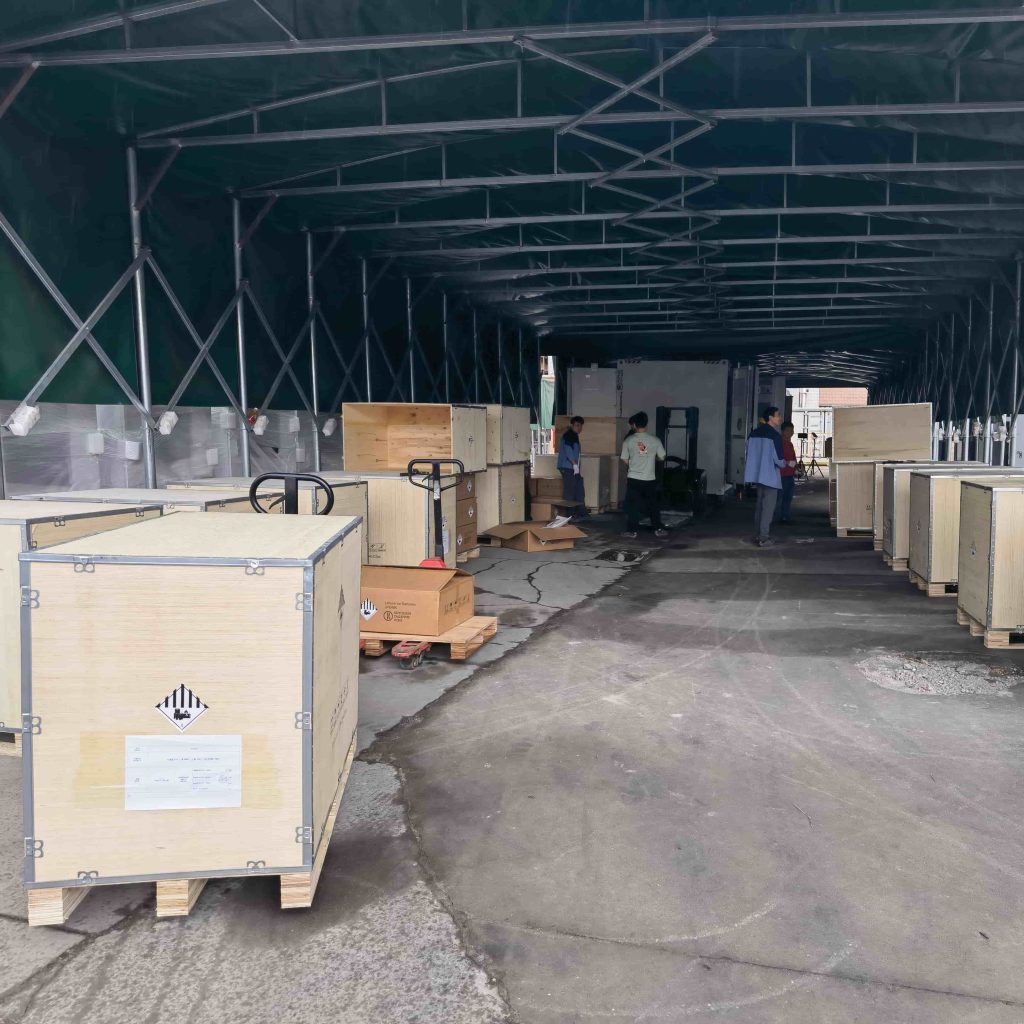
Treat the Thailand industrial example as a C&I ESS technical pre-assessment until named FAT/SAT and commissioning records are available. Two ESSA0100B-0215 cabinets total 200 kW rated AC and 430.08 kWh nominal energy with air cooling and LFP cathode chemistry. Peak shaving and backup remain separate control, reserve and transfer duties. The Q3 2025 label is not proof of a completed installation or of the required load duration.
- Evaluation location: Thailand industrial-facility scenario; exact site duty and connection need approval.
- Equipment screen: Two ESSA0100B-0215 cabinets total 200 kW AC / 430.08 kWh nominal, air-cooled LFP.
- Schedule reference: Q3 2025 is a scenario label until the named commissioning records are supplied.
- Intended duty: Factory peak shaving plus a separately designed backup/reserve and transfer path.
- Acceptance required: Exact safety documentation, electrical/transient and thermal evidence with model/BOM, conditions and PASS/FAIL criteria.
Engineering Risk Matrix: Factory Direct vs. Trading Company
EPC procurement teams must evaluate suppliers based on their ability to control the engineering lifecycle.
|
Engineering Risk |
Trading Company |
Factory Direct (MegSolid) |
|---|---|---|
| Grid Compliance (THDi <3%) | Confirm the exact model reports, settings and local approval responsibility | Price the delivered model/firmware and witnessed connection tests |
| BOM Traceability | Require manufacturer-backed cell/module/BOM and serial/batch records | Require the same controlled traceability and report register |
| FAT Capability | Agree manufacturer access, witness plan and acceptance evidence | Agree the same exact factory test and witness scope |
| Warranty Liability | Assign named manufacturer/EPC/service obligations and remedies | Put covered equipment, exclusions, labour and freight into the contract |
| Delivery Lead Time | Agree release, test, shipment and site-readiness dependencies | Agree the same schedule milestones and delay remedies |
MegSolid Engineering Validation Reference Data
Build the evidence schedule around the ordered model. For the ESSA0100B-0215 outdoor cabinet, the public catalogue gives 100 kW / 215.04 kWh, 400 V AC, air-cooled LFP, IP54 and a 0–45°C operating range. Request the exact report/register and accepted site duty against those values. Confirm any hybrid solid-state electrolyte classification against the offered model/BOM and reports; an alternative liquid-cooled configuration needs its own operating data and test boundary.
|
Parameter |
Evidence Available |
|---|---|
| Cell Safety | Request exact cell/module/system report and model scope |
| Thermal Performance | Request named thermal/derating data and test conditions |
| Cycle Performance | Request exact cycle-test method, endpoint and sample identity |
| Manufacturing Quality | Request controlled BOM, serial and cell/module batch records |
| System Safety | Request actual UL9540A report/status and cell/module/system scope |
Regulatory References
Use the following standards as inputs to the destination project's evidence register. Match the exact model, report scope, connection design and applicable edition before using a reference as an approval claim. A standard listed on a webpage is not a certificate for the installed BESS.
- IEC 62619: IEC 62619 certification is commonly used to verify industrial lithium battery safety performance, including electrical abuse and environmental testing requirements.
- UL 9540A: UL 9540A is a test methodology used to evaluate thermal runaway fire propagation in lithium-ion energy storage systems.
- AS 4777.2: Inverter requirements for grid connection in Australia.
- IEEE 1547: Standard for interconnection and interoperability of distributed energy resources.
FAQ
Q1: What is the main difference between solid-state and Tier 1 liquid LFP commercial energy storage?
Keep chemistry and cycle figures at their model/test boundary. ESSA0100B-0215 lists LFP cathode chemistry and at least 5,000 cycles; the 16.07 kWh hybrid solid-state module publishes up to 8,000 cycles at 80% DOD. Neither value proves a universal 3,000–6,000-cycle comparison, no mid-life augmentation or a complete C&I plant life. Align test conditions, retained-capacity endpoint and system warranty before comparison.
Q2: Does solid-state chemistry really eliminate thermal runaway in commercial battery storage?
No battery chemistry removes the need for the exact cell/module/system safety evidence and installed protection measures. Obtain the named propagation-test scope and match it to the delivered BOM and layout; LFP cathode chemistry does not determine whether the electrolyte is liquid or semi-solid, so confirm any claimed electrolyte advantage from the exact offered model and reports.
Q3: Why does a modular 215kWh cabinet reduce civil engineering costs?
ESSA0100B-0215 publishes 3900 kg and 2450 × 1550 × 2400 mm. Actual site support, anchors, access and lifting follow the controlled GA and approved method. A modular enclosure does not automatically approve an existing slab or standard forklift, or eliminate civil and crane costs.
Q4: What is the cycle life of MegSolid's industrial energy storage system?
ESSA0100B-0215 lists at least 5,000 cycles; its separate maximum charge/discharge-rate entry is 0.5C at 25°C. Obtain the cycle method, endpoint and offered warranty duty for that exact model. IEC62619 safety evidence is not a cycle-life warranty, and the cycle figure does not establish a ten-year C&I performance guarantee.
Q5: Is the initial CapEx of a solid-state BESS higher?
Compare actual installed and lifecycle bids at the same usable AC energy, power, contract year and operating duty. Include auxiliaries, derating, replacements/augmentation, service, labour and freight. Chemistry or factory-direct status alone does not establish higher initial price or a lower 15-year TCO.
Q6: Does the system include a built-in isolation transformer?
The MEGA PCS range publishes a built-in isolation transformer and THDi below 3% for its stated product boundary. Match the exact model/firmware, battery interface, report scope and protection design to the project. Those features do not automatically establish AS4777.2 acceptance or eliminate local installation and connection tests.
Q7: How can EPCs verify the BOM traceability of a commercial BESS?
Request the ordered cell/module/BOM identity, serial/batch records and exact safety report. Identify the manufacturer-backed warranty and the party supplying fault evidence, labour, parts and freight. Direct-manufacturer status alone is not proof that every record or remedy is included.
Q8: What are the typical applications for commercial battery storage systems?
Applications can include peak shaving, solar self-consumption, generator coordination, backup or an agreed market-dispatch service. Each needs its own load, controls, reserve and acceptance basis. A C&I BESS label does not guarantee AEMO participation or zero downtime for every site.
Q9: How does the EMS optimize the performance of industrial energy storage?
For market-responsive dispatch, specify the data/service provider, meter and settlement boundary, command priority, SOC/temperature/throughput limits and loss-of-signal fallback. Obtain the exact controller's supported interface and witness tests. An AEMO API or SCADA label alone does not establish access to market revenue or the optimal ToU result.
Q10: Can MegSolid customize the PCS firmware for specific local grid codes?
Agree the exact inverter/PCS settings, firmware, type-test/report scope and destination connection requirements with the supplier and local project engineer. Any offered customization needs controlled configuration and acceptance evidence. Do not assume every regional code can be met merely by changing active filtering or anti-islanding parameters.
Q11: How to evaluate commercial energy storage suppliers in Australia?
Evaluate the actual destination and operating duty, supported battery/PCS/control interfaces, model-level safety and cycle evidence, usable-energy/derating basis, FAT/SAT and named service/warranty remedies. AS4777.2 or AEMO interfaces apply only where the specific project requires them; they are not universal C&I pass criteria.
Q12: What is a battery energy storage system (BESS) for Australian C&I use?
An Australian C&I BESS combines battery, conversion, control and protection for an agreed commercial site duty. Backup, self-consumption, peak reduction and market participation have different acceptance boundaries. A quoted hybrid solid-state option needs its own exact model/BOM; the ESSA cabinet lists LFP cathode chemistry, which can coexist with a semi-solid electrolyte; confirm the offered electrolyte architecture rather than transferring another product's claim.
Q13: How much does a commercial battery storage system cost in Australia?
A 15-year model at one cycle per day needs actual throughput, SOC/DOD, temperature, auxiliaries, replacement and service assumptions. Use the offered model's warranty and retained-energy evidence; neither a solid-state label nor a headline cycle count proves reduced augmentation or lower lifecycle cost.
Get Your Custom Microgrid Engineering Consultation
Send MegSolid the load/PV trace, critical backup power and duration, site temperature, single-line diagram, connection/export limits and delivery date. Ask the offer to show exact models/BOM, usable AC-energy basis, supported controls, available reports, witness tests, shipment exclusions and supplier/EPC/service responsibilities. Compare that complete scope with any trading-company offer before the deposit; the purchase should leave an identified owner for the installed duty and the repair path.
Global Sales & HQ (Hong Kong):
FLAT 7, 11/F BLK C HANG WAI IND CTR, 6 KIN TAI ST, TUEN MUN, HONG KONG
- Email: [email protected]
- Phone: +852 59811073
R&D & Manufacturing Facility (Huzhou):
No. 898 Mengxi Road, South Taihu New Area, Huzhou City, Zhejiang Province, P.R.China
- Website: https://www.solidess.com/
