
When evaluating a battery energy storage system (BESS), procurement teams often begin with a familiar checklist:
- Battery capacity (kWh)
- Cycle life
- Price per kWh
- Warranty period
- Power rating (kW)
These parameters are useful, but they rarely determine whether a project achieves its expected return on investment.
In commercial and industrial energy storage projects, system failures are usually not caused by reaching cycle-life limits. Most operational issues originate from thermal instability, power conversion inefficiencies, communication failures, poor integration, or inadequate safety architecture.
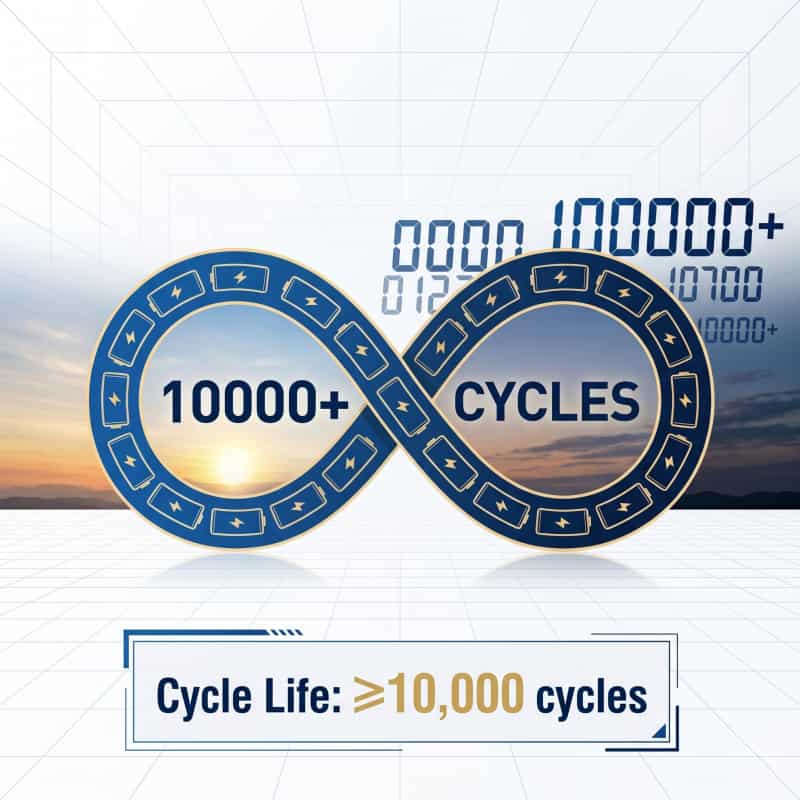
A battery advertised with 8,000 cycles may never complete those cycles if the system experiences overheating, inverter bottlenecks, unplanned downtime, or accelerated capacity degradation under real operating conditions.
For EPC contractors, industrial facility owners, and project developers, evaluating a solid-state battery energy storage system requires looking beyond cycle life and focusing on the engineering factors that determine long-term performance.
Industry Pain Point: Why Cycle Life Alone Does Not Predict Project ROI
Many battery suppliers promote cycle life as the primary purchasing criterion.
A specification sheet showing 6,000 cycles or 8,000 cycles appears attractive. The reality is more complicated.
A battery may achieve its advertised cycle life only under laboratory conditions:
- Ambient temperature of 25°C
- Controlled charge/discharge rates
- Stable operating environment
- Limited depth of discharge variation
Actual deployment conditions are different.
Commercial facilities frequently encounter:
- Peak demand fluctuations
- High ambient temperatures
- Irregular charging profiles
- Grid instability
- Emergency backup events
- Frequent charge/discharge switching
Under these conditions, the real economic value of an ESS depends on multiple engineering factors.
Hidden Cost Factors Often Ignored During Procurement
|
Evaluation Factor
|
Impact on Project Economics
|
|---|---|
|
Thermal management efficiency
|
Influences degradation rate and safety
|
|
PCS efficiency
|
Directly affects energy throughput revenue
|
|
Response speed
|
Determines backup power quality
|
|
Safety architecture
|
Reduces fire and insurance risks
|
|
Communication compatibility
|
Simplifies integration with EMS/BMS
|
|
Operating temperature range
|
Determines deployment flexibility
|
|
Maintenance requirements
|
Affects OPEX
|
|
Scalability
|
Influences future expansion costs
|
Projects that focus only on cycle life frequently experience lower-than-expected returns because these factors were overlooked during the selection process.
Understanding the Engineering Fundamentals of Solid-State Energy Storage
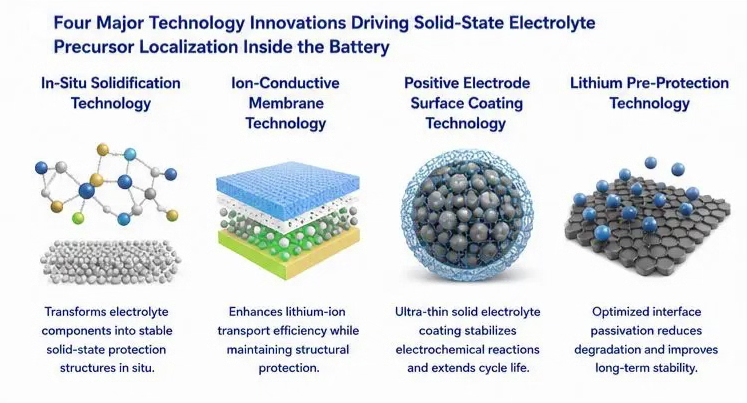
The primary difference between conventional lithium-ion batteries and solid-state batteries is the electrolyte architecture.
Traditional lithium-ion batteries rely on liquid electrolytes.
Solid-state batteries utilize solid or hybrid solid-state electrolyte structures to improve thermal stability and reduce the risks associated with liquid electrolyte systems.
The result is a different operating profile.
Traditional Liquid Lithium Battery vs Hybrid Solid-State Battery
|
Parameter
|
Traditional LFP Battery
|
MegSolid hybrid solid-state LFP Battery
|
|---|---|---|
|
Electrolyte Type
|
Liquid
|
hybrid solid-state
|
|
Thermal Stability
|
Moderate
|
Higher
|
|
Thermal Runaway Risk
|
Present
|
Significantly Reduced
|
|
Operating Temperature Adaptability
|
Limited
|
Wider Range
|
|
Safety Performance
|
Standard
|
Enhanced
|
|
Maintenance Complexity
|
Moderate
|
Lower
|
|
Long-Term Stability
|
Good
|
Improved
|
The engineering objective is not simply increasing cycle life.
The objective is maintaining stable performance throughout the system lifecycle.
The Five Metrics That Matter More Than Cycle Life
1. Safety Architecture
For industrial energy storage systems, safety directly affects:
- Project approval
- Insurance costs
- Site selection
- Operational continuity
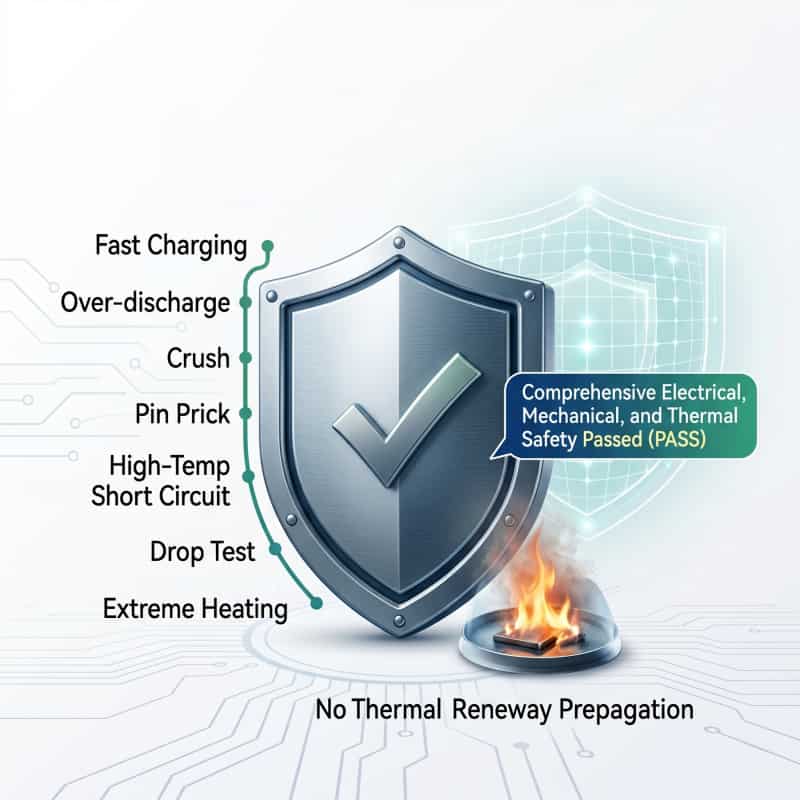
MegSolid's technology roadmap focuses on reducing thermal runaway risks through hybrid solid-state electrolyte design.
In larger commercial systems, additional protection layers include:
- Intelligent BMS monitoring
- Multi-level fault detection
- Fire suppression systems
- Isolation transformers
- AI-based early warning systems in advanced models
For example, the MegSolid 261.24kWh Solid-Liquid Energy Storage System integrates:
- AI early warning algorithms
- Liquid cooling
- IP54 protection
- Multi-layer fire protection architecture
Safety performance often influences project profitability more than nominal cycle life.
2. Temperature Control Capability
Battery degradation accelerates when cell temperatures become uneven.
Temperature imbalance creates:
- Capacity loss
- Reduced charging efficiency
- Premature aging
Advanced ESS designs prioritize thermal consistency.
MegSolid's solid-liquid commercial ESS platform maintains temperature differences within approximately ±5°C through intelligent thermal management algorithms.
This improves long-term cell consistency and reduces degradation rates.
3. Energy Conversion Efficiency
Revenue generation depends on usable energy delivered to loads or exported to the grid.
Even small efficiency differences create substantial long-term financial impacts.
MegSolid PCS systems achieve:
|
PCS Model
|
Maximum Efficiency
|
|---|---|
|
MEGA0030TS
|
96.3%
|
|
MEGA0050TS
|
96.5%
|
|
MEGA0100TS
|
97.1%
|
|
MEGA0150TS
|
97.1%
|
|
MEGA0250TS
|
97.3%
|
|
MEGA0500TS
|
97.5%
|
Over thousands of operating hours, conversion efficiency directly affects:
- Peak-valley arbitrage revenue
- Renewable energy utilization
- Grid-support income
- Overall project ROI
4. Response Time During Grid Events
Backup power performance depends on switching speed.
Industrial processes often cannot tolerate extended interruptions.
MegSolid energy storage inverter platforms support rapid transition capabilities:
- PMA Series ESS Inverters: <20ms switching
- Three-Phase Hybrid Inverter Series: <10ms switching
Fast response helps protect:
- Manufacturing equipment
- Data centers
- Communication systems
- Commercial facilities
Cycle life specifications provide no information about this capability.
5. Scalability and System Expansion
Many projects expand after initial deployment.
An ESS should support future growth without requiring complete redesign.
MegSolid commercial solutions support scalable architectures:
- PCS parallel operation up to 4 units
- Solid-liquid ESS parallel operation up to 10 units
- Residential battery parallel configurations available on selected models
Scalability reduces future CAPEX and improves long-term investment flexibility.
How MegSolid's 51.2V 314Ah Platform Addresses Real Operational Requirements
For residential and light commercial projects, one of the most frequently deployed configurations is the MegSolid 51.2V 314Ah Hybrid Solid-State Energy Storage Battery.
Key Technical Specifications
|
Parameter
|
Value
|
|---|---|
|
Nominal Voltage
|
51.2V
|
|
Capacity
|
314Ah
|
|
Energy Storage
|
16.07kWh
|
|
Cycle Life
|
8,000 Cycles @80%DOD
|
|
Continuous Charge/Discharge Current
|
200A
|
|
Pulse Discharge Current
|
250A (≤20s)
|
|
Operating Temperature (Discharge)
|
-20°C to 60°C
|
|
Communication
|
RS485 / RS232 / CAN
|
|
Certifications
|
UL, CE, UN38.3
|
These specifications allow the battery to support:
- Residential solar self-consumption
- Peak shaving
- Backup power
- Small commercial facilities
- Hybrid solid-state inverter applications
Peak-Valley Arbitrage Performance
Energy arbitrage requires:
- Stable charge acceptance
- Consistent discharge capability
- Efficient inverter integration
The 16.07kWh platform combines with MegSolid hybrid inverter systems to improve utilization of off-peak electricity and photovoltaic generation.
For commercial users operating under time-of-use tariffs, this directly influences project payback periods.
Grid Interaction Capability
Modern ESS deployments increasingly require participation in grid-support functions.
MegSolid inverter platforms support:
- On-grid operation
- Off-grid operation
- Automatic switching
- AC coupling architectures
This flexibility helps EPC contractors deploy systems in diverse market environments.
Safety-Driven Design
The 51.2V 314Ah battery incorporates:
- Hybrid Solid-State LFP chemistry
- Intelligent BMS monitoring
- UL certification
- CE certification
- UN38.3 transportation compliance
The engineering objective is operational stability under real-world conditions rather than laboratory-only performance metrics.
Evaluation Checklist for EPC Contractors and Project Developers
Before purchasing a solid-state battery energy storage system, engineering teams should verify:
- Battery chemistry architecture
- Thermal management strategy
- Operating temperature range
- PCS conversion efficiency
- Response time during outages
- Communication protocol compatibility
- Fire protection architecture
- Scalability capability
- Certifications
- Actual project references
A battery with a higher cycle-life number is not automatically the better investment.
The system delivering higher energy throughput, lower downtime, stronger safety performance, and greater operational flexibility usually generates superior lifetime project value.
FAQ
Q1: How can I tell if a solid-state battery system is truly safe, not just marketed as safe?
The best indicator is the overall safety architecture rather than a single battery specification. Look for semi-solid or solid electrolyte technology, intelligent BMS monitoring, thermal management systems, fire protection measures, and internationally recognized certifications such as UL, CE, and UN38.3. These factors provide greater confidence during long-term operation than cycle life alone.
Q2: Why do some battery systems with the same cycle life deliver very different project returns?
Cycle life does not measure energy conversion efficiency, system availability, or downtime risk. Two batteries rated at 8,000 cycles can generate significantly different ROI outcomes if one operates with higher PCS efficiency, better thermal management, and fewer operational interruptions.
Q3: What is the biggest concern for facility owners when installing an energy storage system?
Most facility owners are less concerned about battery capacity and more concerned about unexpected shutdowns. A storage system that responds quickly during grid failures and maintains stable operation under daily load fluctuations provides greater operational confidence and business continuity.
Q4: How does temperature control affect the long-term user experience of an ESS?
Poor thermal management often leads to faster capacity degradation, reduced charging efficiency, and increased maintenance requirements. Systems with advanced temperature control can maintain more stable performance throughout their service life and reduce operational uncertainty.
Q5: Will a solid-state battery reduce maintenance requirements compared with traditional lithium batteries?
In many applications, semi-solid and solid-state battery technologies improve thermal stability and reduce stress on battery cells. This can help minimize performance fluctuations and lower the frequency of maintenance interventions over the system lifecycle.
Q6: How important is backup power switching speed during a power outage?
For manufacturing facilities, data centers, and commercial buildings, switching speed can determine whether operations continue uninterrupted. Fast transfer times help protect sensitive equipment and reduce the risk of costly downtime during grid disturbances.
Q7: Can a battery energy storage system still perform well in extreme temperatures?
Operating temperature capability is a critical evaluation factor. Systems designed for wider temperature ranges can maintain reliable performance in both hot and cold environments, reducing deployment restrictions and improving project flexibility.
Q8: What makes a battery system suitable for peak-valley electricity price arbitrage?
A successful peak-shaving and energy arbitrage system requires more than battery capacity. Stable charging performance, reliable discharge capability, and high PCS conversion efficiency all contribute directly to maximizing energy savings and shortening payback periods.
Q9: How can I avoid buying an energy storage system that becomes obsolete after a few years?
Choose a platform that supports future expansion. Scalable ESS architectures allow additional batteries, PCS units, or storage capacity to be added later without redesigning the entire project, protecting the original investment.
Q10: What should I evaluate first when comparing two solid-state battery energy storage systems?
Start with safety architecture, thermal management, PCS efficiency, operating temperature range, and system scalability. These factors often have a greater impact on long-term project value and operational experience than cycle life specifications alone.
Q11: What is more important than cycle life when selecting a solid-state battery ESS?
Safety performance, thermal management capability, PCS efficiency, and system availability often have a greater impact on project ROI than cycle life alone. A battery that operates reliably for years can create more value than a system with a higher laboratory cycle-life rating.
Q12: How does PCS efficiency influence the profitability of an energy storage project?
PCS efficiency determines how much stored energy can be delivered to loads or exported to the grid. Higher conversion efficiency reduces energy losses and improves the economic performance of peak-shaving, backup power, and renewable energy integration projects.
Q13: Why are EPC contractors increasingly evaluating solid-state battery systems beyond battery specifications?
Modern energy storage projects require complete system performance evaluation. EPC contractors now focus on safety architecture, response speed, integration flexibility, thermal control, and long-term operational stability because these factors directly affect project risk and customer satisfaction.