 Skip to content
A supplier ranking cannot keep your African factory running when the quoted PCS is too small for the shift. MegSolid ESSA0100B-0215 provides a 100 kW / 215.04 kWh cabinet option; R50 is a 50 kW hybrid inverter with a 75 kW PV input rating, not a complete battery system. Use the African BESS project context to frame the application, then bring the critical-load schedule and generator duty to a named configuration and commissioning offer.
A shutdown eats more than electricity: spoiled stock, idle labour and a missed delivery can dwarf the hardware discount. Put three purchase conditions on the table before you pay:
- System safety boundaries under high temperature and dusty environments
- Operational stability under off-grid or weak-grid conditions
- Long-term Return on Investment (ROI) and asset reliability
In this context, whether seeking C&I Energy Storage, Solar Battery Systems, or heavy-duty industrial BESS solutions, different procurement demands inherently correspond to entirely different system architectures and risk tolerances.
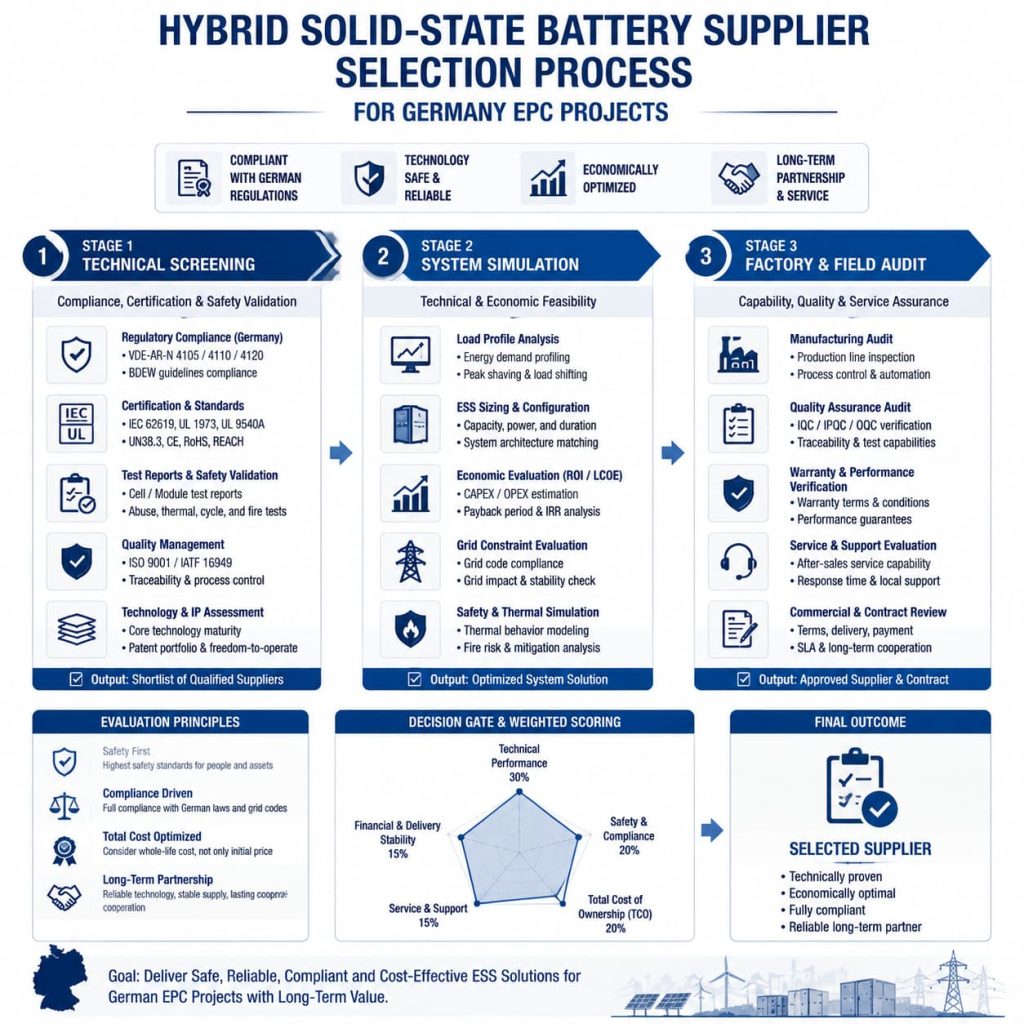
The Engineering Metric System for Evaluating BESS Suppliers in Africa
The core issue for African energy storage projects is not "whether it works," but "whether it can operate continuously and stably under extreme conditions." Therefore, the evaluation model must be broken down into four engineering tiers.
Tier 1: Core Technical Safety at the Cell Level
Start with the duty that earns its keep: deliverable AC power, usable energy at the agreed reserve, operating temperature and ageing basis. Then compare the matched safety-test reports and the actual installed footprint. A cell label alone cannot price a production outage.
In high-temperature regions, battery safety is no longer a laboratory metric but a direct source of system downtime risk.
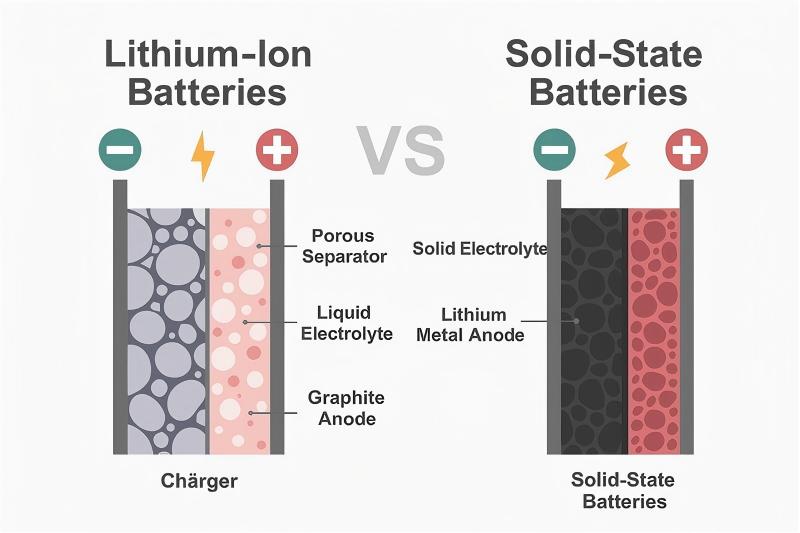
Cell Technology Comparison: Traditional Liquid LFP vs. Hybrid Solid-State Battery — compare the offered model, not blanket chemistry claims
|
Performance Metrics |
Traditional Liquid LFP Battery |
MegSolid Hybrid Solid-State Battery: MEGA-512314FL1 wall pack |
|---|---|---|
| Safety test basis | Obtain reports for the exact offered liquid-LFP cell/module/system | Obtain matched reports; nail-test outcomes do not establish a universal trigger temperature |
| Cycle Life | Compare the offered model's cycle conditions and retention endpoint | 8,000 cycles (at 80% DOD) |
| Core Specifications | Compare the offered pack's voltage, energy, current and inverter interface | Nominal capacity 314Ah, voltage 51.2V, single pack energy 16.07kWh, maximum continuous charge/discharge 200A |
| System interface | Approve the battery, inverter and BMS protocol as one configuration | 43.2–57.6 V wall pack; use a compatible low-voltage inverter, not direct R50 connection |
The engineering significance is very direct:
- Matched safety reports and a defined fault-response sequence → a protection decision your EPC can verify
- The offered model's retention and cycle basis → a replacement budget tied to the real dispatch
- Usable energy, cabinet dimensions and service clearances → the installed footprint your site must accommodate
Tier 2: System Integration and Local Environmental Adaptability
For Industrial BESS system providers deeply cultivated in the African market, the battery cell is merely the underlying physical foundation; true system-level engineering capabilities dictate the final delivery quality.
The following engineering conditions must be met:
- Delivered energy: compare the same AC measurement boundary, SOC window, auxiliaries and dispatch. Peak inverter efficiency is not whole-system round-trip efficiency.
- Continuity: R50 lists inverter backup transfer below 10 ms. Verify the complete quoted system against the load's allowable interruption and starting event.
- Temperature and enclosure: R50 is listed at −35 to +60°C and IP65; ESSA0100B-0215 operates at 0–45°C and IP54. Select the battery and inverter limits separately.
- Compliance: obtain the exact model's certificate/report schedule and match it to the project. A named test method or product-family claim is not automatic approval.
MegSolid's R50KH3 is a 50 kW three-phase hybrid inverter with up to 75 kW PV input, a 150–850 V PV MPPT range and two battery inputs rated at up to 80 A each. Its battery input is 150–800 V. This gives an EPC a defined solar and inverter platform to size; it does not make a 51.2 V wall battery directly compatible. Ask for the approved battery bank, BMS protocol and single-line diagram together with the inverter quote.
Tier 3: Financial Model and Long-Term Performance Guarantees
A low purchase price loses its advantage when the battery misses the peak or needs an unbudgeted replacement. Compare the Energy Storage System (ESS) on delivered AC energy, dispatch frequency, reserve, losses, maintenance and replacement cost. MegSolid's MEGA-512314FL1 wall-pack listing gives 8,000 cycles at 80% DOD; that model rating cannot be assigned to every industrial cabinet or converted into a project-wide savings guarantee.
Key focuses of engineering evaluation include:
- Whether the battery degradation curve is quantifiable
- Whether a ≥10-year performance guarantee agreement is provided
- Whether capacity degradation boundaries are clearly defined
- The impact of O&M and replacement cycles on IRR
Long-term contracts must include: capacity retention curve definitions, default compensation mechanisms, and performance testing standards (on-site or remote). Energy storage systems without these clauses are considered uncontrollable assets in long-term projects.
Tier 4: Local Support and Supply Chain Resilience
The container arriving at your gate is the start of the operating bill. Name who diagnoses a fault, who brings the part and who restores the agreed load. Check the monitoring and service scope before the deposit:
- Monitoring: obtain the model-specific BMS/PCS/EMS protocol, supported alarm records and approved remote-access arrangement. Interfaces and cloud/service terms vary by configuration.
- Presence of a local technical support team or certified partners.
- Whether spare parts inventory covers the target area, and whether the SLA response time is clearly defined.
For off-grid projects, fault response time is far more important than battery performance parameters themselves.
Strategic Classification of Major Semi-Solid State Battery Enterprises
Based on technological routes and system delivery capabilities, suppliers can be divided into three structural categories.
1. Comprehensive Technical Solution and R&D-Driven: MegSolid (SOLID ESS)
MegSolid is a typical system-level, R&D-driven supplier. Its core feature is an integrated "cell-system-inverter" design.
MegSolid's product range gives buyers defined starting points: the MEG-Solid-512314FL1 wall battery, outdoor ESSA cabinets and three-phase hybrid inverters such as R50KH3. Choose the architecture around your load and voltage interface. A 51.2 V wall pack needs a compatible low-voltage inverter; R50 needs an approved 150–800 V battery bank. Get the matched equipment schedule and commissioning responsibilities in the same offer so interface questions are closed before shipment.
2. Regional Market Deep Operation and Integrator: KRL Power
For a regional integrator such as KRL Power, judge the delivery value against your own site: installation coverage, grid-application responsibility, named service staff and available spares. Ask for the relevant project references and written scope. The buyer needs a reachable commissioning and service route, not an undefined claim of a perfect African network.
3. Specialized Cell and Module Suppliers
These mainly provide standardized cells or modules and possess strong large-scale manufacturing capabilities, typically acting as the upstream supply chain in projects. The engineering risk lies in uncontrollable system design, with BMS and PCS adaptation relying heavily on the integrator's capabilities.
Analysis of MegSolid's Technological Advantages and Its Application Scenarios in Africa
The MegSolid system design tightly revolves around three core constraints in Africa: high-temperature environments, off-grid operation, and insufficient O&M resources.
Thermal Management, Safety Systems, and Local Field Verification
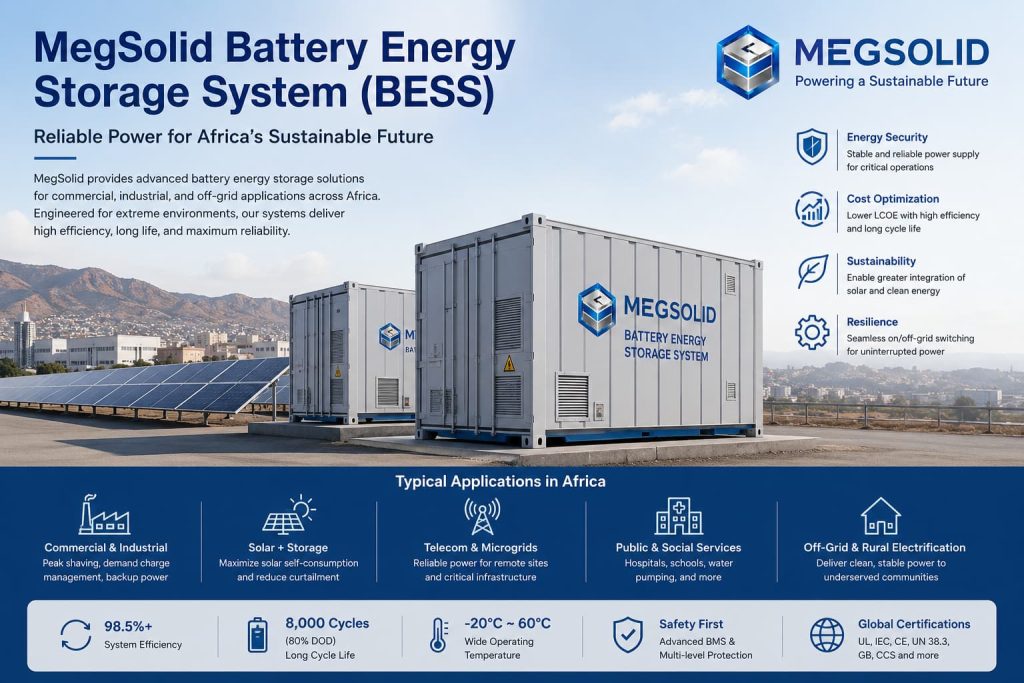
Specify the cabinet around the heat it will actually see. MegSolid's ESSA0100B-0215 offers 100 kW and 215.04 kWh nominal storage with intelligent air cooling and a published 0–45°C operating range. Energon 261 offers liquid cooling and a published −20–55°C range, with derating above 45°C. Match that choice to intake temperature, dust exposure and duty; put the alarm, isolation and recovery sequence into the offered protection and acceptance scope.
A Gauteng food-processing duty of 920 kW with 4.6 MWh nominal storage represents five hours before reserve, conversion losses and auxiliaries. That is a sizing starting point, not proof of five hours at the production bus. Identify the refrigeration, controls and restart sequence, then test the agreed outage and recharge windows. Ask MegSolid for a configuration and acceptance scope that protects those loads; treat any claimed zero-waste project outcome as a reference only when its operating records are available.
Structured Breakdown of Application Scenarios
1. African C&I Energy Storage Scenarios
- Engineering Challenges: Unstable power grids in industrial parks, high electricity prices, and peak-valley arbitrage demands.
- System Support: R50KH3 provides 50 kW rated AC output, up to 75 kW PV input and two battery inputs rated at up to 80 A each; specify an approved 150–800 V battery bank.
- Functional Goals: Demand management, PV complementary absorption optimization, and peak shaving.
2. Remote Area Solar and Off-Grid Microgrids (Solar BESS & Off-grid Systems)
- Engineering Challenges: Rural electrification in Africa, island microgrids, and community off-grid power supply.
- Model Features: the MG/MEGA-512314 movable pack lists 51.2 V, 314 Ah, 16.076 kWh nominal energy, LED display and IP21. It supports up to six packs in parallel. Match a compatible inverter and indoor installation to the actual local load; a community microgrid requires its own system design.
3. Backup Power for Critical Industrial Facilities (Industrial BESS Applications)
- Engineering Challenges: define the medical, data-centre or telecom load's allowable interruption, start event and required backup time; retain any required UPS architecture.
- Economic Impact: price the delivered energy, replacement basis and contracted service. A cycle figure from one wall battery does not establish every critical facility's availability or lifecycle cost.
FAQ
Q1: Africa frequently experiences load shedding. Can your energy storage system ensure my production line runs uninterrupted?
Protect the loads that make the outage expensive. R50KH3's published inverter backup transfer is below 10 ms, but a complete plant's behaviour also depends on the switchgear, controls, starting currents and the equipment's interruption tolerance. Give MegSolid the critical-load list and allowable break time so the quoted configuration and FAT/SAT can demonstrate the agreed continuity. Medical or data-centre loads may still require an approved UPS arrangement.
Q2: Sub-Saharan Africa has extreme high temperatures and dusty weather. Can the energy storage system withstand these conditions?
Choose the actual product for the site temperature. R50KH3 is listed at −35 to +60°C and IP65. ESSA0100B-0215 is an air-cooled IP54 cabinet with a 0–45°C operating range. The MEGA-512314FL1 wall pack lists discharge at −20 to +60°C but charging at 0–45°C. Send the site's intake temperature, dust exposure and enclosure position; ask for the available-power curve and maintenance access in the offer.
Q3: Compared to traditional liquid Lithium Iron Phosphate (LFP) batteries, what are the absolute advantages of semi-solid state batteries in African projects?
The MEGA-512314FL1 wall battery gives a published 51.2 V, 314 Ah, 16.07 kWh nominal platform and 8,000 cycles at 80% DOD. Those are useful inputs for a matched system and cost comparison. Safety selection still needs the test report for the offered cell, module and system. A nail-test result is not a universal thermal-runaway trigger temperature or a guarantee that no system can burn.
Q4: Why is the Levelized Cost of Energy (LCOE) more important than the initial procurement price for Commercial and Industrial (C&I) energy storage projects?
LCOE tells you what the project pays for each delivered kWh over its operating life. Compare the purchase, installation, charging energy, reserve, losses, degradation, maintenance and replacements using the same dispatch profile. Ask MegSolid for the exact model, retention basis and commercial scope so you can price the energy your site will receive. An inverter's peak conversion figure and a wall-pack cycle rating do not establish the whole BESS return on investment.
Q5: Our facility is in a remote, off-grid area. Can the system operate directly with our existing solar PV arrays?
R50KH3 offers 50 kW rated three-phase AC power, up to 75 kW PV input, a 150–850 V PV MPPT range and two battery inputs rated at up to 80 A each. Its 150–800 V battery interface requires a matched high-voltage bank and supported BMS protocol. For an off-grid microgrid, size the usable storage, solar recharge, starting loads and generator contribution against the worst outage window before approving the configuration.
Q6: If the system is installed in a remote African region, how do you handle monitoring, O&M, and after-sales support?
Remote visibility is useful when it shortens the fault-to-recovery path. Interfaces depend on the product: the wall-pack listing includes RS485, RS232 and CAN, while R50 lists RS485/CAN for BMS and RS485 for EMS. Confirm the approved protocol, alarm records, connectivity, remote access and support responsibility in your offer. Cloud access, local labour and response times belong in the service scope rather than a blanket free 24/7 promise.
Q7: Do MegSolid systems have certifications that meet international or local African standards?
Request the certificate or report for the exact model and the project's applicable requirements. Check its identifier, issuing body, test scope and covered configuration. UL 9540A concerns a thermal-runaway fire-propagation test method; naming it does not establish universal certification or automatic grid approval. Ask MegSolid for the offered equipment's document schedule so your EPC can close the compliance questions before shipment.
Q8: Some African mining areas are unattended. What happens if a battery experiences thermal runaway?
The protection scope must show what happens after a detected fault: alarm, isolation, shutdown, response and permitted recovery. Ask for the offered model's protection matrix and matched test evidence, then include the relevant acceptance checks. A claim about four protection stages cannot replace those records or establish that a single-cell fault can never propagate.
Q9: Can your energy storage system be used for peak-valley arbitrage in high-electricity-price regions of South Africa?
Use the EMS to protect the expensive part of the day: the demand peak, the production shift or the outage reserve. Schedule charging and discharging around the actual tariff, PV output, power limit and available energy. Send MegSolid the load trace, tariff and backup priority so the proposed control schedule can show what it can cover and what recharge it needs. Savings follow that dispatch and energy balance.
Q10: Will purchasing your system require complex equipment integration and commissioning?
The interface must be matched before you buy. A MEGA-512314FL1 wall pack operates at 43.2–57.6 V, while R50KH3 requires 150–800 V at its battery input; that wall pack cannot simply be connected directly to R50. Ask MegSolid for the approved battery/inverter combination, BMS protocol, protection settings and commissioning scope. Closing these points in the quote prevents an interface problem from reaching the site.
Q11: How to ensure BESS safety in high-temperature African mining sites?
Select high-temperature BESS safety around the actual model, enclosure and duty. ESSA0100B-0215 is listed for 0–45°C with air cooling; Energon 261 uses liquid cooling with derating above 45°C; R50's inverter rating is separate from the battery's charging limits. For a remote mine, include intake temperature, dust management, service access, alarm response and matched safety reports in the proposal. Chemistry alone cannot eliminate thermal-propagation risk.
Q12: Can a 314Ah C&I energy storage system completely mitigate South Africa's load shedding?
A C&I energy storage system can cover the agreed production loads when its AC power, usable energy, transfer arrangement and recharge plan are correctly sized. Use the 100 kW/215.04 kWh ESSA0100B-0215 cabinet as a defined starting point, or specify a separate matched R50 high-voltage system. Do not connect the 51.2 V wall pack directly to R50. Send the outage schedule and measured load so MegSolid can quote the configuration and continuity test your operation needs.
Q13: What is the expected lifespan and LCOE advantage of semi-solid industrial BESS?
The MEGA-512314FL1 listing states 8,000 cycles at 80% DOD; it is a model rating, not a universal industrial BESS life or a ten-year warranty promise. The project economics depend on usable AC energy, retention, dispatch, replacement costs and contracted service. Ask MegSolid for those model-specific inputs and compare the same duty across offers. This turns a headline cycle count into a buying decision without assuming a 40% O&M saving.
