 Skip to content
South Africa’s largest battery energy storage projects show how developers combine power, energy and dispatch. Your factory faces a different purchase decision: how much production must stay running, for how long, and under which grid or generator conditions? Use the Kenhardt, Oasis and Eskom comparisons to frame that decision before selecting a C&I supplier or committing to a battery capacity.
BESS South Africa: project scale is not your site specification. Kenhardt combines solar with storage; Oasis 1 groups three standalone projects; Eskom’s programme spans multiple sites. The government’s 7 October 2026 statement proposed a 4,600MW BESS allocation under IRP2025; it did not report 4,600MW already built. Compare project type, MW/MWh and dated delivery status before using a headline to select your own equipment.
MegSolid supplies battery-storage equipment to project developers and EPC partners. The South African projects below are public engineering references; the MegSolid products appear separately in the equipment shortlist. For a mining, food-processing or manufacturing buyer, the question is immediate: which loads must keep running, which bill charges can storage reduce, and who will accept the installed system?
What can we learn from South Africa’s largest battery energy storage systems?
Buy the duty your site needs—not the biggest number on a proposal.
Test your own business case against four inputs:
- Actual grid interruptions and the value of the loads at risk.
- Measured solar surplus and the available recharge window.
- Interval peak demand, operating shifts and planned growth.
- Your municipal or Eskom tariff, export terms and full installed cost.
Energy storage stops being an optional technology.
It becomes critical infrastructure.
A missed production batch, an unexpected demand peak and a failed restart are different problems. Put a cost and an acceptance test against the problem you are paying the battery to solve. That is how a national BESS headline becomes a defensible purchase for your facility.

South Africa's Largest Battery Energy Storage Projects in 2026
Kenhardt: Operating Hybrid Solar + Battery Project
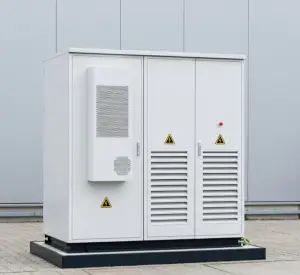
Comparison checked 15 October 2026. “Largest” here means selected major published projects, not a complete live league table. Hybrid generation, a standalone BESS cluster and an Eskom programme are different categories; announced capacity is not installed capacity. The product images on this page illustrate MegSolid equipment and are not photographs of the national projects.
Scatec announced the start of Kenhardt operations on 11 December 2023. Its published configuration is 540MW solar PV and 225MW/1,140MWh battery storage. The contracted hybrid service is 150MW from 05:00 to 21:30 under a 20-year PPA; solar and storage work together to deliver that window.
Project Highlights
- Solar generation: 540MW PV; separate from the battery’s MW rating.
- Battery: 225MW / 1,140MWh; nominal energy-to-power ratio about 5.07 hours.
- Status evidence: Scatec announced operations on 11 December 2023.
- Contracted hybrid supply: 150MW, 05:00–21:30, 20-year PPA.
For the C&I buyer, Kenhardt’s useful lesson is dispatch design: solar, stored energy and an agreed delivery window work together. Ask your bidder for the same clarity at your scale—AC delivery point, guaranteed net output, usable-energy definition and what must remain in reserve.
The 1,140MWh ÷ 225MW ≈ 5.07 hours result is a nameplate energy-to-power ratio. Delivered AC energy depends on usable SOC, conversion loss, auxiliaries, temperature, ageing and dispatch limits. Write those conditions into the offer, and treat the coordinated solar-plus-storage delivery window as a separate service.
From an engineering perspective, the most important achievement of Kenhardt is not its 1140MWh capacity.
Its procurement lesson is to specify the service rather than copy the plant: scheduled dispatch, grid support and interruption backup require different controls, reserves and acceptance tests.
Oasis 1: Three Standalone BESS Projects, One Cluster
Oasis 1 was procured through South Africa’s Battery Energy Storage Independent Power Producer Procurement Programme (BESIPPPP). EDF’s project page, checked 15 October 2026, lists it under construction: three projects totalling 257MW/1,028MWh. Compare the cluster’s construction status separately from Kenhardt’s announced operations.
Among them, Oasis 1 stands out as one of the most ambitious developments.
Project Components
Oasis Mookodi
- 77MW / 308MWh
Oasis Aggeneys
- 77MW / 308MWh
Oasis Nieuwehoop
- 103MW / 412MWh
Combined Capacity
- 257MW / 1028MWh
EDF identifies the development partners as EDF power solutions, Mulilo, Pele Green Energy and Gibb-Crede. The cluster reached financial close in November 2024 with approximately R7 billion of debt funding. Its construction programme is a distinct milestone from commissioning or accepted delivery.
The announced arrangement is a 15-year PPA with Eskom. At 257MW/1,028MWh, the nominal ratio is four hours. For a factory RFQ, ask whether “four hours” refers to nominal DC nameplate or guaranteed net AC energy at the required power, ambient and end-of-warranty condition.
For a separate standalone comparison, Globeleq’s Red Sands project page lists 153MW/612MWh near Upington, a 15-year NTCSA PPA and construction status when checked on 15 October 2026. Its four-hour nominal ratio matches Oasis’s ratio, but the site, connection works and delivery programme differ. Compare the agreed service and status before treating equal duration as equal project readiness.
Eskom BESS: A Multi-Site Programme, Not One Battery
Eskom’s programme is a separate comparison category: distributed utility batteries at named substations. A programme target must stay separate from the capacity already commissioned at an individual site.
Read each Eskom source against its publication date, named phase and individual sites before adding capacities together:
Published Programme Target — Not a Commissioned Total
- Historical phase tables: Phase 1 — 199.04MW / 833.16MWh; Phase 2 — 144MW / 616MWh. Planned scope, not an operating-capacity total.
Eskom’s programme page carries historical planning data, including an approximately 1,440MWh headline and phase tables of 199.04MW/833.16MWh and 144MW/616MWh. The rounded headline and table totals are not identical. Keep each source’s date and planning boundary visible instead of presenting one combined installed total.
Key Projects
Hex BESS
- 20MW / 100MWh
Eskom opened Hex on 9 November 2023. Its published site rating is 20MW/100MWh; owner’s engineer WSP records operational acceptance on 13 December 2023. Opening, acceptance and commercial operation are milestones to identify explicitly when assessing a supplier’s project evidence.
Skaapvlei BESS
- 80MW / 320MWh
Pongola BESS
- 40MW / 160MWh
Melkhout BESS
- 35MW / 140MWh
WSP’s status account referring to March 2025 records Pongola and Elandskop operational acceptance on 15 October 2024, while other sites remained in construction or tender stages. That snapshot does not confirm every site’s completion by October 2026. For your own project, demand the same distinction: equipment delivered, energised, performance tested and formally accepted.
What Do These Mega-Projects Tell Us About the Future?
The useful takeaway is not that every buyer needs a gigawatt-hour project. It is that the contract must define the service, the equipment envelope and the person who signs acceptance.
The real value lies in the trends they reveal.
Lesson 1: Buy Safety Evidence, Not a Chemistry Slogan
The price is only comparable after you define:
- Net AC duty, usable energy, service boundary, evidence and installed cost.
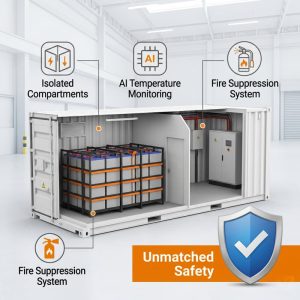
The national project announcements above do not establish solid-state battery adoption. Nor does a semi-solid-state label prove that a supplied package cannot fail. Ask for the exact cell and system configuration, applicable reports, protection logic and emergency interfaces.
Require the supplier and EPC to close these evidence gaps before release:
- Cell/BOM and battery/PCS firmware revisions matched to the offered package.
- Applicable test-report scope and any gap between the tested and supplied configuration.
- Alarm, isolation and shutdown logic, including loss of communication or meter data.
- Fire detection/suppression, site access, separation and the emergency-response interface.
At MegSolid, ask us to map the quoted equipment to those requirements. Bring your local EPC into the conversation before the configuration is frozen; the factory package and the installed site must agree.
Make the equipment discussion specific: ask MegSolid to identify the offered cell/BOM, battery and PCS ratings, control package, operating limits and supporting records. Link each requirement to a document or a test, and give any open item an owner and closure date. That creates a package your EPC can price and accept.
Lesson 2: Match Cooling to the Actual Site Duty
South Africa's high-temperature environment creates unique challenges for battery storage projects.
Battery degradation is closely linked to thermal conditions.
Even small temperature differences across battery modules can accelerate aging and reduce system lifespan.
MegSolid’s 261.24kWh Energy Storage System route uses liquid cooling. Compare it with the air-cooled cabinet route using the published limits—not the assumption that one cooling method wins everywhere:
- Energon 261: 261.24kWh / 125kVA, liquid cooling; −20–55°C, derated above 45°C.
- Altitude: Energon 261 lists up to 4,000m, with derating above 2,000m; check actual site output.
- ESSA0100B-0215: 215.04kWh / 100kW, intelligent air cooling; published ambient 0–45°C.
Ask for output and auxiliary consumption at your design ambient, altitude and required duration, then put the agreed values in FAT/SAT acceptance. Confirm the cooling supply, heat-rejection path, service clearances and derating curve so the equipment is sized for the afternoon duty it must deliver.
For mining operations, industrial parks, and utility projects operating in hot climates, thermal management is becoming a decisive factor in project economics.
Lesson 3: Design Expansion Before Buying the First Block
One lesson from South Africa's largest projects is clear:
Energy demand rarely stays static.
A developer may require:
- Initial duty: define power, net usable energy and reserve for the first operating stage.
- Expansion duty: document the future load, available transformer capacity and physical/service space.
- Release gate: agree compatible PCS/EMS, protection, firmware and mixed-age warranty conditions before assuming another block can be added.
This is why modular scalability is becoming one of the most important evaluation criteria for modern energy storage systems.
A modular battery is an option to engineer, not an automatic right to add capacity later. Price the reserved site interfaces now so expansion does not mean rebuilding the electrical room.
Reliable C&I BESS Solutions for South Africa by MegSolid
A South African factory needs a measurable result at its own connection point. In its 2 October 2026 update, Eskom reported 504 consecutive days without national loadshedding, while targeted local load reduction remained. Base your proposal on current site outages and bills. Identify production continuity, demand reduction or solar shifting, then give those services one shared SOC and recharge budget.
Illustrative factory screen: 250kW for two hours means 500kWh delivered at the AC load. Use the explicit assumptions below to check the energy shortfall, the next equipment configuration to evaluate and the tariff spread. This is a hypothetical buying exercise, not an actual project result or supplier quotation.
- Energy screen: assume an 80% SOC operating window, 95% one-way discharge efficiency and 5kW auxiliaries for two hours. Three 215.04kWh cabinets give 645.12kWh nominal; 645.12 × 0.80 × 0.95 − 5 × 2 = 480.3kWh net in this simplified screen—short of 500kWh.
- Next configuration to evaluate: four such cabinets give 860.16kWh nominal and 643.7kWh in the same assumed screen. Their aggregate 400kW nameplate does not prove the installed system can deliver the duty; confirm parallel design, site limits, ageing margin, switching and motor-start requirements.
- Separate bill-case screen: assume 90% net AC round-trip efficiency, including auxiliary energy within that boundary, R3.00/kWh avoided peak energy and R1.50/kWh recharge energy. Delivering 500kWh requires about 555.6kWh recharge: gross energy spread ≈ R666.7 per cycle. These illustrative tariffs precede degradation, O&M, fees and installed cost; they do not establish payback.
Send MegSolid your critical-load profile, two or three recent bills, solar/generator ratings, required runtime and site conditions. Ask for an equipment configuration, an exceptions list and the values your appointed local EPC must confirm. A proposal that exposes the shortfall before you buy is worth more than a bigger promise after delivery.
From South Africa’s BESS Projects to a MegSolid Equipment Shortlist
The biggest lesson from South Africa's largest storage projects is that customers are not purchasing batteries.
They are investing in long-term energy security.
Use the equipment routes below as a starting shortlist. For the broader manufacturer selection process, see our battery energy storage systems supplier in Africa guide. Start with the operating duty and test conditions, then ask for the exact model and documents your local delivery team needs.
Commercial & Industrial Energy Storage Systems
Available capacities include:
- 55.296kWh
- 100.352kWh
- 215.04kWh
Designed for:
- Factories
- Commercial buildings
- Agricultural facilities
- Hotels
- Schools
Key features:
- Integrated fire suppression system
- IP54 protection
- Flexible solar-storage integration
Advanced Liquid-Cooled C&I ESS
Key Specifications:
- Rated Energy: 261.24kWh
- Rated AC Power: 125kVA
- AI Early Warning System
- Intelligent Liquid Cooling
- Up to 10 units in parallel operation
Evaluate for these site duties; confirm voltage, power factor, reserve and switching requirements:
- Industrial parks
- Data centers
- Mining facilities
- Manufacturing plants
Utility-Scale Containerized Energy Storage
Key Specifications:
- Published rated energy: 5,015.9kWh; rated AC power: 450 × 6kW = 2.7MW.
- 690Vac; select the project transformer and connection boundary separately.
- Smart liquid cooling; published operating-temperature range −30–55°C.
- IP55 protection rating; confirm site exposure, fire and maintenance requirements.
- Published altitude up to 4,000m; obtain configuration-specific output/derating and auxiliary data.
Evaluate the quoted container configuration and PCS/transformer package for:
- Utility-scale renewable energy projects
- Solar farms
- Wind farms
- Grid support applications
- Large industrial microgrids
BESS Procurement Matrix: Turn Project Lessons into Acceptance Gates
|
Project lesson |
Your RFQ / acceptance requirement |
Ask MegSolid and your local EPC to return |
|---|---|---|
| Kenhardt: specify the service | Separate PV MW, battery MW/MWh, delivery window and reserve. | Named model/PCS, duty profile, net AC boundary and the exceptions to your required service. |
| Oasis: separate blocks and stages | List each site/block, status date, delivery milestone and acceptance owner. | Configuration/revision schedule, shipment scope, FAT records and project-specific delivery boundary. |
| Eskom: target is not commissioning | Distinguish a programme total from a site’s installed and accepted capacity. | Serial-linked equipment records, site tests and an agreed signed handover pack. |
| Thermal and site fit | State ambient, altitude, dust/corrosion conditions, access and auxiliary load. | Model-specific limits/derating data; EPC heat-rejection, spacing and site-risk design. |
| Control and connection | Define PV/diesel/PCS coordination, export limit, islanding, restart and failed-data state. | Protocol/point list, authority and setpoints; local EPC confirms the applicable connection process. |
| Usable energy and expansion | Accept net AC energy at the agreed duty; define reserve, ageing and growth. | Capacity/throughput conditions, compatible parallel architecture and expansion exclusions. |
| Commercial and service boundary | Price equipment, BoP, freight, commissioning, O&M and repair responsibility together. | Itemised scope, warranty exclusions, spares, response/escalation route and named site-service owner. |
Before You Request a South Africa BESS Proposal
Kenhardt’s 1,140MWh, Oasis 1’s 1,028MWh cluster and Eskom’s published programme figures describe different things. None tells you how long your production line will run. Use their lessons to demand a measurable duty, a complete equipment boundary and a named acceptance owner.
Battery energy storage has evolved from a renewable energy accessory into critical national infrastructure.
Over the next decade, competition in the energy storage industry will no longer be defined solely by capacity.
Success will increasingly depend on:
- Safety
- Intelligence
- Lifecycle performance
- Thermal management
- System integration capability
Bring those requirements to MegSolid for a model-specific equipment discussion. Use the South Africa BESS regulations guide for the separate connection and compliance questions, then have your local EPC confirm the current requirements with the relevant authority.
The next step is not another generic brochure. Tell us the load you cannot lose, the bill charge you want to reduce and the delivery date you must meet. We can then discuss an equipment route and the open engineering inputs with your delivery team. Use the enquiry below to start with your duty.
FAQ
Q1: Why are South Africa’s largest battery energy storage systems attracting global attention?
They demonstrate several ways to contract storage services: Kenhardt combines 540MW PV with 225MW/1,140MWh BESS, Oasis 1 comprises three standalone projects totalling 257MW/1,028MWh, and Eskom runs a multi-site programme. Compare category and source-dated delivery status before treating the numbers as an operating-capacity ranking. They are public references, not MegSolid customer projects.
Q2: Can a battery energy storage system really protect my business from load shedding?
A BESS can be designed to support selected loads during grid interruptions, but kWh alone does not establish continuity. Confirm critical kW, runtime, islanding/transfer, generator coordination, motor starts, SOC reserve and recharge. Agree witnessed acceptance tests with the local EPC; a grid-connected peak-shaving package is not automatically an uninterrupted backup system.
Q3: What is the biggest lesson from South Africa’s largest BESS projects?
Specify the service and acceptance boundary before comparing capacity. Separate solar power, battery power and energy; distinguish a cluster or programme target from an operating site. Apply that discipline to your own net AC duty, operating reserve, site limits and handover responsibilities.
Q4: Why is safety becoming more important than battery price?
An attractive equipment price cannot close a gap in protection or site emergency design. Compare the exact supplied configuration, relevant test reports, fault isolation, detection/suppression and emergency interfaces alongside price. The public national projects on this page do not establish solid-state chemistry or prove the safety performance of a MegSolid model.
Q5: How do I know if my facility needs battery energy storage?
Start with interval demand, current electricity bills, solar surplus, generator use and actual outage records. Quantify the specific problem: lost production, a billed peak or energy shifted to a higher-value period. Test one dispatch schedule, recharge capacity and installed cost against that duty before asking for a payback.
Q6: Will my energy storage system become too small as my business grows?
Choose expansion as an engineered option. Reserve physical and transformer capacity, then confirm compatible batteries, PCS/EMS, protection, firmware, parallel limits and mixed-age warranty conditions. A modular product does not remove site connection or integration limits.
Q7: Why are mining companies investing heavily in battery storage?
For a mine, the case may involve critical-load continuity, diesel displacement, renewable-energy use or peak-demand management. Measure those loads and the recharge opportunity first. Dust, altitude, site access, power quality, rotating equipment and maintenance responsibility can change the suitable configuration.
Q8: What role does liquid cooling play in large-scale battery storage systems?
Cooling must keep the selected equipment within its permitted operating duty. MegSolid Energon 261 uses liquid cooling and lists −20–55°C, with derating above 45°C and above 2,000m altitude. The 215.04kWh air-cooled cabinet lists 0–45°C. Ask for output and auxiliary demand at your actual site conditions rather than assuming a universal efficiency or life gain.
Q9: How can battery storage improve the value of a solar energy project?
Storage can move measured solar surplus into a useful load or agreed dispatch window. Model export value, recharge/discharge losses, auxiliary energy, reserve and the tariff before assigning revenue. Do not count the same stored kWh twice as both solar self-consumption and energy arbitrage.
Q10: What should I look for when selecting an energy storage supplier?
Compare the supplied model and evidence, net AC duty, operating limits, control/connection interfaces, warranty and complete installed scope. Require named owners for FAT, site commissioning, service labour and spares. Use the project-to-site matrix in this article to expose what the headline price omits.
Q11: Why choose MegSolid as your battery energy storage systems supplier in Africa?
Use MegSolid for a model-specific battery-equipment discussion with your local EPC. The published cabinet routes include 100kW/215.04kWh air cooling and 261.24kWh/125kVA liquid cooling. Request the configuration, operating limits, supporting records and an explicit scope/exceptions list for your duty; judge the offer against those deliverables.
Q12: What type of energy storage solutions do you supply for the African market?
The shortlist on this page covers C&I cabinets and container equipment for project-specific evaluation. Select the actual power, usable energy, voltage, cooling and control package against the site duty. An application label such as mining or grid support does not replace a connection study or guarantee project acceptance.
Q13: Do you provide technical support and integration guidance for local EPC contractors in Africa?
Discuss factory technical documents, configuration and integration-support deliverables with MegSolid when requesting an offer. Agree exactly what is included. The appointed South African EPC or responsible local party must own site design, applicable approvals, installation and site acceptance. Equipment support does not itself guarantee grid permission, ROI or a finished turnkey local project.
