 Skip to content
Do not pay for a BESS and discover that the offered model is missing from the report you need to install it. EPCs buying Commercial & Industrial (C&I) Battery Energy Storage Systems should map the exact cell, battery, PCS and system configuration to the applicable evidence before award. A certificate logo in a sales deck cannot answer which equipment was evaluated, what changed or what your authority will accept.
In North America, the applicable installation code, project authority and equipment scope determine the evidence required. UL 9540, UL 9540A, NFPA 855 and local fire/electrical rules serve different roles. Establish the adopted requirements with the responsible EPC and Authority Having Jurisdiction (AHJ), then compare the supplied documents against that project requirement.
Ask MegSolid to connect the quoted model and controlled BOM to the applicable report/listing scope before you award the order. Bring your site layout and authority requirements to the quotation review. This UL 9540A versus IEC 62619 guide helps you identify the equipment evidence, outstanding approval work and named party responsible for each deliverable, so documentation gaps become a priced scope rather than a late installation surprise.
Key Takeaways
- IEC 62619 covers industrial lithium cells and batteries. UL 9540A is a thermal-runaway fire-propagation test method with configuration-specific reports; they are not interchangeable.
- Map report models, revisions and tested configuration to the offered equipment. Production/serial traceability supports identity but is not a certificate for every batch.
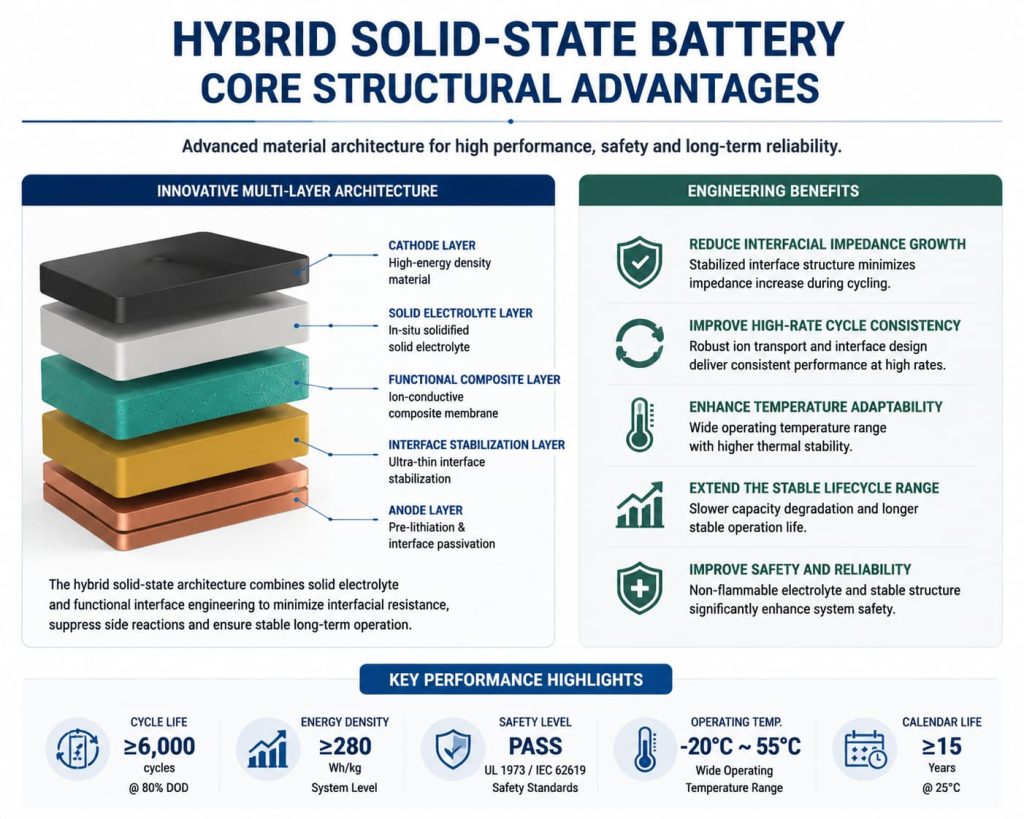
- Evaluate actual cell/module/system fire evidence. Hybrid solid-state technology alone does not prove no propagation or installation approval.
- ESSA0100B-0215 public data identifies air-cooled LFP; a different chemistry or cooling arrangement requires the offered BOM and controlled evidence.
- Quote the documentation and responsibility scope: product evidence, installation inputs, FAT/SAT records and the named parties who must close approval gaps.
What is the Difference Between UL 9540A and IEC 62619?
Separate the equipment safety standard, the fire-test method, the product listing and the installation decision. Each answers a different question about an identified configuration. The report or certificate must be reviewed within its scope, rather than treated as a blanket statement that the whole project will pass.
IEC 62619: Industrial Cell and Battery Safety
IEC 62619 addresses safety requirements for secondary lithium cells and batteries used in industrial applications. Review the applicable edition, tested models, test conditions, report issuer and any exclusions for the supplied battery. Do not reduce its scope to cells only or use it as a replacement for complete-system and site evaluation.
A passing result supports the stated safety evaluation under its specified conditions. It does not guarantee that the battery will never ignite, that every production batch was individually tested or that a 215kWh cabinet prevents propagation under every fault. Identify the cell/battery report and the additional system and installation evidence required for the actual order.
UL 9540A: Configuration-Specific Fire-Propagation Testing
UL 9540A evaluates thermal-runaway fire-propagation behaviour through a defined test method, including relevant cell, module, unit and installation-level evaluation. Obtain the full report and identify which levels, configurations and observations apply. It is not simply a system-level safety certificate.
The test method can include inducing thermal runaway and measuring the response, gases, heat and propagation behaviour at the applicable evaluation level. Results depend on the tested cell, spacing, enclosure, thermal controls and configuration. The AHJ reviews relevant evidence together with the installation design and adopted code; an article cannot replace that project decision.
UL 9540 vs. UL 9540A: Product Certification vs. Fire Test Method
Engineers frequently search for the distinction between UL 9540 and UL 9540A. Understanding this difference is critical for EPC project planning.
UL 9540: The Comprehensive Product Certification
UL 9540 is a safety standard for energy storage systems and equipment. Where a project requires listing/certification, verify the issuing body, listed model, system combination, ratings, installation instructions and conditions of use. A complete-system listing and a UL 9540A fire-test report are separate pieces of evidence, and neither automatically grants site permission.
UL 9540A: The Installation Code Test Methodology
UL 9540A produces test evidence about the evaluated fire-propagation behaviour. Review its applicability to the proposed battery/PCS system and layout, including any conditions or limitations. The adopted installation code and AHJ determine how those results are used at the site. Do not advertise a design-methodology whitepaper as a completed test report.
The BESS Certification Workflow: From Cell to Commissioning
Use the diagram below as an evidence-review route, not a statement that every MegSolid model holds every listed approval. A project should map the offered cell/battery and complete system to their actual reports, then apply the relevant installation requirements. Contract the missing evidence and approval work before shipment.
Ask MegSolid which parts of this route the offered configuration can document today, which upstream records are required and which site decisions remain with the EPC and AHJ. The quotation should include model identity, revision mapping, report availability, installation instructions and evidence-delivery milestones. A controlled gap list is more useful than a blanket compliance claim.
Why Do EPCs Face Permitting Risks with Unverified Suppliers?
Permitting risk follows missing or mismatched evidence, not simply the supplier’s sales channel. A direct manufacturer can leave a documentation gap; an authorized intermediary can supply sound records. Evaluate the exact equipment and accountable document owner on every offer.
The Traceability Trap
Match the report’s cell/battery and system designations, BOM revision, PCS combination and test arrangement to the offered model. Record production and installed serial identities so deviations can be traced. A different cell, thermal system or enclosure may need an applicability review; a generic certificate does not settle that change.
Missing Fire Suppression Integration
The fire-response arrangement must be defined for the supplied system and site. Request the installed detection, ventilation, shutdown, suppression and emergency-access scope where applicable, and review it against relevant reports and authority requirements. No single suppressant name or fluid-dynamics claim establishes UL 9540A results or contains every thermal event.
How to Evaluate Hybrid Solid-State Fire Claims Against the Offered Model
Evaluate Hybrid Solid-State Battery claims with actual cell, module and system reports for the offered configuration. The chemistry may affect fault behaviour, but the outcome also depends on construction, spacing, protection, thermal management and enclosure design. Do not infer the result of a test that has not been provided.
Mitigating Propagation at the Chemical Level
Conventional LFP products also vary by cell design, electrolyte, module and enclosure. A blanket description of every liquid LFP product spraying flame is not a model comparison. Ask each supplier for the relevant test conditions and observations and compare the supplied systems on the same basis.
A hybrid solid-state BOM must identify the actual cell and system rather than apply a portfolio label to a public air-cooled LFP cabinet. Request the offered configuration’s fire evidence and installation conditions. The BESS thermal runaway prevention guide helps organize detection, shutdown, ventilation and response questions; it does not substitute for a test report or establish a no-propagation guarantee.
Integrated Thermal Management
Cooling architecture must follow the actual model. ESSA0100B-0215 publishes intelligent air cooling, while the Energon 261.24kWh / 125kVA route publishes liquid cooling. Neither public boundary proves a universal ±5°C rack spread or fire-fault temperature limit. Obtain the project thermal curve, control/alarm limits and exact test evidence before making those acceptance promises.
Fresno EPC Example: Review the 1MWh-Class Evidence Package Before Award
Consider a Fresno EPC reviewing a proposed BESS before installation. This is an illustrative procurement scenario, not a verified customer installation or approval result. The question to settle before buying is whether the report package covers the exact cell, cabinet, PCS and intended layout. Request the model/revision mapping while the supplier can still close the evidence gaps in its offer.
Five ESSA0100B-0215 cabinets total 1,075.2kWh nominal battery energy and 500kW of summed nameplate AC rating. That is not proof of 1MWh delivered AC energy, approved parallel operation or a permit. Obtain the offered multi-cabinet design, exact chemistry/cooling BOM and configuration-specific reports before approval.
Evidence to Request for This Illustrative Configuration
- BOM mapping: identify the actual supplied cell and cabinet rather than applying the SHS180-314 family reference to every 215kWh unit. Match the report models, revisions and installed serial records to the order.
- Fire evidence: request the completed relevant test reports and their configuration/limitations. A design whitepaper or proposed suppressant is not a UL 9540A result or an AHJ decision.
- Thermal evidence: record the delivered cooling architecture, conditions, sensors and measured site trends. The earlier 3.2°C liquid-cooled-rack outcome is unverified and must not be promised for the air-cooled ESSA model.
Project Records Needed Before Claiming Approval or Savings
- Approval: retain the authority decision, approved layout and conditions for the actual site. The previous two-week outcome is unverified; no approval period is guaranteed.
- Insurance: obtain the insurer’s actual underwriting decision and premium basis. A chemistry or test-method claim does not establish a discount.
- Operation: retain actual commissioning, event and battery-status records for the released configuration. The previous six-month flawless-operation claim is unverified and is not presented as a result.
- Note: Results vary depending on site configuration, local tariffs, and environmental conditions.
Compare Equipment Evidence and Contracted Support
Require the same model mapping, report scope, installation inputs and responsibility schedule from every bidder. MegSolid’s offer should state what evidence is supplied and what must still be reviewed; the acceptance decision belongs to the actual project.
|
Engineering Feature |
Evidence gap to reject before award |
Evidence response to request from MegSolid |
|---|---|---|
| UL 9540A Support | Missing report or unclear tested model/configuration | Relevant complete report, configuration and applicability review |
| Fire Suppression | Detection/response equipment or site duties undefined | Delivered detection, ventilation, shutdown and suppression scope |
| AHJ Permitting | Assumed approval from a generic logo or whitepaper | Named EPC/AHJ review with site-specific requirements |
| Thermal Runaway Risk | Unsupported chemistry-wide safety conclusion | Actual cell/module/system test and operating evidence |
| Warranty and support | Unclear claim owner and remedies | Written warranty, document owner and technical escalation scope |
MegSolid Manufacturing Authority
For a MegSolid equipment and OEM/ODM quotation, send the site country, system power/energy, proposed cell/cabinet/PCS route, connection and installation layout, authority requirements and documentation deadlines. Ask us to return the exact-model offer, available reports, configuration mapping, FAT/SAT scope and a named evidence-gap list. You can then compare what each bidder will actually deliver before committing the project budget.
References & Industry Standards
Use current official standards and adopted local rules for their defined scopes. The following references identify review subjects; they are not evidence that every offered configuration is certified, tested or approved:
- NFPA 855: Standard for the Installation of Stationary Energy Storage Systems.
- UL 9540: Standard for Safety of Energy Storage Systems and Equipment (Full product certification).
- UL 9540A: Standard for Safety of Energy Storage Systems and Equipment (Thermal Runaway Test Methodology).
- UL 1973: Standard for Batteries for Use in Stationary Applications.
- IEC 62619: Safety requirements for secondary lithium cells and batteries in industrial applications.
- IEC 62933: Series of standards for electrical energy storage (EES) systems.
- IEEE 1547: Standard for Interconnection and Interoperability of Distributed Energy Resources.
- IFC 2024: International Fire Code guidelines for energy storage system installation.
- UN38.3: Recommendations on the Transport of Dangerous Goods - Lithium Battery Testing Requirements.
FAQ
Q1: What is the difference between UL 9540A and IEC 62619?
IEC 62619 covers safety requirements for industrial lithium cells and batteries. UL 9540A is a thermal-runaway fire-propagation test method across applicable evaluation levels and configurations. They provide different evidence and neither alone grants complete project approval.
Q2: Why do EPCs face permitting risks with unverified suppliers?
The problem is missing or mismatched evidence for the offered equipment. Check cell/battery and system models, revisions, PCS combination, report scope, installation conditions and production identity, regardless of whether the sales channel is direct or an intermediary.
Q3: What is the difference between UL 9540 and UL 9540A?
UL 9540 is an ESS/equipment safety standard used for relevant product listing/certification. UL 9540A is a fire-propagation test method that produces configuration-specific reports. Review the actual listing/report scope and adopted installation requirements separately.
Q4: Does IEC 62619 certify the complete energy storage system?
No. IEC 62619 evaluates industrial cell/battery safety within its stated scope. The complete ESS, electrical installation and fire-response design may require additional product and installation evidence. UL 9540A is a fire-test method, not a replacement complete-system safety certificate.
Q5: How does MegSolid ensure BESS compliance for EPCs?
Ask MegSolid to map the offered model and controlled BOM to available reports, installation inputs and the agreed factory/site tests. Identify any missing evidence and its owner. A traceability package or methodology whitepaper does not prove a completed fire test or secure an AHJ approval.
Q6: Can solid-state batteries pass UL 9540A easier than liquid LFP?
The offered cell and system design can influence fault behaviour, but a hybrid solid-state label does not establish no propagation. Compare actual test conditions and results for the proposed configuration; conventional LFP systems also differ by design and protective measures.
Q7: What fire suppression systems are used in MegSolid cabinets?
Request the exact detection, shutdown, ventilation, suppression and emergency-response scope for the delivered model and site. Do not assume every IP54 cabinet contains NOVEC1230 or aerosols, or that any one agent contains every battery thermal event.
Q8: How does the liquid cooling system affect UL 9540A compliance?
Use model-specific thermal data and relevant test evidence. ESSA0100B-0215 publishes air cooling; Energon 261 publishes liquid cooling. A public cooling label does not validate a universal ±5°C rack spread or guarantee adjacent-cell temperatures during fire abuse.
Q9: What is the cycle life of MegSolid's compliant BESS?
Request the offered model’s cycle/retention conditions, DOD, rate, temperature, throughput and warranty. IEC 62619 is a safety standard, not proof of 5,000 cycles or a guaranteed ten-year life. Plan replacements or augmentation from the actual duty and evidence.
Q10: Can EPCs customize the BESS to meet specific local grid codes?
The exact PCS capability and site harmonic/interconnection requirements need their own review. A published THDi figure is not full-site IEEE 519 compliance, and reactive/active filtering or grid-code functions must be verified for the offered model and PCC.
Q11: What is UL 9540A testing for energy storage?
It is a test method for evaluating thermal-runaway fire propagation and related observations at the applicable cell, module, unit and installation levels. Obtain the full configuration-specific report and review its relevance to the proposed system and site.
Q12: Is IEC 62619 enough for BESS installation?
No. IEC 62619 covers industrial lithium cells and batteries under specified conditions. It does not establish a whole-cabinet no-propagation guarantee. Applicable product, fire-test and installation evidence depends on the equipment scope, adopted rules and AHJ.
Q13: How does solid-state battery chemistry improve BESS safety?
Do not infer compliance from a chemistry label. Obtain the exact hybrid solid-state cell/module/system reports, protection design and installation conditions and compare them with the project requirements. Public ESSA air-cooled LFP data must not be relabelled as another chemistry.
Get Your Direct Manufacturer Engineering Consultation
Send the model/configuration, site layout, power and energy duty, applicable authority requirements, report schedule and target dates. Ask our manufacturing engineering team for the exact equipment evidence, available documents and unresolved inputs before award:
Global Sales & HQ (Hong Kong):
FLAT 7, 11/F BLK C HANG WAI IND CTR, 6 KIN TAI ST, TUEN MUN, HONG KONG
- Email: [email protected]
- Phone: +852 59811073
R&D & Manufacturing Facility (Huzhou):
No. 898 Mengxi Road, South Taihu New Area, Huzhou City, Zhejiang Province, P.R.China
- Website: https://www.solidess.com/
