 Skip to content
Most African factories still burn diesel every day. Not because they want to — because the grid is unreliable or simply not there. On X, the numbers and the complaints appear regularly. A water factory in Abuja reported spending ₦760,000 every month on diesel just to keep production running. Other factory owners describe a different pain: they paid for a solar + battery system, the containers arrived, and then the supplier stopped answering. When something went wrong, there was no one left to call.
This is why choosing the right system and the right manufacturer matters. MegSolid is the original manufacturer of hybrid solid-state and outdoor cabinet energy storage systems designed for exactly these industrial conditions in Africa.
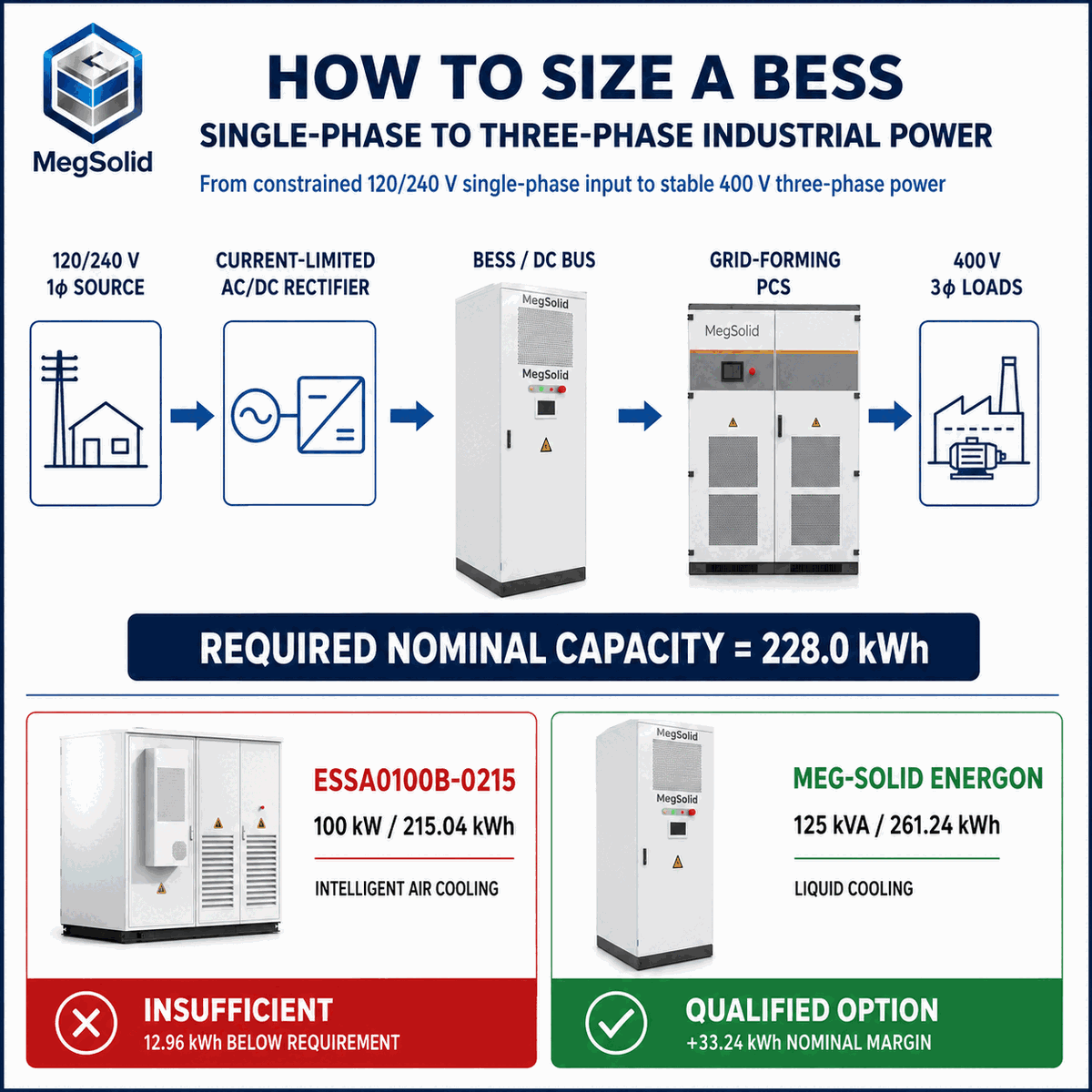
This article answers two practical questions: How do you size a solar + battery hybrid system so that diesel consumption actually drops? How do you choose a supplier so that you do not get abandoned after installation?
Why So Many Factories Still Burn Almost the Same Amount of Diesel
- Battery capacity is too small — Solar covers the day, but the battery is empty by early evening. The diesel generator starts again.
- Power rating cannot handle motor starts — Compressors, pumps and production machines create high starting currents. The inverter and battery cannot support the surge, so the system switches back to diesel.
- The supplier only sells equipment and then disappears — Many trading companies deliver the hardware, collect the final payment, and then become unreachable. On X, factory owners repeatedly report “no after-sales” and “supplier ghosted after payment”.
A system that truly reduces diesel use must solve all three problems. Technical sizing alone is not enough. The supplier must still be there when the system needs support.
Practical Sizing Logic That Delivers Real Diesel Reduction
Use this table as a realistic starting point based on actual African industrial projects:
| Daily Diesel Consumption | Suggested PV Size | Suggested Storage Capacity | Expected Diesel Reduction | Critical Condition |
|---|---|---|---|---|
| 200–400 litres/day | 100–200 kW | 200–400 kWh | 35–50% | Proper EMS + realistic load data |
| 400–800 litres/day | 200–400 kW | 400–800 kWh | 40–60% | Must cover peak motor starts |
| 800+ litres/day | 400 kW and above | 800 kWh and above | 50–70% | Parallel cabinets + strong hybrid control |
- Storage should normally cover 4–8 hours of critical load, not the entire factory for 24 hours.
- The PCS / inverter power must be sized for the highest simultaneous starting current, not the average load.
- The Energy Management System must prioritise solar first, battery second, and diesel only as the last option.
If any of these points is missed, diesel savings will be much lower than expected.
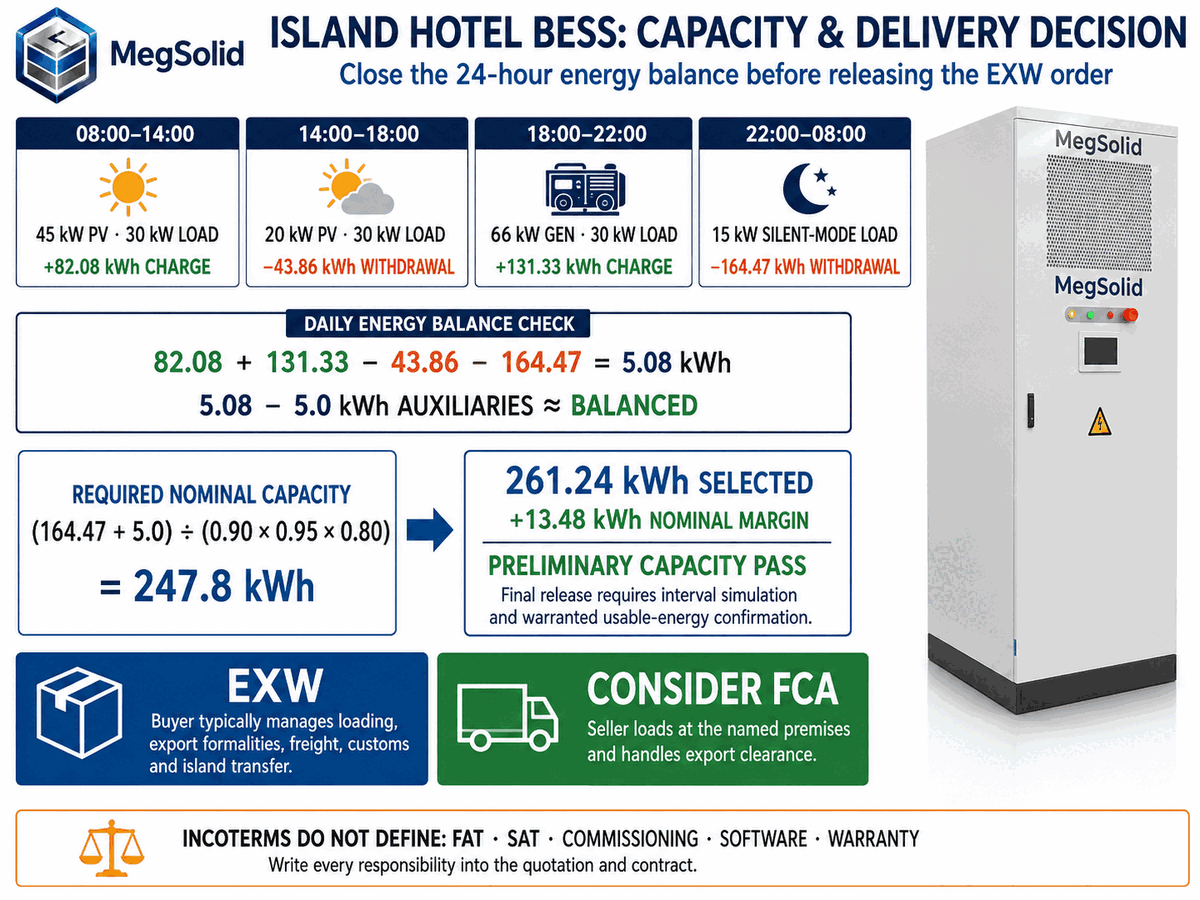
Real Product Options from MegSolid for African Factories
All parameters below come from official product data.
Outdoor Cabinet ESS (Air-Cooled)
- Example: 100 kW / 215.04 kWh
- Protection: IP54
- Cooling: Intelligent air cooling
- Cycle life: ≥ 5,000 cycles
Details: Outdoor Cabinet ESS specifications
Liquid-Cooled Hybrid Solid-State Cabinet
- Rated energy: 261.24 kWh
- Rated AC power: 125 kVA
- Protection: IP54
- Cooling: Intelligent liquid cooling (temperature difference controlled within ±5°C)
- Parallel capability: up to 10 units
- Technology: Hybrid Solid-State (semi-solid) cells
These systems are designed for outdoor industrial environments and can work with existing diesel generators through proper EMS and dry-contact control. More options: Full C&I Solid-State Product Range
How to Avoid Being Left with a Dead System and No Support
The most expensive mistake is not choosing the wrong capacity. It is choosing a supplier who disappears after delivery.
Here is a practical checklist every factory owner or EPC should use before paying:
- Can the company prove it is the original manufacturer?
- Does it provide a clear written diesel-hybrid control strategy and EMS logic?
- Is there a named technical contact who will still answer after installation?
- Are there real project references in similar African industrial environments?
- Can the company provide remote monitoring and parameter adjustment after commissioning?
- Is the warranty backed by the manufacturer, not by a trading company that may no longer exist?
If the answer to any of these questions is unclear, the risk of being left without support is high. MegSolid is the original manufacturer. The company designs, produces and supports the systems directly. This is the practical difference between a long-term partner and a one-time trader.
Step-by-Step Decision Process
- Measure real daily diesel consumption and load profile.
- Identify the critical load that must stay online during outages or night hours.
- Size PV for daytime production and storage for the critical evening/outage window.
- Confirm the PCS power can handle the highest motor starting currents.
- Demand a clear diesel-hybrid control strategy from the supplier.
- Verify that the supplier is the real manufacturer and will still be reachable after installation.
- Only then request a formal quotation.
Skipping the supplier verification step is the most common reason factories end up with systems that do not deliver the expected savings and have no one left to fix them.
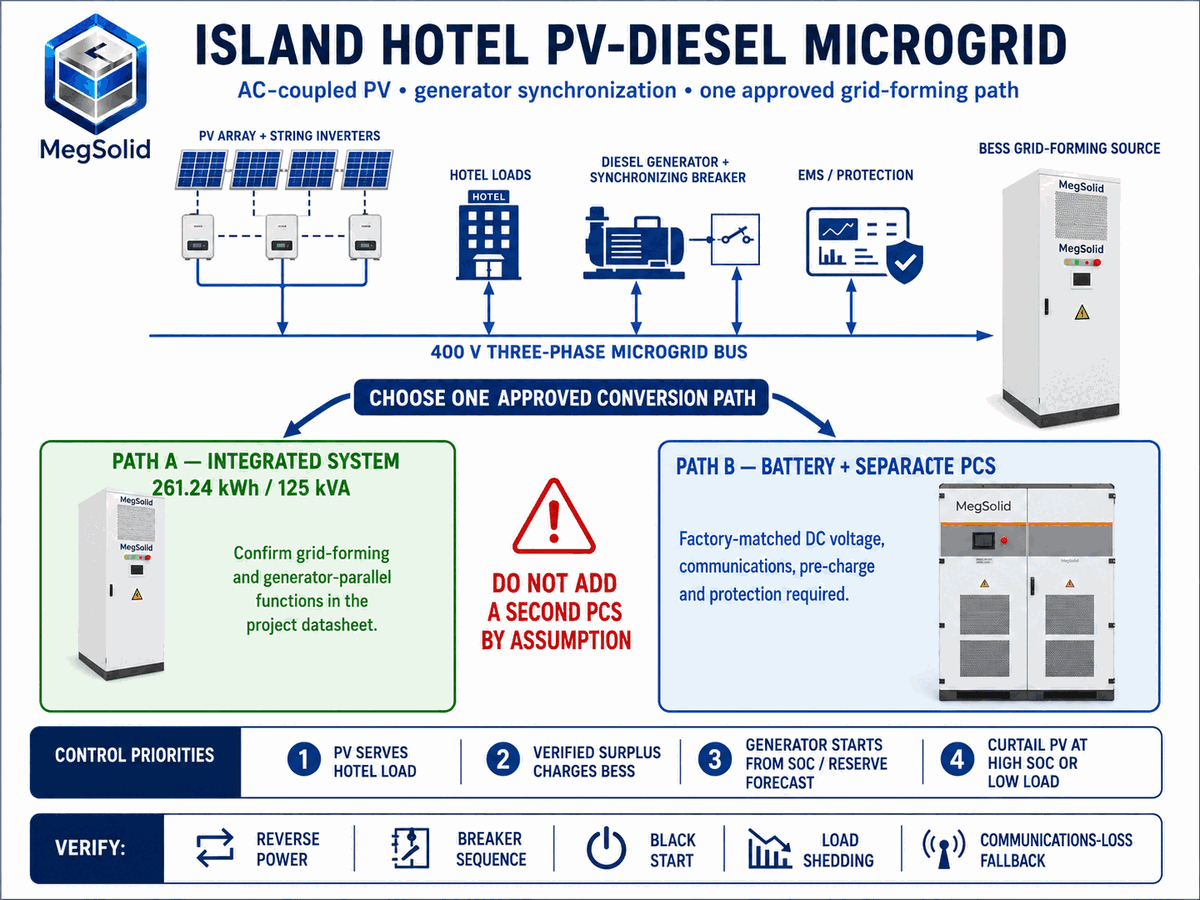
Why Factories That Want Long-Term Results Choose MegSolid
- Original manufacturer with full design and production control
- Outdoor Cabinet and Liquid-Cooled Hybrid Solid-State systems built for industrial conditions
- IP54 protection and proven thermal management for African climates
- Ability to parallel multiple cabinets for larger factories
- Engineering support for diesel-hybrid integration
- Long-term responsibility after the equipment is installed
When a factory invests in solar + storage, the goal is not just to buy batteries. The goal is to burn less diesel every month and keep production running. That only happens when both the technical sizing and the supplier quality are correct. More about the company: About MegSolid
FAQ
Why do many African factories still burn almost the same amount of diesel after installing solar + battery?
Three common reasons: battery capacity is undersized for the evening or outage window, the PCS cannot handle motor starting currents, and the supplier disappears after delivery so the system is never properly commissioned or adjusted.
What daily diesel consumption range is suitable for a 200–400 kWh storage system?
Factories consuming roughly 200–400 litres of diesel per day are typically in the range where 200–400 kWh of storage, paired with 100–200 kW of PV, can deliver 35–50% diesel reduction when the EMS and motor-start capability are correctly designed.
How many hours of critical load should the battery normally cover?
In most African industrial projects the practical target is 4–8 hours of critical load, not 24-hour full-factory coverage. Sizing for the critical window keeps the system economical while still cutting diesel significantly.
What is the rated energy of the MegSolid Outdoor Cabinet ESS example used in this guide?
The example Outdoor Cabinet ESS configuration is 100 kW / 215.04 kWh with IP54 protection, intelligent air cooling and a published cycle life of ≥ 5,000 cycles.
What is the rated energy and power of the MegSolid Liquid-Cooled Hybrid Solid-State cabinet?
The Liquid-Cooled Hybrid Solid-State cabinet is rated 261.24 kWh energy and 125 kVA AC power, with IP54 protection, intelligent liquid cooling that keeps cell temperature difference within ±5°C, and the ability to parallel up to 10 units.
Why is verifying that the supplier is the original manufacturer so important?
Many trading companies deliver containers and then become unreachable. When the system needs adjustment, remote support or spare parts, there is no one left to call. An original manufacturer remains responsible after installation.
What six questions should a factory owner ask before paying for a diesel-hybrid system?
1) Can the company prove it is the original manufacturer? 2) Does it provide a clear written diesel-hybrid control strategy? 3) Is there a named technical contact after installation? 4) Are there real African industrial references? 5) Can it provide remote monitoring and parameter adjustment? 6) Is the warranty backed by the manufacturer?
Can MegSolid systems work with existing diesel generators?
Yes. Both the Outdoor Cabinet ESS and the Liquid-Cooled Hybrid Solid-State cabinets can integrate with existing diesel generators through proper EMS logic and dry-contact control so that diesel runs only when solar and battery cannot meet the load.
What protection rating do the recommended MegSolid cabinets have?
Both the Outdoor Cabinet ESS and the Liquid-Cooled Hybrid Solid-State cabinet are rated IP54, suitable for outdoor or semi-outdoor industrial environments common in African factories.
How many Liquid-Cooled Hybrid Solid-State cabinets can be paralleled?
Up to 10 units of the 261.24 kWh Liquid-Cooled Hybrid Solid-State cabinet can be paralleled for larger factory loads.
What is the main difference between an original manufacturer and a trader for African factory projects?
An original manufacturer owns the factory, provides full traceability, backs the warranty directly and keeps engineering support available after installation. A trader typically sources only, offers limited support and carries a higher risk of disappearing after payment.
Should storage be sized for the entire factory load for 24 hours?
No. In most cases it is more economical and effective to size storage for the critical 4–8 hour window (evening peak or outage periods) rather than attempting full 24-hour coverage of every load.
What happens if the PCS cannot handle motor starting currents?
The system will switch back to the diesel generator every time a large motor starts, which sharply reduces the expected diesel savings and can also stress the battery and inverter.
Where can African factory owners find official product pages for the systems mentioned?
Outdoor Cabinet ESS: https://www.solidess.com/product/outdoor-cabinet-energy-storage-system/ Liquid-Cooled Hybrid Solid-State: https://www.solidess.com/product/megsolid-solid-liquid-energy-storage/ Full range: https://www.solidess.com/solid-state-energy-storage-systems/
How can a factory request a technical sizing review from MegSolid?
Contact the MegSolid engineering team at https://www.solidess.com/contact-megsolid/ and provide real daily diesel consumption data and a basic load profile for a free technical sizing review.
What is the core technology used in the 261.24 kWh liquid-cooled cabinet?
The 261.24 kWh cabinet uses Hybrid Solid-State (semi-solid) cells with intelligent liquid cooling that maintains cell temperature difference within ±5°C.
