 Skip to content
Compare a G2S inverter supplier by the exact model and battery combination offered. MegSolid’s published G2S-C single-phase hybrid inverter range covers six models with 3–6 kW rated AC output. Confirm the full suffix, battery/BMS, firmware, PV design and backup duty before placing an order. For a complete C&I project, use the commercial energy storage procurement guide to define the battery, conversion and site responsibilities in one quotation.
G2S-C Models: Rated AC Output and Maximum PV Input
| Full model | Rated AC output | Maximum PV input | Battery range | BMS interface |
|---|---|---|---|---|
| R3KL1DA-G2S-C | 3 kW | 4.5 kW | 40–58 V | CAN |
| R3K6L1DA-G2S-C | 3.68 kW | 5.4 kW | 40–58 V | CAN |
| R4KL1DA-G2S-C | 4 kW | 6 kW | 40–58 V | CAN |
| R4K6L1DA-G2S-C | 4.6 kW | 6.9 kW | 40–58 V | CAN |
| R5KL1DA-G2S-C | 5 kW | 7.5 kW | 40–58 V | CAN |
| R6KL1DA-G2S-C | 6 kW | 9 kW | 40–58 V | CAN |
Source: the published G2S-C product table. AC output and maximum PV input describe separate interfaces. These figures apply to the listed G2S-C suffixes, not every inverter sold under a G2S family name. Confirm the current offered-model datasheet and operating limits with the quotation.
A CAN interface alone does not approve a battery. Request the exact battery/BMS model, firmware, protocol and cable pinout, together with current limits and the agreed grid-loss, low-SOC and communication-loss acceptance evidence. Send the required model, quantity, destination, PV design, battery/BMS and continuous/starting loads for a configuration-specific quote.
Compare an energy storage inverter supplier by the exact combinations it can document and support: inverter model and suffix, battery model/BMS, firmware, operating mode and protection arrangement. A shared product-family name or a CAN port does not approve a battery-inverter combination.
MegSolid works with global energy storage partners by providing inverter solutions, battery integration experience, and commercial energy storage system engineering support. Partners can review the energy storage inverter portfolio while planning products for different customer requirements. The focus is not only supplying products, but helping partners develop a more complete energy storage business model.
Why Nigerian Distributors Need More Than a Traditional Inverter Supplier
Separate an equipment stock order from a commissioned installation. The quotation should name who supplies the inverter, battery, PV protection, cables, metering and transfer equipment; who installs and signs off the site; and who handles faults after handover. A low inverter price can leave those responsibilities unpriced.
For distributors, customers may require different solutions:
- A homeowner may need backup power during grid interruptions.
- A small business may need solar and battery integration to improve energy availability.
- A factory may require a larger energy storage system to support operational stability.
If a distributor only carries one inverter type, it becomes difficult to serve different customer groups.
A suitable energy storage inverter supplier should help partners build a product portfolio that matches actual market demand.
This includes:
- Residential solutions: Products suitable for homes and small businesses.
- Commercial solutions: Products designed for larger electrical loads and three-phase applications.
- C&I solutions: Higher-power inverter and PCS solutions for commercial and industrial energy storage systems.
Build the product line around repeatable approved configurations. Keep a residential kit, a three-phase commercial system and an engineered C&I PCS project as separate quotation routes, with the appropriate installation and service responsibilities for each.
Build Three Product Routes with Clear Electrical Boundaries
For every route, record phase and AC voltage, required continuous and starting load, battery voltage/current window, PV string limits, backup duration and the required operating modes. An inverter’s AC output, permissible PV input and battery power/current ratings describe different interfaces.
A practical product strategy can include three levels.
Residential Energy Storage Market
Residential customers usually require reliable backup power combined with solar energy utilization.
For this market, distributors need products that are:
- Easy for installers to deploy
- Compatible with common battery systems
- Suitable for homes and small businesses
- Supported by clear technical documentation
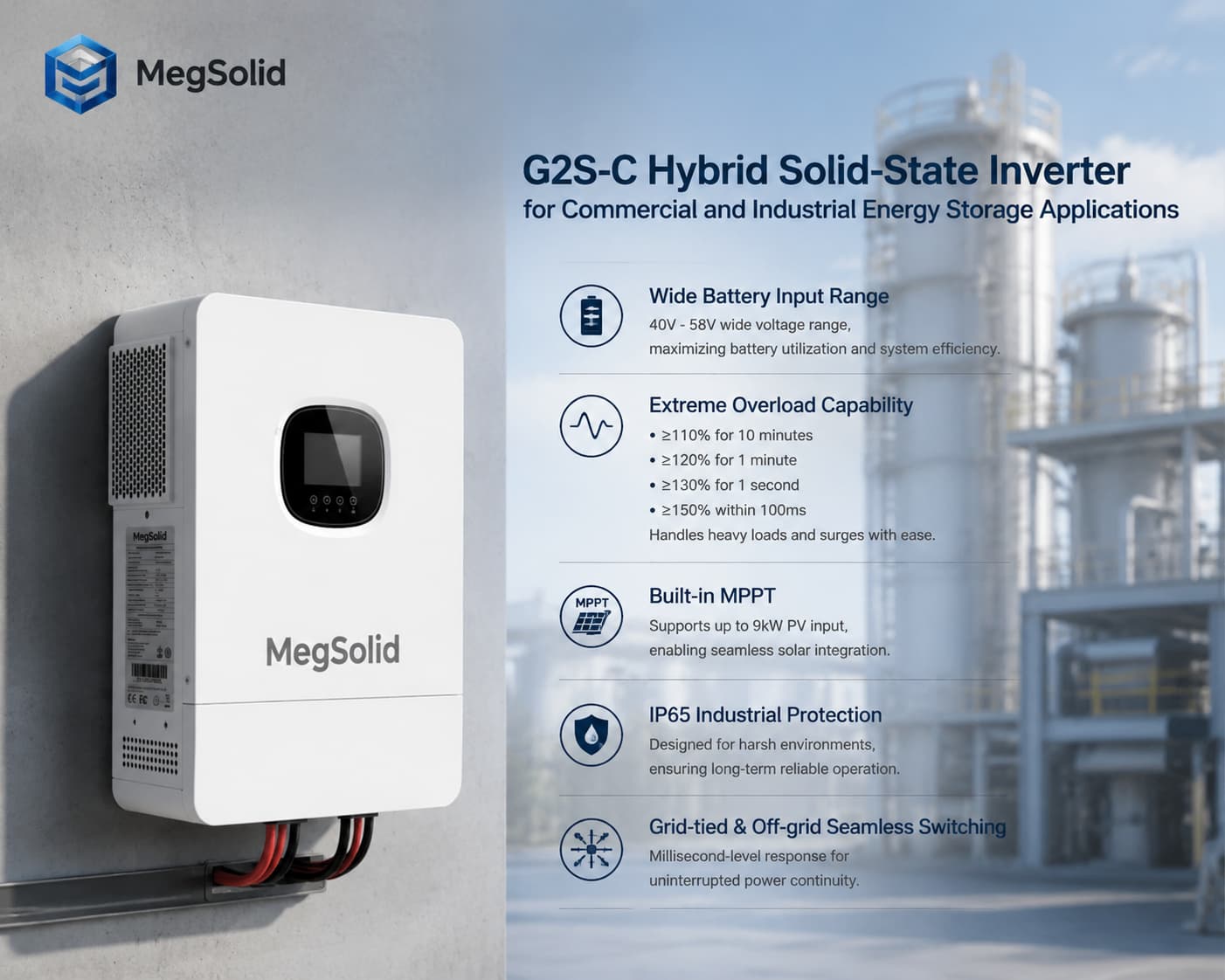
MegSolid G2S-C is a single-phase hybrid inverter designed for residential energy storage applications.
Confirmed specifications include:
- Rated output: 3–6kW single-phase
- PV MPPT voltage range: 100–430 V; battery input: 40–58 V (separate interfaces)
- Inverter backup transfer: less than 20 ms; validate the selected loads and complete switching arrangement
- Communication: CAN
For G2S-C, the published 3–6 kW figures are rated AC output; 4.5–9 kW describes the model-dependent maximum PV input, not a 9 kW AC inverter. The R6KL1DA-G2S-C row lists a 40–58 V battery range and 120 A maximum charge/discharge current. At an illustrative 40 V battery terminal voltage, 40 × 120 = 4.8 kW DC before conversion losses and auxiliaries. Producing 6 kW AC from the 40 V battery alone would require at least 150 A even before losses; this does not describe operation with additional PV or grid power. This arithmetic is an interface screen, not a measured derating curve or a guarantee of output at another voltage. Confirm the actual battery voltage under load, BMS limits and the inverter’s permitted operating point.
Commercial Energy Storage Market
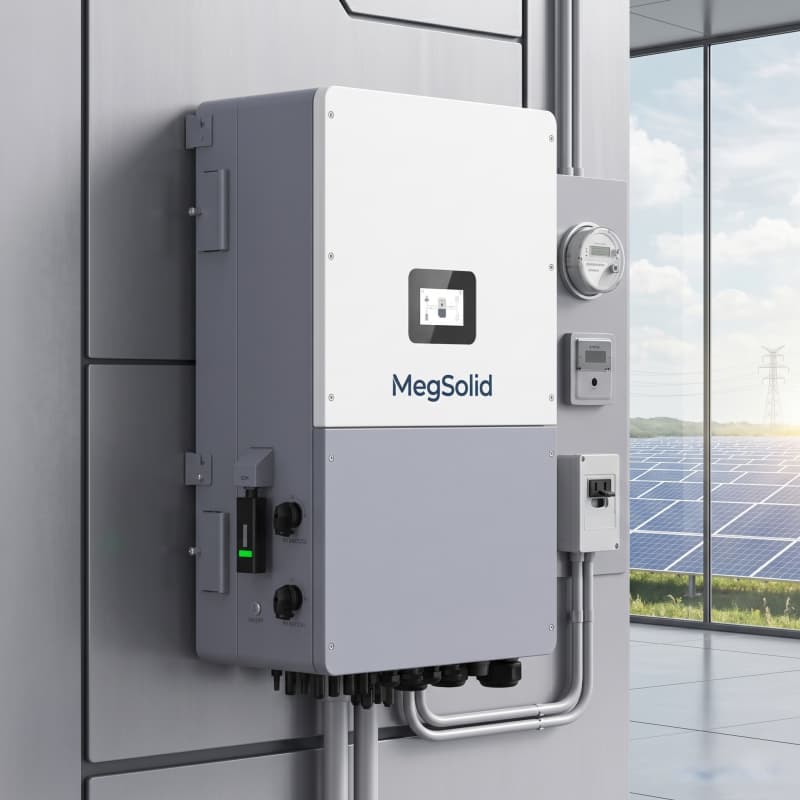
A commercial inverter route is selected from the site’s actual phase arrangement, load and battery interface, rather than simply from a larger kW number. Check three-phase distribution, power factor, start events and the approved islanded or grid-parallel duty before choosing equipment.
Applications may include:
- Offices
- Retail facilities
- Small factories
- Commercial buildings
These customers often require three-phase power solutions and more flexible system configurations.
MegSolid R30KH3 provides 30 kW rated three-phase AC output, up to 45 kW PV input and up to 33 kW maximum battery charge/discharge power. Its 150–800 V battery input requires an approved high-voltage battery bank and BMS protocol. A 51.2 V wall pack cannot simply be connected directly to R30. Close the matched battery, inverter and protection scope before quoting the commercial installation.
When developing commercial projects, distributors should evaluate:
- Customer load requirements
- Battery configuration
- Installation environment
- Future expansion requirements
Quote the approved inverter and high-voltage battery arrangement together with its commissioning documents and exceptions. Define who supplies the battery protection, DC cables, grid/backup switching and final settings; a residential low-voltage battery package cannot fill an unspecified high-voltage commercial scope.
C&I Energy Storage Market
Large commercial and industrial customers require different system planning.
These projects may involve:
- Higher power conversion requirements
- Larger battery systems
- EMS integration
- More detailed engineering communication
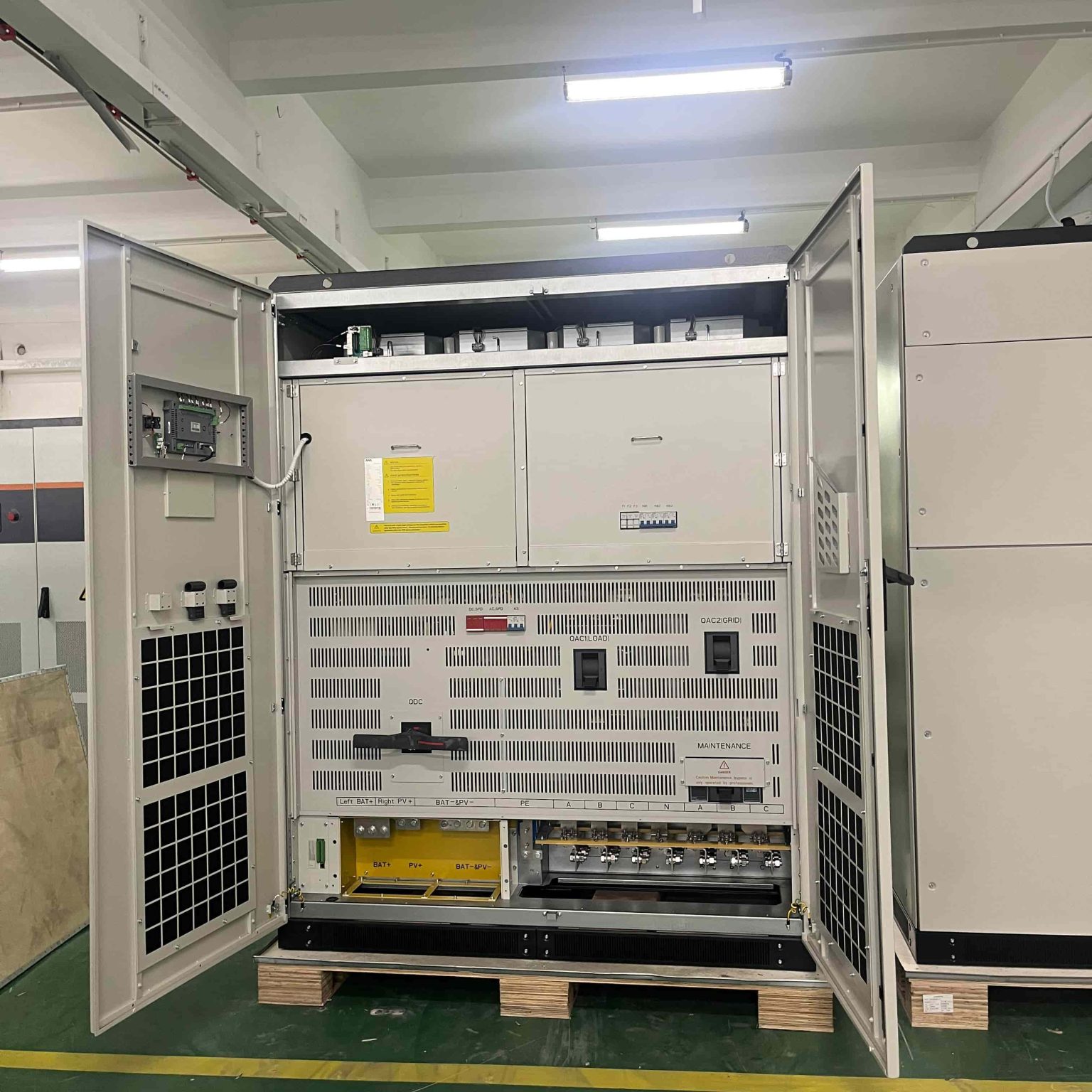
MegSolid's MEGA-TS isolated PCS solutions range lists 30, 50, 100, 150, 250 and 500 kW models. Each has its own DC-voltage window and current limit; the larger PCS is part of an engineered battery/EMS/protection system. Give MegSolid the site's AC power, usable energy, PCC voltage and control duty to request the appropriate model and interface schedule. This gives your distributor line a defined route into C&I projects rather than a promise based only on a higher kW label.
An engineered C&I PCS project needs an SLD, protection/metering design, battery and EMS interfaces, site acceptance plan and accountable EPC responsibilities. Do not describe a PCS equipment shipment as a turnkey Nigerian installation unless the contract actually includes that scope.
Published Factory Reference: Renhe Machinery Bearings, Shaoxing
MegSolid’s published energy storage application cases include the Renhe Machinery Bearings factory project in Shaoxing, China.
- Project location: Renhe Machinery Bearings factory, Shaoxing, China
- Project status: fully installed and commissioned
- Installed capacity: 0.9MW/1.94MWh
- Reported application: peak-load shifting and emergency backup
Keep the Renhe Machinery Bearings reference identified as Shaoxing, China. Its published capacity and application can inform a discussion of MegSolid’s supplied C&I scope, but they do not prove a Nigerian installation, local spare-parts stock, a residential G2S-C acceptance result or a guaranteed customer saving.
Before expanding stock, qualify a reference configuration and its evidence pack for each target application. Record the installed battery/inverter versions, acceptance results, training material and unresolved exceptions so the next order repeats a documented combination.
Why Battery and Inverter Integration Capability Matters for Distributor Success
Many distributors purchase batteries and inverters from different suppliers. While this approach may reduce initial purchasing complexity, it can create challenges during system integration.
Common issues include:
- Communication compatibility problems
- Different technical support channels
- Longer troubleshooting processes
- Difficulty determining responsibility during system issues
Request a compatibility schedule naming the full inverter suffix, hardware revision, firmware and grid-code setting alongside the battery model, BMS firmware, CAN protocol/version, cable pinout and termination. Confirm charge/discharge current limits at low SOC and temperature extremes, plus the response to a lost or stale BMS message. A different G2S 8–10 kW datasheet does not qualify the 3–6 kW G2S-C product.
Important factors include:
- BMS communication: The inverter should communicate correctly with the battery management system.
- Voltage matching: The inverter and battery configuration should be suitable for the intended application.
- System coordination: The supplier should understand how inverter, battery, and energy management components operate together.
Agree factory or pre-shipment acceptance evidence for the ordered configuration: grid loss and recovery, approved load/start events, low SOC, charge/discharge limits, BMS communications loss, controller restart and alarm recovery. Record settings, firmware and measured responses with pass/fail limits. At SAT, verify the real battery, protection, earthing, meters and transfer wiring; a successful bench test does not approve the site installation.
What Support Should Nigerian Distributors Expect From an Energy Storage Inverter Manufacturer?
For OEM/ODM orders, approve the nameplate, model/suffix mapping, firmware access/update policy, language/manuals, packaging and serial-number convention before release. Maintain traceability from the sales SKU to the actual manufacturer model, BOM and certificate/test-report scope. A logo change does not extend a certificate or approve a different hardware/firmware variant.
Ask the offer to separate product-selection support, installer training, warranty administration and onsite service. Confirm what is included, which legal entity performs it and what depends on a local EPC or distributor.
- Product selection support: Helping partners choose suitable inverter solutions according to customer applications.
- Technical communication: Supporting installers and EPC teams when system questions appear.
- Documentation support: Providing technical materials required for sales and project evaluation.
- Business cooperation: Supporting OEM, ODM, and long-term distribution relationships.
Turn support into a fault-handling agreement: identify who receives installer reports, the required serial/BOM/firmware, alarm logs and operating measurements, who authorizes a repair or replacement, and who holds compatible spares. State who pays diagnostic work, local labour, freight and return transport, plus escalation and configuration-rollback procedures. Publish only agreed service territory and response targets; do not assume Nigerian stock or onsite cover from a global sales relationship.
How MegSolid Supports a Nigeria Energy Storage Inverter Product Line
MegSolid’s energy storage inverter portfolio covers residential hybrid inverters, commercial three-phase solutions and modular PCS options for larger energy storage systems. This range helps distributors serve more than one customer segment with a coordinated product strategy.
- Residential hybrid inverter options for homes and small businesses
- Three-phase hybrid inverter options for commercial applications
- Modular PCS options for larger C&I energy storage systems
- Battery integration and technical communication for coordinated system planning
Send MegSolid the target applications and quantities, exact inverter/battery models, phase/voltage, continuous and starting loads, required backup duration, PV string design, generator/grid arrangement, site temperature, intended Nigerian installation location and required delivery date. Request a model-by-model supply schedule, approved suffix/firmware/BMS combinations, documents, pre-shipment and site-test responsibilities, spares/warranty terms and explicit exclusions. Separate equipment delivery from EPC installation, local connection approval and ongoing service. A comparable stock-order quotation should identify both the supported configuration and the accountable party for every open interface.
FAQ
What should Nigerian distributors look for in an energy storage inverter supplier?
Look for an exact model/firmware/battery compatibility schedule, clear continuous and starting-load limits, current technical and installation documents, agreed acceptance evidence, and named fault/warranty responsibilities. Compare equipment-only, supported kits and engineered C&I scope separately.
How can Nigerian solar distributors build a complete energy storage inverter product line?
Start with residential hybrid inverters for backup-power demand, add three-phase solutions for commercial customers, and introduce higher-power PCS options as larger C&I opportunities develop.
Which energy storage inverter solutions are suitable for residential customers in Nigeria?
The MegSolid G2S-C series has 3–6 kW rated single-phase AC output; the model-dependent 4.5–9 kW figure is maximum PV input. Its battery input is 40–58 V and its separate PV MPPT window is 100–430 V. Verify the exact battery/CAN/firmware combination and starting loads. The listed inverter transfer below 20 ms does not guarantee every load or the complete installation’s transfer performance.
When do commercial projects need a three-phase energy storage inverter?
Commercial sites with three-phase infrastructure and higher loads need the appropriate three-phase configuration. R30KH3 provides 30 kW rated AC output, up to 45 kW PV input and a 150–800 V battery interface. Send the measured load, start events and battery brief to MegSolid for the matched inverter/battery scope; a low-voltage residential wall pack is not a direct R30 battery connection.
Why is battery compatibility important for an energy storage inverter system?
Voltage overlap alone is insufficient. Match full model suffix, BMS/CAN protocol and firmware, cable pinout, continuous/transient current, low-SOC and temperature limits, and communications-failure behaviour. For the R6 model, 40 V × 120 A is 4.8 kW DC before losses; it is a screening calculation, not a test curve. R30’s high-voltage battery route remains separate from G2S-C.
What technical support should distributors expect after product delivery?
Agree the fault-reporting and escalation route, required serial numbers, BOM/firmware and alarm data, authorized repair/replacement process, compatible spare parts and who pays local labour and freight. Installer documentation and training should refer to the approved configuration. Only state response times and Nigerian service coverage confirmed for the order.
Can MegSolid support OEM and ODM cooperation for Nigerian distributors?
Discuss OEM/ODM scope for the exact order, including nameplate/model mapping, manuals, firmware permissions, packaging and serial/BOM traceability. Confirm which certificate and test-report scope applies to each delivered variant; rebranding alone does not establish compliance or warranty coverage.
How can a published C&I project case help a Nigerian distributor?
A published project case helps distributors understand how energy storage is applied in real commercial or industrial settings. MegSolid’s Renhe Machinery Bearings reference in Shaoxing, China, was installed and commissioned at 0.9MW/1.94MWh for peak-load shifting and emergency backup; it is a China reference, not a Nigeria project.
What revenue opportunities can distributors develop with energy storage inverters?
Distributors can serve residential backup customers, small businesses, commercial facilities and larger C&I projects. A broader portfolio creates opportunities beyond single-inverter sales.
Why choose MegSolid as an energy storage inverter partner for Nigeria?
MegSolid gives Nigerian distributors named product routes: G2S-C for matched low-voltage residential systems, R30/R40/R50 for approved high-voltage commercial hybrid systems, and MEGA-TS PCS for engineered C&I projects. Send your customer mix and quantity for a product-line quotation with interfaces, documentation, delivery and service responsibilities. Evaluate the matched offer against the installations and support commitments your channel needs to deliver.
Who supplies energy storage inverters for solar distributors in Nigeria?
MegSolid supplies hybrid inverter, battery-integration and energy storage system solutions for global solar distributors and EPC partners, including companies serving the Nigerian market.
Where can Nigerian companies source hybrid energy storage inverters?
Nigerian companies can work with manufacturers that provide suitable inverter products, technical communication and long-term distributor cooperation for residential, commercial and C&I applications.
How can Nigerian EPC companies select an energy storage inverter partner?
Select the partner against the proposed electrical duty and agreed supply boundary. Require the exact inverter/battery/EMS configuration, responsibility matrix, approved SLD and protection interfaces, FAT/SAT limits, fault records and warranty/spares route before equipment release. Keep local EPC, installation and grid/authority obligations explicit.
