
1. A Commissioning Pass Does Not Settle the Operating Bill
An inverter that reaches the site without an agreed battery interface can turn a small purchase saving into days of commissioning work. MegSolid G2S-C offers a 3–6 kW single-phase AC range, a 40–58 V battery range and CAN BMS communication. Compare those requirements with the actual battery and firmware before ordering. Share the battery model, PV strings and AC load to obtain a matched system proposal with the interfaces named in the scope. Commissioning acceptance must identify that configuration and test boundary; usable AC energy, conversion and auxiliary losses, reserve and service obligations continue to determine what the owner receives after handover.
Track the delivered duty over the actual operating period, especially after:
- changes in actual dispatch or retained energy during operation
- exposure to load fluctuations
- entry into non-ideal temperature ranges
The EPC and operator need a named measurement/retention baseline to distinguish normal ageing from a fault or a changed dispatch. Review:
- gradual capacity reduction
- efficiency drift over time
- increasing thermal management load without early warning
- shrinking usable SOC window
These behaviors are rarely visible in datasheets, yet they directly affect lifecycle ROI deviation.
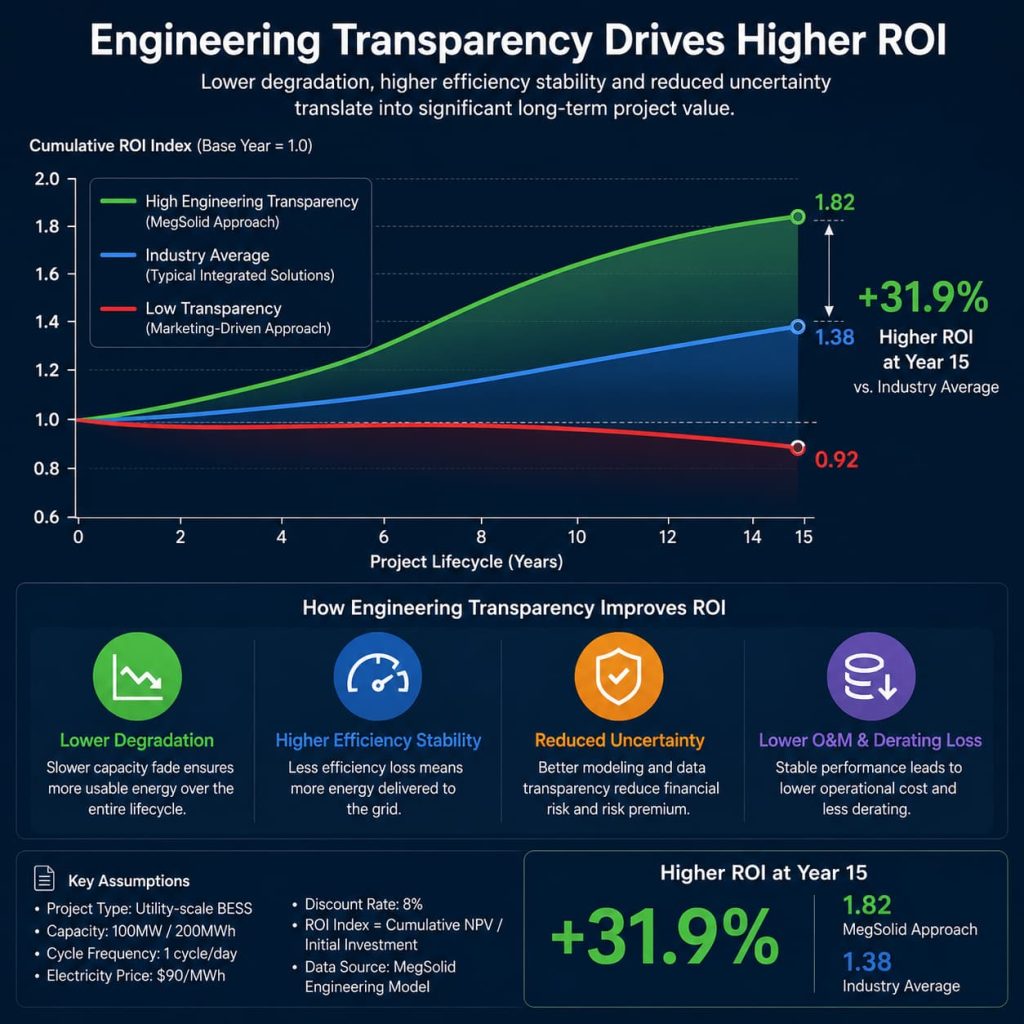
2. How we define “engineering transparency” at MegSolid
At MegSolid, turn engineering transparency into a buying requirement: the named battery/converter, usable-energy basis, control interfaces and acceptance records must agree. Ask for those items in the equipment and integration offer across three boundaries.
2.1 Interface behavior transparency
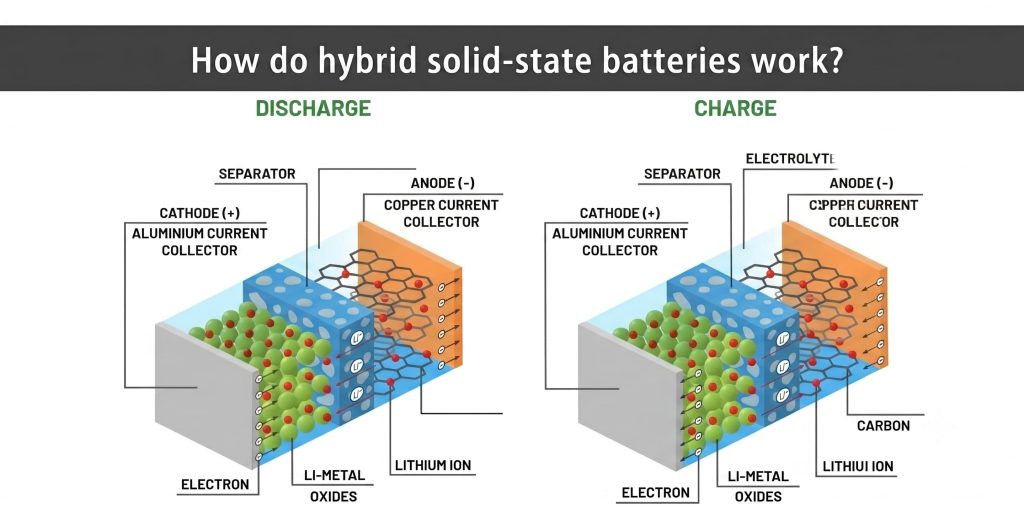
For a hybrid or solid-state battery route, interface studies matter when they answer a model-specific retention question. Use the offered formulation, test conditions and system duty; do not assume every pack has the same impedance behaviour.
Define the required model-level evidence and its link to retained energy:
- interfacial impedance growth trends
- phase-dependent acceleration points
- temperature-dependent migration behavior
These represent long-term electrochemical trajectories rather than static parameters.
2.2 Real-world operating condition fidelity
Ask how the offered configuration is evaluated against the site's coupled operating duty:
- dynamic load profiles
- thermal gradients
- PCS transient response
The supplied test/model scope must state which interactions it covers and how the result is checked at factory and site. A common framework label alone is not a substitute for the actual configuration record.
2.3 Control logic interpretability
One often overlooked EPC concern is “black-box behavior.”
Key questions include:
- When does the BMS initiate power derating?
- How does thermal control engage under peak stress?
- How does PCS handle transient grid disturbances?
A clear limit, alarm and recovery map gives the operator a fault-to-action route. Put those points in the handover so a service call starts from records and agreed responsibilities.
3. EPC Procurement: Price the Result You Have to Deliver
The EPC's proposal must connect the equipment price to a delivered operating duty. The owner and service team then need the same accepted model and responsibility record.
Today, a typical EPC project involves:
- EPC responsible for performance delivery
- investors responsible for financial returns
- O&M teams responsible for long-term stability
All of these converge into one requirement:
- the system must be behaviorally predictable.
Give the procurement team a configuration and acceptance scope they can price. Nominal capacity, peak efficiency and a cycle count are inputs; the usable-energy, dispatch and service boundaries close the investment decision.
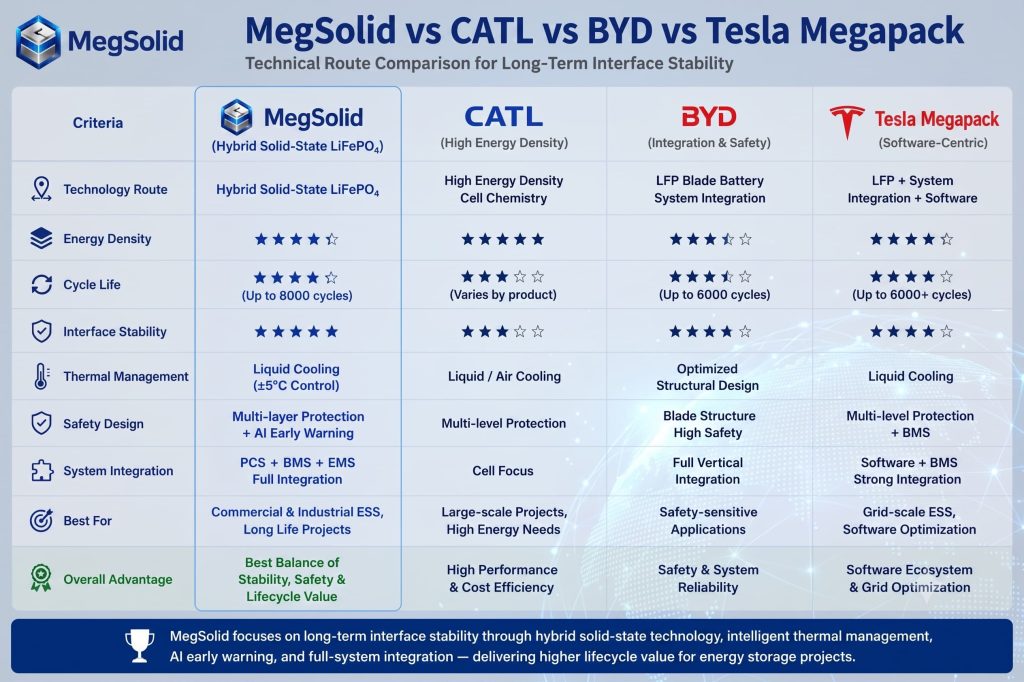
4. Engineering reality across different industry approaches
4.1 Tesla system-level optimization approach
Tesla
Strengths:
- strong system-level energy management
- advanced software optimization
- high integration standardization
For a Tesla proposal, compare the actual regional equipment and project scope:
- requested control/operating data, usable-energy and retention boundaries
- the actual document and service access included in that offer
4.2 CATL manufacturing-led ecosystem
CATL
Strengths:
- strong cell manufacturing consistency
- mature electrochemical aging datasets
- high-volume reliability
For a CATL-based proposal, identify the supplied cell/system and integrator responsibility:
- who owns battery, PCS, EMS and site integration for the supplied configuration
- which test/model records and service obligations the integrator will return
4.3 BYD vertically integrated system approach
BYD
Strengths:
- full vertical integration (cell → pack → system)
- strong cost-performance optimization
- standardized ESS architecture
For a BYD proposal, compare the exact regional configuration and acceptance scope:
- the model, approved operating modes and site-specific settings
- the defined usable energy, acceptance run and commissioning/support responsibilities
4.4 MegSolid engineering transparency architecture
For a MegSolid proposal, ask for the named product and these operating deliverables:
- battery model, retention basis, usable-energy window and written commercial terms
- matched PCS/DC/AC interfaces and supported BMS/EMS protocol
- site temperature, losses/auxiliaries, cooling/protection and accepted duty
- controlled BOM/software baseline, FAT/SAT/performance records and service responsibility
Make the purchase decision checkable:
- Quote energy storage systems against the load and acceptance target, with the model and integration/service scope visible in the same offer.
5. Engineering transparency as a structured technical system
Specify the technical review your project needs in three modules. Ask MegSolid to identify the offered model, data, deliverables and responsibility for each required module in the proposal.
5.1 Interface Stability Modeling (ISM)
For an interface-stability study, define the relevant cell/model questions:
- solid–solid interface impedance evolution
- grain boundary migration under cycling stress
- interfacial contact loss probability
Link the model and test basis to:
- capacity fade rate (dQ/dN behavior)
5.2 Electro-thermal co-simulation
For electro-thermal analysis, define the supplied model and input conditions for:
- Joule heating distribution
- thermal diffusion fields
- electrochemical reaction coupling
Use the agreed model/test scope to evaluate:
- temperature distribution and available-power/derating limits under the modelled duty
- fault/protection behaviour within the relevant matched test scope
5.3 PCS–BMS dynamic coupling verification
For PCS–BMS verification, specify the configuration and measurements for:
- control loop phase and gain margins
- SOC estimator convergence under noise
- fault detection sensitivity vs false positives
6. Price the Delivery Gap Across the Project Life
The finance model must use the same delivered-energy and operating boundary as the technical offer. Track the assumptions that can move cash flow:
- lifecycle error propagation
Key contributors include:
- efficiency drift (Δη over time)
- capacity fade (ΔQ degradation curves)
- auxiliary power increase
- dispatch mismatch losses
Changes in available energy, losses and dispatch can affect a ten-to-fifteen-year model. Quantify them against the actual retention and operating assumptions, then examine:
- IRR (Internal Rate of Return)
- LCOE (Levelized Cost of Energy Storage)
- payback stability
Engineering transparency gives the owner inputs to compare and monitor. It does not guarantee a lower risk premium, bankability or stable ROI by itself.
7. MegSolid G2S-C system engineering reference
The G2S-C residential inverter provides a separate small-project reference. Its public table identifies:
- Rated AC output: 3, 3.68, 4, 4.6, 5 or 6 kW by G2S-C model.
- Battery input: 40–58 V; maximum charging/discharging current 60–120 A by model. PV MPPT is a separate 100–430 V range.
- BMS communication: CAN. Confirm the selected battery/protocol, backup load and written warranty/service terms in the offer.
Match those limits to the selected battery and household duty, then confirm:
- available AC power and usable energy over the intended load window
- model-specific operating/temperature limits and reserve
- the complete backup transfer/load event and accepted configuration
- the supported BMS data, limits and fault/recovery procedure
8. Put Equipment, Acceptance and Service in One Offer
Close the same operating target at each procurement stage:
- Equipment: the exact model, power, energy and interfaces.
- Acceptance: the measured duty, conditions, records and release responsibility.
- Operation: the monitoring, retention, parts and service scope in the contract.
Conclusion
An EPC wins confidence when the owner can see what the quoted system covers, what the site must provide and how the result will be accepted.
Make the MegSolid inquiry specific:
- Send the load/tariff trace, required kW and duration, reserve, site voltage, installation conditions and existing PV/generator/UPS interfaces. Request the matched cabinet or PCS/battery route and an itemised delivery, acceptance and service scope.
A clear scope gives the investment and delivery teams:
- a model and operating basis the investor can assess
- a release/commissioning boundary the EPC can deliver
- a loss/retention/service basis the owner can use in the lifecycle model
Ask MegSolid for the configuration and operating responsibilities your project needs:
- the named configuration, usable-energy and reserve assumptions, control sequence, document pack and written commercial responsibilities.
FAQ
Q1: Why are EPCs focusing more on system behavior models now?
A usable equipment offer lets the EPC connect model ratings to delivered energy, control limits and service responsibilities. Ask MegSolid for the named battery/converter, usable-energy assumptions, interface map and FAT/SAT scope so the owner can compare the complete operating proposal.
Q2: What is the core difference between marketing claims and engineering transparency?
A headline parameter describes one rating or test condition. Engineering transparency links that value to the supplied model, operating limits, control actions and measured acceptance result. Request the records and responsibilities needed to keep that link visible after handover.
Q3: Why is interface stability so critical?
For the actual battery formulation, interface behaviour may contribute to ageing and retained energy. It is one mechanism among several. Ask for the model-specific duty, test conditions and retention basis rather than assuming interface impedance alone governs every pack's capacity fade.
Q4: What is the most critical validation point in EPC due diligence?
Verify the supplied PCS/BMS limits, communication map, command priorities, alarms and recovery sequence. FAT checks the agreed factory configuration; SAT checks the installed interfaces. The project scope determines which dynamic tests and performance values need to be witnessed.
Q5: Why is lab data no longer sufficient?
A lab result applies to its stated model and conditions. The site introduces actual loads, ambient temperature, switchgear, controls and dispatch. Ask how the quoted equipment limits and acceptance run address those conditions, including any remaining assumptions.
Q6: How does engineering transparency impact financing?
Transparent operating and retention evidence can support an investor's review, but it does not guarantee financing or a lower risk premium. Put the supplied model, usable-energy/retention basis, service obligations and commercial terms into the due-diligence package.
Q7: What is the most common hidden EPC risk?
Compare the model's predicted retained energy and losses with the measured operating record under equivalent conditions. Keep changes in dispatch, SOC window, firmware and temperature visible so the operator can distinguish a changed duty from an unexplained performance gap.
Q8: What is MegSolid’s core engineering control variable?
Use a defined retained-energy or capacity metric under agreed test conditions, with any relevant impedance data as supporting evidence. Impedance alone is not a universal system health or lifetime guarantee. Confirm what the offered BMS exposes and how the result is measured.
Q9: Why is efficiency no longer a single-point metric?
Lifecycle revenue depends on usable energy, charge/discharge and auxiliary losses, tariff, dispatch, reserve and replacement costs. A peak-efficiency number does not describe all of those terms. Ask for the actual model and operating assumptions used in the proposal.
Q10: What is the ultimate goal of engineering transparency?
Keep the accepted configuration, operating history, control revisions, service records and retention basis connected throughout the contract. Define the future capacity/performance tests and responsibilities in the commercial scope; do not infer a ten-to-fifteen-year guarantee from a transparency label.