
African EPCs and agents face the same practical problem again and again: many C&I battery energy storage quotations look similar on the first page, yet the outcomes on site differ sharply once the system meets high ambient temperature, unstable grid voltage and limited local service capacity. The difference almost always starts with one early decision — whether the supplier is a genuine manufacturer that owns design and production, or a trader that sources finished containers and re-labels them.
This page provides a usable RFQ checklist written for the real conditions recorded in recent African inquiries: load shedding, high daytime temperatures, diesel-hybrid operation, local certification requirements and the need for long-term agent or EPC support. The goal is straightforward — help you decide which suppliers deserve a formal request for quotation and which should be filtered out before time and project schedule are committed.
- Use this checklist when: you are shortlisting suppliers for a commercial or industrial project or evaluating a regional agency agreement.
- Skip price-only comparison when: the site will operate above 40 °C or experience frequent grid interruptions.
- Require full documentation when: the quotation will later be used for financing, insurance or local authority approval.
1. Confirm Manufacturer Ownership, Not Just Branding
The first filter is ownership. Ask a direct question: does the company design and assemble the battery system, or does it primarily source finished products and re-brand them? Original manufacturers control cell matching, BMS parameters, thermal design and quality records. Traders usually cannot change the internal design or provide batch-level traceability when a problem appears after customs clearance.
| Verification Point | Manufacturer Signal | Trader / Reseller Signal |
|---|---|---|
| Factory and production line | Can schedule a visit or provide recent process photos | Refers only to a third-party factory |
| Cell and module traceability | Provides batch records and impedance matching data | Offers only finished-system serial numbers |
| Engineering changes | Can adjust cooling, communication or protection settings | States that the design is fixed |
| Warranty responsibility | Issues warranty directly and keeps spare-parts stock | Passes responsibility to an upstream party |
MegSolid operates as a hybrid solid-state battery and C&I system manufacturer. Product lines such as the outdoor cabinet ESS series and the 261 kWh hybrid solid-state system are designed and assembled under one quality system. This structure simplifies the documentation package that agents and EPCs later need for local approval and insurance.
2. Demand the Full Technical and Compliance Package
Before any price discussion, request the documents that will later be required by insurers, financiers or local authorities. Incomplete packages remain one of the most common causes of delayed commissioning in African projects.
- System datasheet stating usable energy, C-rate, voltage range and efficiency under defined conditions
- Single-line diagram and protection philosophy
- BMS and EMS communication protocol list
- Cell and system-level safety certificates (IEC 62619 and relevant test summaries)
- Thermal management description and operating temperature limits
- Factory acceptance test (FAT) procedure and sample report
- Warranty terms covering capacity retention, throughput and claim response time
- Transport and packaging documentation required for the destination port
For safety architecture background, see the published EPC guide to UL 9540A and IEC 62619 and the hybrid solid-state thermal runaway explanation. These pages illustrate the technical depth a manufacturer should be able to discuss openly.
3. Check High-Temperature and Weak-Grid Readiness
Many African C&I sites operate above 40 °C ambient and experience frequent voltage fluctuations or complete outages. Liquid-electrolyte systems often require heavier derating or more aggressive cooling under these conditions. Hybrid solid-state designs reduce free liquid electrolyte content and improve thermal stability, which is a practical advantage for outdoor cabinets and containerised systems.
- Published operating temperature range and any power derating curve above 40 °C or 45 °C
- Cooling method (air or liquid) and maintenance requirements in dusty environments
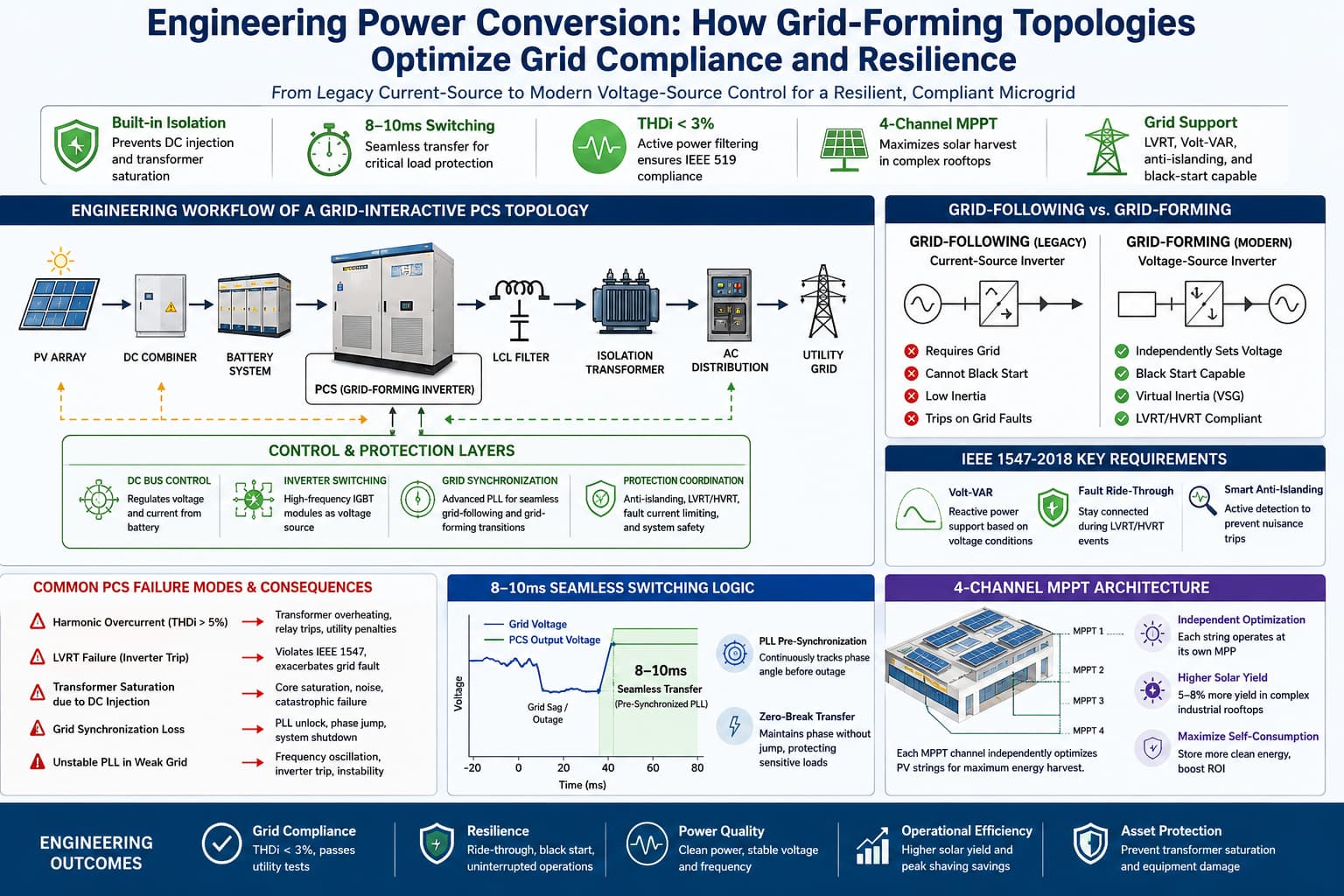
- Evidence that the power conversion system can handle weak-grid or diesel-hybrid operation without nuisance tripping
- IP rating of the outdoor enclosure and corrosion protection for coastal or industrial sites
MegSolid outdoor cabinet models, such as the 100 kW / 215 kWh unit, are specified with IP54 protection and designed for continuous outdoor use. The hybrid solid-state architecture is described in the thermal-runaway prevention guide as a system-level approach that reduces the probability of propagation compared with conventional liquid designs.
4. Score Commercial and Service Terms That Affect African Agents
Unit price per kWh is only one line item. Agents and EPCs also need clear answers on minimum order quantity, lead time, spare-parts policy, training and local technical support. A low unit price that arrives without spare boards or remote diagnostic capability becomes expensive after the first fault.
| Commercial Item | What to Require in the RFQ Response | Why It Matters in Africa |
|---|---|---|
| Minimum order quantity | Stated in cabinets or containers, with sample policy | Allows staged market entry without large inventory risk |
| Lead time and capacity | Confirmed production slot and shipping window | Protects project schedules |
| Spare parts and firmware | List of critical spares and update process | Reduces downtime when local logistics are slow |
| Training and commissioning | Remote or on-site options and language support | Enables local teams to complete handover |
| Warranty claim process | Response time, responsible party and logistics cost | Avoids open-ended disputes after installation |
MegSolid supports OEM/ODM cooperation and provides technical packages suitable for regional distributors. Project-specific discussions can be opened through the official contact portal.
5. Practical RFQ Template You Can Copy
When you are ready to send a formal request, include at least the following sections so that responses become comparable:
- Project location, ambient temperature range and altitude
- Required power (kW) and energy (kWh), daily cycle profile and backup duration
- Grid connection type (on-grid, off-grid, diesel hybrid) and any local grid code
- Preferred cooling method and enclosure IP rating
- Full documentation list (datasheet, single-line diagram, certificates, FAT procedure, warranty)
- Requested commercial terms (MOQ, lead time, spare parts, training, payment)
- Confirmation that the supplier is the manufacturer or an authorised integrator
Why Original Hybrid Solid-State Manufacturers Reduce Long-Term Risk
For African agents and EPCs the highest long-term cost is rarely the first invoice. It is usually the combination of unexpected derating, difficult warranty claims, missing spare parts and limited engineering support when the grid or the climate changes. An original manufacturer that controls both the hybrid solid-state cell chemistry and the system integration can provide a single point of responsibility for performance and documentation.
MegSolid’s published product range includes outdoor cabinets (for example the 100 kW / 215 kWh model), liquid-cooled hybrid solid-state systems and larger containerised solutions. Technical background on system architecture and safety is available in the C&I energy solution overview and the resource centre. Company background and manufacturing scope are described on the About MegSolid page.
Final Qualification Decision
After collecting responses, score each supplier on the four dimensions used in this checklist: manufacturing ownership, completeness of technical documents, high-temperature and weak-grid readiness, and commercial service terms that affect African operations. Only suppliers that clear a minimum threshold on all four should receive a formal purchase order or agency discussion.
If you already have a shortlist and need a model-specific datasheet, FAT procedure or agency cooperation outline, the engineering team can respond through the contact form. For larger containerised requirements see the 5000INTL containerised system.
FAQ
What is the first thing an African EPC or agent should check when evaluating a C&I BESS supplier?
Confirm whether the company is the original manufacturer that designs and assembles the system, or a trader that sources finished products.
Why does manufacturer ownership matter more in African projects?
Because high temperature, weak grid and limited local service make design control, spare-parts availability and warranty responsibility critical after installation.
Which documents should be requested before any price negotiation?
System datasheet, single-line diagram, safety certificates, thermal management description, FAT procedure, warranty terms and transport documentation.
How does hybrid solid-state technology help in high-temperature African sites?
It reduces free liquid electrolyte content and improves thermal stability compared with conventional liquid designs, which lowers the risk of aggressive derating and propagation.
What IP rating should outdoor cabinets typically have for African commercial sites?
IP54 is commonly specified for continuous outdoor operation in dusty or industrial environments.
What commercial terms are especially important for African agents?
Minimum order quantity, confirmed lead time, spare-parts list, training options and clear warranty claim process including logistics responsibility.
Can a low unit price still create high total cost?
Yes. Missing spare parts, delayed firmware updates or difficult warranty claims often outweigh the initial price difference.
Should diesel-hybrid operation be mentioned in the RFQ?
Yes. Many African sites run in hybrid mode; the PCS and control system must be able to operate without nuisance tripping.
What is the practical next step after shortlisting suppliers?
Send a structured RFQ that forces comparable responses on technical documents, temperature readiness and commercial service terms.
Where can an agent request the full MegSolid technical package?
Through the official contact portal at solidess.com/contact-megsolid/.
Is this checklist relevant for South African EPCs and agents?
Yes. It addresses high ambient temperature, local certification needs and the service conditions typical of South African C&I projects.
Does the same checklist apply to Nigerian commercial and industrial sites?
Yes. Weak grid, diesel hybrid operation and limited local technical support are common in both markets.
Can regional distributors in East or West Africa use the same evaluation steps?
The core verification points (manufacturer ownership, documentation completeness, temperature readiness and service terms) remain the same across African markets.
What is a C&I BESS RFQ checklist?
A structured list of technical, compliance and commercial items that African EPCs and agents should request from battery energy storage suppliers before issuing a formal purchase order or agency agreement.
Why should African buyers verify manufacturer status before RFQ?
Because original manufacturers control design, quality records and long-term support, while traders typically cannot modify systems or provide full traceability after installation.
What product advantage does hybrid solid-state technology offer for African C&I projects?
Reduced free liquid electrolyte content improves thermal stability under high ambient temperature, supporting more predictable outdoor operation when combined with proper system design and BMS protection.
Product reference: Official MegSolid outdoor cabinet and hybrid solid-state product pages, checked August 2026. Parameters including IP54, operating temperature ranges and system configurations are taken from published manufacturer documentation.
Disclaimer: Published specifications are screening inputs, not a project guarantee. Actual performance depends on site conditions, load profile, installation quality and maintenance. Always use the latest model-specific datasheet, test records, warranty terms and destination-market requirements for procurement.