 Skip to content
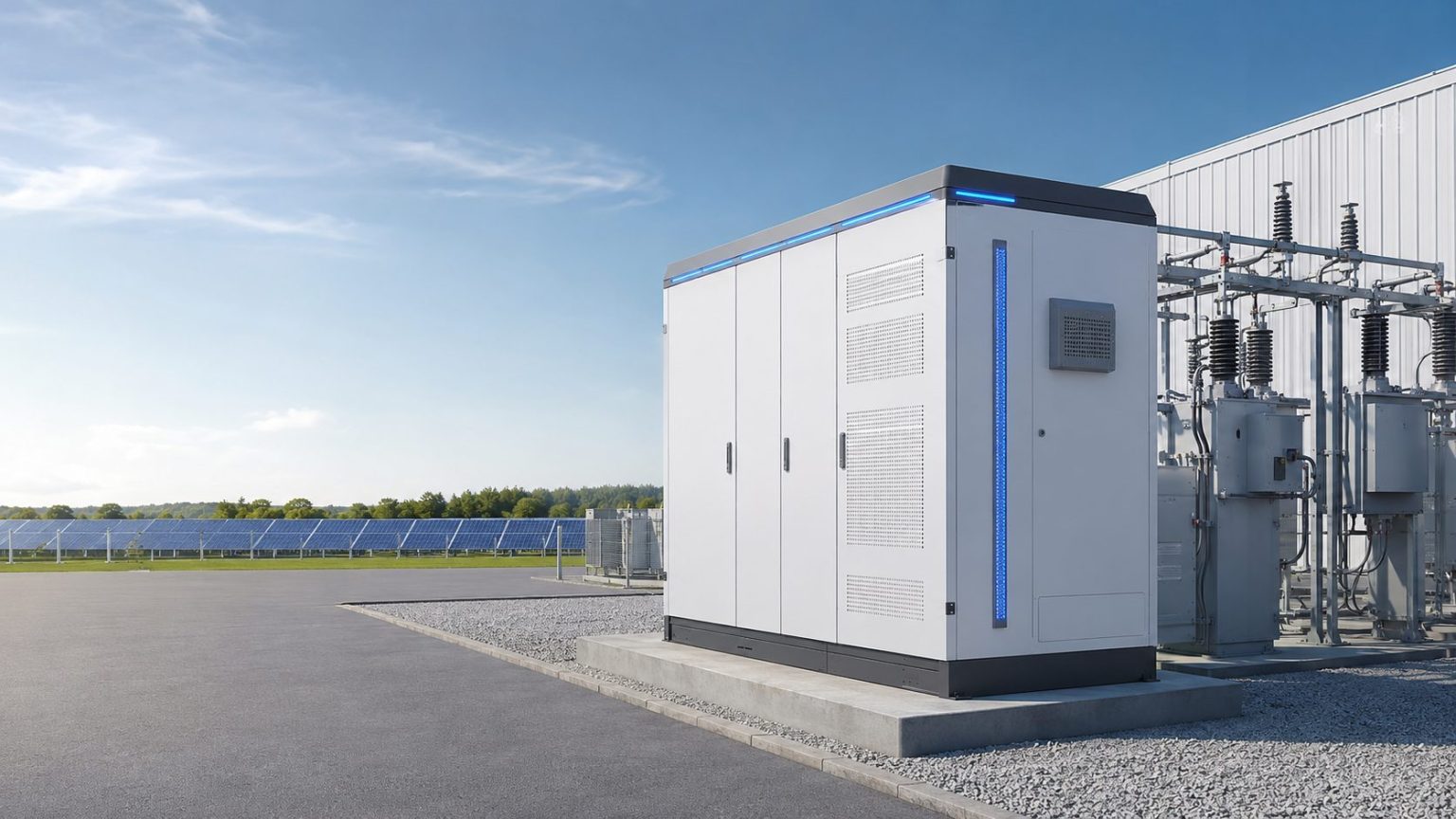
Is this cabinet the right starting point for your C&I site?
The MegSolid ESSA0100B-0215 is a documented option for commercial and industrial projects that need 100 kW rated AC power and 215.04 kWh nominal energy in an all-in-one outdoor cabinet. From my 10 years in solid-state battery and C&I storage work, I would never select a cabinet from its headline numbers alone: first verify the critical load, discharge duration, AC interface, site conditions, and commissioning boundary.
For this model, the specification gives a 672–850 V battery-voltage range, ≥5,000 cycles at 25°C and 0.5C, IP54 protection, a built-in isolation transformer, intelligent air cooling, and specified fire-extinguishing options. Start with the 215 kWh outdoor cabinet engineering deep dive, then turn the project data into a quotation request.
This guide helps buyers do four things before they ask for price:
- Match the cabinet’s rated AC output to the real load profile—not only a monthly electricity bill.
- Treat the stated energy as nominal, then confirm the usable-AC-energy boundary for the proposed duty cycle.
- Compare bids using the same system scope, voltage window, protection, controls, delivery terms, and service responsibilities.
- Submit enough site data for a configuration and project price quotation, rather than a non-comparable headline number.
The selection mistake I see most often
After 10 years of reviewing solid-state battery and C&I storage projects, I see the same mistake repeatedly: a team compares cabinet labels before it has defined the load the cabinet must support. The result is a bid comparison that looks simple on paper but creates redesign work once the electrical interface, dispatch strategy, or commissioning boundary becomes real.
For this cabinet class, I start with five questions: What load must remain online? How long must it be supported? What is the actual AC interface? Which controls and protection equipment are included? Who owns the work between the cabinet and the operating site? Those answers turn a catalogue discussion into a configuration that can be priced and delivered.
That is the difference between a headline quote and a decision-ready offer. For a broader procurement framework, see the C&I BESS battery supplier guide and commercial energy-storage procurement guidance.
Model-level decision data
The right way to read this specification is as a decision baseline, not as a promise about every site. Each value below belongs to the ESSA0100B-0215 model.
| Decision item | Documented value | Buyer action before quotation |
|---|---|---|
| Nominal capacity | 215.04 kWh | Confirm the required usable AC energy, reserve SOC, auxiliary load, and end-of-life margin. |
| Rated AC power | 100 kW | Provide 15- or 30-minute load data and identify the required peak/overload behavior. |
| Battery voltage range | 672–850 V | Verify compatibility across the required system operating window. |
| Cycle condition | ≥5,000 cycles at 25°C, 0.5C | Ask for the quotation’s applicable operating conditions and warranty boundary. |
| Cabinet dimensions | 2,450 × 1,550 × 2,400 mm | Check foundation, transport path, clearances, access, and maintenance space. |
| Net weight | 3,900 kg | Confirm lifting plan, slab loading, and site logistics with the EPC. |
At platform level, the outdoor-cabinet source also states a 400 V rated AC interface with a 320–460 V operating range, 50/60 Hz, 3W+N+PE connection, and on-grid THDi below 3%. It lists IP54 protection, a built-in isolation transformer, intelligent air cooling, and aerosol/NOVEC1230 fire-extinguishing options. Final engineering must confirm which items apply to the offered configuration and destination market.
Validate usable AC energy before setting backup duration
Dividing nominal energy by rated output produces a simple energy-to-power ratio. It does not prove that a site will receive two hours of usable AC backup. The real outcome depends on the SOC operating window, conversion losses, auxiliary consumption, battery condition, temperature, discharge profile, reserve requirement, and where energy is measured.
Before approving a proposal, put the following questions into the technical clarification:
- What usable AC energy is warranted at the stated load, temperature, SOC window, and end-of-life condition?
- Which loads are critical, essential, and deferrable during an outage?
- Does the project require peak shaving, backup, solar self-consumption, microgrid operation, or a defined combination?
- Which equipment is inside the factory supply boundary, and which equipment belongs to the EPC?
This is where a project-specific quotation is more valuable than a generic price request. The commercial team can price a defined system; it cannot responsibly price an undefined operating result.
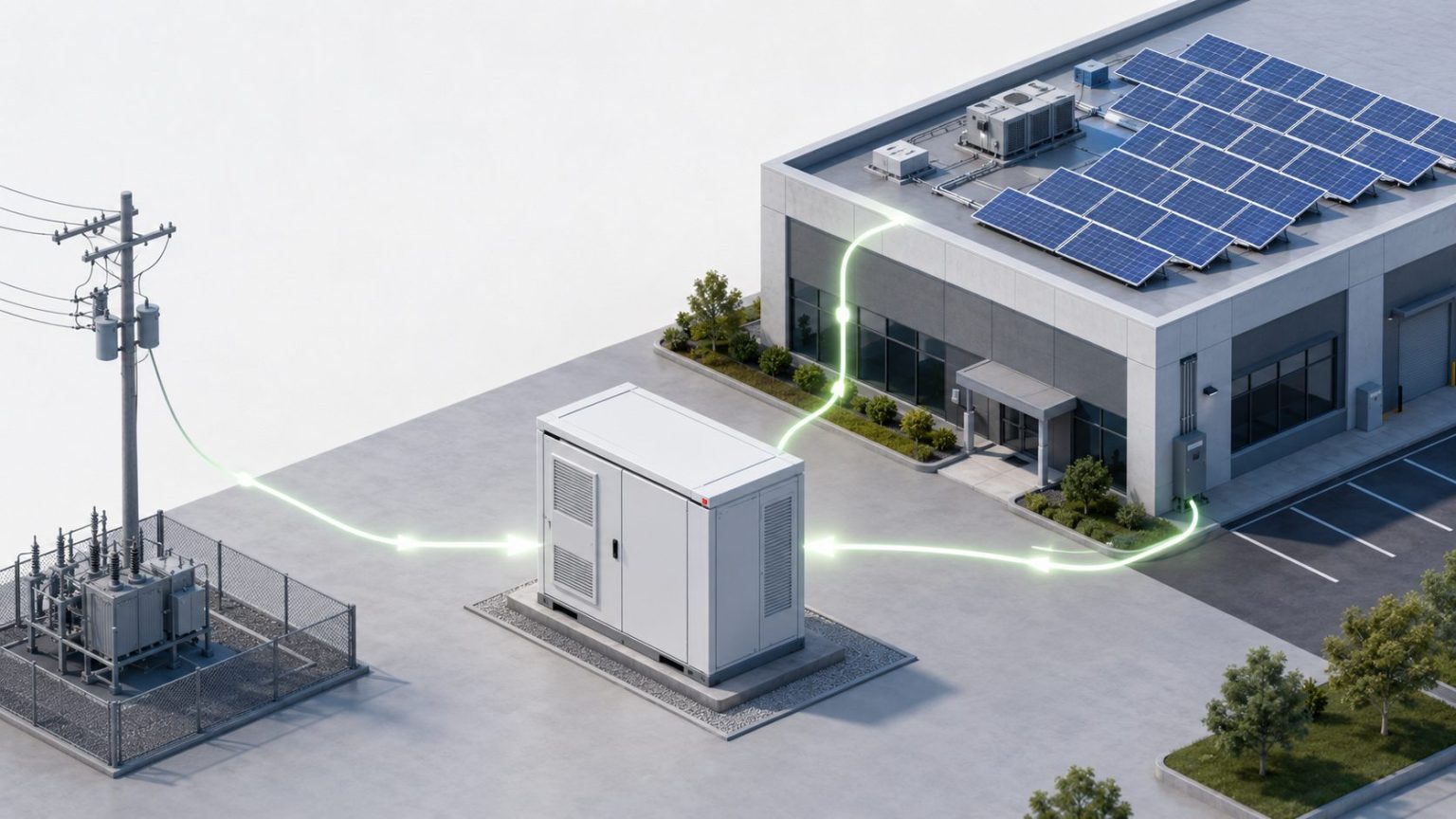
Select AC power, duration, site interface, and operating objective together. This conceptual illustration is not a single-line diagram.
Compare cabinet bids by evidence, not adjectives
“100 kW / 215 kWh” is a useful search term, but it is not a complete procurement specification. When comparing this model with a similar market offer, use the table below as a common evidence checklist. It avoids unsupported claims that one supplier is automatically better than another and shows where model-specific information is available for review.
| Comparison point | This model: documented starting point | What to require from every alternative quote |
|---|---|---|
| Model identity | Exact model: ESSA0100B-0215 | Model code, revision, and cell chemistry—not only a kWh label. |
| AC power and nominal energy | 100 kW rated AC / 215.04 kWh nominal | Separate rated, peak, and overload power from nominal and warranted usable energy. |
| Electrical window | 672–850 V battery range; 400 V rated AC platform data | Full DC/AC window, transformer requirement, grid connection, and protection concept. |
| Power quality | On-grid THDi stated as <3% at platform level | The test condition, applicable configuration, and site-level responsibility. |
| Outdoor integration | IP54, built-in isolation transformer, intelligent air cooling | Enclosure rating, cooling, transformer, safety equipment, and site exclusions. |
| Cycle statement | ≥5,000 cycles at 25°C and 0.5C | The same test condition and the actual warranty terms—not an unqualified cycle headline. |
| Physical deployment | 2,450 × 1,550 × 2,400 mm; 3,900 kg | Foundation, access, crane path, clearances, and service-area assumptions. |
The value of this offer should be assessed through a transparent process: a named model, stated electrical data, defined cabinet information, and a quote that makes the remaining scope visible. A low initial price is not a better offer if it excludes switchgear, controls, freight, commissioning, compliance evidence, or the usable-energy boundary.
For projects where the scope also needs a dedicated power-conversion review, reference PCS and inverter engineering guidance. For BMS/EMS integration discussions, use the BMS and EMS communication architecture guide as a starting point with the engineering team.
Choose the cabinet in the correct order
1. Start with the supported load
List the electrical loads that must stay online and separate them from loads that can be delayed or shed. A nameplate total is not enough; the quotation team needs the peak profile, normal profile, startup behavior, and required continuity objective.
2. Select AC power before battery capacity
The model is listed at 100 kW rated AC. First determine whether this is the correct power class for the supported load, then assess whether the stated nominal energy fits the required duration once the usable-energy conditions are defined.
3. Confirm the interface before discussing a final price
Share the service voltage, frequency, transformer data, existing PV/generator details, single-line diagram, and operating mode. The published outdoor-cabinet platform data state 400 V, 320–460 V, 50/60 Hz, and 3W+N+PE; project engineers must verify the interface for the actual site.
4. Make safety and site responsibility contractual
IP rating, cooling, fire protection, detection, emergency arrangements, access, and authority approvals are not marketing details. Ask for the exact model evidence, the installation assumptions, and the division of responsibility between the supplier, EPC, and owner. The BESS thermal-runaway prevention guide is useful background, and the UL 9540A and IEC 62619 compliance guide can support an evidence request. A project still needs model- and site-specific review.
5. Compare total scope, then ask for price
Request a breakdown identifying battery cabinet, PCS, BMS/EMS, transformer, switchgear, cooling, fire protection, communications, packing, delivery, commissioning, warranty, and exclusions. That creates a price comparison your procurement team can defend.
When this outdoor cabinet is the right starting point—and when it is not
This outdoor cabinet is a relevant starting point for a C&I project whose preliminary load and duration are in this class. It is not a substitute for an energy study or a site-design review.
| Project question | Appropriate next technical discussion |
|---|---|
| The site needs up to 100 kW of defined AC support and an outdoor cabinet layout | Review ESSA0100B-0215 scope, footprint, voltage window, and operating objective. |
| The project requires a different power-to-energy ratio | Review the outdoor cabinet family and request the model that matches AC power before capacity. |
| The project needs a 125 kVA liquid-cooled hybrid solid-state system | Compare the documented 261.24 kWh hybrid solid-state ESS against the defined load and site scope. |
| The project is in a container-scale range | Use the modular cabinets versus containerized ESS comparison before forcing a cabinet solution. |
The market does not reward a buyer for choosing the largest battery. It rewards a buyer who selects the power class, usable-energy requirement, site interface, and commercial scope before the purchase order is issued.
Start a configuration review before asking for price
The fastest route to a useful price is not “Please quote 100 kW / 215 kWh.” Send the short project package below so the technical team can determine whether the proposed cabinet is suitable, clarify inclusions, and return a project-based commercial proposal.
- Project location and application: peak shaving, backup, solar storage, microgrid, or another operating objective.
- Required AC power and duration: rated/peak load, critical-load list, and required support duration.
- Energy requirement: required usable AC energy and the intended measurement boundary.
- Load data: 15- or 30-minute load profile, startup loads, and seasonal changes if available.
- Electrical interface: AC voltage, frequency, transformer rating, single-line diagram, PV, generator, export/zero-export logic.
- Installation conditions: indoor/outdoor location, footprint, ambient conditions, altitude, access, lifting constraints, and service clearance.
- Compliance and delivery: country, required standards or approvals, EPC division of scope, requested delivery date, and commissioning expectations.
- Commercial scope: quantity, expansion plan, warranty expectations, preferred Incoterm, destination, and required documentation.
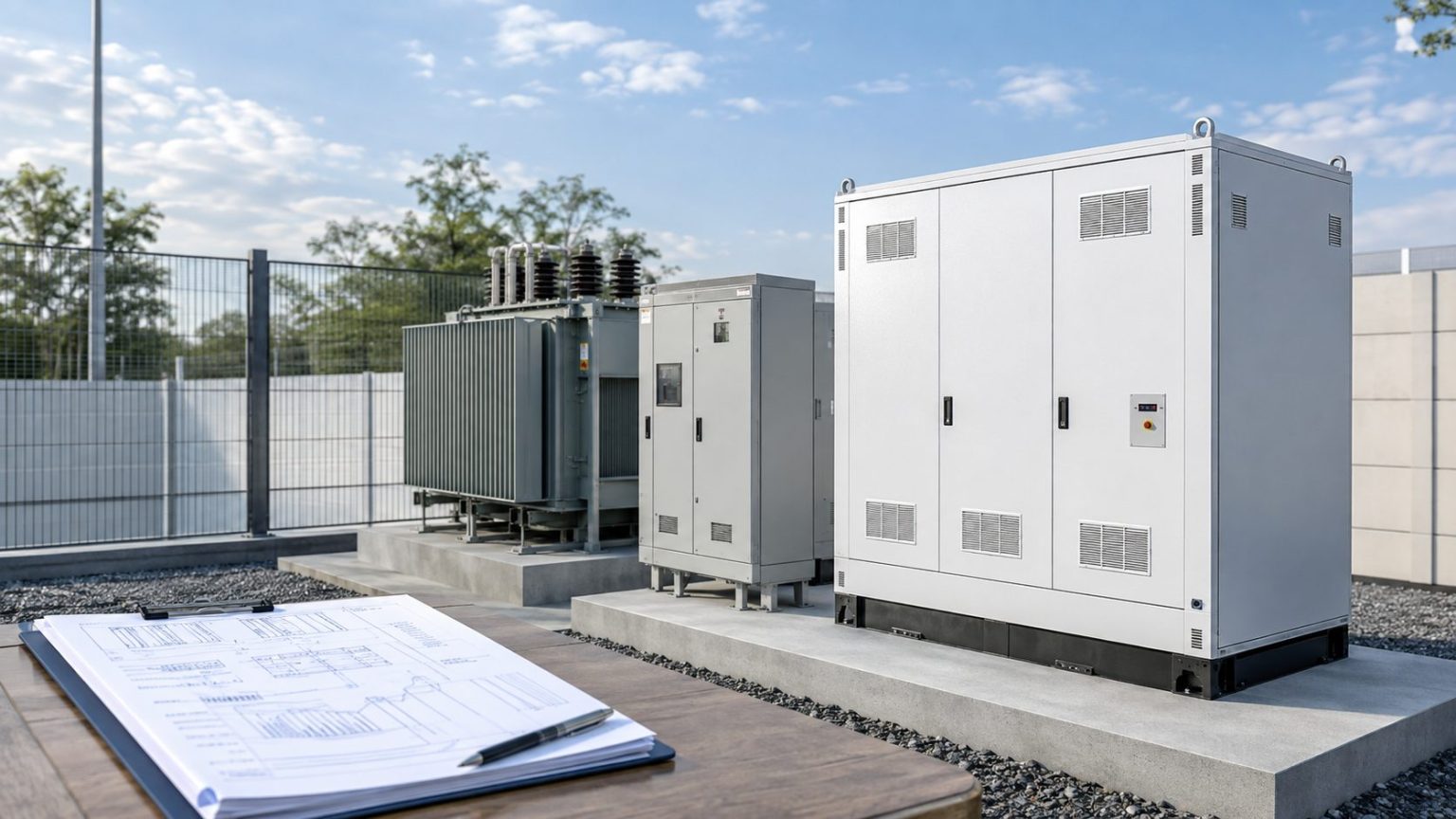
A clear RFQ defines the site interface, access, operating objective, compliance needs, and commercial boundary before price comparison.
For a live technical and commercial discussion, submit this package through Contact MegSolid. For a broader factory-versus-trader review, see Sourcing C&I BESS: Factory Direct vs Trading Co.; this article does not treat an illustration as a named project.
A quotation-ready checklist for EPC and procurement teams
Before comparing offers, obtain a written answer to these points:
- Is the offered model explicitly ESSA0100B-0215, or a different cabinet?
- Does the quoted 215.04 kWh mean nominal DC energy, and what usable AC energy is proposed?
- Is 100 kW sufficient for the critical load, peak load, and required transfer scenario?
- Does the DC range and AC interface fit the actual electrical design?
- Which cabinet, PCS, BMS/EMS, transformer, switchgear, and communications items are included?
- Which cooling, fire-protection, detection, and emergency arrangements are included?
- Are the stated cycle conditions retained in the proposal and distinguished from warranty terms?
- Are the dimensions, weight, access path, foundation, crane plan, and clearances accepted by the EPC?
- Which certificates, test reports, FAT/SAT records, and compliance documents are required for the exact destination?
- What are the delivery terms, commissioning responsibility, service pathway, and exclusions?
Turn project inputs into a usable price comparison
ESSA0100B-0215 gives buyers a concrete C&I starting point: 100 kW rated AC power, 215.04 kWh nominal capacity, a 672–850 V battery range, a published 400 V AC platform interface, and a cabinet specification that includes IP54, an isolation transformer, intelligent air cooling, and stated fire-extinguishing options.
The right next step is not to rely on a generic price per kWh. Give the MegSolid team the load profile, duration, grid interface, installation conditions, required approvals, delivery location, and service expectations. The resulting quotation can be tied to a defined project scope—one that engineering and procurement teams can compare line by line.
FAQ
Which MegSolid outdoor cabinet is listed at 100 kW and 215.04 kWh?
MegSolid lists the ESSA0100B-0215 with 100 kW rated AC power and 215.04 kWh nominal capacity.
Does 215.04 kWh guarantee two hours at 100 kW?
No. Nominal energy does not automatically equal warranted usable AC energy. Confirm SOC limits, efficiency, auxiliary consumption, temperature, degradation, reserve, load profile, and measurement boundary in the project proposal.
What battery-voltage range is listed for ESSA0100B-0215?
The model is listed with a 672–850 V battery-voltage range. Verify complete system compatibility for the proposed site.
What AC interface information is published for the outdoor cabinet platform?
The source states 400 V rated AC, 320–460 V operating range, 50/60 Hz, and 3W+N+PE. Confirm the offered configuration against your site electrical design.
What is the published cycle statement for the 100 kW / 215.04 kWh cabinet?
The model is listed at ≥5,000 cycles at 25°C and 0.5C. Do not treat this as a standalone warranty statement; request the proposed warranty terms and operating conditions.
What physical space should an EPC plan for?
The listed cabinet dimensions are 2,450 × 1,550 × 2,400 mm and the listed net weight is 3,900 kg. The EPC must still confirm access, foundation, lifting, clearance, and maintenance layout.
What protection and cooling features are documented?
The outdoor-cabinet platform lists IP54 protection, a built-in isolation transformer, intelligent air cooling, and aerosol/NOVEC1230 fire-extinguishing options. Confirm the exact proposed configuration and project responsibilities.
Is the published PV-input figure a rating for ESSA0100B-0215?
No model-specific mapping is supplied for the platform’s 250–850 kW maximum PV-power range. Do not assign that figure to ESSA0100B-0215 without written confirmation.
Why is a load profile needed before MegSolid can quote price?
It establishes the required AC power, duration, peak demand, and critical-load boundary. Without it, a price offer cannot reliably define system scope or intended result.
How do I request a MegSolid price quotation?
Send the project location, application, load profile, required AC power and duration, electrical interface, installation conditions, required approvals, delivery date, and desired scope through the MegSolid contact form.
Does project location affect the quotation?
Yes. Site voltage, ambient conditions, altitude, access, delivery terms, required standards, field service, and EPC responsibilities can affect the configured scope and price quotation.
Can a buyer assume the same certifications apply in every country?
No. Certifications are model- and market-specific. Request the exact certificate, issuer, report number, validity, and configuration relevance for the intended destination.
Does purchasing the cabinet remove the need for a local EPC?
Not necessarily. Site studies, permits, protection design, cabling, civil work, installation, local acceptance, and commissioning responsibilities must be assigned in the project contract.
